AP4 |
dialogues. visit LIMPRANA
Bangkok’s Yaowarat was established in 1782 under King Rama I, who relocated Chinese settlers from Rattanakosin to Sampheng to clear land for the Grand Palace. Its early development was guided by royal decrees and trade policies, and resulted in a commercial hub along what became Yaowarat Road in 1891 under King Rama V.
After World War II, Thailand’s nationalist policies and urban growth transformed Yaowarat. In the 1950s and 1960s, anti-Chinese attitudes led to efforts at assimilation, including renaming streets and restricting Chinese schools, yet Yaowarat’s economic energy continued. By the 1980s, the Bangkok Metropolitan Administration (BMA) launched modernization projects, widening roads and controlling street markets to reduce congestion. Since the 2000s, government-led tourism initiatives, driven by the Tourism Authority of Thailand (TAT), have repositioned Yaowarat as a worldwide street food and cultural hub, solidifying its reputation as the “Golden Road” due to its more than 40 gold shops and renowned culinary scene.
The physical landscape of Yaowarat is a blend of heritage and modernity. Stakeholders have supported the conservation historic shophouses, temples like Wat Mangkon Kamalawat, and landmarks such as the Chinatown Gate. The modernization and preservation of the area has encountered criticism for allegedly having privileged tourism and commercial interests that resulted in an increase of property values and displacing locally-focused businesses, such as traditional herbal shops and small-scale traders.
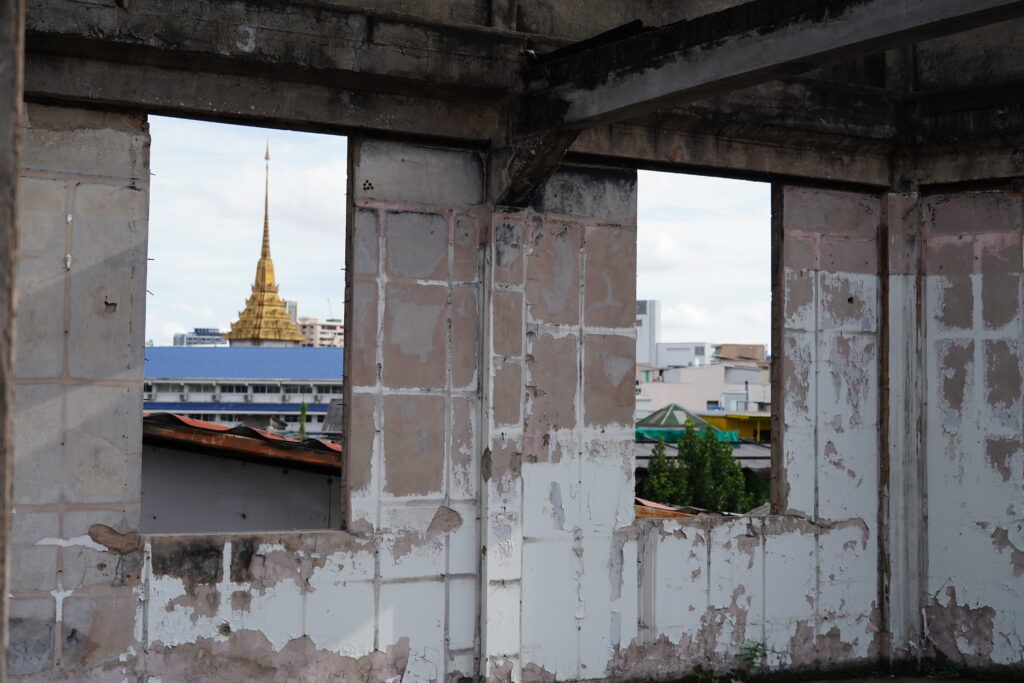
PEOPLE. As of 2025, Yaowarat’s resident population in the Samphanthawong District is approximately 25,000, mostly made up of Chinese-Thai families of Teochew descent. The road-widening projects in the 1980s and rising rents have led to the displacement of some residents. Most live in heritage shophouses or nearby low-rise apartments, with limited public housing compared to Singapore’s HDB model. Community ties remain strong, supported by clan associations and temples, although gentrification threatens affordability.
Tourism plays a significant role in the local economy. In 2024, Bangkok remained one of the top destinations for both domestic and international tourists, with Yaowarat consistently ranked as a must-visit cultural and culinary hub. The district attracts a diverse array of visitors: from food enthusiasts and history buffs to young travelers seeking authentic street experiences. Chinese tourists, in particular, are drawn to Yaowarat for its familiar yet distinctly Thai-Chinese character, while Southeast Asian and Western visitors seek out its legendary night markets and vibrant festivals.
The area has seen the arrival of many new Chinese entrepreneurs, however many local businesses remain family-run, and traditional trades. New investment and company start-up is also coming from a young generation of Chinese-Thai entrepreneurs.
ORGANIZATION. Bangkok’s Chinatown governance consist of a rich network of stakeholders shapes its direction. Clan associations and family trusts are key in property management and organizing cultural events. Local groups and business networks work to preserve heritage, support community welfare, and maintain traditional trades.
Municipal authorities, such as the Bangkok Metropolitan Administration (BMA), are involved in infrastructure and public space management, but their influence is often limited by the area’s unique, fragmented ownership structure. Recent years have seen an increase in collaboration between local stakeholders and city officials, particularly in areas such as urban renewal, festival organization, and tourism management.
Currently, stakeholders note that while this decentralized approach has protected Yaowarat from more aggressive gentrification seen elsewhere, it can also slow down coordinated planning and investment in public amenities. There is a growing demand for more inclusive, community-driven frameworks that balance economic development with the preservation of intangible heritage, while also supporting local entrepreneurs.
In response to increasing challenges, some local groups are experimenting with new business models, knowledge-sharing projects, and cultural programs focused on engaging younger generations and keeping Yaowarat’s identity as a vibrant community and cultural landmark.