explore the full collection of appraisal. at present. articles.
thought-provoking pieces blending research, insights, and experiences from a diverse community of professionals in the people-facing industries landscape.
Array
(
[0] => WP_Post Object
(
[ID] => 194
[post_author] => 2
[post_date] => 2020-10-01 00:10:42
[post_date_gmt] => 2020-10-01 00:10:42
[post_content] => In six long and short months what I pay attention to has changed fundamentally. For an appraisal of now and what I will need from life ahead - I have to reach back and track the shift.
It’s the end of January. My friend’s advice from her location of Taiwan gradually builds a real possibility in me here in the Netherlands. Whilst the realities are hidden from public view, the virus is being detected in Paris. Still keeping quiet about it, the authorities don’t mind me crossing borders in late February. We have visitors at the beginning of March and as they board a flight back to London - those who rule finally act. Lockdown.
[carousel id="NTF123"]
The daily world shrinks, amidst a flurry of doing. We set up a whats app group of families committed to taking care of one another should the virus come to their households. We check with those most vulnerable, we want to know where they sit with these new rules. Glad for compliance and wary of their sense of it not affecting them - we become their accountability.
The geography of our attention changes. Whilst reaching out virtually, by phone, by text, in imagination and memory, our body is getting used to a contained, routine existence. The energy of crisis dissipates and now we must build daily life within the home, within what can be walked to, within our bodies.
The small decked garden that is usually left unused and slippery in favour of the public spaces is now attended to. The attention spreads through the living spaces and systems, the living routines of daily life. We begin to refine and redesign. Excited by resourcefulness we find what we need to make new workspaces. Repurposing, we organise and create with what is to hand.
New space, and new boundaries come too. The freelance work that pays to sustain and nourish our bodies stops. The vague certainty about future earnings that usually carries us through dissolves. Questions about the year and years ahead are in relief. Time is edged with the anticipation of a call: someone is infected, someone is on their way to hospital, someone is declining.
To reply this new vulnerability, do something with the feelings, we administrate, organise, get hands dirty with bureaucracy. Property, savings, budgets and plans. We project and check. We guide elders who hadn’t had time, didn’t understand, don’t want to face what has now become necessary. The geography of attention expands into futures of loss. Futures of taking care.
Vitality is woven between this attention to the endings. We sleep, we eat, we walk, we pause. Our brains accumulate familiarity so we look more carefully and make what was always there into something new. There is time in the community garden, at the
old graveyard. We are experts in clouds. We learn that we do know how to make food that delights and nourishes. We are grumpy, shout at one another, recover.
Beyond a household we are allowed to gather in triangles, 1.5m between each body. We learn to take all friendship time, all playmate time, besides and behind one another. Walking, cycling, on the move in the air. We learn to stand apart, to stop hugging,
After it all “normality” was greedily resumed. Returning to the commute, the restaurant, routine consumption, travel, the buzz beyond household and local. But the richness of what we learned cannot be unlearned. The proximity of our vulnerability has been revealed, it is not easily hidden again. We now carry the truth about what matters within the details of our lives.
The future is held in the question: how will the public world adapt to this new inner reality?
[post_title] => NATASHA FOWLER.
[post_excerpt] =>
[post_status] => publish
[comment_status] => open
[ping_status] => open
[post_password] =>
[post_name] => natasha-fowler
[to_ping] =>
[pinged] =>
[post_modified] => 2025-04-30 03:28:48
[post_modified_gmt] => 2025-04-30 03:28:48
[post_content_filtered] =>
[post_parent] => 0
[guid] => https://appraisalatpresent.com/?p=194
[menu_order] => 0
[post_type] => post
[post_mime_type] =>
[comment_count] => 0
[filter] => raw
)
[1] => WP_Post Object
(
[ID] => 170
[post_author] => 2
[post_date] => 2020-10-01 00:20:01
[post_date_gmt] => 2020-10-01 00:20:01
[post_content] => By any measure, 2020 has been an annus horribilis to end all anni horribiles. Worse, it isn’t over yet. With the Corona virus pandemic far from being vanquished, borders still closed and economic indicators plunging, it’s more than likely that the New Abnormal will involve working from home, bingeing on Netflix and pleading for leniency with social distancing ambassadors.
But we’re a resilient lot. Many businesses have been decimated while others have adjusted well and some are even thriving (they say astrology is booming). Working remotely, socially responsible behavior and making the most of advances in technology (Zoom meeting, anyone?) have become prominent norms in The Year of Living Differently.
Outside of the daily cycle, our current reality involves the need to unwind – not in a party-like-there’s-no-tomorrow manner – but in ways that approximate our pre-pandemic lives. Leisure travel is just a distant memory and in the past half-year or more, I’ve discovered the many lovely green spaces that Singapore has to offer. I’ve also come to appreciate that (geographical) size does matter – at 720 square kilometers, there are obvious limits to a country that’s roughly the size of a village in China.
As an inveterate traveller, I was accustomed to frequent trips to all corners of the globe. Nowadays, with nowhere to go (proposed flights to such a destination are beside the point), I’m reduced to living vicariously, sustained by personal memories and dreams of once again heading out into the wild blue yonder. A year ago, in a previous life, I visited the remote, wide-open spaces of the Uyuni Salt Flats in Bolivia and the tropical wetlands of the Pantanal in Brazil – stark and necessary reminders of the beauty and diversity that make Planet Earth unique. My plans to explore Mexico’s exotic Oaxaca and Chiapas states this month have come to nought, but the optimist in me takes some solace in that age-old rallying cry: ‘Wait ‘till next year’. [carousel id="GE1"]
On a more sobering note, the life-changing effects of Covid-19 include disruptions at places of learning, record levels of unemployment, post-traumatic distress and a general decline in our physical and mental well-beings. Even before the staggering events of this year, we were struggling to address global issues related to climate change, sustainability and social decay – now, recovery on every level seems more distant.
Coming to grips with the grave new world in 2021 and beyond is the challenge that confronts us all. Medical research and government policy, public discourse and individual behaviour, second waves and second chances, will help to define our immediate future. These are unprecedented circumstances and only time will tell if we emerge stronger or fall deeper into the abyss.
Meanwhile, I’m keeping fingers crossed and bags packed.
[post_title] => GEOFFREY EU.
[post_excerpt] =>
[post_status] => publish
[comment_status] => open
[ping_status] => open
[post_password] =>
[post_name] => geoffrey-eu
[to_ping] =>
[pinged] =>
[post_modified] => 2025-04-30 03:27:09
[post_modified_gmt] => 2025-04-30 03:27:09
[post_content_filtered] =>
[post_parent] => 0
[guid] => https://appraisalatpresent.com/?p=170
[menu_order] => 0
[post_type] => post
[post_mime_type] =>
[comment_count] => 0
[filter] => raw
)
[2] => WP_Post Object
(
[ID] => 152
[post_author] => 2
[post_date] => 2020-10-01 00:25:15
[post_date_gmt] => 2020-10-01 00:25:15
[post_content] => Six months after the beginning of the pandemic, I still feel like in limbo.
The continuous alternation between hope and delusion, depression, and excitement - today even more accelerated – put me on hold.
In fact, the whole world is on hold, on a forced holiday, waiting to go back to school: a metaphor, but also the next scenario, happening just in a few days.
Our days are organized in a different way, in my case building a stricter routine. Downtime, creative ‘otium’ disappears for the fear that anxiety could fill the void.
Interrelations are different: no more occasional encounters. We discover people in the very near proximity and family, and that goes under scrutiny.
Living in a big city feels less appealing: no immediate advantages are perceived.
The small privileged world I’m lucky to be part of - that of art collecting and exhibitions - is forced to face its irrelevance, and still...
Although all international and national art fairs had been canceled, most of the big ones were able to organize very sophisticated virtual visits; many galleries have registered good sales, mainly with their long-term clients.
Auction houses have been active online and reached peak sales; cutting-edge festivals have started coming back in mixed mode: some public, some with live participation, others via Zoom.
The most serious and unpredictable aspect concerns traveling: the ever-changing safety rules differ from country to country and make it almost impossible for the public to even plan a short trip.
Encounters end up being mostly between specialists. The contexts become restricted, exchanges are diminished; the ‘reach’ obtained through a wider audience engagement is lost.
Spontaneity and improvising are lost: at the moment no more hugs, handshakes, or going impromptu to the movies or to an exhibition.
Everything needs to be carefully planned, the public is demoted, operators are in despair.
For me, work has doubled: things that closed down in real life had to be resumed online. Virtual guided tours, audio-video guides for Instagram, Zooms have to be available round the clock.
More recently, in-person presence Is required in an attempt to re-establish a sort of recovery.
So we have resumed long, uncomfortable, complex travels, with the pending risk of ending up stuck in a distant quarantine .
And yet, like for all the rest, we start again, trying to keep anxiety at bay.
[post_title] => DONATA PIZZI.
[post_excerpt] =>
[post_status] => publish
[comment_status] => open
[ping_status] => open
[post_password] =>
[post_name] => donata-pizzi
[to_ping] =>
[pinged] =>
[post_modified] => 2025-04-30 03:14:44
[post_modified_gmt] => 2025-04-30 03:14:44
[post_content_filtered] =>
[post_parent] => 0
[guid] => https://appraisalatpresent.com/?p=152
[menu_order] => 0
[post_type] => post
[post_mime_type] =>
[comment_count] => 0
[filter] => raw
)
[3] => WP_Post Object
(
[ID] => 284
[post_author] => 2
[post_date] => 2020-10-01 00:35:45
[post_date_gmt] => 2020-10-01 00:35:45
[post_content] => The so-called ‘new normal’ after COVID-19 pandemic has given us the sense that our living space may be filled with potentially deadly viruses, lurking on every surface.
These fears are well-founded: more than 850,000 people worldwide have been killed so far by the airborne virus, transmitted through everyday activities such as talking, singing and sneezing. We have since grown accustomed to wearing masks to avoid inhaling or exhaling the virus. In addition, droplets of saliva were found to be a source of infection, and all surfaces are now subject to rigorous routines of cleaning and disinfection.
It is natural to consider how these huge changes to our lives will affect our consciousness.
I believe they will increase our awareness of the boundary between the digital information and physical worlds.
[fromyoutube id="ni-Ttr6NgtM" align="left" width="50"]
Since Apple released the iPhone with the integrated touchscreen user interface in 2007, much of our lives have been devoted to stroking black glass surfaces. Previously, when we touched a smartphone screen, we were rarely aware of the glass surface that our fingers were in contact with.
However, the COVID-19 outbreak which occurred at Oita Medical Center in Japan was suspected to originate from the shared touchscreen tablets used to view electronic medical records. The Coronavirus thus revealed that the touch screen is itself a material substance, and that the digital and physical worlds are facing each other across a thin, glass membrane.
This event made me think about ‘The Kiss’, an art installation presented by the artistic unit EXONEMO at the 2019 Aichi Triennale in Japan resembling a monument to a world divided by the surfaces of display. The work consists of two smartphones look-alike displays facing each other and supported by 3D-printed hand-like structures. Each display shows a video chat-like screen depicting a face with the eyes closed. Somehow, we recognize the overlap of the two physical displays as a kiss. However, the glass screens of the display block any direct contact between the digital entities.
Despite video conferencing software allowing us to communicate over physical distances, we remain divided by the glass screen on the display surfaces. And in a world where the virus may exist on every surface, being inside a screen can make you feel secure.
However, can we overcome this division? Various companies around the world, such as Neonode are combining holographic displays with hand-tracking technology to create contact less, interactive displays. Another company, Ultraleap, sells devices that mimic tactile sensations using controlled ultrasound emission.
Perhaps the future of these technologies is a world of perfect kisses shared by holograms.
The question, however, lingers: will we ever hug each other directly once more, beyond the display surface?
I sincerely hope so.
[post_title] => YUTA NAKAYAMA.
[post_excerpt] =>
[post_status] => publish
[comment_status] => open
[ping_status] => open
[post_password] =>
[post_name] => yuta-nakayama
[to_ping] =>
[pinged] =>
[post_modified] => 2025-04-30 03:26:05
[post_modified_gmt] => 2025-04-30 03:26:05
[post_content_filtered] =>
[post_parent] => 0
[guid] => https://appraisalatpresent.com/?p=284
[menu_order] => 0
[post_type] => post
[post_mime_type] =>
[comment_count] => 0
[filter] => raw
)
[4] => WP_Post Object
(
[ID] => 182
[post_author] => 2
[post_date] => 2020-10-01 00:40:55
[post_date_gmt] => 2020-10-01 00:40:55
[post_content] => When the Metropolitan Opera House at Lincoln Center announced that it was suspending its 2020-2021 season in mid-March, that’s when New Yorkers knew that COVID was being taken seriously. Then Broadway followed. Then restaurants had to acquiesce. Times Square was empty. It was the equivalent of NYC being brought to its knees.
New Yorkers are used to changing moment to moment, but COVID and BLM challenged even the nimblest of us. Spontaneity had to step-aside for a measured approach. We had to quell our instincts to take action and sit in the present, an unfamiliar feeling in a “live-to-work” culture.
Sheltering at home caused social disparities to broil past the limits of people’s will power. If COVID made most white people grateful for their privilege, then BLM shocked them out of their reverie. The blinders necessary for the “live-to-work” mentality of the city, were now proof of complicity in accepting the unacceptable.
So in response, Human Resource departments are scrambling to find Chief Equity Officers. It’s the dilemma of the moment in organizations: how to match your intent to your actual impact when you don’t know what you don’t know.
Smaller companies run the risk of “tossing” the job to the “closest” or most vocal person of African descent, but not with the additional salary or necessary resources. The desire for equality has to come from the very, very top, but that is like voting against yourself. Equality means sharing power and money.
People resist change, especially when it directly works against them. Fear inspires blame. Such stress fuels conflict. The US American historic landscape is fraught with inequalities. The lid on the racial pressure cooker could no longer hold. Half the country see it as a bad thing and half see it as progress.
NYC is back, but it’s not business as usual. We have experienced a paradigm shift, around working, loving, co-existing and existing. The professional landscape is no longer just black in white. It has emerged to value the richness that comes when a single story is expanded beyond one world-view.
New York City took a gut-punch, but despite the exodus, people are still shuffling from place to place trying to get to their destinations. Parking is still hard to find. The coffee shop lines are out the door and people have returned to the business of doing their business. Work means health insurance. No work means no affordable health care. It’s the one place that US Americans struggle for their freedom and where we really felt the loss of it during COVID.
In a NY Times Op-Ed, Jerry Seinfeld, NYC’s quintessential comedian, complained about the people who fled and lauded the virtues of those who stayed (he was in the “country”). There is no doubt the city is licking its wounds, but when we are back to the business of complaining about the complainers, then it’s safe to say that New York is getting its mojo back.
Countless white people were introduced to our privilege and complacency, whether we liked it or not. The books White Privilege and How to Be and Anti-Racists are now must reads for anyone who wants to return to an equitable workplace. It’s not natural to accept differing world-views, but it is human to evolve.
When they say that New York is a city that doesn’t sleep, COVID challenged that aspect of its brand. Just as Spring returns every year, New York will need some time to feel back in full bloom. People are licking the wounds of their prior apathy. There is healing to be done.
Global societies have traditionally rewarded those who conform, but the future looks poised for shifting blame to responsibly. When decision makers are able to respond to the changes necessary for the next steps, they may not like what they find . That change will not be comfortable for many, but it will be a step close to closing the gap between our stated values and our actions.
[post_title] => KATHERINE KING.
[post_excerpt] =>
[post_status] => publish
[comment_status] => open
[ping_status] => open
[post_password] =>
[post_name] => katherine-king
[to_ping] =>
[pinged] =>
[post_modified] => 2025-04-30 03:34:04
[post_modified_gmt] => 2025-04-30 03:34:04
[post_content_filtered] =>
[post_parent] => 0
[guid] => https://appraisalatpresent.com/?p=182
[menu_order] => 0
[post_type] => post
[post_mime_type] =>
[comment_count] => 0
[filter] => raw
)
[5] => WP_Post Object
(
[ID] => 164
[post_author] => 2
[post_date] => 2020-10-01 00:50:52
[post_date_gmt] => 2020-10-01 00:50:52
[post_content] => I work as a tv & film animation producer. Facing the Covid-19, our animation media industry, has proven to be very resilient. With the experience of working remotely, and unlike live action productions, we realised that we are much less tied to a geographical or physical location than we previously thought and can effectively work as a global team even if we are not in the same studio.
We will see more of that in the future, across numerous industries, as many corporations are looking at reducing their work place real estate and optimise costs. Technology will ease and help accelerate such transition, but while this may not have a negative impact on productivity, the challenge will be how this will affect creative collaborations and team’s personal well-being.
[carousel id="FP1"] On a personal level, the pandemic proved to be a very inspiring time in terms of personal development. Lockdown and reduced (or no) commuting and traveling, has forced me to slow down, as our industries have halted. Time has suddenly become a more abundant commodity.
Living in a privileged environment surrounded by nature, it has allowed me to reconnect with the world around me and noticing things that I always took for granted, such as the large variety of birds that populated my garden and how these « seize the moments » had a positive impact on me.
As a result, I know I will be coming out of this pandemic somehow changed, not radically, but surely having a different relationship with the world that surrounds me and how I interact with it.
As such, I have been questioning our society current culture of speed and immediacy, but also that of instant gratification which has been ruling our lives across all our social media interactions, or buying habits. In these Covid times, slow is the new fast.
Born in the late 60s, I wonder if post-Millennials that have grown up with the expectation of immediacy, will be coming out of the pandemic with different expectations after having experienced this « slow » time of forced inner reflection, when everything around us calls for more speed.
I am an optimist, and I think that this global shared trauma will have a positive underlying shifting ripple effect on our society.
Surely there will be more social anxiety around across all age groups, but this will call for a change of flow, guided by a need for agility and resilience, and perhaps more authenticity.
[post_title] => FREDERIC PUECH.
[post_excerpt] =>
[post_status] => publish
[comment_status] => open
[ping_status] => open
[post_password] =>
[post_name] => frederic-puech
[to_ping] =>
[pinged] =>
[post_modified] => 2025-04-30 03:36:01
[post_modified_gmt] => 2025-04-30 03:36:01
[post_content_filtered] =>
[post_parent] => 0
[guid] => https://appraisalatpresent.com/?p=164
[menu_order] => 0
[post_type] => post
[post_mime_type] =>
[comment_count] => 0
[filter] => raw
)
[6] => WP_Post Object
(
[ID] => 175
[post_author] => 2
[post_date] => 2020-10-01 01:00:51
[post_date_gmt] => 2020-10-01 01:00:51
[post_content] => For the past 1 year the world has changed drastically, especially in my hometown Hong Kong. I wonder whether it is the act of God, or mankind. I suspect mainly it is the latter. Human beings when in danger act selfishly. Rather than thinking of the well-being of others, people consciously and unconsciously commit to all kinds of acts that would create grievances, misunderstanding, disputes, and destruction.
Hong Kong has been hit by both social unrest and pandemic, and the urge to have peaceful life is the highest priority for most Hong Kong people. Between the two evils I personally think the corruption of the mind is more detrimental and permanent. While pandemic appears to be life threatening, the Hong Kong medical system is well-prepared as compared to many countries around the world. Furthermore, the hygienic awareness of Hong Kong people, the practice of wearing facial masks at all time, coupled with social distancing rules and free COVID testing enforced by the government, have all contributed to getting Hong Kong back to normal soon!
The corruption of mind, as exemplified by destructive actions and rampant media distortions, is the most worrying. Politicizing EVERYTHING by some Hong Kong people, either overtly or covertly, is dampening the growth of Hong Kong. Their over-fantasizing of the West being superior, ignorance to world’s affairs, distrust to China, and unwillingness to adapt to changes – have caused destruction to themselves and to the others, AND have put Hong Kong in a very critical state. Law and order must first be restored, and proper guidance on educational curricula and media must also be enforced in order to avoid falsehood being spread out uncontrollably.
Hong Kong, the Pearl of the Orient, has been in flux throughout its history. This time is the return to the motherland China. With openness and sincerity, I am confident the two societies will learn from each other and benefit their citizens over time. The Chinese expression “Seek common ground while reserving differences” is the ultimate goal.
Global politics are complicated and ever-changing. The outright intrusions of foreign powers into Hong Kong affairs in the past year have exacerbated the divide among Hong Kong people who hold different political views. It is sad, but I firmly believe when Hong Kong people return to their true moral compass, they will find their own path and carry on. In fact a sizable number of Hong Kong people are currently emigrating to different countries around the world, as they don’t have faith in the future of Hong Kong. That’s totally fine. Freedom of choice.
“Community with shared future for mankind” is the universal goal that China wishes to relate with countries around the world. We should make every effort to pursue peace and prosperity, rather than conflicts and wars, to make our world a better place to be.
So let’s go!
[post_title] => HELEN Y. CHEN.
[post_excerpt] =>
[post_status] => publish
[comment_status] => open
[ping_status] => open
[post_password] =>
[post_name] => helen-y-chen
[to_ping] =>
[pinged] =>
[post_modified] => 2025-04-30 03:41:15
[post_modified_gmt] => 2025-04-30 03:41:15
[post_content_filtered] =>
[post_parent] => 0
[guid] => https://appraisalatpresent.com/?p=175
[menu_order] => 0
[post_type] => post
[post_mime_type] =>
[comment_count] => 0
[filter] => raw
)
[7] => WP_Post Object
(
[ID] => 190
[post_author] => 2
[post_date] => 2020-10-01 01:05:23
[post_date_gmt] => 2020-10-01 01:05:23
[post_content] => At the age of 72 one of the few advantages I seem to have is that of being capable of offering a far more distant perspective on the past and an ability to analyze the present and the future less conditioned by ideologies or certainties.
Not born rich, I have always been an entrepreneur and have spent my life building.
In my endeviours, I have been guided by an internal force fed by curiosity, research of the new, and a serene reading of reality. A willingness to accept changes and challenges rather than a strong ambition or thirst for gain in itself.
I am living this epochal event with exactly the same spirit
I cannot say that I was traumatized by the arrival of the pandemic, nor that I suffered too much from confinement at home, perhaps because I don't live in a studio apartment.
I experienced everything as an extraordinary novelty: seeing a metropolis like Milan totally empty of activity and movement was something surreal. isolation as a defense from an invisible enemy was something never experienced before.
i did not suffer on a professional level neither.
in recent years, working on tech- ventures, I had already came to terms with and organized my activities around the logic of remote working.
My latest company - a digital virtual coach dedicated to the community of amateur cyclists - was born 4 years ago without shared offices and full time staff.
the pandemic has instead engaged my intellect and motivated me to search and understand what is the subliminal meaning of what is happening and attempt to imagine an aftermath.
For a long time I had shared with my closest people my concerns for the direction taken by the world in the new millennium: that of a capitalism solely guided by a financial vision, with heavy side effects on social assets and devastating on the planet's resources.
I always felt that the system was moving towards collapse: the arrival of the internet was a driving force, an accelerator of the process of globalization that brought well-being to parts of the world that had been excluded until then. Yet, it was also spreading all the distortions of system.
Having studied with great passion the ancient Eastern philosophies and religions, I am convinced that reality is a whole and that it is not possible to dwell on the analysis of details while forgetting the overall view.
The oscillation of reality between yin and yang is a clear concept for me.
Accordingly, I think that what is happening cannot be interpreted with traditional thought categories. We must resort to a metaphysical vision: we are facing a force pushing us towards a new point of balance, with new structures, new sensibilities and a new sense of common responsibility.
And since everything is new, I’m open to accept it, with positive attitude despite, everything unpleasant I have to experience in the meantime
This pandemic is a disease. To me it’s a growth disease.
[post_title] => MAX MOROCUTTI.
[post_excerpt] =>
[post_status] => publish
[comment_status] => open
[ping_status] => open
[post_password] =>
[post_name] => max-morocutti
[to_ping] =>
[pinged] =>
[post_modified] => 2025-04-30 03:58:19
[post_modified_gmt] => 2025-04-30 03:58:19
[post_content_filtered] =>
[post_parent] => 0
[guid] => https://appraisalatpresent.com/?p=190
[menu_order] => 0
[post_type] => post
[post_mime_type] =>
[comment_count] => 0
[filter] => raw
)
[8] => WP_Post Object
(
[ID] => 239
[post_author] => 2
[post_date] => 2020-10-01 01:10:01
[post_date_gmt] => 2020-10-01 01:10:01
[post_content] => As for many, how things evolved for me during these extraordinary times could not be predicted. I am a translator registered at the Italian Consulate of Hong Kong and also a tutor of Italian language, working for private customers, companies and schools. I also have a passion for poetry, and I’ve been regularly taking part in poetry events and readings, co-organising a few of them.
Covid-19 impacted both my professional life and my leisure time. The requests for translations dropped, especially during the third wave of Covid-19 in Hong Kong, in July 2020. Most of the times, the translations need to be notarized at the Italian Consulate, which has been receiving visitors only by appointment. This acted, and still acts, as a deterrent, as people who did not have urgent assignment decided to postpone their translation jobs.
On the other hand, the rise of Zoom school lessons and lectures made people more confident of the ‘actual’ possibility of learning online. Therefore, I could continue my teaching of the GCSE (General Certificate of Secondary Education)-Italian, despite the school closure. Also, I kept teaching one of my private students online, even from Italy, where I went for a short holiday. And I had new requests of Italian lessons from interested parties: people turned to new things to learn during lockdown, and this is always a positive sign.
As for my passion, which is writing, in particular poetry, there was a complete change. Poetry readings and recitals are undoubtedly best enjoyed live. Therefore, once bars closed, it was harder to have the readings via Zoom, even if the group of poets that I follow and normally join every week (Peel Street Poetry), continued – undeterred – to have weekly online poetry nights. Surprisingly though, for larger events such as themed readings with specific invited poets/speakers, people could now take part in them from every part of the world, and that increased both the audience and the pool of possible invited guest speakers. The local dimension became more international. On some occasions, international poetry readings were taking place at the same hour in different parts of the world. This was an unexpected positive sign.
Also, lockdowns and Covid-19 have been greatly inspiring writers and poets: everyone had more time for themselves, and the topic was unprecedented. Therefore, there are already a few quarantine/Covid-related poetry anthologies published or in the making, and online poetry contests responding to these specific themes. As always, inspiration comes more urgently from hardship, and it’s being definitely so for the literary production.
Nonetheless, I miss my weekly poetry gatherings and all the many activities and events related to the literary and cultural scene that have been and will be cancelled in Hong Kong and all over the world.
[post_title] => PAOLA CARONNI.
[post_excerpt] =>
[post_status] => publish
[comment_status] => open
[ping_status] => open
[post_password] =>
[post_name] => paola-caronni
[to_ping] =>
[pinged] =>
[post_modified] => 2025-04-30 04:06:37
[post_modified_gmt] => 2025-04-30 04:06:37
[post_content_filtered] =>
[post_parent] => 0
[guid] => https://appraisalatpresent.com/?p=239
[menu_order] => 0
[post_type] => post
[post_mime_type] =>
[comment_count] => 0
[filter] => raw
)
[9] => WP_Post Object
(
[ID] => 241
[post_author] => 2
[post_date] => 2020-10-01 01:30:25
[post_date_gmt] => 2020-10-01 01:30:25
[post_content] => Comedians speak the truth. Politicians provide the comedy. One million lost, to an unseen invader; communities and economies threatened, nature vengefully reclaiming former loss. Belief in densification and mega cities of hyper-urbanization, so readily accepted as an inevitable march on modernity, questioned, if not to its survival, to its significance.
About art and human purpose, filmmaker Andrei Tarkovsky said “The more we know, the less we know. Getting deeper, our horizon becomes narrower.”
And what of our purpose? I.T. enabling such ease of sharing, the constant improvement of the knowable to impact people and cities, to erase the errors of the past and conceive sustainable, renewable places for people, of the future, the way we were taught to think.
Something else happened. The past decades brought our emerging world something different; overqualified hoards sprinting along the same highway, with the sameness of ideas ever codified and narrow, but boy, don’t the renderings sell? How do we unlearn?
Scale matters. The measure of a conversation and its respect; 50 centimeters of intimate human space. A talk, to act human, emergence out of chaotic discourse, renewed with ideas illuminating future days. A laptop screen, and get the camera eye-level and no backlight; all networked, wired, wireless, real and unreal, heaped upon us, to bring clarity in a year of unbelievable fiction.
We had learned to learn through the gift of flight. Cities, all cities, as accessible as a walk to the next neighborhood. No longer. Such is the loss in 2020 to be captive in one place, yet unable to rediscover the lost, underappreciated journey of back alleys and meandering life-ways, our experiences sanitized; the cafes and laboratories of our ideation lost to “Closed” signs, and with it, the inability to satiate the pangs of desire for the clutter of our most wonderful neighborhoods.
We adapt, discover anew, our past and dormant senses, find other inspiration. Spring listening to Bill Evans on his journey fifty years ago to Paris, the Village Vanguard, Stockholm. Melting into Charlie Haden or the Concerto de Arnajuez, the Paul Desmond, Chet Baker version; soothing, meticulous, flowing, connecting past, present and replenishing vitality lost, a reminder, to all of us visualists, to conceive deeper, frame improvisation, until our small contributions drives people to notice, and unearth layers upon layers, as intentioned, but evolved organically.
Vertical cities, yes. The life within, considered, programmed and captured fleetingly to accentuate adaptation, that we have forgotten that the mission is to shelter, and beauty can be found in more than artifacts, to the life clustered in, around and between. Call it architecture if you want; it is city making, person by person, space by space, with Palladian formalism giving way to a Minecraft process of vast flexibility and speed to create, destroy and remake quickly, and unlearn what we know too well; to imagine without fear.
This world truly is upside down. To live in the most inside out of cities, Hong Kong, where life and teeming mess drips onto the most democratic space, the streets. Existence here is the inhumanity of too many steaming months, elbowing crowds, soaring stress, injected with the turmoil of protests one year, Covid 19 the next, but pulled into the response, the strength of citizenship that this city of 7.4 million people learned from its past, acting instinctively for personal and societal safety.
We are changed. No falling back to the past; onto the perplexing complications of what lies ahead, with people visibly connected to each other, to make a story so unreal, so imaginative, that it is real.
[post_title] => PHIL KIM.
[post_excerpt] =>
[post_status] => publish
[comment_status] => open
[ping_status] => open
[post_password] =>
[post_name] => phil-kim
[to_ping] =>
[pinged] =>
[post_modified] => 2025-04-30 05:15:59
[post_modified_gmt] => 2025-04-30 05:15:59
[post_content_filtered] =>
[post_parent] => 0
[guid] => https://appraisalatpresent.com/?p=241
[menu_order] => 0
[post_type] => post
[post_mime_type] =>
[comment_count] => 0
[filter] => raw
)
[10] => WP_Post Object
(
[ID] => 272
[post_author] => 2
[post_date] => 2020-10-01 01:40:50
[post_date_gmt] => 2020-10-01 01:40:50
[post_content] => The debate on what will happen to our cities is very polarized: between those who are convinced that it will soon be over and those who think that we will still have to live with the pandemic for a long time to come.
Between those who think that nothing will change, we will soon return to business as usual, and those who believe that we will have to profoundly change our development model.
It is better to start from facts and understand what transformations have happened or are happening that are powerful change factors.
First of all, there has been a leap in telework and in the activities that can be carried out at a distance, from teaching, to services, to care of people.
In Manuel Castells' book of the mid-1990s entitled "The Birth of the Network Society", it was said that in the face of the great debate on the spread of telework, in his opinion, there were more researchers studying remote working in n those years than there were those who actually worked remotely.
Today the situation has completely changed. From then on, there has been a very rapid development of all telecommunications forms. Still, we discovered that the development of distance relationships did not replace but rather multiplied the reasons for displacement and physical encounter.
We have more interactions, and, therefore, we have more reasons to move and meet. So much so that in the face of the end of the city's prophecies, due to the internet, cities have experienced the most remarkable phase of expansion in history.
We have discovered with the leap of distance activities, forced by the pandemic, that many of them can be carried out even in times of peace, but this requires the availability of broadband distributed unevenly today, digital literacy, a complete reorganization of activities, the need to add space in common safely to those who do not have adequate private space, and finally the recognition of the necessary persistence of work that cannot be carried out remotely: all networked infrastructure and its maintenance, health care, food production and distribution, etc .
There are undoubtedly new opportunities to not be forced to live always expensive and congested cities.There is much talk about it still more than abandoning the cities, this seems to open to a more flexible type of living, which can certainly benefit many smaller and good quality centers, not too far from the cities.
There may be consequences on demand for office space: already some large companies such as Google have announced that they will extend the period of work at a distance and reorganize in that direction.
There may be consequences on demand for housing, from the importance of balconies to the enhancement of the condominium model, to the greater importance of housing size if it must be not only housing but also a place of work, study, loisir.
There is a deep questioning of the traditional forms of zoning that rigidly define and separate functions; today that the residence also becomes a place of work, that restaurants also become places of production of food to be distributed at home, that workplaces become more temporary, the mixitè can also enter the homes, offices, places of consumption.
All cities, forced by the needs of physical distancing and lockdown, are proposing policies to support the development of sustainable individual mobility (bicycles, scooters, pedestrians), policies to reorganize the city by districts 15 minutes -within which to find schools, commerce, catering, public green, pharmacies, primary medicine, essential public offices-, Paris has even established a deputy mayor position on this, policies for allocating public space for private collective use (restaurants, bars, etc.).
It is interesting to note that these measures coincide with the auspices contained, for example, in objective 11 of the UN SDG: to make cities inclusive, healthy, resilient, and sustainable.
The question is whether we can and will be able to catch this dramatic event to accelerate the movement in this direction of which there were already some signs, or if we have to wait for the storm to pass completely.
What is certain is that we are going through an unprecedented challenge and that there is significant uncertainty about the future.
Still, we have to live in this contradiction, trying to better understand problems and opportunities.
[post_title] => SANDRO BALDUCCI.
[post_excerpt] =>
[post_status] => publish
[comment_status] => open
[ping_status] => open
[post_password] =>
[post_name] => sandro-balducci
[to_ping] =>
[pinged] =>
[post_modified] => 2026-06-17 20:24:30
[post_modified_gmt] => 2026-06-17 20:24:30
[post_content_filtered] =>
[post_parent] => 0
[guid] => https://appraisalatpresent.com/?p=272
[menu_order] => 0
[post_type] => post
[post_mime_type] =>
[comment_count] => 0
[filter] => raw
)
[11] => WP_Post Object
(
[ID] => 224
[post_author] => 2
[post_date] => 2020-10-01 01:45:36
[post_date_gmt] => 2020-10-01 01:45:36
[post_content] => For some years now, I have been at the helm of a small strategic consulting company that carries out innovation projects, mainly digital. We are a group of about 20 people, on average under 35, who carry out a purely intellectual work. On the occasion of the recent lockdown, due to the characteristics of our work we were able to switch smoothly to a remote-work mode, right off ensuring that all our projects could be fully operational. This allowed us to shift our attention from the day-to-day aspects of activity management to medium or long-term ones, related mainly to the understanding of the transformations taking place and to risk mitigation.
As it came clear to many, the changes we are undergoing revolve around the theme of uncertainty or, more precisely, the awareness of having been hurled into a condition where we no longer have the capability to see or plan anything for the immediate future. This is what we are struggling to accept, because some of the deepest connotations of our lives are associated with the future, progress, evolution and, above all, trust in what they imply.
Even the business world – normally dwelling in its own competitive dynamics and often ‘apparently’ remote from these realities - is now facing a period of uncertainty, in which the fragile nature of the capitalist system – built on the very optimistic idea of continuous growth – is becoming evident in it’s fullness.
the very idea on which the social evolution is based, from when man started to use fire and sleep in caves, to when we synthesized life-saving drugs and so on.
society and life itself cannot ignore the idea of progress as a decrease in the unpredictability of tomorrow.
Yet, to those like me who were born in Italy at the beginning of the Eighties, this feeling of uncertainty is familiar : we were born in a dystopic world, where you had take a clear position: this or that side of the wall.
On our life path, the absence of certainties has not only been a transient element but, rather, the foundation to a new perception of the time we live in: a present continuously blasting into its thousand diversities and facets, while the future flattens into an elusive timeline.
It is sadly ironic, then, that just as my generation starts to fill decision-making positions, a sudden and uncontrollable global event reminds everyone that the future is uncertain and that what we built is not forever.
I believe the message in this unprecedented happening is not pessimistic.
On the contrary, I rather think this might be the moment to rethink some of the dynamics originally generated within the idea of progress that today appear exacerbated by a ‘consumerist bulimia’ from which capitalism has failed to part.
The ruling class - together with scholars and not without the contribution of those who concretely conduct business on a daily basis - will have to try to find ideas alternative to capitalism, identifying ways to operate not only for an economic profit but also for a collective return.
The BCorp and the so-called 'triple bottom line' are an attempt in this direction. Nevertheless, there are no simple ways and shortcuts. It will be necessary to proceed through small attempts and see which model will emerge first.
In this transition toward a new and still unidentified business and organizational model, there are, however, some points of interest already visible today and deserving, in my experience, particular attention.
The generational alternation is certainly one of the most critical ones, and the closest to my heart.
In fact, new generations are bringing innovative values systems into business organizations - rarely equipped to welcome them in a functional way. The dominant themes are a work-life balance, continuous professional growth and, particularly in some markets and sectors, rewarding retributions.
These topics - legitimate and sometimes necessary- are not, however, topics always coherent with the economic and financial logic ruling companies. It is therefore necessary to define ways for their progressive integration, through tools that integrating this functional change into the company’s mission.
Among these tools: goal-oriented – rather than time-oriented - work and remote working.
Solutions apparently within the reach of many people, unfortunately clashing with, on the one hand, obsolete labour regulations, and, on the other, with a cultural resistance hardly moving beyond well-known logic of control and micro-management.
There is, however, a last and further element that is crucial to realize a robust change: a renewed and deep trust between employer and employee allowing flexibility and transparency in both directions, based on the assumption employer and the employee are sufficiently equipped – culturally and emotionally – to accept each other’s point of view.
These are real necessities in a post Covid world.
[post_title] => ANDREA VIOLANTE.
[post_excerpt] =>
[post_status] => publish
[comment_status] => open
[ping_status] => open
[post_password] =>
[post_name] => andrea-violante
[to_ping] =>
[pinged] =>
[post_modified] => 2025-04-30 05:26:45
[post_modified_gmt] => 2025-04-30 05:26:45
[post_content_filtered] =>
[post_parent] => 0
[guid] => https://appraisalatpresent.com/?p=224
[menu_order] => 0
[post_type] => post
[post_mime_type] =>
[comment_count] => 0
[filter] => raw
)
[12] => WP_Post Object
(
[ID] => 156
[post_author] => 2
[post_date] => 2020-10-01 01:50:16
[post_date_gmt] => 2020-10-01 01:50:16
[post_content] => The early digital conversations flickered and buzzed in the design crowd on ZOOM and Web EX and Teams. How can we optimize remote work functionality and make sure we can keep in touch?
We as designers adapted quickly into the WFH mode and the proof began to show in the pudding. We could communicate, create, produce and connect and the workplace was taking a back seat.
Maybe the office was not as important as we thought. There was another way.
What was next? A full range of return-to-work scenarios and how-to playbooks emerged on the internet, from architects, interior designers, and from real-estate and developer teams.
Special presentations and conferences were created to spread the word in the Design community network. What could we do so that the workplace could be adapted to a set of requirements that allowed for us to return to a new normal? We wanted to get back to the office where we could share, brainstorm, spark new ideas like we used to do.
But then it started to change again. We began to learn more about the virus, how it worked, how it was transferred, and still more and more questions came up. The Design community expanded the net. What was happening in retail? What would the office tower need to survive? What was happening to public space? What was happening to cities? What about outdoor space and safety?
Now where are we going with our design thinking?
I believe there are three main lessons that we are learning that influence the ways we think and design.
No. 1, CHANGE, We now understand that we have to be more flexible with our think and our solutions. Everyday brings new information and new understandings. Now I know I have to be always ready to rebound, to change and to react. This is not the time to be rigid and stubborn.
No.2 SAFETY We want to be safe, and we want to know we will be safe. Even though seeing someone clean a space doesn’t mean that it is safe, it is a sign that the building owners are doing what they can to protect the occupant. Seeing the restaurant owners strictly follow protocol for distancing and outdoor dining, we can feel safer.
As a designer, I have been practicing sustainable design approaches in all of my projects. Now more than ever, a sustainable and a truly safe design process is the only way we can move forward in our evolution of our cities, buildings, interior spaces and objects. Now more than ever, the HVAC system is one of the prime areas for smart and thorough design. We need safe air transfer and delivery.
No. 3 TRUST All of us in the world are having a crisis of trust. We can’t trust others around us, we cannot trust spaces and places around us as they might be carriers of the disease. And we cannot trust our own buildings, the occupant. I believe that in order to o make progress with our next steps in the design of our environment, we need to rebuild our many layers and senses of trust.
2020 will be about deeper analysis of our challenges as we spend more time within ourselves and our families and look forward to times where we can feel safe, comfortable, productive and happy in our buildings and cities.
[post_title] => DOUGLAS WITTNEBEL.
[post_excerpt] =>
[post_status] => publish
[comment_status] => open
[ping_status] => open
[post_password] =>
[post_name] => douglas-wittnebel-2
[to_ping] =>
[pinged] =>
[post_modified] => 2021-12-09 02:26:12
[post_modified_gmt] => 2021-12-09 02:26:12
[post_content_filtered] =>
[post_parent] => 0
[guid] => https://appraisalatpresent.com/?p=156
[menu_order] => 0
[post_type] => post
[post_mime_type] =>
[comment_count] => 0
[filter] => raw
)
[13] => WP_Post Object
(
[ID] => 278
[post_author] => 2
[post_date] => 2020-10-01 02:00:28
[post_date_gmt] => 2020-10-01 02:00:28
[post_content] => I have been thinking how the recent experiences will change the way we work, the way we plan spaces.
I have asked myself - easiest Question ever; - which industry increased its sales so far during this hectic year of political turmoil in Europe and Asia, social unrest in the U.S., and a global pandemic affecting all aspects of our lives? E-COMMERCE!
Even Japan, which is still developing its e-commerce technology, experienced a 30% rise in e-commerce business during the COVID lockdown period. Rise of e-commerce or virtual stores are not new subjects for the retail industry as we know it. Yet, it might take us in a new direction when we look at the new issue of localization.
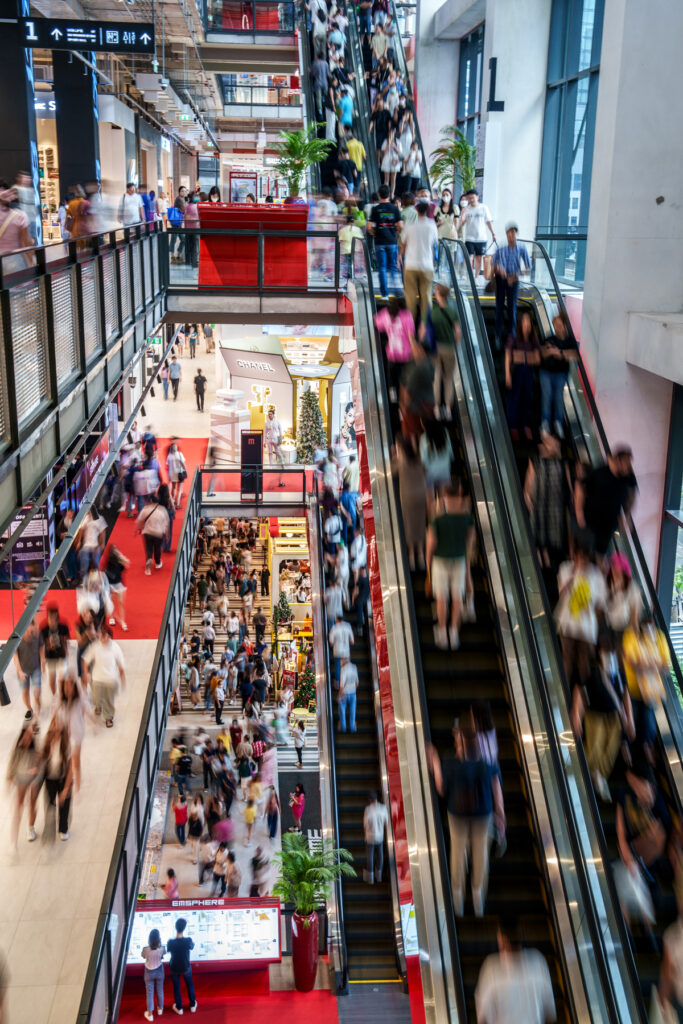
During the rebound consumption bump from May to July in Japan, outlet malls in suburban areas were the first to recover while retailers and department stores in major city centers continued to struggle. Safe access by car (less contact with strangers), convenience (one stop shopping) and outdoor air were the main reasons people chose local outlet malls. There was still psychological hesitation in general to visit crowded areas.
This forced localization created by the COVID virus may be only temporal, and may last a few years in the worse-case scenario. however, it seems to have chances to continue with the rise of Remote Working. Japan was somewhat slow to adapt this new way of working.
The sudden reality of the pandemic caused a drastic change of mind, and luckily both companies and employees realized it was not such a bad idea. Recent study shows how some Japanese are already starting to look for houses with a workspace in the suburbs rather than apartments in the city centers. Those newcomers in the suburbs have had a lot of new ideas - born from social media and actual experiences. Perhaps we could try to understand what we need to change to reply to their aspirations.
For example, Malls will probably need to upgrade to satisfy the new mixture of visitors with a wide variety of demands.
Flexible spaces play an important role. Malls should consider planning multiple medium sized plazas instead of one grand plaza. In this way, malls could diversify ways and options to attract a wider variety of visitors with events, pop up stores, festivals, etc.
Tenant planning could be adapted as well. Retailers will no longer require large lease spaces because of e-commerce.
Moreover, Malls would need to enrich their public spaces, not only to differentiate them from others, but also to provide comfort, peace-of-mind for visitors to stay longer.
It might be interesting for malls to operate department stores like a corner space with seasonal tenants.
One thing for sure: popularity of technology will prompt malls to adjust and evolve its business format based on ever changing conditions.
[post_title] => TAKANORI TSUKIYASU.
[post_excerpt] =>
[post_status] => publish
[comment_status] => open
[ping_status] => open
[post_password] =>
[post_name] => taka-tsukiyasu
[to_ping] =>
[pinged] =>
[post_modified] => 2025-04-30 05:42:50
[post_modified_gmt] => 2025-04-30 05:42:50
[post_content_filtered] =>
[post_parent] => 0
[guid] => https://appraisalatpresent.com/?p=278
[menu_order] => 0
[post_type] => post
[post_mime_type] =>
[comment_count] => 0
[filter] => raw
)
[14] => WP_Post Object
(
[ID] => 236
[post_author] => 2
[post_date] => 2020-10-01 02:20:33
[post_date_gmt] => 2020-10-01 02:20:33
[post_content] => In these months, like many if not all, I have reflected on the consequences of what man has put in place to defend itself from (or to live together with) the virus which, in its invisibility is as harmful to man’s social life as it is to man himself.
If something so big is happening, and it involves the whole of humanity, the first thing to do is to analyze what seems inadequate or wrong today: an object in the house in which we are forced to live 24 hours a day; the organization of an office where sooner or later we will return to work or that we will leave instead; the reception areas of public services such as hospitals and stations, or of meeting places such as bars, restaurants, hotels, stadiums, etc.; cultural facilities, from museums to theatres and concert halls.
The other thing to do is to start a new project season that overcomes disciplinary barriers and involves all available acting parties (anthropologists, scientists, philosophers), with the awareness that this project’s design has to be born from the criticism – even radical and better if merciless – of the reality that we want to change, as well as from listening to society, to its needs and its difficulties. In this way, innovation and culture can meet again.
In fact, if the impact that the virus has produced on our personal life has been enormous, what it caused on our collective life has been even greater. In particular, the world of culture, exhibitions, concerts, theatres – which mainly lives on collective enjoyment, and on the relationship with the public – comes out devastated by the closure, before, and the "social distancing" now imposed by the response against the virus.
The first concerts and theatre performances, even if happened outdoors, have witnessed fruition in "solitary distancing", absolutely unacceptable (as, instead, the beauty of a cultural performance is to be found in participation). This increases the distance between actors and spectators and causes not only a decreased participation but also a growing disaffection of the audience.
The cultural productions, exhibitions, shows, concerts, festivals, of which Italy is very rich thanks to its history, have been upset by the rules that the fight against Covid-19 have imposed in terms of constraint both for those on the stage and for the audience. It is a question of money, of economies, but also of completely different ways of producing and participating in culture.
A great debate has begun, therefore, on what will happen in such an important part of the life of all communities, cities, and territories. What will happen to the great contemporary creativity? What will happen in the places of preservation of historical and artistic heritage? Is a general shift of cultural fruition (and production) to digital means credible? If we have a constant decrease of audience at the shows, and of visitors at museums and exhibitions, how will we make these activities sustainable? Which training system will or will have to support the cultural institutions with the new professional skills that are required? This debate raises so many questions and so many uncertainties, and we are getting short of time. Will we have enough time to give the right answers?
In Italy, the world of culture has mobilized. In order to "buy" time, the creation of a Culture Fund has been requested: a large national long-term loan guaranteed by the Italian State, useful to give more time to the cultural and creative institutions and companies, so that they could plan the new future, the "new normality", the new cultural project and the investments that will be necessary.
We do not know if the resources allocated by the Government will be sufficient, but they will certainly allow to attest to the needs and to understand the requirements of the Italian cultural system.
[post_title] => ANDREA CANCELLATO.
[post_excerpt] =>
[post_status] => publish
[comment_status] => open
[ping_status] => open
[post_password] =>
[post_name] => andrea-cancellato
[to_ping] =>
[pinged] =>
[post_modified] => 2025-04-30 05:51:15
[post_modified_gmt] => 2025-04-30 05:51:15
[post_content_filtered] =>
[post_parent] => 0
[guid] => https://appraisalatpresent.com/?p=236
[menu_order] => 0
[post_type] => post
[post_mime_type] =>
[comment_count] => 0
[filter] => raw
)
[15] => WP_Post Object
(
[ID] => 185
[post_author] => 2
[post_date] => 2020-10-01 02:25:01
[post_date_gmt] => 2020-10-01 02:25:01
[post_content] => After months of private isolation and careful 'care' I believe that, with the reopening of cultural places, we will have to pay attention to one theme above all: accessibility.
A museum - a theatre, a cinema, or even a library – should , first and foremost, be an empathetic, pleasant, welcoming place; a place that by its very nature is called to remove its own barriers (sensory, physical, cognitive but also cultural, emotional and economic), rather than creating new ones.
However, under the current circumstances and just beyond the emergency, even allowing visitors to feel comfortable and be an integral part of a cultural experience seems to have become a very complex operation (or at least more than usual).
The audience is experiencing a moment of deep trauma, and this should not be minimized – as it too often happens – since we are, indeed, still in the middle of a deeply harrowing experience. Accordingly, at least for what concerns the fields of art and culture, a return to any resemblance of ‘normality’ and relevance will require dealing with this trauma, and not avoiding it; integrating it and not relegating it or underestimating its impacts (even in the long term), seeing it as an unfortunate "parenthesis" far away in space and time.
Yet, while most cultural organizations now pay proper attention to crisis management and their own survival by looking at reopening and if, on the regulatory side, the technical guidelines for reopening are available, the task of designing each preparation procedure – besides health protocols – is essentially left to personal initiative and individual sensitivities. Notwithstanding with this, unfortunately, there is no previous literature on what we are experiencing, all the more so in the fields of art and culture. So how can we start structuring ad-hoc strategies for culture?
[carousel id="mz1"]
By communicating and offering: Security – creating spaces where people feel culturally, emotionally and physically secure, while transmitting the awareness of a person's discomfort or discomfort;
Reliability and transparency – providing as complete and accurate information as possible, in constant good faith;
Help and support – establishing and building new trust, a sense of security and hope while using past experiences, without rejecting them, to promote the recovery of the relationship between audiences, institutions, and between institutions and audience; acting as a facilitator with the aim to develop and share the experiences we have just lived ;
Collaboration and reciprocity: recognizing the relationship with the audience through a shared decision-making process. This means a process that can determine "what is best for the audience", before even considering what is best for the institutions;
By honoring the dignity of the individual, which means not only talking, but also listening – because our previous knowledge of the audience has been turned upside down, including the central one, of risk tolerance: in this sense the audience’s opinion replaces any opinion that we may have and as such must be heard and understood;
By unraveling and overcoming cultural stereotypes and prejudices, to offer innovative, responsive services; to observe, analyze and adapt the therapeutic value of traditional cultural connections and to incorporate them into new policies and processes that build, promote and support the community, including needs, values and opportunities;
Finally, in this new era, it is of fundamental importance to be truly inclusive for all members of our community.
In short, we need to re-engage the audience and rekindle its active participation, so that the same audience will help support and grow a new "offer", as this is the real priority.
Handling the "audience’s needs” should be our first goal now.
[post_title] => MASSIMILIANO ZANE.
[post_excerpt] =>
[post_status] => publish
[comment_status] => open
[ping_status] => open
[post_password] =>
[post_name] => massimiliano-zane
[to_ping] =>
[pinged] =>
[post_modified] => 2022-02-14 07:28:28
[post_modified_gmt] => 2022-02-14 07:28:28
[post_content_filtered] =>
[post_parent] => 0
[guid] => https://appraisalatpresent.com/?p=185
[menu_order] => 0
[post_type] => post
[post_mime_type] =>
[comment_count] => 0
[filter] => raw
)
[16] => WP_Post Object
(
[ID] => 580
[post_author] => 2
[post_date] => 2020-10-01 02:30:29
[post_date_gmt] => 2020-10-01 02:30:29
[post_content] => The Covid tsunami that has left everyone stunned now obliges a forced, fluid and unsure coexistence with the pandemic. The art world is a system built on relationships, encounters and events that suffer from the situation but reacts by adapting to the protean reality.
The first victims were the art fairs. After being all canceled , they quickly changed tune adapting to the new reality, and operate now in an online-offline situation. Soon after Art Basel, Frieze London – taking place between 9 and 16 October - offers an articulated program of Online Viewing Room,s OVR, and live visits to the exhibitions in the city galleries and exemplifies the hybrid current situation of the art market.
The very fast digitization was the most obvious aspect of the change: if the demands of art, especially contemporary, are a window to the future, so far the business methods have not been. Suddenly - in a a reality excluding physical contacts, whispered prices and crowded rooms - technology has forcefully entered the daily life of galleries, auction houses and collectors. It has been an epochal and necessary change: art, under pressure even before the pandemic, has in fact entered a new era. Even the most reluctant collectors have been forced to dialogue with new systems, buying online with transparent prices; online sales went from 10% in 2019 to 37% in 2020.
Hauser and Wirth, one of the most important galleries in the world, shows at Frieze a HWVR reconstruction of its large stand with works that are actually for sale, exploring the nebulous boundary between real and virtual worlds.
Museums without visitors have increased their online offer a hundredfold, often reviewing itineraries and didactic, and are preparing for articulated futures. Interest in art has increased globally in domestic mode, but despite this, 2020 was a terrible year for galleries. The global turnover, calculated for 2019 at around sixty-four billion dollars, suffered a loss of around 36%, with great losses for medium-sized galleries and enormous difficulties for small ones, many of which will not survive.
This strengthens established artists and leaves fewer opportunities for the exposure of young artists in whom collectors are less likely to invest. In the absence of exhibitions in galleries and fairs, Instagram and other social media, where many have published their works and found collectors, especially among millennial collectors for whom surfing the web is routine, have helped the visibility of younger artists.
[carousel id="mo1"]Local situations are re-evaluated as, for example, at Gallery Weekends in cities, which do not involve demanding travel and allow greater depth in the gallery / collector / artist interaction, while integrating the return to a more local dimension to a the wider reach provided by the digital component.
Thanks to online auctions, battleships like Sotheby's, Christie's and Phillips have managed to keep the bar straight. Auction sales felt49% in the first half of the year, yet Christie's, Sotheby's and Phillips' online-only auction sales increased more than five fold from 2019, to $ 370 million, with curious inclusions such as Stan, the Tyrannosaurus Rex skeleton, sold by Christie's for $ 31.8 million in the Impressionist and Modern Art “20th Century” auction that fetched $ 340,851,500.
The spectacularization together with the possibility to remotely attend this kind of auctions haveclearly found a global audience, even if the personal contact is lacking for anyone. As a famous gallerist told me ”if it were up to me I would still go and deliver the paintings in person, taking them in the car”.
In this roller coaster we forget the primary function of art: to nourish the spirit.
On October 14, 2020 the long-awaited exhibition “The Torlonia Marbles. Collecting Masterpieces” will be open to the public at Musei Capitolini in Rome. Ninety-two Greek and Roman works have been selected from the marbles belonging to the most prestigious private collection of ancient sculptures in the world.
A unique opportunity to remember how handing down art of every era is not just a pleasure for sophisticated collectors but a necessity for the knowledge of generations, even today looking to the future, whatever it may be.
[carousel id="mo3"]
[post_title] => MICHELA MORO.
[post_excerpt] =>
[post_status] => publish
[comment_status] => open
[ping_status] => open
[post_password] =>
[post_name] => michela-moro
[to_ping] =>
[pinged] =>
[post_modified] => 2025-04-30 05:52:41
[post_modified_gmt] => 2025-04-30 05:52:41
[post_content_filtered] =>
[post_parent] => 0
[guid] => https://appraisalatpresent.com/?p=580
[menu_order] => 0
[post_type] => post
[post_mime_type] =>
[comment_count] => 0
[filter] => raw
)
[17] => WP_Post Object
(
[ID] => 177
[post_author] => 2
[post_date] => 2020-10-01 02:40:37
[post_date_gmt] => 2020-10-01 02:40:37
[post_content] => I operate with my partner a feature film production company that was on a remote location ready to begin filming when the pandemic hit.
Totally financed, totally cast and crewed. We had to send everyone home.
As certain industries re-open, it is hard for us yet to imagine collecting twenty to thirty people under hot lights on a film set during Covid.
The Canadian government in conjunction with the screen industry have created safe guidelines for production. They’re sensible and onerous and add significant costs to production.
Living with this uncertainty has prompted us instead to concentrate on financing other films and developing feature film scripts which can be done by email and zoom. In fact, the rate of development has been very exciting on many of our projects, including those by some writers who normally find it hard to concentrate; in this case the isolation has worked to accelerate the creative process.
We have also had success with some financing aspects as we find financiers are eager to imagine the day when actual production can re-commence.
That being said, having a good script ready to go is one thing. But it isn’t a movie unless it is filmed – and for the moment we aren’t sure when we will be able to do that, not to mention where the final films will be sold and seen with festivals and cinemas going digital. Part of our motivational incentive been the idea of gathering people for a collective creative experience.
How much of that process will be compromised?
The film business in Canada has benefited from government programs for financing film projects, both nationally and regionally. As I wrote above, these instruments have been re-tooled during the pandemic to offer additional development support. It is challenging to envisage how to pivot safely to film production (shooting) at the moment.
At the same time, the situation has spawned a new kind of creative energy and introspection about what needs to be made and seen in the post pandemic world.
As a communicator I’m hopeful that this moment, no matter how frightening or uncertain, has the potential to bring people together through the universal.
[post_title] => JENNIFER JONAS.
[post_excerpt] =>
[post_status] => publish
[comment_status] => open
[ping_status] => open
[post_password] =>
[post_name] => jennifer-jonas
[to_ping] =>
[pinged] =>
[post_modified] => 2025-04-30 05:57:56
[post_modified_gmt] => 2025-04-30 05:57:56
[post_content_filtered] =>
[post_parent] => 0
[guid] => https://appraisalatpresent.com/?p=177
[menu_order] => 0
[post_type] => post
[post_mime_type] =>
[comment_count] => 0
[filter] => raw
)
[18] => WP_Post Object
(
[ID] => 589
[post_author] => 2
[post_date] => 2020-10-01 02:45:50
[post_date_gmt] => 2020-10-01 02:45:50
[post_content] => The situation with COVID has changed time by time from this February till now, hugely affecting our personal and social life.
During this period, I wondered one thing. “What is “mask” all about?”
It has been said that Japanese people are great lover of “masks”. Not only in the autumn and the winter when flu spread every year, but also in the spring when many people suffer from hay fever. In the over-packed commuter trains and in the dried up airplanes, we could also notice a lot of people wearing masks. Long before COVID situation occurred.
We hear that those who wear masks in other countries are really hospitalized patients, so I presume such behavior by Japanese people - who regularly and spontaneously wears masks in the town - has looked quite odd to non-Japanese people. Japanese people like to wear mask “to protect themselves”. Of course, we wear mask when we get flu, cough and sneeze as a way not to transmit diseases to others. But when healthy people wear mask, it is in order to avoid being affected by something unknown from other people.
It may have been a subconscious behavior to secure distance from others in the urban society where we cannot help contacting with others closely and densely”
As soon as COVID crisis occurred, masks ran out in Japan. Most of masks in Japan had been supplied by China, and China suffered from COVID first. They could not supply mask to Japan untill March. Previous prime minister Abe, who left the position in September - right after he established the record as the longest prime minister in Japanese governmental history - made a lot of mistakes in COVID measures, and the biggest one was what was called “Abeno Mask”. The mistake consisted in supplying 2 masks to each household - not to each individual - and the masks were made of gauze, not disposable but washable, to be reused many times. He wore one of those masks himself. It was oddly small, barely covering his nose and mouth, but not chin. He utilized several million yen from the budget to realize this plan that, however, did not last for a long time. When Abeno Masks were finally delivered, masks had already been supplied in the market.
Due to the COVID situation, masks seem to have overwhelmingly mushroomed all over the world, covering everybody’s mouth. At least, in Tokyo, it became a tool without which we cannot spend ordinary life. When we forget to wear it and go out, we will be pointed out and be scolded, and will not be allowed to enter into shops, restaurants, and of course, theaters. At the moment, in October, Japanese theaters are mostly allowed to sell tickets for full capacty, upon the condition that all audience wear masks and will not yell, cry, call ”Bravo” “Encore” and so on. It is acknowledged audience members will not transmit the virus to each other if only they all wear masks.
Mask became the strongest tool not to transmit and not to be transmitted. But it is rather weird to see patrons - refraining themselves from the joy of talking each other in the auditorium or in the foyer - further inhibit themselves avoiding to express the joy, while quietly watches the stage. An auditorium populated by an all masked audience will be a reality, until the vaccine will be found. But what about after the vaccine? Can we say this style would not become a 'new normal'- standard and we would return to the old ways?
This summer, I produced a small theatre production. Small budget, but with 43 cast members. So, we found it rather difficult to secure social distance in the theater rehearsal studio and dressing rooms. (We decided to go ahead with this production suddenly. therefore, we gathered staffs on a rather short notice. The costume company we engaged accepted our order with pleasure, saying that it had been a while since they last worked for theater. While they had no work, they organized in order to make masks that actors, singers and dancers could wear during the rehearsal and breath comfortably. “But we are happier to make costumes rather than make masks, no matter how small is the budget.” they said. During the production, there was a scene in which villagers gather meaninglessly. They wear “Abeno Mask”, and of course two of those masks were from my house...)
When theaters reopened, the number of the infected in Tokyo had rapidly increased. Each time an infected person was identified in the company, the show would need to be immediately cancelled, making it difficult to reopen.
In the theater, the transmission among patrons could be mostly avoided when all wear masks. Infection between performer and audience could be avoided by securing sufficient distance between the stage and the seats, and by separating them with transparent sheets or acrylic board if necessary.
The main problem remain the infection among performers. It is a global controversy whether performers should wear masks or face shields during the performance, and if the artistic expression would be possible while securing social distance.
That may be possible in solo performance, drama recitals,etc. Yet, in the majority of physical expressions, it is almost impossible to secure social distance while achieving artistic quality. The director is not be able to conduct sufficient rehearsal with actors wearing masks.
Notwithstanding with this - in order to secure the performance under the Corona emergency, prescriptive regulations - say for example: "when 2 people wearing masks, distance themselves by 2 meters and talk for less than 15 minutes and still become infected, people around them will not regarded as close contact person" - have been gradually implemented in public health centers and productions.
Consequently, musical and dance rehearsals are conducted with performers all wearing masks. Direction and choreography need to be conscious of their breathing well with masks. Obviously, while this this allows to secure the performance as well as to nullify staffs and casts efforts, it is also clear that performers wearing masks - with their expression hardly visible - would not be able to communicate their creativity in the same way.
The director of my summer production - who is our theater artistic director - told to performers: ”Actors will be on stage together without mask, spitting and scattering sweat to each other. This is something only a group sharing a common destiny could do. So, if you are not ready to be in such group, maybe it is better not to take part in the show this time.”. He then left the decision to each actor.
“A group sharing common destiny” would typically be a “family”. Most people probably do not wear mask at home. Even if each family member could be infect going outside and return home. (in fact, it seems, in Japan, most of the group infections take place at home or while dining together.)
It might be a time for us to ask ourselves who would be the people we choose to be together without wearing a mask. In other words, who we would accept in a group that shares a common destiny.
Securing social distance will harm direct physical contact which leads to harm our activity of making new lives. We have to take off masks to eat, to drink and to kiss a real kiss.
Taking off mask seems to be a test to risk a life in order to live a real life.
[post_title] => MINAKO NAITO.
[post_excerpt] =>
[post_status] => publish
[comment_status] => open
[ping_status] => open
[post_password] =>
[post_name] => minako-naito
[to_ping] =>
[pinged] =>
[post_modified] => 2025-04-30 06:05:48
[post_modified_gmt] => 2025-04-30 06:05:48
[post_content_filtered] =>
[post_parent] => 0
[guid] => https://appraisalatpresent.com/?p=589
[menu_order] => 0
[post_type] => post
[post_mime_type] =>
[comment_count] => 0
[filter] => raw
)
[19] => WP_Post Object
(
[ID] => 158
[post_author] => 2
[post_date] => 2020-10-01 02:50:54
[post_date_gmt] => 2020-10-01 02:50:54
[post_content] => [carousel id="ER1"]For some of us the virus arrived in multiple locations simultaneously. In mid-March we were already very concerned for our family in northern Italy even as I was preparing a new production in North Carolina and my partner was home at work in New York. Although things were still calm where I was, events in NY were moving quickly and it was becoming clear that our production would never be seen by an audience. I watched from afar as stores closed one by one and Broadway completely shut down. Within days the same had happened to us in North Carolina. It wasn’t long before each new day brought a flood of cancellations of future productions, and soon all 2020 employment had disappeared.
The first logical and emotional reaction was to reach out to colleagues, both recent and from years past. Checking to see how they were weathering the storm, did they have any work left, how were the Covid numbers in their states? It was soothing to re-connect with old friends and to know that we were all in the same situation; with one huge difference.
As opposed to most countries, the US did not adopt a centralized federal response. Rather, we were left to the judgement of each individual state governors ( some highly influenced by our current president, others moving ahead solely based on science ) We are fortunate to live in New York where our government took a hard line, a tight shutdown, and even now we are in the midst of one of the slowest and most precise re-openings in the country. Many have left the city for vacation homes, family homes, and other safe havens.
I think this has added to our Virus stress in the US. Already in the middle of a contentious (toxic) election season, many of us believe that the past 4 years have done so much damage to our country, at home and abroad. We now sit at home and watch the evening news full of more self-inflicted wounds.
The Performing Arts Community is at a very difficult crossroad. We are trying to keep our creative juices flowing, organizing online fundraisers, actors and musicians from Broadway productions joining together to raise money to help the victims of Covid. I am currently working on one such event with a cast of CATS who have not been together in 35 years. It is rewarding and exciting, but for an art form that is all about collaboration, 45 singers recording from their individual homes will never replace all of us joined together in a theater.
When will that happen? I’d like to be optimistic, but the reality is not pleasant. The finances of theater, opera and symphonies cannot be sustained with 25% capacity, not any more than a restaurant could survive with those numbers. How do we separate actors, musicians, those who work backstage? It will surely be a slow arduous task, small chamber groups playing at a distance, a singer giving a solo concert, a small musical with 2 or 3 actors.
The challenges are enormous, so for now we can only wait for solutions, and garden, paint, chat with the birds in the yard, prepare amazing meals, appreciate an evening at a restaurant as if it is the first time, explore Maine and Massachusetts instead of Europe and Asia.
We prepare for the time we can go back to “normal” and hope that progress can be made to bring that day closer.
[post_title] => EDWARD G. ROBINSON.
[post_excerpt] =>
[post_status] => publish
[comment_status] => open
[ping_status] => open
[post_password] =>
[post_name] => edward-g-robinson
[to_ping] =>
[pinged] =>
[post_modified] => 2025-04-30 06:07:22
[post_modified_gmt] => 2025-04-30 06:07:22
[post_content_filtered] =>
[post_parent] => 0
[guid] => https://appraisalatpresent.com/?p=158
[menu_order] => 0
[post_type] => post
[post_mime_type] =>
[comment_count] => 0
[filter] => raw
)
[20] => WP_Post Object
(
[ID] => 265
[post_author] => 2
[post_date] => 2020-10-01 02:55:25
[post_date_gmt] => 2020-10-01 02:55:25
[post_content] => Made in Cloister is a project born with the aim of reconverting an abandoned cloister and use it as an exhibition and performative arts center in constant dialogue with the neighborhood.
The history of the place and its location have defined the re-conversion project. The idea is to recover a part of the cultural heritage of the City of Naples and revive its traditional craftsmanship, renewing it with a contemporary zest through the realization of projects by international artists and designers. This also means involving the territory and the community, where this project takes place, with the aim of triggering a meaningful process of urban regeneration through art.
We operate in an area of the so-called "urban outskirts". Our mission is to explore the potential role of art in the regeneration of cities, starting from the strong belief that art can be an engine and a catalyst in the development and well-being of suburban areas.
The lock-down imposed by the pandemic blocked the ‘typical’ programming and activities of the Foundation. Nevertheless, we did not stop but, rather, we concentrated our efforts at programming the “Refettorio Made in Cloister", a soup-kitchen, and one of the activities in support of the neighboring area.
Every Monday, the Foundation receives food surplus from supermarkets, and it invites famous chefs to cook meals for those most in need.
It was during the lockdown that the number of destitute people increased. For this reason, the Foundation stepped up the activity of the canteen to cook and distribute meals twice and even three times a week.
We therefore focused on supporting and listening to our nearest community. This was an important move, as it took us closer to the people living in the neighborhood, who in turn changed their views towards the Foundation. Today, they feel that it is an organization closer to their needs rather than something distant.
This unprecedented situation forced us to pause and reflect, and it obviously affected our cultural and artistic activities. But it was from this experience and from the lockdown that the new Sergio Fermariello's exhibition project came from. It is a site-specific installation, scheduled for this autumn, of which the central theme is ‘listening’.
The title of the exhibition is precisely (H)EAR: listening to oneself, to other people’s needs, and to the messages of our land, as this is what the lockdown has left us.
[post_title] => ROSA ALBA IMPRONTA.
[post_excerpt] =>
[post_status] => publish
[comment_status] => open
[ping_status] => open
[post_password] =>
[post_name] => rosa-alba-impronta
[to_ping] =>
[pinged] =>
[post_modified] => 2021-12-09 02:26:55
[post_modified_gmt] => 2021-12-09 02:26:55
[post_content_filtered] =>
[post_parent] => 0
[guid] => https://appraisalatpresent.com/?p=265
[menu_order] => 0
[post_type] => post
[post_mime_type] =>
[comment_count] => 0
[filter] => raw
)
[21] => WP_Post Object
(
[ID] => 133
[post_author] => 2
[post_date] => 2020-10-01 03:00:29
[post_date_gmt] => 2020-10-01 03:00:29
[post_content] => Essentiality, frugality, authenticity, simplicity. Rediscovery of the value of human relationships, the bond with the planet, and the importance of preserving nature. The list of things that we have (re)discovered in the face of the Covid tragedy is a long one.
With a new awareness, we find ourselves (re)considering some fundamental components of civil life, of our socioeconomic systems, of the way we relate to others. In this context, even the most natural gestures such as eating acquire a different meaning, both in the individual -consumer and in the commercial- business perspective
Throughout the world, the restaurants and gastronomy industry has been one of the sectors most affected by the pandemic, together with the production chain and the economic ecosystem depending from it.
Human relations and conviviality, deep values linked to food and its consumption, have been strongly affected by the rules of social distancing. The new status quo has led us to look at our lifestyle with new eyes and to ask ourselves whether some of the habits, products and services that characterized our life before still made sense afterward.
And so, how can we re-interpret our relationship with food, agriculture and the environment from the second half of 2020 onward?
The pandemic has shifted our point of view: from inside the plate – or, at most, its immediate surroundings– to the very rich immaterial baggage/ that food brings with it- result not only of history and culture but also of social, environmental, and ethical responsibility linked to its production and consumption.
The issue of global nutrition has finally taken on a new depth in view of the climate, environmental and social emergency we are experiencing. While the business world is wondering what the social mission of companies should be – as demonstrated by the increase of corporations that acquire the status of B Corporation –health and well-being take on new relevance., at all levels of society.
The awareness global happiness is directly connected with the relationship we establish with food and with the relationship food has with the environment, opens the way for a new sustainable gastronomy that contemplates the impact of food production and consumption throughout the ecosystem as well as the sustainable production of "wholesome" food as a force for the solution of the climate problem, - rather than its accelerator.
If, in fact, we can define sustainable an advancement "aimed to cater to the needs of the current generation without compromising the ability of future generations to meet their own needs", recognizing that food has a profound impact on the overall balance of the planet and on people's health – as well as placing these two aspects in a direct and interdependent relationship - – means to work concretely to achieve a greater and more widespread state of well-being.
food shapes its identity, - from production and consumption models to the overall user experience - connecting wholesomeness to a broad concept of sustainability that ties agricultural production and domestic consumption with a single common thread the one leading to happiness and collective well-being through greater respect for the planet and its inhabitants.
Looking at the future.
[post_title] => CHIARA PATITUCCI.
[post_excerpt] =>
[post_status] => publish
[comment_status] => open
[ping_status] => open
[post_password] =>
[post_name] => chiara-patitucci
[to_ping] =>
[pinged] =>
[post_modified] => 2025-04-30 06:11:00
[post_modified_gmt] => 2025-04-30 06:11:00
[post_content_filtered] =>
[post_parent] => 0
[guid] => https://appraisalatpresent.com/?p=133
[menu_order] => 0
[post_type] => post
[post_mime_type] =>
[comment_count] => 0
[filter] => raw
)
[22] => WP_Post Object
(
[ID] => 426
[post_author] => 2
[post_date] => 2020-10-01 03:10:51
[post_date_gmt] => 2020-10-01 03:10:51
[post_content] => To guarantee the survival of the human race, this ‘suspended’ time forced us to a compulsory isolation and social-distancing, gifting us with a precious element: time to reflect. Man was given the opportunity to ponder on what he really wanted for himself and for the environment that has been hosting him.
It is necessary, and indispensable, to investigate the relationship between man and Nature. What do we mean, today, by the words ‘Nature’ and ‘natural’? Are these notions now empty and fossilized or, on the contrary, still endowed with a meaning that we need to investigate further? To what extent can man understand and experience Nature as a preliminary condition for his existence?
Through planning and technical operations, man overrides his rootedness to the earth. Technology is the way in which man interacts with the natural order and builds the human one upon it.
the limit of this view is that technology dominates nature or even tends to replace it.
How can we react to this tendency that dehumanizes our lives without fulfilling us?
The individual and the community will have to rethink and deeply redefine society and professions. This will be an increasingly urgent necessity, possibly satisfied through a micro-economic model -‘economy of proximity’- , where individual abilities could be elevated.
It will become more and more important to know who physically produced a raw material , on which 'terroir' it has been planted, whether its production has safeguarded the environment and resulted in limed waste.
Surely, the most immediate progress will be visible within the large-scale retail chain stores. that may even become, in the not too far future, places for research.
large-scale retail chain stores should be redesigned as places of aesthetic research reflecting manual skills and craftsmanship that identify a specific territory and become themselves micro circular economies.
I hope Zarathustra words will become, an invitation for reflection to a new mankind:
“I beseech you, my brothers, remain faithful to the earth, and do not believe those who speak to you of otherworldly hopes!”
[post_title] => CINZIA MANCINI.
[post_excerpt] =>
[post_status] => publish
[comment_status] => open
[ping_status] => open
[post_password] =>
[post_name] => cinzia-mancini
[to_ping] =>
[pinged] =>
[post_modified] => 2025-04-30 06:17:38
[post_modified_gmt] => 2025-04-30 06:17:38
[post_content_filtered] =>
[post_parent] => 0
[guid] => https://appraisalatpresent.com/?p=426
[menu_order] => 0
[post_type] => post
[post_mime_type] =>
[comment_count] => 0
[filter] => raw
)
[23] => WP_Post Object
(
[ID] => 197
[post_author] => 2
[post_date] => 2020-10-01 03:20:40
[post_date_gmt] => 2020-10-01 03:20:40
[post_content] => Politics and the pandemic are likely to accelerate the much-discussed income inequality gap.
Education as a constant has been disrupted in both developed and developing countries and the pandemic is highlighting the digital gap within and across societies. Technology is embedded in economies and everyday life, yet it remains out of reach for several segments of society when accessing formal education.
From a longer-term perspective, political paralysis - overhauling government policies, reforming and shaping accessibility to education systems is likely to have a negative impact on future productivity and growth outcomes unless education delivery methods are revamped.
Some developed countries, with suitable technological conditions and capabilities are struggling to deliver educational output in a cohesive manner across the public and private sector institutions.
In developing countries, technology infrastructure shortcomings: hardware and bandwidth at national level are critical to support digital access. At household level, affordability of technology tools and personal space for students to devote time to learning, unfortunately is in short supply in many parts of the world today. News coverage of Covid-19 impact on school closures in remote parts of Zimbabwe hit home the disparate conditions - students crowd around a battery-operated transistor radio to listen to government broadcast English language lessons.
Interruption in delivering formal education and differing capacities in facilitating technology enabled remote learning tools is very likely to have profound impact on nurturing human capital. In a globalized world, the current unsettling environment could potentially widen the societal, inter generational, knowledge and skills gap. The potential impact on less developed countries is likely to be far reaching. Due to lack of a formal learning environment, children are likely to be pulled out of school and absorbed into the informal economy to support the family network.
In an era of digital ‘creative disruption’, governments in partnership with organisations and entrepreneurs should leverage the unforeseen opportunity presented by the pandemic – re-engineer the current educational methods, systems, and techniques to deliver relevant education, skills, and training. A collaborative approach is required to formulate appropriate policies to enhance livelihood outcomes by narrowing the education and digital gaps.
I pen this note by extrapolating from personal experience. During my distance learning journey over the past 4- 5 years at a reputable UK university, there have been no enhancements to the digital learning tools and methods, especially when interacting with lecturers and fellow students, spread far and wide from California to Kabul. Over the past few months, conducting desk-based research, collaborating with institutions and organizations in Nepal also provided an insight into the digital technology challenges facing developing nations.
[post_title] => NEENA BIRDEE.
[post_excerpt] =>
[post_status] => publish
[comment_status] => open
[ping_status] => open
[post_password] =>
[post_name] => neena-birdee
[to_ping] =>
[pinged] =>
[post_modified] => 2025-04-30 06:24:44
[post_modified_gmt] => 2025-04-30 06:24:44
[post_content_filtered] =>
[post_parent] => 0
[guid] => https://appraisalatpresent.com/?p=197
[menu_order] => 0
[post_type] => post
[post_mime_type] =>
[comment_count] => 0
[filter] => raw
)
[24] => WP_Post Object
(
[ID] => 276
[post_author] => 2
[post_date] => 2020-10-01 03:30:41
[post_date_gmt] => 2020-10-01 03:30:41
[post_content] => I have recently published an illustrated book for young children and worked at the development of online and offline art laboratories .
Working on these projects this year – considering what has been and is still happening – has definitely expanded my academic experience as well as deepened the understanding of schools and new parents.
As evident from these months of lockdown, education is a topic that effects the daily routine of anyone around the globe.
While schools have remained closed due to the virus, parents panicked because of the sudden lack of infrastructures that could contain and entertain the new generation.
Most of the families, pupils and students have been ‘put on-hold’ due to the initial semester’s uncertainty, and most of the education institutes with reliable internet access have rushed to digitize their learning materials.
Accordingly, articles on well-known online magazines published lists of tools and recommendations that could optimize the remote learning experience for instructors and students, as well as for organizations supporting education in a race against time meant to improve digital literacy.
This digitization spree works, but it has its limitations. It seems that the ‘digital natives’ – this is how we (older) call the young generation - are not so much into screen-based learning, at least not in the way we were expecting.
The copycat of traditional systems into pixel doesn’t seem to look appealing to students who complain about the way the new classes have taken shape.
Collaborating with pupils, I collected their voices and feelings during this peculiar time: some of them were energized by seeing their friends on the screen, and yet they couldn’t bear with the one-hour-long lesson on their devices.
As adults, we should wake up and consider that in order to innovate education, we need to develop a series of alternative models.
The forced adoption of digital tools is not sufficient to deal with the changes occurring in our world. To guarantee innovation and keep up with what is happening now, we need cultural and talent-related diversity.
Can we guarantee diversity when educators share the same academic background? How can we assure innovation without trans-disciplinary exchanges?
The debate about the upcoming semester has started with discussions on new desks, masks or ‘artificial devices’- extensions of this unexpected reality. Yet, it is the content, or better how we spend time sharing experiences and knowledge with our pupils, that should be at the center of these public debates.
the philosopher Ivan Illich's in his book book ‘De-schooling society’ (1971) writes “Most learning is not the result of instruction. It is rather the result of unhampered participation in a meaningful setting. Most people learn best by being "with it," yet school makes them identify their personal, cognitive growth with elaborate planning and manipulation.”
There is not a secret formula on how to initiate a better educational approach to life
Since early age, schools should aim at initiating and favoring the expression of our nature, emotion and background.
I believe that the human body is at the center of the learning process, and art is a tool to explore and reveal the self to ourselves and to others.
For example, the gesture of painting is not about reproducing the master, is about achieving an inner equilibrium.
the context where we all are living now pretty much resembles the ‘ moist media’ - as sum of bits, atoms, neutrons and genes – described by British artist and theorist Roy Ascott.
By being aware of it, we can help structuring the idea of our self and become active contributors to the society.
[post_title] => TOMMASO MAGGIO.
[post_excerpt] =>
[post_status] => publish
[comment_status] => open
[ping_status] => open
[post_password] =>
[post_name] => tommaso-maggio
[to_ping] =>
[pinged] =>
[post_modified] => 2021-12-09 02:27:16
[post_modified_gmt] => 2021-12-09 02:27:16
[post_content_filtered] =>
[post_parent] => 0
[guid] => https://appraisalatpresent.com/?p=276
[menu_order] => 0
[post_type] => post
[post_mime_type] =>
[comment_count] => 0
[filter] => raw
)
[25] => WP_Post Object
(
[ID] => 180
[post_author] => 2
[post_date] => 2020-10-01 03:50:56
[post_date_gmt] => 2020-10-01 03:50:56
[post_content] => Crisis and Trauma Natural disasters, wars and other mass traumas are known to lead to significant increases in widespread psychological distress due to the often interrelated effects of isolation, stress, substance abuse and economic anxiety among other factors. These have led to dramatic spikes in domestic (intimate partner) violence and depression resulting from Covid-19.
Thank Goodness we’re all Online. A third or more of the world’s population is currently or has recently been under “lockdown,” so it is fortunate that most have the internet (59% of the world population, 80-95% in the West) to keep us “occupied,” both in the sense of work as well as keeping us entertained and connected.
But while smartphones and social media appear to be a lifeline to many, there is a creeping realization that they are not the benign force their creators may have originally intended. These addiction machines exploit many of the same elements underlying the “gamification” of consumers, methodically tapping into natural yearnings and human vulnerabilities.
Pleasure Seeking and Cuddles. Users get hooked on social validation, instant gratification, unpredictability and the anticipation of variable rewards through exactly the same chemical loops as gambling and cocaine, rewiring the brain to keep hunting compulsively for more more more. A former president of Facebook admitted that it exploited a “vulnerability in human psychology” with activity generating “a little dopamine hit”. Even back in 2012, Twitter was “harder to resist than cigarettes and alcohol.” Now stir in the “love hormone” oxytocin, released in as little as 10 minutes on social media, and you have an irresistible cocktail.
But the key is that if they are hooked, they are generating more data.
[carousel id="KL1"]
It’s not the data. Netflix docu-drama The Social Dilemmahighlighted that it’s not the data per se that is sold, but the “slight, imperceptible change in your own behaviour and perception... changing what you do, how you think, who you are” through algorithms processing data willingly generated in return for cat videos, Kardashian posts, sourdough recipes and anything else that you are looking for.
Those last few words are the key - influencing what users choose to look for is where the real money is made. All your clicks, likes, watched videos, posts, searches, purchases and everything else in your digital lives ultimately lead to ads uniquely targeted to you, your interests and your prejudices. Artificialintelligence continually improves those algorithms to generate ever more perfectly timed and profitable ads.
Is it alive? Organism-like properties. One definition of life revolves around the idea of autopoiesis, “living systems, which are alive and maintain themselves metabolically whether they succeed in reproduction or not.” Gaia, the Ancient Greek personification of Earth, is considered to show organism-like properties. Perhaps today’s internet platforms should, too?
The Parasites. Is Facebook like Toxoplasma gondii? The parasite which starts in cat feces, migrates into rats’ brains, where it alters its chemistry including releasing higher levels of dopamine (yes, dopamine again), leading them to be sexually aroused by the smell of cats’ urine and hence rather fearless. This inevitably leads to their deaths, and continuing the cycle with new cats. In humans, one study found higher suicide risk in infected women. Others showed increased entrepreneurship (dopamine fearlessness?) as well as more outgoing and warmhearted behaviour (love hormone?)
And maybe Google is like the Castrator Barnacle, which enters a host crab and takes control by sending chemical signals to its brain to care for the barnacle larvae as its own. Scarier still, if the crab is male, its gonads shrink, it grows a larger abdomen to carry and care for the larvae and even does the mating dance of a female ie “parasitic castration.”
The biggest hosts. Forget mind-controlled crabs - it seems like the biggest parasitic hosts are every one of us.
But unlike the poor crabs and rats in these examples, we can reverse the effect on ourselves and society at large. Though “companies like Facebook will continue to do everything they can to keep your eyes glued to the screen as often as possible... using algorithms to leverage our dopamine-driven reward circuitry”, mindful use of technology is still possible for the forewarned.
[post_title] => KA-MING LIM.
[post_excerpt] =>
[post_status] => publish
[comment_status] => open
[ping_status] => open
[post_password] =>
[post_name] => ka-ming-lim
[to_ping] =>
[pinged] =>
[post_modified] => 2021-12-09 02:27:33
[post_modified_gmt] => 2021-12-09 02:27:33
[post_content_filtered] =>
[post_parent] => 0
[guid] => https://appraisalatpresent.com/?p=180
[menu_order] => 0
[post_type] => post
[post_mime_type] =>
[comment_count] => 0
[filter] => raw
)
[26] => WP_Post Object
(
[ID] => 147
[post_author] => 2
[post_date] => 2020-10-01 03:40:59
[post_date_gmt] => 2020-10-01 03:40:59
[post_content] => I’d like to think that those of us in Higher Education here in the United States felt the tremors of the pandemic a little bit earlier. Many of our institutions have a high percentage of international students and alumni in our ranks. It’s not improbable then, that we didn’t hear the anecdotal or see on social media that our colleagues and their families were quarantined or ill or incommunicado… and that was at the end of 2019.
And so, the Spring 2020 semester began in late January and there was already tension in the air. Tensions continued to mount as word of the virus along with contagion and quarantine moved from Asia to Europe, and to Italy especially, and finally reached the shores of New York. Nevertheless, work continued, and plans were made for the usual semester’s worth of academic events and end of term activities – all with the caution that this might shut down at any minute.
Among those plans was an early March conference in Tulsa, Oklahoma.
At week’s end, I flew home with 9 fellow passengers; the self-quarantining had begun. A week later, the Institute announced it was going remote immediately for the remainder of the semester.
Other schools and departments at my Institute may have scrambled at that point.
But Interior Design did not. And Architecture did not. Our training is to solve problems, to design better solutions, solutions that consider the present and the future and their previous manifestations. Solutions that inherently take into account human interaction.
When people talk about ‘online learning’ as the catch-all moniker for education in a pandemic, I bristle. That’s not what we do. Our pedagogy is based in studio culture and depends on the interaction between student and critic. It is not online learning with a student at a computer monitor at whatever time suits her best working independently with no critical interaction. What we do is ‘remote teaching and learning’ where we as critics are very much in real time dialogue with students and their work.
Some of us in this profession have been working remotely for decades; e.g., with clients in London, bankers in New York, and structural engineers in Los Angeles for a project in Tokyo. Therefore, today, we can take those exercises from our practice, and along with the ever more sophisticated and intuitive software, now cloud based for real-time access anywhere, and programs like Zoom and Miro and Milanote that have made our work easier – and turn those 6am or 10pm meetings into more productive classes. We can still meet face to face with our clients, now our students, and review the work as well as have group discussion and engage in constructive critique.
Most importantly in the current situation – and the most eye-opening obvious lesson to learn from this - we are able to expand the circle of critics and jurors we invite into our studios: from our local cohort of extraordinary talent to the farthest reaches of our extended networks. A colleague and I were invited to sit on reviews in New Delhi in June. Another review had critics from London, Istanbul, Berlin, Philadelphia, and San Luis Obispo. The benefit to students is immeasurable – to have their work reviewed and critiqued by a global panel of academics and professionals not only enhances the educational experience but simultaneously in this remote mode still allows for the interpersonal dialogue.
What is to be learned? My take is the world that we occupy - large and expansive - can suddenly become small and intimate. Conversely, the intimate spaces that we occupy with family and loved ones are now filled with the voices of strangers. Our public spaces are now zoned and distanced to make them private and our private spaces have become so active and dynamic due to our being closed and quarantined. The individual view expands from the personal to the global.
Again, our training is to solve problems and design better solutions that consider the present and the future relative to their previous manifestations. We will design the new normal through solutions taking into account our evolving complex human interactions.
picture credits: "Airocean World Map", R. Buckminster Fuller and Shoji Sadao, 1954
[post_title] => DAVID C. C. FOLEY.
[post_excerpt] =>
[post_status] => publish
[comment_status] => open
[ping_status] => open
[post_password] =>
[post_name] => david-c-c-foley
[to_ping] =>
[pinged] =>
[post_modified] => 2021-12-09 02:27:28
[post_modified_gmt] => 2021-12-09 02:27:28
[post_content_filtered] =>
[post_parent] => 0
[guid] => https://appraisalatpresent.com/?p=147
[menu_order] => 0
[post_type] => post
[post_mime_type] =>
[comment_count] => 0
[filter] => raw
)
[27] => WP_Post Object
(
[ID] => 270
[post_author] => 2
[post_date] => 2020-10-01 04:20:28
[post_date_gmt] => 2020-10-01 04:20:28
[post_content] => As a professional who, until February 2020, lived on events and physical social contacts, in writing this article I ask myself: what, now? What could be useful to people? What do they ask themselves? What kind of communication do they need?
For this purpose, I tried to summarize my approach in the most pragmatic way.
We have entered in full a "Shut-in Economy" – a new term that we will hear a lot in the coming months. Literally "shut-in" means “being closed indoors”, therefore “Shut-in Economy” is a “closed-in” economy, developing within one’s physical borders.
Being aware of it will allow us to grow our business.
In my case, since it is not possible for me to organize events as before, I’ve noticed a huge increase in demand for having me as a "video testimonial", that is the request to advertise products and services of tech companies through videos that are broadcast on my channels.
People don't stop communicating and promoting, but they do it from "protected" environments, which are – we may say – closed environments. We are not locked up as if we were living in monasteries, but certainly online communication of all kinds – previously going unnoticed (from videos to socials, via blog post) – is now of great importance, and it is becoming the cornerstone of business.
In terms of content, when I speak, discuss, communicate and confront hundreds of people every day, I sense that people have a great need for reassurance.
Traditional media and social media are full of terrible news, of denials, and muddled concepts that in turn confuse us and throw us into a state of cognitive overload, from which it is difficult to get out. Too many voices, too much noise: we don't know whom to believe; we don't believe anyone; we are afraid. I think it is necessary to convey the message that things will go well if we all take our responsibilities and adapt to what is happening.
People need not to be afraid anymore. They need to be reassured and have fun. Therefore, I think that the era of infotainment is opening up. The era of being present online everywhere and all the time is ending and the era of talent is opening up.
In this context, maybe, operators, influencers completely alien to our eyes, and "glossy" characters with lives detached from reality, will disappear, to make room for the delirious and funny TikTok characters, where humour and personality count more than beautiful images.
Every concept can be transmitted in a thousand different ways. Hopefully, this period will bring in a new awareness: lightness does not mean superficiality.
[post_title] => RUDY BANDIERA.
[post_excerpt] =>
[post_status] => publish
[comment_status] => open
[ping_status] => open
[post_password] =>
[post_name] => rudy-bandiera
[to_ping] =>
[pinged] =>
[post_modified] => 2025-04-30 06:32:22
[post_modified_gmt] => 2025-04-30 06:32:22
[post_content_filtered] =>
[post_parent] => 0
[guid] => https://appraisalatpresent.com/?p=270
[menu_order] => 0
[post_type] => post
[post_mime_type] =>
[comment_count] => 0
[filter] => raw
)
[28] => WP_Post Object
(
[ID] => 192
[post_author] => 2
[post_date] => 2020-10-01 04:10:51
[post_date_gmt] => 2020-10-01 04:10:51
[post_content] => I had stitched together the career of my dreams when the pandemic hit. I had a great job at a company I loved (Flipboard), I got another job at a non-profit organization I loved (Burning Man), and I was finally trying a format I loved (podcasting). And now I could work from home? Yesss. I thought I had everything I wanted, carefully curated by me.
But once the walls around my days crumbled, the load of this responsibility became too much to bear. Imagine having to respond to Slacks, emails, texts, meetings and demands from multiple employers every day. I felt my physiology changing as I became more jumpy, more irritable, and more stressed. A content job never sleeps, and it certainly doesn’t care about the fact that you should be doing something else. Anyway, my bosses deserved someone 100% focused on them, not a frazzled frog who felt like she was being slowly boiled alive.
So I was pretty receptive when a new opportunity came along with a startup bent on doing things differently. Aside from the chance to focus on one thing and one thing only (long exhale), I could see that all my work led me to this point: content converging with consciousness. I have joined a company born from the seismic shifts happening in our culture today, with founders devoted to A New Way of doing business, including building a media company without advertising.
The road ahead is steep but necessary and exciting, and I’ve been pondering a lot on the ideas we talk about daily. They give me hope in a fractured, post-COVID world.
The divide is manufactured. Our media ecosystem has resulted in a state of exhaustion, confusion, and anger. Just watch a documentary like Netflix’s “The Social Dilemma” to understand how platforms like Facebook and YouTube addict and divide us in the name of clicks and profit. It’ll take a heroic effort to break these chains. Waking up to it is a start.
Do the work of understanding. Once we realize we are in bubbles of our own making, we’ve got to fight like hell to pop them. This means everything from following people you don’t normally agree with on Twitter, to resisting click bait in favor of deeper explorations and ‘slow news,’ to approaching conversations around hot button issues with patience and respect.
Listen to the truth of personal experience. It’s easy to get caught up in tired tropes and to debase “The Other” as predictable and clueless. Instead, obliterate stereotypes through personal stories. Someone’s lived-in experience cannot be argued. Everyone deserves to tell their story — and to be heard. Just that act of listening to them can be radical.
Redefine the gatekeepers. Who gets to share their opinion has been evolving since the printing press; now, of course, everyone gets to have a voice. Much as companies like Patagonia and Ben & Jerry’s have set a new standard about what it means to be a conscious company, we must re imagine a new kind of gatekeeper — one whose value is measured not in impressions and likes, but in their ethical backbone and constructive contributions to the overall ecosystem.
Carve out time for relationships. Now that we’re all homebodies, there’s no excuse not to reach out and (virtually) touch someone, especially as we face a long, socially distant winter. I am privileged to have a front-row seat to making — and maintaining — connections with interesting people of all kinds. (That’s part of why I said yes to contributing to this notebook.) Of course, selfishly, yeah, these relationships might come in handy one day. But what’s more important is that they bring warmth to the screen today; a reminder that 1-to-1 connection really matters in an increasingly remote world.
[carousel id="MIA1"]
[post_title] => MIA QUAGLIARELLO.
[post_excerpt] =>
[post_status] => publish
[comment_status] => open
[ping_status] => open
[post_password] =>
[post_name] => mia-quagliarello
[to_ping] =>
[pinged] =>
[post_modified] => 2025-04-30 06:26:16
[post_modified_gmt] => 2025-04-30 06:26:16
[post_content_filtered] =>
[post_parent] => 0
[guid] => https://appraisalatpresent.com/?p=192
[menu_order] => 0
[post_type] => post
[post_mime_type] =>
[comment_count] => 0
[filter] => raw
)
[29] => WP_Post Object
(
[ID] => 140
[post_author] => 2
[post_date] => 2020-10-01 04:25:30
[post_date_gmt] => 2020-10-01 04:25:30
[post_content] => I help leaders tell strategic stories. To board of directors, to employees, to clients. Everyone has a story. But somehow, when we put on our professional persona and follow all the rules of what we’re supposed to say to influence others, our stories lose their soul. Why is that?
Because we do not inspire.
And if COVID times have taught me anything, is that what is most important in our interactions with others is inspiration. Our teachers, in school and in life, move us to go beyond what we think we’re capable of. They don’t just share information; the internet does a much better job of that. Only people who inspire are the ones we need and should want in our lives. And only real time face-to-face interaction can shine a light to illuminate us forever.
When the lockdown started, I was reminded of my first yoga class when I was told to just breathe and let go of all thoughts. Well, we know that the more someone tells you not to think about something, the more your mind focuses on just that.
So for weeks, my thoughts were on the past. Soaking up that special energy on the streets of New York, unplanned strolls to the supermarket without ever worrying that there may not be any food or paper towels available tomorrow. Eventually, my thoughts turned to the people I missed in places that once were my back yard-- France, Italy, Argentina, Mexico and today feel like unreachable planets. And with all the debates around online education and the impact on this generation and society for years to come, I was reminded of my teachers in Paris and Cambridge and what education at its best is really about.
We may be trained in the gavel, the balance sheet, and the algorithm, but are we truly educated?
Are we given all the tools to be the best possible versions of ourselves during our formative years? And in our work lives, do our corporate leaders invest in our professional development so we can keep pushing the boundaries of the possible, or do they push us instead to take 21st century risks with 20th century mindsets?
In the world today, there are millions of teachers teaching the same subjects to millions of people.
Wouldn’t we create more value in society if everyone simply had online access to the very best thinking in any particular subject? Wouldn’t the investment of time in school and in universities pay greater dividends if teachers shared their unique insights, their intellectual and creative technology with the sole purpose of cultivating our individual assets, and make that modality of education a way of life?
I have not given much thought to the economics of education which may be ripe for innovation. I am still reflecting on the professional educators and regular human beings who create and inspire and who have transformed my life.
What do we need to change in our society to make more of those? A new, real breed of much needed influencers?
[post_title] => CLAUDIA DOBKIN.
[post_excerpt] =>
[post_status] => publish
[comment_status] => open
[ping_status] => open
[post_password] =>
[post_name] => claudia-dobkin
[to_ping] =>
[pinged] =>
[post_modified] => 2025-04-30 06:37:33
[post_modified_gmt] => 2025-04-30 06:37:33
[post_content_filtered] =>
[post_parent] => 0
[guid] => https://appraisalatpresent.com/?p=140
[menu_order] => 0
[post_type] => post
[post_mime_type] =>
[comment_count] => 0
[filter] => raw
)
[30] => WP_Post Object
(
[ID] => 428
[post_author] => 2
[post_date] => 2020-10-01 04:40:05
[post_date_gmt] => 2020-10-01 04:40:05
[post_content] => We all read about Bill Gates predicting that the next world war would not see –– armies and weapons, as protagonists but a virus.
We were impressed by such a vision, such strength. still we only realized the meaning of those words after Covid-19 caused a pandemic that looks no one in the face, from the most powerful man on Earth – U.S. President Donald Trump – to any Mr. Nobody who, when you think about it, in Covid-19’s view is Trump himself.
the more time goes by, however, the less valuable Gates' prophecy is to me. Sure, he saw things right as no one else, nevertheless just pointing to a virus was too elusive. Which virus? When? In what form? Above all, how to prepare people, countries, and governments for it? No clue. And herein lies the reason for the general lack of planning before the virus started spreading.
For work and for passion, I am following the pandemic as seen from the perspective of the world of agricultural production, food and wine – and of their distribution and delivery. This means stores and supermarkets- the most reassuring outlets-, and also bars and pizzerias, restaurants and trattorias- the places most at risk.
mind you, they are at risk especially due to fear and psychosis associated with indoor places.
In Italy, although I think this also applies to the whole so-called Western world, the kitchens, staff, rooms, and the tables of any public place are sanitized with almost maniacal care. Owners and managers mind about the cleanliness of their places –it was so even before – because they know that any profit from their activity depends on it.
They can't afford any mistake, now more than ever.
having said that, following rules and complying with every provision is not enough to make citizens feel safe and step into a place with no worries. that would be a distorted view of this world and, no matter what one does, the customers would still not feel safe. that is an obstacle that cannot be overcome.
The restaurant business is the perfect victim of a thousand clichés, as well as so much mediocrity at the level of government, administrators and mass media, and of the virologists’ desire to play a leading role. They can’t believe they have become television stars, and in order to be listened to, they threaten the end of humanity, like Cassandra did on the walls of Troy. Restaurants and hotels, the hospitality industry and top-notch agricultural production chains are victims of the eternal love the average Italian feels for the "almost-free full meal",for the cute little hotel, for products passed off as best of the season and picked in the garden, and for freshly caught fish.
It will take a long time to build again, in different yet still effective ways within an economic model -a universe - that was based on today shattered reference points, one for all: mass tourism. People no longer travel. Countries are closing their borders/retreating in on themselves. It’s not even appropriate to talk about the journeying to and from continents.
in Italy, regions are locked down again, and we live of stop and go attempts. There is a disheartening data point: we proceed through improvisations and bans but tolerate a summer piling up on the beach and cramming in the discos.
The moment is extraordinarily difficult. Exceptional measures would be needed, but only through a vision of real economic growth, of choices and investments rather than through subsidies. The exact opposite of Italian politics playing with handouts, ‘small change’ raining down so that no category can complain about being excluded.
It seems that a sick Italy is relying on one of those good doctors who do not make you die, but neither heal you.
It is still too early to predict the future.
For us Italians, it is comforting to have behaved in a ‘better’ way if compared to other foreign countries, while facing the outbreak of the pandemic, It’s almost unbelievable, a miracle.
We are in a better health despite the fact that large parts of the population, after the lockdown, have disregarded any invitation to play safe.
Yet, let’s remember that if people in other countries fall ill, our economy will too, and we’ll be back to square one.
[post_title] => PAOLO MARCHI.
[post_excerpt] =>
[post_status] => publish
[comment_status] => open
[ping_status] => open
[post_password] =>
[post_name] => paolo-marchi
[to_ping] =>
[pinged] =>
[post_modified] => 2025-04-30 06:42:25
[post_modified_gmt] => 2025-04-30 06:42:25
[post_content_filtered] =>
[post_parent] => 0
[guid] => https://appraisalatpresent.com/?p=428
[menu_order] => 0
[post_type] => post
[post_mime_type] =>
[comment_count] => 0
[filter] => raw
)
[31] => WP_Post Object
(
[ID] => 130
[post_author] => 2
[post_date] => 2020-10-01 04:50:45
[post_date_gmt] => 2020-10-01 04:50:45
[post_content] => In the face of the changes that are affecting the society around us I wonder whether we need a review on how business is run and the values we hold? Don't get me wrong: I am tough when I need to be in negotiations, I value my profession and very much enjoy doing business. I am grateful as it sustains my way of life. I particularly like serving those who may have a need to sell items of Jewellery, to turn things they do not wear into cash-flow, where possible. It is a nice way to recycle within the market of supply and demand.
The recent global pandemic, and the tension between the US and China this past year, have led to a harder market than ever before, especially in the luxury mid-sector.
Behavioral Patterns in many people's lives have changed rapidly, resulting in less demand to dress-up, or to attend functions in person. People fear job-cuts, therefore many spend less on non-essentials. Having said that, I must add that we had a phenomenal sale result last Friday in Hong Kong from the Jewellery online sale, and from the Wine and Whiskey sale the week before. The team had to work extra harder though, on reaching out to buyers on every lot in order to sell-well.
I noticed, demands from local grass-root restaurants, food deliveries and the sales of daily-fundamentals, selectively, appear to be on the rise. On the opposite side of the spectrum, extremely rare items that are sought-after, still fetch record-breaking prices in auctions, with a lot of interest. I think people are looking for investment opportunities in order to spread risks. [carousel id="AC1"]
Sometimes I wonder if it were possible or thinkable for companies to dial back on the need for huge growths, concentrate on sustainability, even with business intent?
'Where there are challenges, there are opportunities'
As a specialist and an evaluator, my challenge to myself is how to be responsible in what I take-in and sell on behalf of my client? What is fair in my eyes, does it tax the earth less, what brings joy, how to work with others without over compr omising or taking over, how to listen, when to speak-up, what is being true to myself, what is the definition of being professional?
These are ideals, and I cannot say I have fully lived-up to each phrase, but these questions keep me going and, periodically, continue to exhilarate me, making it worthwhile to carry on.
Personally (which is nonetheless linked to me professionally), these testing times have brought occasional depression, a feeling of being trapped on a forever running wheel, especially during times that business results are not meeting expectations, and having worked hard to make a living, however, only being able to afford a miniature home (perhaps relatable to many who live in big cities). The downward spiral in my thinking can come as a whirlwind.
Yet I truly love my job.
This then leads to an opportunity to practice, often after some emotional struggle, what has been learnt through great mentors. Observing my mind, being in the now - literally, feeling the body through the energy, taking a step back to gain a perspective on how we can serve our clients and work in a more efficient and effective way.
[post_title] => ANASTASIA CHAO.
[post_excerpt] =>
[post_status] => publish
[comment_status] => open
[ping_status] => open
[post_password] =>
[post_name] => anastasia-chao-2
[to_ping] =>
[pinged] =>
[post_modified] => 2025-04-30 06:46:17
[post_modified_gmt] => 2025-04-30 06:46:17
[post_content_filtered] =>
[post_parent] => 0
[guid] => https://appraisalatpresent.com/?p=130
[menu_order] => 0
[post_type] => post
[post_mime_type] =>
[comment_count] => 0
[filter] => raw
)
[32] => WP_Post Object
(
[ID] => 246
[post_author] => 2
[post_date] => 2020-10-01 04:45:48
[post_date_gmt] => 2020-10-01 04:45:48
[post_content] => Just when the world was getting closer via food, and the gastronomy world ventured into a new wave of experiences, events and conventions, life took a twist with the coronavirus pandemic and we entered a new wave of ‘social distancing’.
Like any other country, restaurants are the heart of Indian communities.
Because of this, hospitality and restaurant industry in India has experienced rapid growth in the past few years, contributing to 10% of the overall GDP.
Different cuisines, events and produce from all over the world is welcomed in this country of 1.4 billion people, making it an attractive culinary hub.
In the global lockdown following the Corona virus crisis, the hospitality industry was hardest hit:10% of restaurants have shut down permanently, and another 30% are unlikely to reopen.
Having worked as a restaurant marketing consultant myself, when I initially talked to restaurateurs they seemed really confident about getting through this crisis within a short period of time.
But a couple of months ago, it became clear that restaurants weren't going to open anytime soon, and watching other countries handling this pandemic much better than India, everyone’s mood collapsed. The fall in the industry is largely driven by many markets being in lockdown, consumers not stepping out due to fear of transmission, and restaurants not opening up, even if the city is not in lockdown.
Restaurants thrive on social gatherings, and since the only way to flatten the curve is social distancing, the situation brought the F&B industry to its knees.
We as consumers are social animals, and people will always eat and drink.
From that perspective it is likely, the hospitality industry will return to an inclined landscape. when the Corona virus crisis ends.
[carousel id="PS1"]
However, in the current scenario, with no relief on rents, accruing staff salaries, overhead expenses and no or minimal inflow of food sales we would need to see- how eateries – from affordable fast food chains to high end restaurants- will manage to rapidly adjust strategies without jeopardizing their future.
Chefs and restaurant owners are now having to figure out what their businesses would look like in a socially distanced world.
One transformation in India is the rise of home chefs and bakers, delivery and cloud kitchens, small private catering, personalized curated food boxes by restaurants corresponding to a plunge in home cooking and local food supply chain.
With restrictions on international travel and tourism, the government is also promoting state tourism and local supply chain.
People have always been willing to spend much more on food and produce when they are in other countries, and now with the restrictions on outsourced food and supply chain, there is a rise in demand for local food and produce.
It seems people will be finally inclined to value their own food and ingredients and be willing to pay a fair price for it, thus strengthening our own food culture.
In any case, it appears the dining out industry in India is yet to bounce back and is operating at 8-10 percent of pre-Covid levels.
Industry’s leaders anticipate that when the storm passes, the hospitality domain will see a bolt of transformation, creativity and new normal lasting change in consumer behavior. Hence, the Indian hospitality industry should take steps in the direction of creating safe spaces for the consumers.
What would we as consumers want before we make a decision to dine in?
An average Indian consumer eats at least 2-3 meals outside every week.
I fathom that there will be fewer restaurants—or fewer of the kinds of restaurants we love to go to and cherish. I do see smaller menus, more focus on quality ingredients, increase in outdoor dining, renewed attention to customer loyalty together with the option of scrolling through `a wider portal of multichannel offerings as the baseline to be part of the market.
Having said that, people will always want to meet each other and celebrate.
Restaurants are the last walls of hope for offline social human engagement. Everything can go virtual in this world but restaurants and bars can never go truly virtual.
When we bid a farewell to this pandemic—and it's a matter of time before we do—it’ll be heart-warming to seeing families, friends, couples, and colleagues reconnect in profound ways over scrumptious meals.
That’s the power of food, no matter which culture or country you belong to- it unites people and trust me when I say this- the love of food can spread faster than this virus!
[post_title] => PREET SANGHVI.
[post_excerpt] =>
[post_status] => publish
[comment_status] => open
[ping_status] => open
[post_password] =>
[post_name] => preet-sanghvi
[to_ping] =>
[pinged] =>
[post_modified] => 2025-04-30 06:43:57
[post_modified_gmt] => 2025-04-30 06:43:57
[post_content_filtered] =>
[post_parent] => 0
[guid] => https://appraisalatpresent.com/?p=246
[menu_order] => 0
[post_type] => post
[post_mime_type] =>
[comment_count] => 0
[filter] => raw
)
[33] => WP_Post Object
(
[ID] => 432
[post_author] => 2
[post_date] => 2020-10-01 04:55:11
[post_date_gmt] => 2020-10-01 04:55:11
[post_content] => Saying 2019 and 2020 are pivotal is no overstatement for us in Hong Kong. Our economy contracted 9% year on year in the second quarter of 2020. And that was just a start. Sometimes we wonder how deep the Hong Kong citizens’ emotional resilience can run; how much the psyche of this city can withstand the force of schismatic changes; and to what extent the social fabric can still hold without yielding to the historic upheavals to this borrowed place of borrowed time. Covid-19 could be the emblem of an inflexion point in our history. [carousel id="TY1"]
What happened in Wuhan in January and February 2020 and later in Italy set the stage for the rest of the world for the subsequent months. Our business is cross-border e-commerce trade. We started tracking the development of Coronavirus in China when public data became available, sensing that it could wreak havoc to our operations.
China e-commerce sellers supplies account for anywhere between 20% and 30% of global e-commerce retail offerings in sale value. But China’s supply chains were basically shut down in February while the world was watching afar. The lockdown of the nation for a month and half was unimaginable in scale and was testing the governance of any political systems and ideologies. We had our China staff grounded for two months in small towns and villages in Hebei - the province of the Coronavirus epicentre. But technology and stoic work ethics brought back 70% of our productivity across five locations including Hong Kong and the US.
By late-March, China was returning to 70-80% normalcy in terms of production capacity. Over 4,500 people in China had died by then, and back in late January we thought over 1,000 deaths would have been an unthinkable calamity. Because of the scarred memory of SARS, Hong Kong people have aggressively social-distanced and face-masked themselves right from the start. The city was turned muted in every sense of the word compared to 2019. And up until mid-March, our business has been holding up better than expected as the supply chain of China recovered from the month-long disruption rather uneventfully.
But March was also when the Coronavirus tsunami hit the world. Heart-breaking imageries were live-streaming from Italy. On March 11, the WHO declared Covid-19 a pandemic. When the pandemic became “official”, the world was instantly thrusted into another dimension. E-commerce platforms like Amazon and eBay drastically upended their policies in terms of product offerings and delivery performance requirement. Air freight costs skyrocketed within weeks as 90% passenger flight capacity was grounded in the following months. The entire global e-commerce logistic network was half paralysed. Covid-19 just short-circuited globalisation. The worst business case we projected would have meant millions of dollars of loss in the second and even third quarter of this year.
We tried to compute the best forecast of the Covid-19 development and its business impact. We focused on getting supplies ready and finding available logistic solutions to deliver orders that were still coming through. Weekly or monthly reporting turned into daily morning dashboards. Decision-making cycles were compressed into hours. Home-use products were doing well. But fast fashion was down by 40%, while yoga clothing and intimate wear were popular. One of our best-selling items is strings for making home-made face masks. There were China sellers making millions from exporting surgical and N95 masks even under tight export and import control.
By early summer when the first wave of Covid-19 subsided, e-commerce turned out to be a winner in the pandemic. Sale increased over 40% year on year. Internet technology keeps part of the economy and our daily life functional. The world was somehow rewired and reconnected. Amazon’s share price has gone up 70% year to date in 2020.
This is only Chapter 1 of Covid-19. Covid-19 is an emblem – emblematic of all the socio- and geopolitical disruptive changes super-charged by the pandemic. As the Economist concluded, “The pandemic will leave economies less globalized, more digitized and less equal.” And this could further feed into “globalized indifference” which worries the Pope. But as history pivots, we can only choose hope over despair and carry on…
[post_title] => TAK YIP.
[post_excerpt] =>
[post_status] => publish
[comment_status] => open
[ping_status] => open
[post_password] =>
[post_name] => tak-yip
[to_ping] =>
[pinged] =>
[post_modified] => 2025-04-30 06:47:49
[post_modified_gmt] => 2025-04-30 06:47:49
[post_content_filtered] =>
[post_parent] => 0
[guid] => https://appraisalatpresent.com/?p=432
[menu_order] => 0
[post_type] => post
[post_mime_type] =>
[comment_count] => 0
[filter] => raw
)
[34] => WP_Post Object
(
[ID] => 282
[post_author] => 2
[post_date] => 2020-10-01 05:00:09
[post_date_gmt] => 2020-10-01 05:00:09
[post_content] => Like many of us throughout the pandemic, I’ve had some time on my hands.
An opportunity to skim the 50 plus email blasts received on a daily basis from leading fashion retailers.
Most are on track with outreach.
However, one retailer in particular stood out as being completely out of touch with our unprecedented reality.
A recent embarrassment from said retailer had the caption: “Wild Style” with a model in a sad, dreary animal print dress boasting: “No Plans? No Problem. Striking prints & playful silhouettes bring all the fun that’s needed.” But here’s the problem(s): A) no one wants a sad, dreary animal print dress (not in the midst of a pandemic & frankly not ever) and B) what fun? Are we really having fun yet?
No wonder this particular retailer is on the brink of bankruptcy:
No clue as to how to communicate with the end consumer.
This is THE retailer that introduced multi-brand luxury E-commerce to the U.S.! Ironic how the first can finish last, never evolve and worst of all: have no sensitivity to the times.
Yes, they have had a significant focus on beauty and promotional blasts throughout these last few months (which makes more sense these days then their pushing cocktail dresses and tuxedos on us, but it didn’t stop them for trying).
However, we can all live without “Party Perfect” and “Necklace Layering 101” for the moment! First off, if you’re going to a party, please social distance and be sure the guest list does not exceed 5 and wear a mask. Then, if you need help layering your necklaces, please know that you are far better off then most these days (and bless you for having so many necklaces that you don’t know what to do).
My favorite newsletter of all time from said retailer, was dated Tuesday, March 31, 2020, subject line: “A message from our CEO”. You may have missed it, as one would think, “who cares?”. I, for one, was curious and upon opening, something jumped off the page under “Temporary Associate Impact”. The CEO announced to the world that he had waived 100% of his salary to do his part to support the company. How admirable!
Subsequent articles revealed that this same CEO will rack up 6 million in bonuses (yes, that’s right) to see the company through its bankruptcy. Now that would have made for a more illuminating email blast! Poor me, I’m waiving my salary to support our company, but please don’t worry, I have 6 million coming my way!
Of course, I’ve since unsubscribed to said company’s ‘updates’.
While it pains me that such an iconic retailer could fall into the wrong hands and may no longer be around, it seems that may sadly be the one trend they got right of late!
Don’t get me wrong: I do love and respect our business.
yet I more and more often, I wonder whether the evident aloofness and prolonged detachment expressed by some sectors of the business are the real, major culprits of its demise.
Let’s re-connect with the (real) world!
[post_title] => VICTORIA DI GIACINTO.
[post_excerpt] =>
[post_status] => publish
[comment_status] => open
[ping_status] => open
[post_password] =>
[post_name] => victoria-di-giacinto
[to_ping] =>
[pinged] =>
[post_modified] => 2025-04-30 06:59:33
[post_modified_gmt] => 2025-04-30 06:59:33
[post_content_filtered] =>
[post_parent] => 0
[guid] => https://appraisalatpresent.com/?p=282
[menu_order] => 0
[post_type] => post
[post_mime_type] =>
[comment_count] => 0
[filter] => raw
)
[35] => WP_Post Object
(
[ID] => 280
[post_author] => 2
[post_date] => 2020-10-01 05:20:55
[post_date_gmt] => 2020-10-01 05:20:55
[post_content] => I think what is hardest to reconcile is that we could not have imagined the scenario that we are in, and if someone had said that the economy would shut down, and a worldwide pandemic would change every thing about our lives, we would not have believed it. It is unthinkable, and unfathomable.
We have learned that we are interconnected in a way that we did not understand. The good side is that while we may not all be in the same boat, we are in the same storm, and we understand at a new level what it means to be a human, how to care, how to be empathetic. Even with dogmatic differences that often hamper meaningful exchanges, it is easier to understand someone’s hardship because it has affected you too.
The hard realities that we have learned are how interconnected the social ecosystem is.
I know many people that rely on a daily routine to stay mentally and physically healthy, whether it be a gym, or an AA meeting to start their day. While we have all become creative in ways to get the human connection, we are missing touch, face-to-face empathy, and new ideas that come from the happenstance of accidental conversations.
But the ripple effect of the pandemic impact continues to surprise me, and even though it is logical, each confrontation of it is a bit of a shock. People going to work in office buildings support restaurants, transit, parking garages, gasoline supply, and a hundred other aspects of their day, and when that is gone, we are confronted with a broad downstream affect. Lack of holiday parties will dampen the need to have that special dress, the accessories that go with it, and the shopping trip with friends. In some ways, the interconnected system is too delicate, but also resilient because when it breaks, new shoots form to rebuild a different way.
We have new learnings and therefore new retail, and the way forward will take some twists and turns.
It takes 66 days to form a new habit and consumers and workers tried many new things (curbside pickup, grocery delivery, a different way to work with colleagues), and many of them will continue these new habits, even after life looks more like it did before. We were forced to change the way we shopped for things that were unavailable, and went outside of our normal buying patterns to obtain these items. This created a scarcity mindset, and that won’t go away for a long time.
So, what do retail companies and their partners need to do? We need to anticipate needs as opposed to model past behavior.
Mobile and a mobile first strategy becomes even more critical than it was before. Consumers shop in “micro-moments” from anywhere and during other activities, and friction-less takes on a whole new meaning. But aside from new habits, new priorities and a new way of looking at things, the customer experience and the community you represent must be the guiding principle for decisions you make as a business when determining how best to be meaningful to the customer.
[post_title] => VICKI CANTRELL.
[post_excerpt] =>
[post_status] => publish
[comment_status] => open
[ping_status] => open
[post_password] =>
[post_name] => vicki-cantrell
[to_ping] =>
[pinged] =>
[post_modified] => 2025-04-30 07:03:40
[post_modified_gmt] => 2025-04-30 07:03:40
[post_content_filtered] =>
[post_parent] => 0
[guid] => https://appraisalatpresent.com/?p=280
[menu_order] => 0
[post_type] => post
[post_mime_type] =>
[comment_count] => 0
[filter] => raw
)
[36] => WP_Post Object
(
[ID] => 569
[post_author] => 2
[post_date] => 2020-10-01 05:25:22
[post_date_gmt] => 2020-10-01 05:25:22
[post_content] => At the beginning of the year, all retailers were eagerly waiting for another high season of tourism, especially from the influx of Chinese tourists during Chinese New Year. Meanwhile, news updates about Covid-19 widespread were on the rise, China was lock downed and the tourists started to disappear.
As soon as Covid-19 hit Bangkok, fairly a number of Bangkokians were on alert and were starting to put their masks on in public. The number of shopping mall goers plunged since they felt anxious to go out of the house. Many companies started to use Work From Home policy. The food delivery businesses and online supermarket shopping have ever since been booming at a great stride.
Once the coronavirus turned into a crisis in Thailand, the government decided to temporally declare lockdown in dense public spaces, such as shopping malls, parks, schools, pubs, and fitness clubs. Some of the businesses selling essential items for their daily life, such as supermarkets and restaurants, have been exempted from closure, but the walk-in customers have been permitted to order takeaway food only. The retail industry has started to launch new services to survive. Some of which are pick up service and shopper service. With an ever-changing uncertainty, all of us have to work against time; speed-to-market is a key to survive.
So far, Thailanders have adapted very well to change. We can still find pleasure in anything. Mask on? no problem, we started to fashion a mask set, furnished with a scrunchie and a headband to match with our outfits. Remote Learning? New Laptop, tablet and IT accessories are a must. Work From Home? We need a new set of stationery and accessories intended for a Zoom Appropriate’ setting. Food? If we can’t cook, we can hunt for home cook food from Instagram to find the trendiest home cook available. Or we can start to learn how to cook with master chefs everywhere, while the top selling kitchenware item is an air fryer. Pampering ourselves? DIY manicure kits are being sold like hot cakes. All of these can be done via social media. Food Delivery, aggregator and parcel services are greatly in demand.
But there is something still missing: human interactions, such as simple greetings, daily conversations or gathering in the music events because all of us have to abide by the physical distancing policy. We did see some social gathering events online like Zoom party, Live fan meet, Live Concert, but none can replace the fulfillment of genuine social interaction.
In Thailand, leisure attractions are very limited. Hence, Thailanders resort to shopping malls for leisure. Once the lockdown of retail businesses has been lifted, we get to witness the return of eager shoppers resuming to their usual lifestyle: to see and be seen. And when restaurants are to re-opened, we get to see the usual scenes of people enjoying the chitchat and returning to their social group again.
The Covid-19 is still among us, but we still crave for social interactions and enjoying our lives. As a retailing operator, we need to ensure shoppers that we can provide safety and a worried-free space that they can still mingle and live well in a “new normal”.
[post_title] => THIRANANT KORNSRITIPA.
[post_excerpt] =>
[post_status] => publish
[comment_status] => open
[ping_status] => open
[post_password] =>
[post_name] => thiranant-kornsritipa
[to_ping] =>
[pinged] =>
[post_modified] => 2025-04-30 07:07:44
[post_modified_gmt] => 2025-04-30 07:07:44
[post_content_filtered] =>
[post_parent] => 0
[guid] => https://appraisalatpresent.com/?p=569
[menu_order] => 0
[post_type] => post
[post_mime_type] =>
[comment_count] => 0
[filter] => raw
)
[37] => WP_Post Object
(
[ID] => 161
[post_author] => 2
[post_date] => 2020-10-01 05:30:43
[post_date_gmt] => 2020-10-01 05:30:43
[post_content] => All experts seem to agree that we have entered the era of e-commerce, virtual shopping, virtual fashion shows, virtual magazines, and virtual socializing. If this is true, then we may no longer have the opportunity to feel the difference between vicuna and cashmere, or to appreciate a diamond’s real brilliance or the amazing color of a semi -precious gem, and making new friends is a thing of the past.
We also will no longer have the opportunity to experience exceptional salesmanship, visual merchandising that inspires, mannequins that tell us stories, interior design, lighting and creative architecture that transport us. Presumably this is all history now.
Yes, e-commerce does make transactions more efficient. But unless we know exactly what we are looking for, the internet cannot find things for us. And neither can a generic product description no matter how effectively it is pushed out to us can persuade us that the item fits our exact needs.
Enter into the new world of the old brick-and-mortar store whose job remains first and foremost to deliver the brand’s DNA, it’s essence, creativity, point of view, relevance of the moment ,service and quality experience that the brand promises.
An adjustment will have to take place. How we will build our retail destinations, being streets or shopping malls will make the difference. Developers will need to invest in creativity and evolve from thinking of themselves exclusively as owners of real estate. Brands will need to create more interesting stores, with great service, well trained sales associates who truly understand the products they sell, and create visual merchandising experiences that will mesmerize the shopper. Build again theater ,to go see and experience.
Perhaps we are doing a fast rollback to what shopping was in the 50’s or 70’s when Flagship stores and Big Box retailers did not exist. This was a time when chic boutiques were temples of luxury. Where the sales associate was ready to take you on a luxury journey as soon as you entered the store. Compare that to today’s experience where the sales associate always responds to an inquiring client with “if you do not see it, we do not have it”—for that type of experience, the Internet is a far better alternative.
The new retail can take inspiration from the boutiques that are always a coveted destination because merchants should travel the world to bring us a special something, where we find treasures that feel as if they were selected just for us instead of finding the same brands we already know. In these stores, we will come looking for the unique and different rather than the advantageous or discounted price.
To survive and thrive we must foster a new generation of individuals, and not merely ‘me too’ shoppers. We must have the courage to say eccentricity is OK and being glamorous can be a quality once again. We must be clear that living in sweat pants or wearing work-out clothes as casual wear is not fashion.
Brick and mortar stores are here to stay. How we will stage them, what we will choose to present, and how we will capture the imagination of the new client depends on how creative we can get. Therefore the mantra for the future of retail is “imagination”.
[post_title] => ELEONORA PARKINSON.
[post_excerpt] =>
[post_status] => publish
[comment_status] => open
[ping_status] => open
[post_password] =>
[post_name] => eleonora-parkinson
[to_ping] =>
[pinged] =>
[post_modified] => 2025-04-30 07:11:59
[post_modified_gmt] => 2025-04-30 07:11:59
[post_content_filtered] =>
[post_parent] => 0
[guid] => https://appraisalatpresent.com/?p=161
[menu_order] => 0
[post_type] => post
[post_mime_type] =>
[comment_count] => 0
[filter] => raw
)
[38] => WP_Post Object
(
[ID] => 274
[post_author] => 2
[post_date] => 2020-10-01 05:35:14
[post_date_gmt] => 2020-10-01 05:35:14
[post_content] => 11th March 2020 the W.H.O announced COVID19 as a worldwide pandemic!
The hospitality industry was left wondering what had hit them! And with that, restaurants, spas, hotels and resorts were creating new Policies and Procedures in order to manage this COVID 19 ‘pandemic’. Working from home, reduced hour work weeks, furlough and the dreaded redundancies were happening fast and furious… people all over the world were glued to their devices searching for clues on how we negotiate these new norms…
With so many people around the world hunkered down in their homes, in bounces ONLINE life, online everything!!
At this stage, Wellness takes the lead!
From hospitality brands to Personal Trainers to the Wellness/Life/Executive/Business Coach, schools/colleges/universities and many more, everyone was jostling for centre stage.
During the ongoing days, weeks, months of lockdown, knowledge and information were at our fingertips, (literally at our fingertips) which allowed us to dabble/sample/try/learn various different aspects of ‘wellness’.
‘How do we protect ourselves and our loved ones from catching the virus’?
Being the passionate ‘wellness warrior and working for a leading hotel wellness brand there are no complaints from my side as wellness takes centre stage. I was immediately thrilled and became excited at the prospect of people all over the world having the time (enforced or not) to become better informed about how to incorporate wellness into their lifestyles! More and more people were becoming interested in all things wellness…
At the same time, the situation led me to further question where our ‘Wellness Industry’ was heading as we move forward into the potential unknown: The Global Wellness Institute states: ‘Wellness tourism is a $639 billion market in 2017, projected to reach $919 billion by 2022’ and this was pre-COVID19! This is HUGE!!
So, What Is WELLNESS?
The word ‘wellness’ has become a very broad term and can include everything and pretty much anything from a body work (massage etc) to nutrition (balanced eating) to cold showers (from Shinto priests dousing themselves with ice cold water), breath work (monks and yogis practicing Pranayama increasing oxygen intake) to forest bathing (time in nature) to meditation to all forms of movement (with exercise and yoga being most familiar) to sound healing (music etc) to hospitality to real estate and the list goes on…
We all have also heard that wellness is a ‘journey’ a ‘way-of-life’!
No doubt we will also agree that it is the consistency of daily habits that ensures a successful life of feeling and being well. Wellness daily habits would hopefully include those of bathing, teeth brushing and hair washing, and these are invariably ingrained into our lives as basic hygiene habits, and so they should be.
This begs the question: What if the next wellness trend roll-out was just another lucrative money-making strategy? Not much different from any other business stream that we may criticize. How often have we encountered an ancient way-of-life philosophy, movement, food item that has taken centre stage and then packaged and sold to and for the masses? Don’t misunderstand me, I am NOT diminishing this knowledge/product/food item etc as they could be, and potential are extremely and significantly helpful.
I am merely suggesting that it may be worth a little more of a thoughtful questioning process.
At this moment in time, we need to ask the question; What can we offer in reply to every body – and every purchasing power needs?
I truly believe we need to ’go back to the basics’ when it comes to wellness, even when it does not offer instant-gratification.
‘Going back to basics’ ensures that we are daily and consistently eating well, keeping ourselves well hydrated, moving/exercising, stretching, meditating, having a spiritual quiet time, doing breath work exercises and keeping our boundaries strong with our work/life/family in-balance.
Wellness is a journey, a return to the simpler and conscious way of living, instead of just the plethora of ‘wellness’ offers that come at us from different spaces. May I humbly suggest that we need get onto a new journey of well-being – BEING-WELL!
Aristotle says is so well with “Quality is not an act, it is a habit” and “We are what we repeatedly do.
Excellence then, is not an act, but a habit”
[post_title] => LISA JODY MANSER.
[post_excerpt] =>
[post_status] => publish
[comment_status] => open
[ping_status] => open
[post_password] =>
[post_name] => lisa-jody-manser
[to_ping] =>
[pinged] =>
[post_modified] => 2025-04-30 07:14:59
[post_modified_gmt] => 2025-04-30 07:14:59
[post_content_filtered] =>
[post_parent] => 0
[guid] => https://appraisalatpresent.com/?p=274
[menu_order] => 0
[post_type] => post
[post_mime_type] =>
[comment_count] => 0
[filter] => raw
)
[39] => WP_Post Object
(
[ID] => 535
[post_author] => 2
[post_date] => 2020-10-01 05:40:16
[post_date_gmt] => 2020-10-01 05:40:16
[post_content] => I think we are past ‘the world has changed’ and would question if that actually happened. Tell me how the world has changed when the rich get richer, the middle class is still shrinking, and people are suffering. The planet is still in peril.
Perhaps business performance, profit and efficiency declined, projects disappeared, and the global workforce has been reduced. Nothing really new.
The conversation has changed, and the pandemic made that happen.
But look at the bright side, personal relationships are more intimate. People close to each other are closer than before. One thing is very clear to me, we will all (need to) re-evaluate, rebuild and restart our relationships. How we reconnect with each other and concentrate on what’s meaningful and what matters most. The same is true with the relationships we have with brands. How businesses align with consumers’ values, how they engage, behave, how they show up. This, by the way, is the change.
And people as well as companies that think long and hard about this, about their purpose and their ambitions, do something about it – most importantly, the right thing – will prevail.
Which brings me to what I really want to address: working not from the office. In the creative field, this may become an issue. Although technology has helped us a great deal through this crisis, there is no doubt in my mind that people are craving human contact, ideation, collaboration and exchange of thoughts in person. The ’limitations’ of the past eight months in terms of being spontaneous have had a massive toll on healthy creative thinking.
What I hate about this ‘twilight zone’ we live in, is that we all work so many more hours. For what exactly? Better ideas? Don’t think so. To keep yourself busy? Maybe.
But here is the good news:
The opportunities moving forward are amazing. For people, brands and businesses. The opportunity is course correction. And NOW is the time for that.
If what you do is not meaningful, don’t ¬¬do it. Whatever you do, focus on what matters most and forget everything else. Blow shit up. Believe in yourself.
If there is one thing we are learning from this crisis, it’s this:
Don’t try and rebuild ‘normal’. Normal isn’t working. Never has. Never will.
[post_title] => WILLIAM MAXIMILIAN WODUSCHEGG.
[post_excerpt] =>
[post_status] => publish
[comment_status] => open
[ping_status] => open
[post_password] =>
[post_name] => william-maximilian-woduschegg
[to_ping] =>
[pinged] =>
[post_modified] => 2025-04-30 07:18:50
[post_modified_gmt] => 2025-04-30 07:18:50
[post_content_filtered] =>
[post_parent] => 0
[guid] => https://appraisalatpresent.com/?p=535
[menu_order] => 0
[post_type] => post
[post_mime_type] =>
[comment_count] => 0
[filter] => raw
)
[40] => WP_Post Object
(
[ID] => 862
[post_author] => 2
[post_date] => 2021-02-07 00:10:54
[post_date_gmt] => 2021-02-07 00:10:54
[post_content] =>
Perhaps nothing expresses the indiscriminate, viral, porous, and dynamic nature of popular culture more than food. The multi-directional influences, the obliviousness to cultural, political and geographical boundaries and to appropriation, reveal the true, organic nature of how ideas and influences circulate among different people. The problem only arises when this dynamic gets drawn into the dialectics of identity, ownership, ethnicity, nationality, anti-colonialism, and other issues.
Singapore as the latest iteration of the grand port city in Southeast Asia, is the heir to a culinary history that predates its establishment by several centuries.
Consequently, the city has an array of dishes, with complex, hybrid histories, that connect it to port cities in the region. These dishes represent the divergence, convergence, and integration of peoples in the region over several centuries, resulting in diverse cultural networks that transgress and blur national, racial and ethnic boundaries. The terms for many cooked items also have etymologies that reveal old and unexpected origins. Singapore’s varied cuisine therefore signifies links with that of every southeast Asian country, as well as of India, China, Portugal, the Netherlands and the United Kingdom.
For example, kaya, the steamed coconut egg jam consumed as a breakfast favourite with butter on toasted commercial white bread in Singapore and the region (already a hybrid concoction), is considered a national delicacy in Singapore, Malaysia, Indonesia and Thailand. Its ingredients (with an excessive amount of egg yolk) and cooking method betray Portuguese mestiza origins, but its name has Sanskrit roots, probably coined in the Malay world. The old term for it is srikaya, and as sericaia it is part of the culinary heritage of Portugal and Brazil, and as chiricaya, jericaya and jericalla, of Central America. Another dessert, the “traditional” small Malay cake known as kuih bahulu, is in fact derived from an old-fashioned Portuguese cake, akin to a madeleine. The two words that make up the term originate from the generic Chinese Fujianese (kueh, 粿) and Portuguese (bolo) terms for cake. Both words were integrated into the Malay vocabulary centuries ago.
Compounding the complexity of this food history, is the diversity of the cuisines of each official category of race in Singapore. What is termed Malay for example, might include the heritage of the Minangkabau, the Malays of Riau, the Javanese, the Baweanese, and the Bugis of Sulawesi, among others. The same complexity exists for the wide range of regional traditions from China and India. The varied ways these regional cuisines evolved and influenced each other outside of their motherlands also provide more nuances to the spectrum of cuisine traditions. Many items associated with certain communities in Singapore are not known in their country or region of origin. With all these diverse lineages influencing each other for centuries, it sometimes becomes impossible to disentangle the origins and “ownership” of many dishes. It becomes evident that the idea of the culturally pure is a myth and articulated primarily for political and other reasons.
Global food culture in the twentieth century has churned out dishes like the Hawaiian pizza, the California roll (sushi), the teriyaki burger, among other hybrid concoctions.
In Singapore, this dynamic experimentation and multidirectional borrowing, which is a tradition that is several centuries old, has seen many cross-over dishes, such as the Danish meatball frikadeller, which first became the Dutch colonial frikadel (croquette) before becoming the Javanese and Malay bergedel. Then, there are also Chinese stalls selling Malay nasi lemak (coconut milk rice), Malay stalls selling Chinese chicken rice, Indian stalls selling mee goreng (fried Chinese noodles), among many other exuberantly mixed-up outcomes.
However, recent controversies concerning the cultural boundaries of food highlight how the mindset about fixed national and racial divisions, a legacy of the colonial era, stubbornly lingers, and what we eat and how we describe our dishes have been dragged into this contested arena. The British footballer Rio Ferdinand’s 2016 Twitter post from Singapore where he described nasi goreng (fried rice) as ‘local’, created a social media storm, with many laying claim to the dish as an Indonesian original. More recently the Singapore restaurateur Violet Oon’s presentation in her menu of a Peranakan version of nasi ambeng (a local Javanese rice dish), elicited angry responses from the Singapore Javanese and Malay communities which accused her of cultural appropriation.
Yet the effervescent mayhem that represents Singapore’s connection to the region’s early embrace of the hybrid and the global, tenaciously goes on today with even more varied outcomes, now that the city has become an important culinary centre, attracting top chefs and restauranteurs from all over the world.
The word that best sums up this exuberant hybridity is in fact a popular regional dish.
The rojak is a fruit and vegetable salad served differently with a variety of sauces according to location and ethnic styles (rujak in Malay and Indonesian), and sometimes has a combination of Malay, Chinese and Indian ingredients. These days it has also come to mean an arbitrary mixture of things in Malay and Singapore English, a term used most memorably by a minister who said the opposition would only be able to form a “rojak government” making “rojak policies”. Although the term suggests chaos and disorder, it is time to rehabilitate and celebrate the rojak in culture as something creative, entrepreneurial and egalitarian. With a long history in the region, the conceptual rojak is therefore both utterly Singaporean and Southeast Asian.
[post_title] => PETER LEE.
[post_excerpt] =>
[post_status] => publish
[comment_status] => open
[ping_status] => open
[post_password] =>
[post_name] => peter-lee
[to_ping] =>
[pinged] =>
[post_modified] => 2021-07-07 08:41:08
[post_modified_gmt] => 2021-07-07 08:41:08
[post_content_filtered] =>
[post_parent] => 0
[guid] => https://appraisalatpresent.com/?p=862
[menu_order] => 0
[post_type] => post
[post_mime_type] =>
[comment_count] => 0
[filter] => raw
)
[41] => WP_Post Object
(
[ID] => 743
[post_author] => 2
[post_date] => 2021-02-07 00:20:37
[post_date_gmt] => 2021-02-07 00:20:37
[post_content] => The conversation I am proposing has been prompted by a very specific personal experience.
It concerns a social group that is known to me for the simple fact that I am part of it: in a very general sense one could refer to it as the sector of ‘cultural work’.
This is not a serious definition as, rather than a cohesive segment, this group is heterogeneous demi-monde, often sensitive to "trends" distant from those relevant in other contexts.
Here, the more one distinguishes oneself from others, painting one’s own identity as an individual in strong colors - refinement of taste, complexity of needs, anomaly of interests - the more one acquires value.
One of the most promising ways of being a brilliant flâneur and dallierlies is envisioning ‘turning point’ – marked in part by the recent conditions of isolation - that has created a humanity of self-sustaining survivors.
What is, then, the present turning-point intensely felt by the intellectual demi-monde?
Where is the ‘new’ meandering from?
In the desire to transform what is already existing by taking back the means necessary to satisfy one’s needs.
But let's proceed in order profiling – firstly – the decalogue of the ‘sage-smudged’, free individual .
Buy organic products, avoid feeding on corpses, recycle, consume less energy, travel with low-polluting vehicles (or rather ride a bicycle), fight the supply chains, buy directly from the manufacturer, dispose of the remains correctly, not leave any annoying signs of your passage on the planet, respect future generations.
Above all, the first commandment is: "produce everything you can on your own and consume, what you have produced with your work".
Technology, the daughter of the system, becomes a power of the negative, a tool to subvert the system itself and to give back the means of production – now in the hands of few - to everyone.
Think: the spread of 3D printers that could soon become affordable to a large number of people.
Here is the habit of a small, sensitive, responsible slice of the societas hominum.
Needs must not change so to leave the production mechanism unchanged; it’s the anthropology of the "customers" who satisfies their needs and, why not, their desires with "goods" produced by third parties that should rather be eradicated.
It is necessary to overcome the market economy by reaffirming use-values rather than consumption-values!
I am sure the protean capitalism will master how to answer - with a nod of understanding - to this emerging necessity silently and threateningly snaking the intellectual demi-monde .
Launching in the market – at a convenient price of course! – a reliable product to ultimately erase goods and clients.
[post_title] => DAVIDE BONDI'.
[post_excerpt] =>
[post_status] => publish
[comment_status] => open
[ping_status] => open
[post_password] =>
[post_name] => davide-bondi
[to_ping] =>
[pinged] =>
[post_modified] => 2026-06-17 20:25:04
[post_modified_gmt] => 2026-06-17 20:25:04
[post_content_filtered] =>
[post_parent] => 0
[guid] => https://appraisalatpresent.com/?p=743
[menu_order] => 0
[post_type] => post
[post_mime_type] =>
[comment_count] => 0
[filter] => raw
)
[42] => WP_Post Object
(
[ID] => 1007
[post_author] => 2
[post_date] => 2021-02-07 00:30:20
[post_date_gmt] => 2021-02-07 00:30:20
[post_content] => Empty grocery shelves, virtual queues on e-commerce grocery stores offering limited options, videos of milk dumped in the drain, euthanized livestock, rotting ripe crops buried in the ground, the fear and anxiety of an immune system impotent against an invisible enemy.
2020 portrays the absurdity of modern society.
Global hunger and food insecurity is in the rear view mirror. The number of people “marching towards starvation” spiked from 135 million to 270 million as the pandemic unfolded; that’s the warning of David Beasley, Executive Director of the World Food Programme (WFP) last December. He stressed that “Famine is literally on the horizon and we are talking about the next few months. ” Welcome to 2021.
Things must change. We took an impromptu, elongated pause…
We learned to be more precise and are learning to reflect upon our values and actions. Frankly, we asked and continue to ask ourselves a lot of questions based on the brutal facts and realities of our modern world.
Prior to the pandemic, we already knew 30-50% of all food produced globally is never eaten.
The value of this wasted food is worth over $1trillion. 1 in 9 people on this planet go to bed hungry. 2 billion lack the sufficient nutrients while more than 2 billion are overweight or obese.
The shocking reality of our vulnerable food supply chain, the never-ending list of global health problems and the impact of climate change have led to a possible paradigm shift.
So, where do we go from here?
In Jordan Peterson’s new book Beyond Order, he identifies that “opportunities lurks where responsibilities have been abdicated”. Right now, it is arguably the most exciting and fascinating time for any entrepreneur, investor, law maker, visionary and even consumer.
The pandemic has exacerbated the threshold of the flawed system we have put in place (the real problems in the world), creating a need for methodical solutions that demand change.
As homo-sapiens, we have the unique skill-set of rapid mobilization through the narratives we create and strongly believe in.
The pandemic has transpired the dire need for a better alternative to what we already have.
Rigid and wasteful supply chains, animal husbandry that requires up to 80% of agricultural land, 1/3 of global arable land used to grow their feed in mono-cropping methods, inefficient use of finite resources, unhealthy, chemical-filled production processes backed by large corporations that prioritize profitability.
Our production system – harming more than nourishing our bodies and our planet - is in turn hurting us.
Many of us are trying to tackle it. Policy makers, private and public companies, consumers understand the need for a different approach to food production as we work towards more sustainable, healthy, production methods.
But for now, for those of us that have the privilege to consciously create and execute the solutions to the problems we have caused, the market has signaled its willingness to try.
The global pain is more personal than ever having affected people from all walks of life.
The problems are complex. But the solutions we offer need to be simple and seamless for meaningful adoption. They are convenient, consistent, transparent, affordable, accessible, safe, trustworthy, adaptable and scalable to truly meet the current needs; These characteristics will help us define what is better for us.
Undeniably, this is only the prologue, but it’s one that is worth the work; we have a starting point with a collective consciousness for change.
[post_title] => JESSICA NAOMI FONG.
[post_excerpt] =>
[post_status] => publish
[comment_status] => open
[ping_status] => open
[post_password] =>
[post_name] => jessica-naomi-fong
[to_ping] =>
[pinged] =>
[post_modified] => 2025-04-30 07:26:09
[post_modified_gmt] => 2025-04-30 07:26:09
[post_content_filtered] =>
[post_parent] => 0
[guid] => https://appraisalatpresent.com/?p=1007
[menu_order] => 0
[post_type] => post
[post_mime_type] =>
[comment_count] => 0
[filter] => raw
)
[43] => WP_Post Object
(
[ID] => 831
[post_author] => 2
[post_date] => 2021-02-07 00:40:07
[post_date_gmt] => 2021-02-07 00:40:07
[post_content] => The idea of good nutrition also being sustainable is not a unique one, however the awareness around climate change has made people view good nutrition in a different lens.
Dietary interventions that are purported to assuage climate change generally tend to zero in on the reduction of dairy and meat consumption, however this must be analyzed further in the perspective of overall nutritional consequences for the general population. This raises the important question of can a diet that meets optimal nutrition requirements also provide protection to the environment?
So, what is a sustainable diet? There are no specific guidelines on what constitutes a sustainable diet but the general idea is it would take into account the impact an eating pattern has on the environment, the individual, and the food supply ecosystem as a whole. Factors that determine how sustainable a diet is may include: cost, biodiversity, ecosystem protection, nutritional availability (in the context of general health).
According to the EAT-Lancet Commission, vegan and vegetarian diets have the greatest reduction in land use and greenhouse gas emissions (GHGE). However, the implementation of sustainable eating is not as straight forward as replacing all animal foods with fruit & vegetables. The “diet for planetary health” that was published by the EAT-Lancet expert committee in 2019 was largely criticized, by the food industry as well as the medical and scientific community for not being culturally, socially, regionally or religiously sensitive and due to its potential to induce certain micronutrient deficiencies.
When it comes to the environment, for instance, if meat is replaced with plant foods while keeping the total dietary energy constant, the resultant diet could still have a higher GHGE. This is because, factors such as geographic region, farming techniques, transport method and growing conditions can all influence the environmental impact of foods.
In a nutritional perspective, any dietary change should be considered in terms of the overall diet, alongside any possible nutritional consequences for health. For example, dairy products or animal-based products serve as excellent sources of vitamin B12, generally absent in plants. Reduction of energy intake alone is also unlikely to reduce greenhouse gases, as the effect would be highly dependent on the types of food chosen, e.g. certain diets, that induce weight-loss tend to be low in carbohydrates and higher protein (animal foods tend to contain more bioavailable protein), are unlikely to reduce GHGE. Although interventions, like reducing processed meat consumption could be beneficial both for an individual’s health and the environment, there are other potential conflicts between health and environmental goals. Another such example is fish, which is often touted for its omega-3 content, however, overfishing/ farm-raising poses a serious threat to current fish stock.
So we return to the question, can one’s dietary lifestyle be both healthful and sustainable at the same time? Even though this is achievable, a deeper look at studies indicate that healthful diets may not necessarily be sustainable and the opposite is also true. While consumers are aware that food production has an impact on climate change, a lack of consumer knowledge of sustainable diets make them difficult to implement. It is therefore important to help consumers understand what constitutes a sustainable diet by communicating in a way that enables realistic behaviour change in the population.
According to The International Conference on Nutrition Rome Declaration, optimal diets, are ones that include traditional diets, that meet nutrient requirements across all age groups and special nutrition needs. Hence, like most questions when it comes to health, there is no “one diet that fits all”.
So, where does one start?
As providers, coaches or administrators, it is important to consider simple strategies of communicating all health information
Ask open minded questions and assess where the client or patient’s baseline is
Use teach back communication method to ensure clear understanding of the discussion
Use simple culturally and regionally relevant vocabulary
Use less words and more visuals
Food is unique as it satisfies both emotional and physiological needs. So, it is preferable to use a systematic and step by step approach to instill the feeling of progress even if not perfection. Let us protect individuals and our environment one concise and effective conversation at a time.
[post_title] => KARTHIKA THIRUGNANAM.
[post_excerpt] =>
[post_status] => publish
[comment_status] => open
[ping_status] => open
[post_password] =>
[post_name] => karthika-thirugnanam
[to_ping] =>
[pinged] =>
[post_modified] => 2025-04-30 07:31:45
[post_modified_gmt] => 2025-04-30 07:31:45
[post_content_filtered] =>
[post_parent] => 0
[guid] => https://appraisalatpresent.com/?p=831
[menu_order] => 0
[post_type] => post
[post_mime_type] =>
[comment_count] => 0
[filter] => raw
)
[44] => WP_Post Object
(
[ID] => 739
[post_author] => 2
[post_date] => 2021-02-07 00:50:57
[post_date_gmt] => 2021-02-07 00:50:57
[post_content] => What we eat, the ways and places where we consume contribute considerably to defining both our personal and social identity.
The analysis of the relationship between man and his forms of nourishment, in this phase of uncertainty and social isolation, are relevant for the recovery of a dimension of conviviality, in the awareness that it plays a fundamental role in promoting a balanced approach to nourishment. In the future, the ability to build architectural and urban contexts in which new technologies will favour the relational profile of people will be indispensable and consequently the possible development of new contexts of exchange, production and food consumption. The concept of conviviality will be increasingly influenced by the growing connectivity.
In the awareness that the rhythm of our lives is destined to change in a structural way, the notion of conviviality will be able to offer a useful starting point for the structuring of supply systems adapted to the new context. The recovery of conviviality will pass through connectivity linked to a deeply humanized vision of technology, all this means that investments for technological development will have to be accompanied by relational aspects. Companies that know how to include values such as empathy within their brand essence will be the winners.
The future holds new forms of aggregation for us, in other places than traditional ones. For example, people will eat more and more often in open spaces, even with inadequate temperatures. It will therefore be necessary for every form of culinary offer to adapt to the changed needs, in order to satisfy these new needs. New solutions will have to be developed to help people find spaces and moments to dedicate to meals with friends. These meals will not necessarily have to respect traditional rituals, which identify the table as a place of sharing, but they can take place in new spaces for consumption. The community space will be linked to the increasingly artisanal, natural and territorial offer.
The evolution of naturalness will have two possible feasible developments, a more varied and qualitatively more and more tailored food offer, a consequence of creative and technological interventions applied in the various phases of the agri-food chain, the result of contamination between different professional figures. The concept of technology must not be in contrast with that of naturalness, the research must enhance the cultural identity and above all the emotional aspect of the food we will be increasingly hungry for.Moreover, technology will be essential in giving new life to the by-products or waste of agri-food production giving life to a new notion of "natural -circular".
The concept of medical follows and adds to naturalness, the second possible and desirable development. The curative food proposed today both by the food industry and by a sector catering, has a limit, the unbalanced relationship between nourishment and pleasure of the senses. The challenge will be to work on innovative solutions to make the products more seductive and pleasant in a process of progressive active education in taste and health.
“Food theory is of great ethical and political importance. Food turns into blood, blood into heart and brain; in matters of thoughts and feelings. Human food is the foundation of culture and sentiment. If you want to improve the people, instead of ranting against sin, give them better nutrition. Man is what he eats ".
Ludvwig Feuerback
[post_title] => CINZIA MANCINI.
[post_excerpt] =>
[post_status] => publish
[comment_status] => open
[ping_status] => open
[post_password] =>
[post_name] => cinzia-mancini-2
[to_ping] =>
[pinged] =>
[post_modified] => 2025-04-30 07:38:46
[post_modified_gmt] => 2025-04-30 07:38:46
[post_content_filtered] =>
[post_parent] => 0
[guid] => https://appraisalatpresent.com/?p=739
[menu_order] => 0
[post_type] => post
[post_mime_type] =>
[comment_count] => 0
[filter] => raw
)
[45] => WP_Post Object
(
[ID] => 841
[post_author] => 2
[post_date] => 2021-02-07 01:00:20
[post_date_gmt] => 2021-02-07 01:00:20
[post_content] => Chai has been synonymous with socializing in India, especially within the middle class. We take a break from work and drink a cup of chai, we meet friends and there is some chai. For some of us it has been Indian filter coffee and in the last couple of decades green tea has gained ground, but chai and coffee have been a social mingling ritual.
In the last 10 months chai has changed.
It has become a solitary affair of comfort and assurance of good health, sometimes even soothing the throat with overly strong notes of spices and turmeric. A sudden transformation from being the perfect brew, the social ritual to a private one of comfort punctuated with medicinal and immune boosting spicey notes, ranging from cinnamon and cloves to lemongrass and tulsi.
Each home had their favorite CTC tea brand, now they have their favorite kadha chai.
Kadha was the unpleasant medicinal concoction that you consumed only when forced by circumstances, the flu or inflammation, now the kadha has invaded our everyday chai.
There are different varieties of green tea and herb-spice blends assuring immunity and we are guzzling them all day. There have been cases where people who consumed too much of the spice and herb concoctions caused toxicity. Spices like turmeric, fenugreek, cinnamon are part of some of the herbal medications that have been reported to have been consumed in excess out of fear and desperation.
While numerous food businesses have suffered the lockdown and economic depression, several start-ups have blossomed with herb and spice teas branded as immunity boosters and antivirus concoctions, trying to reassure their consumers on product safety while trying to keep their businesses afloat.
The shift has been enormous.
We switched to wearing mainly pajamas, the worktable was assembled near the most pleasant window, and we have tried to shake off the sudden uncertainty of our work situations with the chirping of birds.
Sipping medicated teas and tisanes became a routine and the dining table saw more and more organic real foods. We washed our hands of most of the junk foods that provided instant gratification.
Nutritional foods and supplements, medicinal herbs and spices, immunity boosting formulas are the new coffee that fuels our day. Food businesses that suffered initially and then re-invented themselves with take-aways, are also riding the wave of pure, healthy, organic foods and immunity boosting drinks while the packaging of these take-aways, are in multiple layers of plastic, single use pouches of hand sanitizers, napkins thrown in for good measure and contact-free food delivery being the norm.
Pranayama and Yoga are more and more aspirational; Ayurveda is the medicine that we rediscovered with a new zeal, or is it fear? Yoga teachers, fitness instructors and Ayurveda practitioners found new ways to connect with their clientele, zoom meeting rooms being the new classroom and bedroom balconies the new workout area. The popularity of podcasts, YouTube and IGTV videos by health professionals is like never before and it has become the most trusted way of getting medical advice.
The fear psychosis has played a role in the early days of the worldwide wave of panic and lockdown.
The same fear seems to have become cold and redundant, but the stress has become more persistent making people willing to escape to new hidden getaways. All remote holiday places across the country are running at full occupancy and have long waitlists, indicating that those who can afford it can escape all misery. Each hotel and boutique property now has an immunity booster welcome drink and a few immunity shots served at breakfast or even tea, along with a side of hand sanitizers and disposable masks.
Yet I wonder if there is any good emerging out of this crisis.
The initial lockdown induced a waste of fresh produce and dairy because of distribution challenges.
Afterwards, however, the organic farmers and distributors have found more genuine customers for their produce. Everything besides fresh produce is now being marketed online to allow even the most remote farmers reach out to interested consumers.
Some uneducated farmers in the remote areas of north eastern states of India received active help from well-meaning professional sectors, to help them to sell their produce all over the country. I personally bought a lot of unusual produce from far away corners of the country to support the farmers and witnessed how there are more and more people joining hands to make ends meet this way.
The regular consumer has become a lot more aware of the nutritional quotient of the food being consumed every day.
More and more people are cooking all their meals at home, using good quality produce that they source with personal interest. Baking sourdough breads at home, cooking gluten free meals and desserts, using alternative sugars like sugarcane, date, or coconut jaggery, including healthier natural fats in meals etc. has become more pronounced even though awareness and intent than there was previously.
More people are now fermenting probiotic supplements like kombucha, ginger ale, kimchi and sauerkraut etc. at home and educating themselves to their benefits.
There is a newfound interest in gardening as well.
Apart from being a recreational activity in extreme stressful times, growing even microgreens and some medicinal herbs gives easy access to the nutritional and immunity boost that one needs.
There is a desperate attempt to heal the body and to get immunity. The plant nurseries all over the country have been reporting that saplings of Tinospora cordifolia locally known as Giloy, are in excess demand and the prices have grown twenty times, the same plant is reportedly being harvested in excess from the forests too. Saplings of Holy Basil and Moringa have met the same fate. Many medicinal herbs that are now part of the new immunity and health boosting formulations have become expensive while their supply has dwindled.
There is a dichotomy in consumption patterns as well.
Well-known ayurvedic formulation for immunity, Chyawanprash became a permanent fixture on the breakfast table in many homes, good quality ghee grew into a whole new dimension as a healing medicine. Equally, the number of people who consumed a lot of junk food that the sales of instant noodles, biscuits and crunchies has skyrocketed. This has been motivated, in part, by overconsumption – caused by stress - and in part by the fact that these foods could be stockpiled.
Which means that such foods are essentially the indicators of stress-eating and addictive-eating.
Finally, if it is positive to observe a growing demand for locally grown organic produce that reflects a growing attention to overall ecosystem, on the other hand it’s impossible not to notice a contradiction in the amount of plastic being generated with the single use PPE kits, masks and hand gloves as well as multiple layers of plastic packaging of home-delivered foods.
This the dichotomy in our approach to the matter is becoming a deep pit. I hope the pit isn’t bottomless.
[post_title] => SANGEETA KHANNA.
[post_excerpt] =>
[post_status] => publish
[comment_status] => open
[ping_status] => open
[post_password] =>
[post_name] => sangeeta-khanna
[to_ping] =>
[pinged] =>
[post_modified] => 2025-04-30 07:44:17
[post_modified_gmt] => 2025-04-30 07:44:17
[post_content_filtered] =>
[post_parent] => 0
[guid] => https://appraisalatpresent.com/?p=841
[menu_order] => 0
[post_type] => post
[post_mime_type] =>
[comment_count] => 0
[filter] => raw
)
[46] => WP_Post Object
(
[ID] => 872
[post_author] => 2
[post_date] => 2021-02-07 01:20:05
[post_date_gmt] => 2021-02-07 01:20:05
[post_content] =>
With the pandemic, human interactions have undergone a radical change, and this is reflected in the increase in interactions on social networks, digital platforms, and e-commerce.
The restoration business was not far behind, before the pandemic, many restaurants had already started the trend of opening their websites, their reservations online and the chefs on their social networks had once again become stars. On their accounts, their followers learn not only about their creations but also about their personal life.
This phenomenon created a global push towards more local, organic, and sustainable foods to grow.
Even before the beginning of the pandemic all restaurants from simple neighborhood restaurants to haute cuisine have been redesigning their menus, but now with Covid-19 the change has been dramatic, driven by the changes in economy and the lack of products from abroad in addition to the drive towards Vegetarian or vegan dishes causing the trend for animal protein substitutes or plant-based protein. With the pandemic local products are sometimes the only products available, so flexibility and creativity have become part of the daily routine in any kitchen professional or amateur.
We have seen social support from consumers that understand the problems everyone is facing, and they focus to consume more local products. We have seen a focus on local wines and the rediscovery of them, although they can sometimes be more expensive than imported wines. The pandemic has also brought a change in food delivery, how food is prepared and how it is designed to pack and deliver. Complete menus have been modified to reduce the number of products and ingredients in inventory and to offer what is economically viable for restaurants and the consumer.
This situation has helped restaurants to have less waste in their menus, without losing sight of the experience that the restaurant seeks to offer the customer. This has been a very big challenge for chefs because in restaurants the diner is exposed to a series of things that together encompass the customer's experience, not just the food, the music, the service, the setting, and these intangible things that the chefs we do to offer our services.
Food delivery has become the lifeline for many restaurants that had to close their doors, but that also was redesigned, dishes are prepared but not put together until they arrive at the consumer house, other times the dishes are semi-cooked so they can be finished by the diner.
Packaging evolved dramatically in no time, environmentally friendly packaging and reusable packaging have become part of the norm, and the bond with delivery apps has become literally the “vehicle” to reach to consumers. With the increase in digital services, many of the neighborhood restaurants had to adapt to this new offering and the learning curve caused many to close and others to find a niche to exploit. On the other hand, we have many people who have become more environmentally conscious and are reducing animal protein and others who are against animal cruelty, both valid reasons are driving changes in the way we cook and have been amplified during the pandemic since fewer products are available and cooks have sought and found substitutes in plants and vegetarian diets that still include dairy products and eggs. And not only cooks and chefs are experiencing this, but people in their homes also began to cook more and more consciously too.
As a TV chef, I was in high demand from my audience to cook simple, quick, and delicious recipes. This experience has changed, because although many people can enjoy my television programs, social media has made the relationship of my viewers closer, now with a tap on the phone, we have access to personalities that in the past we would not have thought we had. With the confinement, a way for people to save is preparing their food at home, that is why the increase in easy-to-prepare and, above all, inexpensive recipes have been increasing. Nowadays people like to interact with chefs, see beyond their recipes, they look for sources of inspiration, their family recipes, the best kept secrets before, and this makes the commitment greater and communication much more. fast and efficient.
Consumers' values have changed, today they demand more environmentally friendly dishes and packaging. But we are still looking for a wow factor in the flavors and dishes and we are looking for comfort food that evokes a happy moment amid the confusion we are experiencing today. Going out has become more about having a place to go rather than going to a restaurant, the experience is now more important than ever before.
[post_title] => ZAHIE TELLEZ.
[post_excerpt] =>
[post_status] => publish
[comment_status] => open
[ping_status] => open
[post_password] =>
[post_name] => zahie-tellez
[to_ping] =>
[pinged] =>
[post_modified] => 2025-04-30 07:50:18
[post_modified_gmt] => 2025-04-30 07:50:18
[post_content_filtered] =>
[post_parent] => 0
[guid] => https://appraisalatpresent.com/?p=872
[menu_order] => 0
[post_type] => post
[post_mime_type] =>
[comment_count] => 0
[filter] => raw
)
[47] => WP_Post Object
(
[ID] => 733
[post_author] => 2
[post_date] => 2021-02-07 01:10:50
[post_date_gmt] => 2021-02-07 01:10:50
[post_content] => We have been working in spice making for generations and have always been very close to our clients, both private and corporate.
Understanding our clientele is important and helps my business to be grounded in my values and relevant as well as helped me to continue in believing in my values.
In comparison with the 2000's, a lot of home cooks today are more health conscious and consequently more informed and educated on what they consume and specifically the quality of a product .
In my personal opinion, instant packs or products which contains preservatives, MSG or additives are slowly losing their interests. Informed and health-conscious consumers are always on a hunt for authentic, ethically, and artisanally-made products which, most of the time, are transparent about the purity of their ingredients, its origins and how is it being crafted and made into the end product. These are just a few to name what most consumers today look out for when they shop for spices to use in their cooking. For example, when it comes to our Bak Kut Teh (BKT) spice mix, some of the most commonly asked questions would be “Do you add MSG inside?”, “Where is your white pepper from to make this BKT?“ In essence, quality and unadulterated spice blends are always on top of their check list.
In the same way, in the context of the spice trade, consumers who have some basic knowledge of spices most commonly ask questions related to provenance, that is also one of the main challenges that I face as a spice maker.
For instance, some of them will only use pepper from Sarawak or Kampot because they might have either heard it from someone or read it somewhere these regions produce the best peppers in the world. However, with some education, and simple taste test, they immediately understand that, while it is useful to know a certain spice from a certain country might be touted the best, it is important to appreciate that the quality of the spice depend on many factors - such as the seeds of the spice, the soil and environment of the crop, how they were processed and how they are being stored and packaged.
Country of origin do affects consumers' perception and trust in a product at present time.
In my own personal experience, I have also noticed how home cooks today like to take ownership when they cook for themselves or for their loved ones.
For example, they like the concept of how we suggest our customers to blend their own fresh onions at home together with our dry rempah (spice blends) to make into a fresh paste prior to cooking, say a curry chicken. They have the control of what kind of onions they'd like to use - i.e. shallots, red or white onions - and what kind of oil they will fry the spice paste with. With this, they know what goes into the food that they cook for their own consumption or for their loved ones.
After having clung on to my own beliefs for 30 odd years - not choosing convenience over products' freshness and quality - it is nice to still see home cooks and professional chefs alike search for freshness and be able to continue to provide them with my traditional spice blends.
In fact, even for our B2B partners often profit margin is not the most important to them anymore, a lot of them place a high regard on product quality and authenticity and.
Unfortunately, over the years I have also met with many potential B2B partners knowing that they would rather settle for less -in terms of quality of ingredients used at their F&B establishments or for food purveyors- than compromise their profit margins.
Thankfully, we had the privileged to continue to work with the chefs, food establishment owners or food purveyors who appreciate that we share the same vision of our product as they do taking pride in our own crafts.
Share the same passion in continually elevating the taste and quality of food, independently from where it is served not just only in the restaurants, but also at home and even at the hawkers.
[post_title] => ANTHONY LEOW.
[post_excerpt] =>
[post_status] => publish
[comment_status] => open
[ping_status] => open
[post_password] =>
[post_name] => anthony-leow
[to_ping] =>
[pinged] =>
[post_modified] => 2025-04-30 07:47:45
[post_modified_gmt] => 2025-04-30 07:47:45
[post_content_filtered] =>
[post_parent] => 0
[guid] => https://appraisalatpresent.com/?p=733
[menu_order] => 0
[post_type] => post
[post_mime_type] =>
[comment_count] => 0
[filter] => raw
)
[48] => WP_Post Object
(
[ID] => 767
[post_author] => 2
[post_date] => 2021-02-07 01:30:47
[post_date_gmt] => 2021-02-07 01:30:47
[post_content] => Singapore made headlines in late 2020 by being the first country in the world to approve the sale of a chicken nugget made entirely from cells grown in the lab!
The California company EAT JUST developed this lab-grown meat and is the first of many companies that are researching such products around the world. Growing animal meat without having to rear or kill animals has been attracting much public and investor interest for several years, with the promises that it is good for the environment, reduces climate change and gives countries ore control of their food supplies.
And lab-grown meat comes on the heels of plant-based protein, another product made by processing plant material like beans and other plant ingredients, into meat lookalikes. Some like the “Impossible Burger” even look and feel so much like real beef that the patties can be cooked as medium-rare with redness that looks like animal blood but is in reality a plant chemical that resembles blood.
Both these are what regulators in many countries called Novel Food.
Novel foods are generally considered to be those foods or food ingredients which do not have a significant history of consumption, or hitherto have not been part of the conventional food basket available to chefs and consumers. Both lab-grown meat and plant based protein are considered Novel Food and subject to new regulations concerning their safety.
Both also belong to a growing array of novel, future food, in an emerging sub-sector of so-called Alternative Proteins.
The Alternative Protein market has been estimated to be worth US$ 14-15 Billion in 2020, or about 1% of the US$ 1 trillion meat industry. Some speculate that these meats may become mainstream within even a decade, starting faster in countries with large middle classes which are already looking for more sustainable food sources.
The World’s food systems admittedly are being severely challenged because of climate change, loss of land and water resources to grow food, and a declining number of aging farmers, according to the Food and Agriculture Organization, United Nations! In fact, some in the food industry have even gone so far as to say publicly that the world’s food systems are broken! And that modern farming practices continue to exacerbate the climate situation and inefficiently use up the world’s freshwater.
At the same time, the World Food Programme, which received the 2020 Nobel Peace Prize, warned that more people are facing threats of hunger because of conflicts and the COVID-19 pandemic. In 2018 there were an estimated 830 Million people who were severely food insecure.
So how have these warnings been responded to?
The year 2020 has seen tremendous growth in investments to research and commercialize so called alternative methods of food production. Among the early entrants into the plant-based protein industry are companies like BEYOND MEAT and IMPOSSIBLE FOODs.
BEYOND launched its IPO in May 2019 at US$1.46 Billion and was immediately over-subscribed. IMPOSSIBLE FOODS is pre-IPO and already has an estimated valuation of about US 2 billion; it is also dominating the North American market with its plant-based beef patty used in hamburgers which simulates the flavor and structure of “real” beef using its proprietary technology which even allows for its patties to show the reddening and bleeding in “real” meat.
However, although there is strong evidence that alternative proteins produced in labs are less damaging to the environment, they are still beyond the affordability of price-conscious consumers. And likely to be so within the near future until scale up and technology can reduce the costs of per unit production. So for the moment they are unlikely to help in the hunger reduction efforts so urgently needed.
How has the culinary world responded? And what of consumers?
So far, the responses to the plant-based protein have been positive, with many chefs jumping on the bandwagon to create new recipes. The North American market has seen the most uptake since plant-based protein was considered quite a novelty in an animal meat dominated market. In Asia, where traditional plant-based proteins like mock meat have featured strongly in the diets of vegetarians like Buddhist priests, the uptake has been less spectacular. But COVID-19 may have become an ally to more acceptance as it is generally perceived to be safer than eating animal meat.
The picture with lab-grown meat is less clear since the first product, the EAT JUST chicken nuggets have just been launched. And the other lab-grown meats like shrimp and pork may be at least a year away from sale to consumers. Gastronomically, minced meat is a minor use form of animal meat in Asian diets. But will chefs in Asia respond in the same way as their Western counterparts to find more innovative uses of lab-grown chicken or shrimp in the interests of saving the environment? In Asia, local cuisine has strong roots in using whole animals – chicken, fish or shrimp, and it is difficult to imagine the famous ‘Singapore chicken rice” with minced chicken. It is possible, however, to picture lab-grown minced shrimp in dim sum dishes even though many Asian dishes use whole shrimp.
"Necessity is the mother of invention” as the old saying goes. So if indeed the supply of chicken and shrimp from animals grown on farms declines significantly due to different reasons like climate change, it may force a change in consumer eating habits and correspondingly, for chefs to respond by using lab-grown meat.
Another unpredictable trend is the occurrence of disruptors like pandemics, natural disasters and crop/animal diseases which reduce the supply of food. The world has seen some of these in 2019/20, notably the African Swine Fever, Avian Flu, typhoons and the Army Worm. All these, including COVID-19, caused governments to wake up to the reality that they cannot take food imports as assured but need to be prepared for some amount of food production within their countries. Singapore is a visible example when it announced its “30by30” and its “Express 30by30” plans in 2019 and 2020 respectively to produce 30% of its nutritional needs by 2030. And Alternative Protein production is an integral part of these plans.
Gazing into the crystal ball, the day may also come when food technology becomes so advanced that it may be possible to actually create the equivalent of a chicken drumstick or whole shrimp in the lab!
[post_title] => PAUL TENG.
[post_excerpt] =>
[post_status] => publish
[comment_status] => open
[ping_status] => open
[post_password] =>
[post_name] => paul-teng
[to_ping] =>
[pinged] =>
[post_modified] => 2025-04-30 07:56:35
[post_modified_gmt] => 2025-04-30 07:56:35
[post_content_filtered] =>
[post_parent] => 0
[guid] => https://appraisalatpresent.com/?p=767
[menu_order] => 0
[post_type] => post
[post_mime_type] =>
[comment_count] => 0
[filter] => raw
)
[49] => WP_Post Object
(
[ID] => 874
[post_author] => 2
[post_date] => 2021-02-07 01:40:33
[post_date_gmt] => 2021-02-07 01:40:33
[post_content] =>
what is your view on the current food space – production, supply chains & retail.
Production is going through a renaissance at the moment. New emerging technologies like ours are enabling food manufacturers to rethink the fundamentals of food itself and they are beginning to embrace these innovations as they start to become more and more commercially viable. Food manufacturers themselves are also investing more heavily into R&D in food science and food formulation leading to whole new categories of products including, but not limited to, the booming emergence of plant-based meat and dairy alternatives.
Supply chains are currently being affected heavily by COVID-19 and also by global political shifts e.g. US elections/Brexit. While this represents a challenge, it also presents an opportunity to build a more resilient global food supply chain moving forwards. Food security and localised food production seem to be getting higher up on the agendas of politicians and rightly so. It’s easy to see how global warming and continued political instability could only put further pressure on these supply chains so now is a great time to strengthen.
Food service has been severely immobilised by COVID-19. While surging demand for food delivery has provided a revenue stream for restaurants, I see this as mostly negligible and not sustainable. Retail through supermarkets has been booming and provides a stable revenue stream throughout COVID-19. While I’m not entirely sure of how successful direct-to-consumer offerings have been, given the fierce competition for supermarket shelf space, I imagine food manufacturers (especially smaller/independent ones) have been trying to build out these channels to be able to drive up their own order volumes.
what are the issues and changes you have been noticing in the food world that have motivated you to research ‘novel’ foods?
There is an issue and a change which when combined motivate me to research this area.
The issue is that many of the foods we currently produce are produced in efficient ways. This inefficiency is usually reflected in natural resource use (land, water, crops) and/or in the harmful bi-products (carbon emissions). The change is that science and technology has now reached the point where we can do something meaningful about this; a fundamental shift in how we go about producing food; an inflection point kind of like how we moved from the horse & cart to cars.
is the impact of current changes homogeneous across geographies?do you notice relevant similarities or differences?
The underlying issues are global, however like with anything there are early adopters.
More advanced economies and those that have invested more heavily in science are the ones paving the path at the moment (US, Europe, Israel and Singapore). There is more awareness in their general populations (thus driving consumer acceptance and demand) and they are also the ones who are nearer to mobilising these technologies and so understand them more.
do you see resistance towards what you do?
Generally speaking there is more acceptance than resistance to what we do.
On a high-level people understand that producing dairy from cows may not be the most efficient way of producing it. They also appreciate that if we continue with current dairy farming practices that there could be severe repercussions, most significantly environmental repercussions due to greenhouse gas emissions. Over time we will likely experience some resistance, especially and most impactfully due to the efforts of lobbying by existing dairy conglomerates. An example of this behaviour is the recent Amendment 171 passed in European parliament which aims to restrict/obscure the labelling of plant-based dairy products. Despite these efforts however, plant-based adoption is still growing substantially and so while this resistance places additional hurdles in the path, the inevitable is still the inevitable.
forced isolation, uncertainty and remote working seem to be keeping us more and more in our homes and our neighborhoods. we spend more time by ourselves, reflect, becoming more ‘subjective...
People live busy lives and so this forced isolation has provided a period of reflection across the board.
This time has given us all an opportunity to think about and prioritise the things we care most about and so naturally we are all becoming more passionate and more in tune with our inner belief systems. This is reflected in how we see our relationships, our life goals, our career choices, our health and of course the external impact all these decisions have on the wider external world. An output of this is the change in the way we eat.
Anecdotally I believe that there are two categories of people, one who are overburdened by the stress of covid and who are currently making food decisions based on this. This category is more likely to be following unhealthy diets and are currently stuck due to stress. The other category have through conscious effort or through sheer luck managed not to succumb to the stress and have been able to use this opportunity to eat healthier/more nutritious foods as well as eating foods more in tune with their inner belief system (e.g. plant-based). We are yet to see the long term implications of this period of forced isolation, but it is my hope that these good habits stick and the people who are currently stressed become alleviated of this stress as the world opens back up so they can better their health, eating habits and general being.
what do customers want: taste or ethics? Is there space for both?
When it comes to food, in my opinion taste and nutrition is everything. Of course it is more nuanced than this but in my mind it is very simple. We eat either for functional benefits (for nutrition, to raise energy levels, to build muscle) or for the experiential benefits (the flavours, the serotonin hit, the enjoyment of food, the cultural enjoyment of eating with other people). Where ethics comes in is that the customer no longer gets the experiential benefits; as the mental anguish they face due to ethnical dilemmas outweighs the experiential benefits, thus making the eating experience unenjoyable.
While ardent vegans might disagree I believe they are currently sacrificing experiential benefit for “the greater good” or for this ethical reason when choosing many vegan products e.g. vegan cheese. This is also a limiting factor in more non-vegans converting to veganism as the trade off between experiential versus ethical is so high.
At Better Dairy we are trying to reduce this trade off. The implications being that these benefits are not at odds with each other but instead, by innovating, we no longer have to compromise on one or the other.
how do you think pandemics, natural disasters and food shortage issues caused by climate change will impact on the acceptance of novel foods?
Innovation in food is only at it’s infancy. Pandemics, natural disasters and food shortages will only spur on more investment and focus into this innovation out of necessity. This is across governments, corporate, investors and startups and all of this leads to wider acceptance across the board. If the ecosystem is aligned to will this into existence then it will happen. Given the conversations we’ve had and continue to have over time I have no doubt that in 10 years from now that a large proportion of our foods will be produced in new and interesting ways. It builds on the past decades of work across selective breeding of crops, modification of plants to have higher yields and many other innovations that have already occurred and are embraced in the foods we eat today.
how have changes and current events affected you as a person/consumer do you buy your groceries differently, as a businessperson: is anything you are considering/planning differently?
On a personal level I am eating more healthily for sure. While I do also occasionally succumb to stress/ give in to the draw of unhealthy food, for the most part I am eating more of a healthy diet containing a better balance of proteins, fats and sugars.
[post_title] => dialogues: JEVAN NAGARAJAH.
[post_excerpt] =>
[post_status] => publish
[comment_status] => open
[ping_status] => open
[post_password] =>
[post_name] => dialogues-jevan-nagarajah
[to_ping] =>
[pinged] =>
[post_modified] => 2025-04-30 08:00:42
[post_modified_gmt] => 2025-04-30 08:00:42
[post_content_filtered] =>
[post_parent] => 0
[guid] => https://appraisalatpresent.com/?p=874
[menu_order] => 0
[post_type] => post
[post_mime_type] =>
[comment_count] => 0
[filter] => raw
)
[50] => WP_Post Object
(
[ID] => 752
[post_author] => 2
[post_date] => 2021-02-07 01:50:04
[post_date_gmt] => 2021-02-07 01:50:04
[post_content] => I have worked in food and agriculture for the past 12 years; from farming, to supplying restaurants and families in Mexico City. My company, works with small-scale farmers in agro-ecology and fair trade.
I believe food is a key element in the conversation about health and conservation.
What we eat and from where we get our supplies has a tremendous impact on our health and on the health of our planet.
I see peasant (campesino) farmers as the guardians of the earth, since they take care of our soil, water and air while providing us with food rich in nutrients and culture.
From this perspective, one of the biggest challenges lies in being conscious of the limitations that farmers face as well as understanding what our food landscapes have to offer in terms of seasonality and variability. Wanting to have “everything” no matter when, has stressed our resources and our culture in the name of profit and availability, without paying attention to livelihoods and the environment. More and more people are starting to realize that constraint and “sacrifice” can lead to a more healthy, harmonious, and rich life. A life that supports and promotes life.
Half of the metropolitan area of Mexico City, where I live and work, is supposedly destined to environmental conservation and food production. In particular, the chinampas - millenary farm islands in the south of the city - could make up for most of the vegetable consumption in Mexico City.
Our mission is Conservation producing or producing and conserving together while safeguarding a UNESCO World Heritage Site, that are the chinampas: a way of life that has survived for more than a thousand years, giving way to a culture that is in danger of extinction.
This is not an impossible mission as many may think.
Stakeholders - business operators, communities, and consumers - request changes and welcome improvements in the food ecosystem.
Working with different agents: farmers, consumers, chefs, artists, NGOs, Travel companies and weaving a strong network of collaborators makes the movement resilient: Chefs as opinion leaders have somewhat led by example by sourcing their ingredients from small scale organic farmers.
On the other side: a renewed recognition of the values of freshness and a more seasonal approach supports farmers and the environment. We have seen a rising interest from people who want to reduce their consumption of meat and processed foods and yet don’t often have access to local and healthy produce.
Online platforms and apps, moreover, have helped connect farmers with consumers, enabling them to purchase online and choose products, making the adoption of healthier diets easier for consumers.
Evidently, the direct contact with the consumers requires adaptation.
It demanded, first of all, a support from technology in helping farmers organize their production and harvests in order to supply the produce according to the customer’s demands.
In addition it has emphasized the relevance of diverse forms of communication as, often, consumers need to be informed in a clear and attractive way about the benefits of this type of food business model.
Social networks are included as part of the communication strategy.
Visiting farms has also worked very well for us and proved to be the most powerful way of gaining trust and engaging consumers.
[post_title] => LUCIO USOBIAGA.
[post_excerpt] =>
[post_status] => publish
[comment_status] => open
[ping_status] => open
[post_password] =>
[post_name] => lucio-usobiaga
[to_ping] =>
[pinged] =>
[post_modified] => 2025-04-30 08:05:38
[post_modified_gmt] => 2025-04-30 08:05:38
[post_content_filtered] =>
[post_parent] => 0
[guid] => https://appraisalatpresent.com/?p=752
[menu_order] => 0
[post_type] => post
[post_mime_type] =>
[comment_count] => 0
[filter] => raw
)
[51] => WP_Post Object
(
[ID] => 811
[post_author] => 2
[post_date] => 2021-02-07 02:00:07
[post_date_gmt] => 2021-02-07 02:00:07
[post_content] => The world of Japanese tea is an example of challenges we have been witnessing in agriculture over the past couple of decades and perhaps an example of resilience in our sector.
Domestic consumption of Japanese tea represents the 93.75% of total sales.
It has steadily declined over the last 15 yeas by approximately 30%; production and market prices have decreased accordingly. The current pandemic due to Covid-19 is expected to worsen the existing declining trend.
In 2020, from April 1st to the end of May Japan’s Government issued a National State of Emergency in response to the coronavirus - coinciding with the new tea season. It was a decision for which we had no control.
As a result, in each tea-producing region, the market price of the ‘first tea’ (new spring tea) has fallen below half it’s average price, the whole of tea stocks were sold. Such events, in turn, influenced the production of the second tea (summer new tea) and the third tea (autumn new tea), to a point where many producers renounced to harvesting them. Tea became one of the most significantly affected industries within the agricultural sector. [carousel id="tea1"]
True, the decline of our industry has been in the making for long time, yet this year’s situation has been unprecedented. It has been an acceleration towards a further decline, particularly when taking into consideration other cumulative events and issues faced by the industry - as the aging of the agricultural population, and difficulties related to manpower and knowledge transfer. In Japan, the average age of agricultural worker is over 60 years old, and the number of workers is decreasing.
These cumulative effects will likely cause another major revolution in the Japanese tea industry.
Shizuoka Prefecture – for more than 100 years- the largest producer of tea in Japan - since the beginning of statistics - will lose it’s number one position in Japan to the Kagoshima Prefecture, currently the second largest producing region. An event that no one in the tea community has ever experienced; it is no exaggeration to say that it is comparable to a NATURAL DISASTER.
[carousel id="tea2"]Nonetheless, as I am spending my days traveling back and forth between the tea-producing regions of Kyoto and Nagasaki – cities that are facing a crisis nobody in tea-producing regions has ever felt before - I see an opportunity of recovery: overseas exports of Japanese tea has tripled over the last 15 years and we can improve this further.
The historical peak of Japanese tea exports was in 1917, more than 100 years ago, when a record volume of 30,000 tons was exported. Back then, Japan was still a developing country and tea was the second most important export item after silk.
In 2019, tea exports amounted to only 5,000 tons so it is fair to say that there is still room for growth; it is thought widespread that exportation is the only trump card to overcome this predicament this is believed by production sites and in our communities at large.
Today, Japanese tea is recognized by tea lovers all around the world, for example, for a high-class green tea such as matcha, is also being used as a flavor in matcha ice cream. Research results have shown that green tea is effective as antioxidant also against viruses such as COVID-19 the consumption has increased over the past year.
For this, exports of green and other types of Japanese tea are expected to increase despite the corona situation, and we are hopeful for 2020 results.
In a way, the reader of this article can be the ‘savior’ of Japanese tea industry as the tea-producing regions resilience and survival is rooted in the possibility our teas becoming more and more popular worldwide to be used as a healthy and anti-aging drinks indispensable in the new normal era.
Let's drink Japanese tea and survive together in this unpredictable era.
[post_title] => YASUHARU MATSUMOTO.
[post_excerpt] =>
[post_status] => publish
[comment_status] => open
[ping_status] => open
[post_password] =>
[post_name] => yasuharu-matsumoto
[to_ping] =>
[pinged] =>
[post_modified] => 2021-07-07 08:29:33
[post_modified_gmt] => 2021-07-07 08:29:33
[post_content_filtered] =>
[post_parent] => 0
[guid] => https://appraisalatpresent.com/?p=811
[menu_order] => 0
[post_type] => post
[post_mime_type] =>
[comment_count] => 0
[filter] => raw
)
[52] => WP_Post Object
(
[ID] => 883
[post_author] => 2
[post_date] => 2021-02-07 02:10:24
[post_date_gmt] => 2021-02-07 02:10:24
[post_content] =>
Fresh air, sunlight and greenery are in scarcity for urban dwellers especially for those who are packed in a high-density city like Hong Kong. Weekend escape to the countryside, seeking haven for regenerating one’s heart and soul seems becoming a necessity rather a fashion.
Yet, the accessibility of these free public goods might be beyond reach for the majority on a daily basis, and conceptual alternatives for the desire for “healthy living” are to be quenched.
Healthy living has to be realized in context and its meaning is always subject to the evolving definition of the affectionate party - those has a strong sense of ownership and belonging.
Living a healthy life is about wholeness, a life that ties with the nature, history and the community; a life about respect and sharing; a life about understanding and experience.
Food is a big part of our life.
Other than nutrition and taste, there are numerous expectations for various reasons. Questions on origin, producer, ingredient and method of production are often asked these days. These questions are not merely raised for the sake of food safety or quality, but for tracing back to the land and people that our consumption are linked to.
It is a matter of relationship and network; it is a matter of believe and trust.
While labels on product provide most of the needed information, seeing is believing!
When people can build their own profile for a brand and its products through their own direct experience, their multi-level aspirations of a product, be it a bowl of rice or a dish of soya sauce, can be better fulfilled. That taste of the meal could perhaps recall one’s sweet moment in the field or an adventure of foraging.
iN working at the re-qualification of abandoned areas – particularly remote ones where economic activities of any kind, including farming, have vanished - we should consider these realities : the building of some new form of ‘healthy living’, is an actc of caring for the community.
We need to consider these efforts as multi-faceted ones aimed to re-establish a balance between nature conservation and rural activities, first.
We must be able to showcase how to generate economic output while maintaining the quality of our natural environment. Agricultural activities enhance bio-diversity and support the re-creation of Close connection with individuals and local community; partnerships and mutual support are essential.
Small operations, non-profit organizations and individuals involved in farming, food production, eco-tourism, community education; etc., may not have proper access to all the pivotal nodes of the business chain but can play a key part in their own role: in constructing and maintaining a common business platform, a community based network.
Cross-branding could be an effective mean to enhance sense of ownership and also quality control when people take pride in their contribution in whatever form.
Food has a much larger meaning than feeding and indulgence, it can be a choice for betterment of our environment and community.
The farm, is not a production ground; it is our stage.
[post_title] => ANDREW LAM SL.
[post_excerpt] =>
[post_status] => publish
[comment_status] => open
[ping_status] => open
[post_password] =>
[post_name] => andrew-lam-sl
[to_ping] =>
[pinged] =>
[post_modified] => 2025-05-01 00:27:57
[post_modified_gmt] => 2025-05-01 00:27:57
[post_content_filtered] =>
[post_parent] => 0
[guid] => https://appraisalatpresent.com/?p=883
[menu_order] => 0
[post_type] => post
[post_mime_type] =>
[comment_count] => 0
[filter] => raw
)
[53] => WP_Post Object
(
[ID] => 726
[post_author] => 2
[post_date] => 2021-02-07 02:20:52
[post_date_gmt] => 2021-02-07 02:20:52
[post_content] => Two news articles published on the same day at end-December 2020 speak vividly of the prevalence of snacks and fast food in daily life -- not just today but indeed some 2,000 years ago.
Archaeologists have found in Pompeii, the Roman city buried by the volcanic ash of Mount Vesuvius in AD79, the remains of a thermopolium (Latin for ‘hot food and drinks counter’), its brightly colored frescoes -- some depicting animals that were likely butchered and sold there -- strikingly intact.
Traces of pork, fish, snails and beef had been found in deep terracotta jars containing hot food, that were embedded in circular holes on the counter, which served as the shopfront. Animal bone fragments were also among the findings unearthed on the site.
The food and drink residue was found in December, two months after work on excavating the interior of the thermopolium began. First partly unearthed two years ago, the snack bar is located in Pompeii’s Regio V archaeological site, which was unveiled the day after Christmas.
More than 80 such olden food joints have been discovered in the ruins of Pompeii in more than two centuries of excavation, but this latest finding is the first time that an entire thermopolium has been dug out.
Ubiquitous in the Greco-Roman world, thermopolia were street-food eateries of the day that served up the ancient equivalent of fast food. According to historians, on-the-go Romans -- including a significant portion of Pompeii’s population of some 20,000 -- regularly flocked to these snack bars for a quick bite.
And while a number of the thermophilia had been found, according to a BBC report, to have “decorated back rooms” that may have functioned as dining rooms, apparently most sold food that were meant to be eaten on the run rather than sitting down.
In other words, fast food didn’t necessarily originate with American burger joints in the 1920s nor with 19th-century fish-and-chips shops in the United Kingdom.
And of course the concept of quick takeouts has over the centuries expanded well beyond thermopolia, hamburger and fried chicken chains to food trucks and vending machines, among other food joints -- and around the world, with localised versions of kebab kiosks and roadside stands in just about every city and town across the globe.
[carousel id="ang1"] Which brings us to the other news article of December 29 that is linked to food trends: Britain announced that it will, from April 2022, ban “buy one get one free” promotions for foods high in sugar, fat or salt, and free refills of sugary soft drinks in restaurants.
It’s the latest step in the UK government’s mission to tackle obesity and improve public health. The government sees obesity as one of Britain’s biggest long-term public health problems: Almost two-thirds of adults in England are overweight and one in three children leave primary school overweight or obese.
“Creating an environment which helps everyone eat healthier foods more regularly is crucial to improving the health of the nation,” said British Public Health Minister Jo Churchill.
UK has also implemented taxes on sugar-sweetened beverages in a bid to reduce their consumption -- one of some 40 nations to do so.
A sugar tax remains one of the measures on the table for Singapore in its efforts to reduce Singaporeans’ sugar intake. Instead, in October 2019, the republic announced plans to ban advertisements of packaged drinks with very high sugar content. Beverages with medium to high amounts of sugar or saturated fats will have mandatory front-of-pack labels stating they are unhealthy. The UK, meanwhile, is also considering a total ban on online junk food advertising.
[carousel id="ang2"] Singapore’s proposed move to grade beverages as healthy -- or not -- was its latest salvo in the war on diabetes it first declared in 2016.
Pre-pandemic, the disease was one of the biggest drains on the public healthcare system, costing the country over S$1billion a year to manage. If left unchecked, close to 1 million people in Singapore could end up with diabetes by 2050.
Globally, 1 in 11 adults -- some 463 million people -- already live with diabetes.
The disease has been described as “the silent epidemic that is three times as deadly as Covid”, having killed 4.2 million people in 2019.
Projections by the International Diabetes Federation (IDF) see the number of people afflicted with the ailment rising to over 700 million by 2045.
Covid-19 may have set back some of the regulatory moves planned for 2020, such as advertising bans on high-sugar drinks.
But in fact, amid the coronavirus pandemic, the World Health Organization announced on November 14, World Diabetes Day, a Global Diabetes Compact, to be launched in April 2021. The goal is to support countries in implementing effective programmes for the prevention and management of diabetes, with particular focus on health promotion efforts, especially by reducing obesity among young people.
Increasing wealth and access to unhealthy foods are among the key factors behind the rise in the number of people with diabetes, the IDF notes. And the condition can be managed, even reversed, by changes in diet, increased exercise, stopping smoking, and overall maintaining a healthy body weight.
Demand for healthier food options is obvious. But what if the food we love is also good for us -- and great-tasting too? For food scientists and entrepreneurs, the market for healthy, delicious staples (even snacks and fast food) beckons.
[post_title] => ANGELENA CHAN.
[post_excerpt] =>
[post_status] => publish
[comment_status] => open
[ping_status] => open
[post_password] =>
[post_name] => have-cake-and-eat-it
[to_ping] =>
[pinged] =>
[post_modified] => 2021-07-07 08:22:11
[post_modified_gmt] => 2021-07-07 08:22:11
[post_content_filtered] =>
[post_parent] => 0
[guid] => https://appraisalatpresent.com/?p=726
[menu_order] => 0
[post_type] => post
[post_mime_type] =>
[comment_count] => 0
[filter] => raw
)
[54] => WP_Post Object
(
[ID] => 741
[post_author] => 2
[post_date] => 2021-02-07 03:00:02
[post_date_gmt] => 2021-02-07 03:00:02
[post_content] => Quarantine. Lockdown. Isolation. With COVID-19, these became everyday words. The pandemic has meant loss of livelihood, and loss of life, for far too many people. The hospitality industry has been decimated by the closure of restaurants and the loss of millions of jobs, and there is nothing good to say about this reality. But a strictly economic point of view doesn’t take culture into account. For those of us who—whether through privilege or good fortune—have managed to keep our lives intact, the shuttering of restaurants has created privation of a different sort.
It may seem frivolous to bemoan the consumer’s lost ability to eat out, if that is the only disruption to our lives. It certainly isn’t a matter of urgency. And in fact, until a few weeks ago, I felt guilty about complaining that I couldn’t go out to eat, especially at a time when so many families can barely afford to feed themselves. But without making light of that desperation, I realize that consumers, too, have lost something vital. Restaurants aren’t simply about indulging one’s senses or having the leisure and means not to stand over a hot stove. They represent a vibrant, expansive world that, at its best, carries us beyond the limitations of our own, narrow culture, by offering new sensations of taste and presentation that stimulate curiosity and imagination. Restaurants are often the point of entry into unfamiliar cultures, and in that respect, they represent education in the most basic sense of the word, which comes from the Latin root meaning “to lead out.” In losing restaurants, we lose an educational opportunity, an immediate means of being led out of our small zones of comfort. This process helps us become better citizens of the world.
That is reason enough to rue the loss of restaurants. But there is more. In losing these public venues, we risk losing sociability, an important aspect of commensality. The pandemic has forced us into isolation, into constricted, physically distanced “pods,” insisting that we take meals alone or in tiny groups rather than sharing the table with others. And we have to ask whether these solo, artificially bounded meals are as meaningful, lacking as they do the intimate community that a shared table creates. Sharing a meal is a deeply human activity, one that differentiates us from other species. It turns the biological act of eating into something more profound. Restaurants both enable and encourage this communion with others. As we partake of a meal together, in public, we momentarily transcend our individuality and become part of a larger whole.
What does the future hold? Restaurants will return. For those who open them, many of whom are struggling immigrants, they will continue to offer a path to a better life. But some aspects of restaurant culture will necessarily change. The long farm tables that promoted spontaneous conversation among strangers will likely disappear, as will the delightful intimacy of sharing numerous small plates passed from hand to hand. Fear of contagion changed dining habits during the Enlightenment, when a generation of educated diners, newly concerned about hygiene, stopped dipping into the table’s communal bowl and demanded individual place settings and cutlery, thereby marking out private space within a public setting. Since that time, we have come full circle, reveling in small, shared plates and dipping into common dishes with our hands, hoping to regain a sense of oneness with our companions (whose very name reflects the sharing of food, com panis, “with bread”).
This style of dining will likely cede to a more individualized table, at which portions are served on disposable (and ideally plant-based) tableware to avoid any contagion. The re-conceived restaurant should also strive to make diners aware of the labor involved in getting the food to the table—not just that of the cooks, but also of those harvesting the fields, and those who clean the kitchen after us. Restaurants can lead by recognizing the human cost of each meal, not just setting its sticker price. In this way we can hope to have a truly collective experience that embraces not just those at the table, but the entire chain behind the meal.
Then restaurant meals will be genuinely convivial, evincing awareness that we are all in this together.
[post_title] => DARRA GOLDSTEIN.
[post_excerpt] =>
[post_status] => publish
[comment_status] => open
[ping_status] => open
[post_password] =>
[post_name] => darra-goldstein
[to_ping] =>
[pinged] =>
[post_modified] => 2025-05-01 00:42:15
[post_modified_gmt] => 2025-05-01 00:42:15
[post_content_filtered] =>
[post_parent] => 0
[guid] => https://appraisalatpresent.com/?p=741
[menu_order] => 0
[post_type] => post
[post_mime_type] =>
[comment_count] => 0
[filter] => raw
)
[55] => WP_Post Object
(
[ID] => 757
[post_author] => 2
[post_date] => 2021-02-07 02:40:14
[post_date_gmt] => 2021-02-07 02:40:14
[post_content] =>
you are an acute and experienced observer of the world of food.what are the changes you have been noticing in the last decade, and those that will be accelerated by the events of last year?
For some years now there has been a growing “mono-diversity.” This homogenization of eating habits does not follow a geographical pattern, but a social and cultural one. Geo relocation and travel do not push for a consumption of traditional food out of nostalgia, but tradition is consumed as an experiential recreation or cultural event. This traditional food is a forgery, built from a collective ideal that builds an artificial authenticity from audiovisual content on the internet.
High-level gastronomy, meanwhile, becomes experiential in the proportion in which it becomes banal.
In the supermarket, the food remains the same. Its packaging tries to be fresher, more sustainable and more communicative, but this is at the level of container and not of contents. There is no real change. I have sometimes seen an attempt to create a link between the consumer and the producer via smartphone, but this is still relatively anecdotal.
Allotments and individual gardens are a growing trend, but they are a toy; they are not effective in the sense that they do not allow self-sufficiency.
There are small artisan shops (some by ex-designers) that in a monothematic way allow you to buy high quality ingredients or prepared foods, but at high prices.
What will accelerate:
Restaurants are abandoning their classic format and new formats are appearing. Some will survive while others will be ephemeral. Delivery will be automated with self-driving vehicles and will normalize the fact that production (the kitchen) is not connected with consumption (the dining room), creating important changes in both areas, and therefore changes in both work and social habits.
Food production will become more artificial, but also healthier and more sustainable.
Plastic from fossil fuels will be removed from packaging, and the industry will stop imitating tradition and start making design-project-centered products integrating all aspects that make up an edible object, from a consumer-focused perspective.
is the impact of current changes homogeneous across geographies? do you notice relevant similarities or differences?
The current changes are not geographically homogeneous, but socio-cultural.
They also follow generational patterns, regardless of geo-location. The Internet and social media unify trends and lifestyles across the globe.
Traditions are maintained by some kind of social or cultural malfunction, or by nostalgia that is acquired due to the impossibility of imagining a future, either individually or collectively.
in the last decade – and even more now – we have spent a large part of our lives in the digital dimension, and food appears to be one of the few real, tangible ‘experiences’ we have in a day. we occasionally have meals delivered, yet we seem largely to be rediscovering homemade food, researching and connecting with – now more visible – producers, enhancing our interest in nutrition and health.
To quote myself: “The virtual world is increasingly important: we work and socialize online, we play video games, and we communicate via smartphones. Food is one of the few real things left, interacting with the physical body and working as a self-evaluation and self-reaffirmation accessory. Food will become our society’s most designed, desired and meaningful object.”
Due to current restrictions, we are forced to eat at home, and, therefore, to cook at home, something unusual for many of us. Eating at home involves buying the ingredients and cooking them.
This purchase being for personal consumption is more ecological and more political and its preparation depends on the culinary capabilities of each family unit, or on the possibilities of learning and household equipment. In any case, a home-cooked meal will never have the sensory level of one produced by a professional in the field of gastronomy, it will always be an approach, but it may be that it has a better political and ecological awareness, and that it is healthier.
The digital channel will make producers more localizable and accessible and will also make it easier to share images of our productions on social media, to reinforce our self-esteem and self-recognition.
are we changing what and how we eat?
Very slowly
what products and services would be appealing to us?
We find it attractive for food to be an object, designed according to parameters of the worlds of fashion and lifestyle (involving art and design). This is food for continuous consumption, with its own narrative, a narrative like that of a series, with seasons and ingredients that are developed as if they were characters.
This narrative could contain all the elements to establish a connection with the diner, and thus create loyalty. We are talking about a mental, rather than a sensory experience. It would be nice not to eat meat, but for the food not to be vegan. Meat will slowly come be perceived as tobacco is but will not be outlawed.
In restaurants: Cuisine will become something like a sect, with very closed group rituals and traditions and to satisfy the senses only. So personal chefs will increase but linked to people or groups with specific nutritional diets.
In food markets: It would be good for plastic packaging to disappear, and be replaced by eco-friendly and smart packs, which will incorporate technology through smartphone codes. It would also be good if the products inside the packaging were healthy. That the food is "local-Cosmopolitan", but not Km0 and that the products do not follow the seasons (this does not make sense as products will be grown artificially) but seasonal trends.
In casual eateries it would be great if the act of eating became divorced from the context and its traditional forms. And the home kitchen will be freestyle, will not follow any rules, and in some cases could create trends on social media.
In general, it would be good for this new food to create a new "food elite," and as a consequence new bodies and new brains with new ideologies for a new and different twenty-first century, better for all.
forced isolation, uncertainty and remote working seem to be keeping us more and more in our homes and our neighborhoods, away from centers. a number of us are moving out of cities. we spend more time by ourselves, create new priorities, become more ‘independent’ and subjective.how will this change the space we want to eat in – at home and in restaurants?
At home the food will be freestyle, and always a model or prototype of a desired reality, patterned on guides and internet videos. The space where we eat will be an equivalent, a false model, of the traditional: the restaurant or a radical casual home. The restaurant must offer a story or a narrative, and its food will be consumed for what it represents, the dining space will be unstructured (out of joint) and will occur in our perception, as normal or in contexts that are currently unimaginable.
how will physical channels of food-delivery – i.e., grocery shops – need to be re-thought?
According to forecasts, in several years everything that moves will be autonomous (self-driving) so the physical disconnection of preparation with consumption will be easier and cheaper, kitchen and dining room will be separated and thus migrate each in turn to more autonomous and different formats.
In the near future a kitchen or grocery shop could be centralized with the latest technologies, or an amateur network of chefs united and coordinated by an app or a kitchen on wheels that prepares food while transporting it.
We may need to redesign the postbox to receive and maintain food and its corresponding infrastructure.
how will public ‘spaces’ – the new sociality – need to be imagined to entice reluctant patrons in?
Public space becomes a space of transit, of displacement with areas appropriated, spontaneously or otherwise, for social use – selectively, never generally.
will domestic and commercial hospitality change?
Yes, domestic hospitality will be more intimate and commercial hospitality will become intuitive, integrating space, people and virtual applications.
will we need more ‘human touch?’ how much does ‘craft’ – in content and appearance – matter in a technological era?
As soon as AI looks more human, we will not need this real "human touch".
Likewise, as soon as industry offers natural and healthy things, the idea of craft will not make sense, except as a nostalgic and traditional touch.
The concept of industry (democratization of consumer goods) will be constituted from the project of contemporary design and not of commercial or economic parameters. “Craft" will be "industrial" when the concept of "craft," without losing its qualities (in this case its most important is empathy), becomes more widespread, and is more affordable for the public.
how have changes and current events affected you as a person/consumer and as an ex-designer?
The pandemic has had a profound effect on my work and personal life, especially in terms of mobility. Projects at European level have been stopped or postponed, as being physically present is sometimes necessary. The idea of Europe as a local market has been suspended for the time being, and everything has become ultra-local and less cosmopolitan.
has your approach to projects – selection and development – changed?
At the product level I have very interesting and contemporary projects, but I can't find suitable companies to carry them out, not because of a technical or economic issue, but rather because of a brand attitude.
Companies are becoming more sensitive towards ecological and environmental issues, which is a good thing.
I have been developing the speculative food design project for over twenty years, and it is now, in 2021, that I see the possibility of putting these ideas on the market through companies or food brands.
On an interior design level, everything that is retail is digitized, so the spaces will be used to create complicities and stimuli in relation to the brand, and not for the sale of a product. The virtual world will host everything functional and the real world will just be empathetic. The real and the virtual finding way to complement each other will welcome and shape the new society.
[post_title] => dialogues: MARTÍ GUIXÉ.
[post_excerpt] =>
[post_status] => publish
[comment_status] => open
[ping_status] => open
[post_password] =>
[post_name] => marti-guixe
[to_ping] =>
[pinged] =>
[post_modified] => 2025-05-02 02:43:04
[post_modified_gmt] => 2025-05-02 02:43:04
[post_content_filtered] =>
[post_parent] => 0
[guid] => https://appraisalatpresent.com/?p=757
[menu_order] => 0
[post_type] => post
[post_mime_type] =>
[comment_count] => 0
[filter] => raw
)
[56] => WP_Post Object
(
[ID] => 784
[post_author] => 2
[post_date] => 2021-02-07 02:50:18
[post_date_gmt] => 2021-02-07 02:50:18
[post_content] =>
In 2019, I travelled between Japan and Italy’s offices more than a dozen times as well as visiting South America, Israel and other cities in Europe for countless business trips.
Last year, I couldn't leave Milan due to overseas travel restrictions.
I am a person who acquires inspiration from traveling and communicating with people, rather than just designing on a computer, thus the current situation - the impossibility to travel - is an exceedingly difficult time for me.
In addition, the food and beverage industry – a sector I heavily work for - as you all know, has been affected hardly by the corona storm. Even high-end establishments are trying to survive the lowering of prices, adding bento boxes and side dishes to their menus, organizing take away and deliveries.
My work has been affected by these events and the projects we have worked on have been cumulatively shaping the way I look at my future work.
The project I am developing for a courageous manager - who is trying to open a new store in this difficult period - in a way summarizes what I feel is changing in my work.
The client - owner and chef of a restaurant in Kumamoto area, where I am from - is a long-time friend and studied in Italy from 19 to 26 years old. Upon completing his studies, he returned to Kumamoto and opened a full-fledged Italian restaurant that was particular about local consumption.
He recently asked me to work at the design of his relocating restaurant and, during a prep conversation about the project, shared with me his vision.
He told me that the chef of a two-star restaurant in the suburbs of Florence, where he trained when he was young, taught him that "the role of the restaurant is “to protect manufacturers and artisans”.
I had the chance to eat at that restaurant when my friend was working there.
Local produce as Chianina beef steak, Cinta Senese ham, freshly harvested vegetables, Tuscan olive oil and Chianti wine would be presented on the table as sophisticated dishes; the chef's husband and daughter - in charge of the dining service - offered me warm hospitality.
Amazingly simple food. When I have asked my friend what Italian food was, he said "hometown"/home food.
the food of Italy is - a bit like the country - it is not ‘Italian’, but rather a cuisine that is defined by a specific environment with the ingredients of the place, it is made with what is there.' That is ‘Italian cuisine’"
A place fostering relations. A family-owned restaurant - not easily reachable driving across the hills from Florence – that gathered customers and apprentice cooks from all over the world. My friend learned his trade there at a young age and returned to our hometown to start restaurants in collaboration with local producers.
So, my friend did, replicating there the same vision in a far land.
Our hometown of Kumamoto - located in southern Kyushu, of Japan, - is full of amazing nature represented by the active volcano- Also- one of the largest calderas in the world - and Amakusa, - a beautiful archipelago of islands.
There my friend prepares gentle, nourishing and, above all, delicious dishes, using rare native vegetables and livestock that graze naturally on such an abundant land.
Would it be exaggerated to say that one can understand the land of Kumamoto by eating there?
Every time I return to Kumamoto with my family, the chef would take us to his farm. Ripe tomatoes growing on pesticide-free plants, grass fed beefs are, of course, delicious on their own, but in his hands, they turn into even better dishes.
The young man who trained in Italy inherited his master’s vision, became one of the famous chefs in Japan, and represented the Kumamoto area at the 2015 food-themed Expo in Milano.
Living in rural areas of Japan, he is conveying local foods and their culture to various parts of Japan and the world. A globalized local concept.
The design concept of the restaurant in Kumamoto recalls the traditional Tuscan trattoria, and it is executed by using as many Kumamoto-made building materials as possible to incorporate his vision.
Kumamoto has been hit by natural disasters such as major earthquakes and typhoons in recent years.
Although the chef himself was affected by the disaster, he volunteered to prepare meals and contributed to the community.
The success of the restaurant is rooted in such interactions and the trust gained there.
It is said that the local economic activities are conditioned by the natural environment, such as climate, topography and by the culture born in the area, that brings happiness to people.
I think he has proved this with his own achievements.
Ironically, I learned design and became my own person working on the design of luxury brand stores around the world. I travelled to implement one brand making sure it would work in different countries.
This project is exactly the opposite: designing a restaurant that is steadily practicing localization as to preserve local industry and culture. Design a store that can only be found in Kumamoto and not replicated anywhere else in the world. Most of all, a project in my in my hometown, during a pandemic.
A new challenge for me: unquestionably, a sign of changing times.
Different in the way of working. Due to the epidemic of the new coronavirus, there has been little movement of people across national borders, and logistics has been paralyzed.
Consequently, I had to think about the future direction of my work.
Working on the Kumamoto restaurant project while I was in Milan, unfortunately I have not been able to see the property. Yet, it has been possible to design and interact with friends and vendors through online meetings.
Of course, I wish I could visit the site in Japan every day but had to rely on collaborators acting on my behalf. Advances on the Internet have made the world smaller than ever and made it possible to work in this way: a designer who runs a small office in Milan and a chef at a restaurant in Kumamoto can connect and create new works.
Different in the content: a local project connected and sharing a vision with a global audience.
I sense we are witnessing an increase of small, entrepreneurial projects independent from large corporations that are grounded on shared values – a sort of ‘spiritual globalism’.
I believe that if each territory were to highlight its specific uniqueness, there would be more young people like me and the chef who would want to discover it – discover an unknown world.
Perhaps, now that the tools of our works allow us to reach remote territories developing diverse ideas, it would be even more interesting to work on these projects, adapting the design according to different cultures, in different countries and support small company initiatives.
[post_title] => KATSUYA TAKEDA.
[post_excerpt] =>
[post_status] => publish
[comment_status] => open
[ping_status] => open
[post_password] =>
[post_name] => katsuya-takeda
[to_ping] =>
[pinged] =>
[post_modified] => 2021-07-07 08:19:41
[post_modified_gmt] => 2021-07-07 08:19:41
[post_content_filtered] =>
[post_parent] => 0
[guid] => https://appraisalatpresent.com/?p=784
[menu_order] => 0
[post_type] => post
[post_mime_type] =>
[comment_count] => 0
[filter] => raw
)
[57] => WP_Post Object
(
[ID] => 847
[post_author] => 2
[post_date] => 2021-02-07 03:15:17
[post_date_gmt] => 2021-02-07 03:15:17
[post_content] => I am co-founder and COO of a company operating in the promotion, construction and development of innovative companies in the areas of robotics, artificial intelligence and mobility. An ecosystem born from the desire to enhance the intellectual properties developed together with universities, research institutes and international companies.
Reflecting on this last year, I think the evolution of the market has offered to design and technology many opportunities to develop new integrated business models of "social" value, capable of supporting local business owners and interacting with the urban environment.
In the aftermath of the outbreak of the pandemic, an already widespread diffusion of connecting services has allowed people to maintain and cultivate their relationships. Digital tracking technologies have ensured the performance of essential activities such as online banking or the management of medical prescriptions. The existence of digital platforms has also allowed some companies to transfer almost all their offer to online channels.
Yet, during the different lock-down periods, companies and small businesses - restaurants, grocery shops, markets - have encountered various difficulties not only in managing existing loyal customers – acquired through a relationship built over time - but also in the proposition of their commercial offer. on digital media and in the acquisition of a new online clientele.
Delivery – through customer proximity and intimacy - has been the true crucial point of contact with customers achieving in 2020 an exceptional growth. Although 92% of transactions in 2020 were for the purchase of fast-food and consumer products, this sector appears to have the potential for even further growth in the future.
In fact, in a period of severe limitations in terms of movements and contact between people, delivery has assumed - and continues to assume - a decisive role in the subsistence and the development of company-customer relationships. Relationships that, however, are not to be understood as a mere physical approach, but which develop on a deep emotional side, identity, value level. An excellent reason for developing platforms and vehicles that favour the redevelopment of existing social and commercial structures.
Today, a responsible innovation enabled by deep technologies cant be detached from the consideration of a broader horizon: that of the inter-connectivity between people, communities, objects and environments in the context of Smart City and more in general, the Smart Landscape, an intelligent scenario within which specialized environments belonging to different domains such as finance, economics and of course, mobility work in an interconnected way.
Interpreting the small trade of proximity in this context - even beyond the pandemic - the only way to compete and survive the large-scale retail trade and large delivery platforms is to unite small traders in a single network. By providing them with the skills and knowledge that they have not yet had the opportunity to develop internally, and to do so quickly.
This integrated approach to communities and proximity offers also to operators such as us unparalleled learning opportunities. It allows us to introduce specific realities - food chains, markets, restaurants - visions of design and advanced technologies. Not only commercial platforms, but also means of transport, services, collaborations.
Means and services enabling the small traders of an area of the city - from the greengrocer to the gastronomy - to deliver their products to your doorstep within their neighborhood, for example by means of ultralight electric bicycles driven by professional riders. Enabling customers to order from home their groceries from the market, from shopkeepers and professionals that know them and are already accustomed to their preferences, all of this from the safety of their own home.
A multidisciplinary network able to recover, protect and enhance the existing fabric, while preserving neighborhoods and communities that are important to the city.
I believe that the changes seen in recent years have highlighted a wide-ranging reality, in turn expression of aspiration and needs are equally diversified. New challenges - different demographic groups animated by specific needs, e-commerce acquisition costs, marketing competition - require the development of new projects.
Hybrid formulas – ‘phygital’ business models assisted by a targeted technology- transfer - that evolve in response to the evolution of the world.
This is very clear in the food sector - already the glue and animator of the trade proximity and depository of experiences and knowledge to be safeguarded - which asks us to be open to new comparisons and to the evolution of Society.
[post_title] => IVO BONIOLO.
[post_excerpt] =>
[post_status] => publish
[comment_status] => open
[ping_status] => open
[post_password] =>
[post_name] => ivo-boniolo
[to_ping] =>
[pinged] =>
[post_modified] => 2025-05-01 00:37:04
[post_modified_gmt] => 2025-05-01 00:37:04
[post_content_filtered] =>
[post_parent] => 0
[guid] => https://appraisalatpresent.com/?p=847
[menu_order] => 0
[post_type] => post
[post_mime_type] =>
[comment_count] => 0
[filter] => raw
)
[58] => WP_Post Object
(
[ID] => 833
[post_author] => 2
[post_date] => 2021-02-07 03:10:17
[post_date_gmt] => 2021-02-07 03:10:17
[post_content] =>
After a tumultuous 2020, this is a year to look forward to.
It’s time for the service industry, in which F&B plays an important role, to get back on its feet and who better to look to for support than today’s youth.
Millennials - a generation whose goal is to socialize - have been fueling this industry over recent years.
So how can we learn and cater to a segment such as this?
By observing them.
For one, they prioritize the environment they are in and who they eat with. Our sector needs to realize digital communication is key and in order to build trust among the young it needs to move away from traditional forms of promotion and rely on word-of-mouth through social media platforms.
Millennials are also part of a group that, at its very core, is averse to establishments that rely on duplication, such as celebrity restaurants and chains that use a common copy-and-paste method.
This is a generation that do not blindly chase stars but rather admire entrepreneurship and somehow always root for the underdogs.
Beyond the young, our sector needs to consider wider changes in society.
Working from home is now de rigeur with enormous impact on society and a shared awareness of possible crisis.
Telecommuting, flexible workplaces and hot desking that infiltrate our culture, force businesses to pivot and to realign themselves to fit into this domestic space.
This seems to translate into a trend of establishments focusing on smart, casual dining – that choose a single product they can hone and refine to attract attention – as well as home-based businesses, who produce just one item (or category) and rely on it entirely.
Such businesses utilize consultive marketing – selling not just food but knowledge and solutions.
For example, a salad shop that not just sells vegetables but also educates on sustainability and a zero-waste lifestyle. Or a home-based kombucha brewer, who also teaches classes on fermentation and their by-products.
In an environment affected by WFH, the future of businesses: how we think, create and sell will also change and businesses will need to cope with these new circumstances.
In my opinion, two types of F&B establishments will experience momentum from 2021:
Global brands like Starbucks and McDonald’s: will never disappear if they pay attention to market trends and the value they offer. Consumers know that no matter where they go in the world, one will receive a similar experience for their intrinsic qualities, such as consistency, efficiency and dependability,
Private dining and independent start-ups: will be supported by Generation Y and younger as long as they are mature in their usage of technology and social media, These businesses contribute to an eclectic dining market place making the Singapore F&B scene vibrant and indirectly contributing fresh social media content that millennials crave.
The desaturation of the Central Business District coupled with hopefully astute management will certainly favor the growth of these entities.
[post_title] => MATTHIAS PHUA.
[post_excerpt] =>
[post_status] => publish
[comment_status] => open
[ping_status] => open
[post_password] =>
[post_name] => matthias-phua
[to_ping] =>
[pinged] =>
[post_modified] => 2025-05-02 03:03:37
[post_modified_gmt] => 2025-05-02 03:03:37
[post_content_filtered] =>
[post_parent] => 0
[guid] => https://appraisalatpresent.com/?p=833
[menu_order] => 0
[post_type] => post
[post_mime_type] =>
[comment_count] => 0
[filter] => raw
)
[59] => WP_Post Object
(
[ID] => 938
[post_author] => 2
[post_date] => 2021-02-07 03:20:10
[post_date_gmt] => 2021-02-07 03:20:10
[post_content] =>
I’m a food and travel show host; a food explorer, often visiting far away and remote places to understand traditional cooking techniques.
I believe in discovering cultures through food and over the years - filming off the beaten track - I have witnessed first-hand the power food has in bringing people closer.
Being unable to travel, my career has gone through a transformation over the last year.
I spent several months building a pizza oven and outdoor kitchen in my garden in Hong Kong.
I taught myself how to film and I have created a new web series sharing the message that whilst we can’t physically travel we can still let our taste buds do the exploring.
In the process I also became obsessed with making wood fire cooked Neapolitan pizza.
I share my story only because I’ve noticed I’m not alone in this type of career transformation.
The more I hear about it, the more I realise that there are new opportunities in the F&B industry arising all around the world.
Right now, we’re seeing the rise of the entrepreneurial home cook.
People who perhaps have always fancied themselves as bakers or chefs have started to see the benefits of providing their local areas with new food choices. It seems that right now the market and the timing is right for budding entrepreneurial cooks.
A few examples: in our neighbourhood an Indonesian lady does incredible authentic Indonesian food for self-pick up from her house: another couple of entrepreneurs have started a cookie company renting out a professional kitchen to make batches of their products for localised distribution. We’ve also got a local Biltong producer, a pie maker, a private Indian kitchen the list goes on.
In fact, while writing this piece, my parents who live in rural France have just placed an order from a locally based Sri Lankan lady who sends out a monthly menu for placing orders.
I’m quite sure the same is probably happening in other countries all around the world too.
Suddenly the idea of starting your own ‘restaurant’ isn’t as daunting a prospect as it once seemed.
I can think of a few reasons why this model might be thriving.
Whilst the global economy has taken a big hit, spending habits are still hard to kick. People have always enjoyed spending money buying from food vendors and will continue to do so.
In addition, right now, there is a captive audience of people at home and on their phones. These customers are open to the idea of delivery now more than ever and the delivery infrastructure is well developed and reliable.
It would seem we are all now less inclined to judge or place much importance on the brand: as long as products or food items are marketed in a nice way, often following a formulaic modern looking layout, then that’s enough for people to trust the brand and place an order.
In all of this, the ‘support local’ movement has never been stronger: people are more willing now to turn to their neighbours for support and to offer support.
Accordingly, in a world seemingly telling us to focus locally, there may be more opportunities to flourish for these small-scale businesses catering to a localised demographic. Helped by the increasing number of direct-to-consumer channels.
This generation has seen the empowerment of the individual brand through social media allowing people to have direct access to an audience via YouTube and other social media platforms. The line between using platforms for socialising or for self-branding is increasingly blurred.
As more channels provide access to customers, and customers in turn are more receptive and trusting towards individual vendors, there seems to be huge opportunities to market and sell products directly to consumers not just in the F&B industry but also in many other industries too.
This would suggest the potential for a decentralisation of the F&B industry.
A lean business model allowing people with innovative ideas to adapt to market needs, offering alternatives for customers at a time when restaurants don’t have the same flexibility.
These new small-scale businesses, rely on minimal overheads /investments , they are low risk and are able to adjust their business quickly, whilst growing a loyal customer base.
It is an agile business model capable of developing a strong bond between the artisan and the customer and enables customers to have direct access. It brings the concept of a restaurant right back to the basics.
As industries are being forced to lay off skilled workers, my hope is that this could well be a blessing in disguise. Talented people all round the world will let their art/cooking/writing whatever skill they have flourish outside of the confinement of a traditional structure; the same structure that may have provided security in the form of guaranteed income but perhaps isn’t as necessary as it once was.
I hope people are able to embrace such opportunities and with conviction make their dreams a reality.
I strongly believe restaurants will eventually return to where they belong at the top of the food chain.
However, when they do, they may find that they have some new competition in the form of these new small ventures. For anyone reading this with an inkling to embark on a new F&B venture I hope this article provides the extra motivation needed to get things up and running. With less barriers to entry than ever, now is the time to give yourself a new goal, be bold and make your F&B dream a reality! Get producing, get on all those annoying social media sites and get selling!
[post_title] => JAMIE BILBOW.
[post_excerpt] =>
[post_status] => publish
[comment_status] => open
[ping_status] => open
[post_password] =>
[post_name] => jamie-bilbow
[to_ping] =>
[pinged] =>
[post_modified] => 2025-05-02 03:07:00
[post_modified_gmt] => 2025-05-02 03:07:00
[post_content_filtered] =>
[post_parent] => 0
[guid] => https://appraisalatpresent.com/?p=938
[menu_order] => 0
[post_type] => post
[post_mime_type] =>
[comment_count] => 0
[filter] => raw
)
[60] => WP_Post Object
(
[ID] => 1088
[post_author] => 2
[post_date] => 2021-02-07 03:30:50
[post_date_gmt] => 2021-02-07 03:30:50
[post_content] => how do you see the real estate market evolving due to the events of last year and the consequent acceleration of hybrid working patterns and customer reticence to visit crowed spaces?
I believe that the main trends will be flexibility and transversality. This period we are living will leave us three elements that will have to coexist: the habit of prudence, the desire to recover sociality (in the workplace, study, in our free time, etc.) and the redefinition of values and personal priorities, fruit of the circumstances and reflections that followed.
In my opinion, the consequence of this will be “hybrids” formula not only in work models, but all aspects of our life.
Before the emergency, mix- use structures - neighborhoods or buildings – in both public and private spaces were already emerging as a successful. Services not for the exclusive benefit of the occupants of the buildings but rather deliberately aimed at different users. This transversality has already been rewarded in some cases because it proved successful during the emergency period.
Furthermore, the flexibility of the spaces will prevail. With regard to offices, we expect - and we are witnessing – to a development suitable for smart working: non assigned workstations, used on rotation, and, above all, greater importance and space assigned to meeting rooms and shared spaces - sometimes even in the coffee corner areas or in the canteen, in some cases even the reception area - as the presence in the office will be linked more to meeting colleagues and customers rather than to individual work, which can be carried out at home or in other areas.
In the same way, the halls and common areas of accommodation facilities are being transformed, becoming work and meeting spaces as well as losing their function as check-in spaces - useless queues, useless crowds, useless waiting: technology frees an environment that can serve more profitable purposes. The same happens with regards to residential structures - student housing, senior housing – that will see shared spaces useful for more functions. It is conceivable that the same trend also affects other functions.
the last couple of years have seen the massive ‘re-introduction’ of food concepts as catalyst of ‘experiences’ with restaurants and groceries replacing out-going mid-range fashion concepts. how important is food – restaurant, eateries, bars, groceries and supermarkets - for properties both is terms of revenues as well as aggregator?
The link between food and the real estate market has strengthened in recent years, as demonstrated by the demand for commercial spaces intended for catering: about 20% of companies that turn to brokers for rent want to start a catering business. The main Italian cities all recorded the same type of behavior.
In recent years, the growing tourist attractiveness of the cities of art, the dawn of television formats dedicated to food, the impact of events and summits - like Expo in Milan - have been driving the catering sector and sustained a gastronomic boom.
Multi-ethnic restaurants have increased, new formats have debuted and numerous excellent chefs have opened restaurants, many of which are Michelin starred.
In general, on a national level, we have noticed that who opens a restaurant aims for pass-by positioning especially in the start-up phase and in the case a fast food or take-away establishment. The latter targets small spaces and high-traffic streets, even better if they are touristy or in a "nightlife" spot.
Those who intend opening a restaurant with a certain number of place settings, requiring larger spaces, sometimes opt for more peripheral locations with a discrete passage.
This is especially true for those locations that can already boast a loyal clientele that remain devoted regardless of the location. In recent years, many have also moved location to reduce rental costs. The Michelin starred restaurants are patronized by customers who not only want to eat well but want to live a real sensory culinary experience. A type of customer who, allocating an above-average budget to satisfy their palate, decides to go to that specific restaurant rather than another.
what is the percentage of area dedicated to food – grocery, food halls, eateries, restaurants, bar - in properties under your management? is it going to increase?
If we consider shopping centers with GLA of 40,000 - 50,000 m2 as the reference segment, the average incidence of the area dedicated to food is between 5 and 8%, with a tendency to increase these spaces in the coming years, to up to 10-12%.
It is important to underline that this is a trend already established before the start of the emergency period, relating to a strategic choice of strengthening two components within the retail structures: implementing mixed-use - with a view to having a place dedicated not exclusively to shopping but also to leisure and experienced at different times of the day - and to refine the experience linked to food.
what kind of models/concepts have been penalized by last year’s situation and which projects thrived? what kind of food shops/concepts are again becoming relevant as an anchor?
The structures most penalized were food courts in shopping centers - often closed during the weekend - those with exceptionally large but exclusive indoor spaces and the catering establishments serving the business districts, which remained largely deserted during lock-down - sometimes even today – due to the introduction in a systematic way of smart working. On the contrary, businesses that had the opportunity to take advantage of open and external spaces, of the "drive-through" systems (including McDonald's, for which the order / collection method by car was already an element of success before Covid-19) and the ability to exploit digitization to increase take-away and home deliveries (and last but not least its visibility on the market pending the end of the emergency).
On the other hand, the introduction of smart working has favored and at times revitalized businesses in local contexts, less patronized in the past, which at times have been able to seize the opportunity to retain new customers.
to what extent have you been assisting to a digitization with regard to food operators?
The digitization process has been massive and involved operators on all levels, from smaller / family-run businesses to very high-end / star-rated ones, both in the restaurant sector and for the sale of food products. The change has been quite rapid - often unavoidable for the survival of food enterprises. It happen mainly through food delivery channels - Deliveroo, Just Eat, etc. - and an increased activation of social media profiles by individual businesses, as well as aggregated accounts – i.e. tourist resorts "showcased" multiple services and companies on Instagram.
what would be your recommendation to food operators entering malls or mixed used projects today?
Giving any advice in this time of uncertainty is difficult, but we see two trends emerging above all.
More and more restaurants are expected to also sell their produce through physical shops and e-commerce. Secondly, the offer of all-day meals could take hold, not just the "classical" lunch and dinner.
The people who increasingly combine the offer of food with technological solutions deserve a separate consideration. Who during the pandemic did not use digital services for the first time, a clear sign of our digitization?
It is reasonable to imagine that those who want to be a protagonist in the restaurant sector of the near future will have to combine all traditional offers with contact-less payment methods, online reservations, solutions for delivery and take-away, digital menus and gift cards.
In terms of eating habits, among the trends of the coming years, anti-waste recipes, products with a low environmental impact or even the climatic diet will increasingly take hold, thanks to the growing sensitivity of the public towards issues related to sustainability.
[post_title] => dialogues: ALESSANDRO PASQUARELLI.
[post_excerpt] =>
[post_status] => publish
[comment_status] => open
[ping_status] => open
[post_password] =>
[post_name] => dialogues-alessandro-pasquarelli-2
[to_ping] =>
[pinged] =>
[post_modified] => 2025-05-02 03:10:07
[post_modified_gmt] => 2025-05-02 03:10:07
[post_content_filtered] =>
[post_parent] => 0
[guid] => https://appraisalatpresent.com/?p=1088
[menu_order] => 0
[post_type] => post
[post_mime_type] =>
[comment_count] => 0
[filter] => raw
)
[61] => WP_Post Object
(
[ID] => 835
[post_author] => 2
[post_date] => 2021-02-07 03:40:24
[post_date_gmt] => 2021-02-07 03:40:24
[post_content] =>
There is a long debate on whether food is part and interacts with creative industries.
I would argue gastronomy is one of the most important segments of our creative economic ecosystem.
In the Italian model of cultural production, the Creative industries are of great importance, besides the components of Heritage, Performing arts, Content production and Contemporary artistic production.
Fashion, Artistic craftsmanship, Design and Eno-Gastronomy are significant industries both from an economic and their symbolic value point of view.
Specifically, the food sector is strongly connected to other cultural disciplines as it is often related to activities – as traditions, practices, celebrations, artistic representations - that foster social identity, knowledge and know-how transfer, conviviality, and intergenerational interaction. It often represents a distinctive element and an opportunity for local development and protection of local varieties.
That is the reason why we see a rise in projects that identify food as a fundamental element for the enhancement of cultural heritage.
Emblematic, in this sense, is the case of the Langhe, Roero and Monferrato area, which in a few years, thanks to the collective protection system - DOC and DOCG designations of origin - and to their consequently improved reputation, has seen the price of wines growing significantly and new and important cultural initiatives flourishing (book prizes, performing arts events, new architectures and contemporary art).
In addition, many important monuments and sites in Italy have a cultural and environmental capital with a highly significant potential for enhancement of its cultural impact, of the value of agricultural production, and of the development of gastronomy and proximity tourism.
Strategic plans aimed at the requalification of these monuments need to consider initiatives that could re-store ‘life’ into the local communities, abandoning common point of views typically adopted in the enhancement of cultural heritage projects.
We need to ask ourselves:
What could motivate an audience – wider than cultural visitors and tourists - to visit a historical complex? What are the non-cultural reasons to visit it?
What would further enrich cultural tourists stay?
What would benefit the local constituency?
In this context, food culture and production could become the fundamental attractors of a site and a pivot of the valorization process.
One of the latest regeneration studies, the Abbey of Santa Maria di Staffarda and its agricultural compendium - a Cistercian monastic settlement dating back to the 12th century, located in the territory of the Mont-Viso Transboundary Biosphere Reserve – offers a good example of the role of food in the requalification of sites and communities.
A religious and productive complex that supported itself autonomously – in a spiritual dimension and a philosophy very close to today’s circular economy - it has historically lived and thrived both thanks to its spiritual function as well as commercial activities: agriculture, animals’ husbandry, dairy production, shops and farmers' market hosted within its walls lost in time.
Here restoring the agricultural and food business is a vehicle of a rebirth of the site and a re-activation of its community.
A sort of re-creation of the original village, where historical, natural and artistic components – together with productive ones - could merge through technological innovation and marketing.
Historical complexes like such as this need to be requalified respecting the ‘concept’ upon which they were conceived and lived, where food was often one of the bonding agents of a laborious society.
Through the deployment of multifaceted approaches rooted in interdependent and integrated action plans - Culture and Heritage; Tourism; Agro-food production and sustainability; Networking and Brand positioning – it is possible to re-habilitate the meaning of agricultural production and sustainability.
This in turn would ensure the sustainability of the community even today: increasing the demand for the site's products, broadening the site's reference market, and promoting the development of small local businesses and therefore creating employment.
For the critics, freeing heritage sites from their “museification” by building and narrating them through the knowledge of ‘minor arts” – such as agro-food ones – does not mean to lessen the cultural value of monuments or historical sites.
Quite the contrary.
It provides opportunities to residents to preserve their culture and represents a chance to attract visitors interested in gastronomy, nature and wellness, who could then spontaneously discover art, culture, history of the place.
It is a type of “philological” approach - vowed to understand the past and the legacy it has left us- in a way reflecting the original function of cultural heritage and its meaning within today’s setting, activating connections and creating opportunities for a contemporary use.
Above all, it responds to a vision that integrates cultural and creative industries, activating important local development processes and therefore generating a long-lasting impact that seem to be even more relevant now that we are assisting in a rebirth in domestic tourism, the rediscovery of local manufactures and gastronomy interest.
[post_title] => PAOLA BORRIONE.
[post_excerpt] =>
[post_status] => publish
[comment_status] => open
[ping_status] => open
[post_password] =>
[post_name] => paola-borrione
[to_ping] =>
[pinged] =>
[post_modified] => 2026-06-17 20:25:45
[post_modified_gmt] => 2026-06-17 20:25:45
[post_content_filtered] =>
[post_parent] => 0
[guid] => https://appraisalatpresent.com/?p=835
[menu_order] => 0
[post_type] => post
[post_mime_type] =>
[comment_count] => 0
[filter] => raw
)
[62] => WP_Post Object
(
[ID] => 940
[post_author] => 2
[post_date] => 2021-02-07 03:50:45
[post_date_gmt] => 2021-02-07 03:50:45
[post_content] =>
When I started working in this sector, in October 1989, the restaurant brand name was the element attracting the customer; today, patrons are attracted by the figure of the ‘owner chef’.
It is an ‘interesting evolution, yet my attitude and feeling towards the business has not changed and I'm still working and adapting to changes in the environment.
We own a few restaurants. We opened one of them - "Tsuru to kame” - with the intent of improving and supporting the status of women who, for historical reasons, have not always been recognized as chefs despite their capabilities, being humble and hard working.
The store concept – managed in continuous collaboration with the 7 female chefs - is aimed to pass on the culture and traditions of kaiseki seasonal Japanese cuisine to the next generation, in an welcoming environment.
I feel that, particularly today, the success of our activities depends on two key aspects: investment on training and business model development.
My first responsibility is to train properly itamae chef and refine our customer service.
Itamae training does encompass both the learning of food and utensils, manners on how to deal with the clientele, how to speak etc. In addition, it includes the daily study of ceremony, calligraphy, English, haiku, tanka, Kojiki, etc. to develop human sensibilities and soft knowledge.
Learning the job requires a lengthy practical apprenticeship; of about 2~3 years.
Food preparation training is divided into phases. Sushi training is organized daily in the mornings, while fish cooking is arranged over a period of 1 week in one of our restaurants specialized in fish cooking.
Apart from the store we also run a lunch box sales business; each trainee would spend some time there and prepare the ingredients - cutting, simmering, and baking training - for 100 jars of vegetables and fish every day.
During the training we work, learn and experiment with ingredients, making expensive ‘osechi’ dishes (special dishes to eat on New Year's Day) learning professional skills together – craft cutting of blowfish, sushi, soft shell turtle, and game – a type of training that blend cooking and human qualities into professional craftmanship.
We are lucky to be able to conduct a training that may not be possible in a small store.
The most difficult part of our job is to be able to create teamwork and share one purpose.
We try to achieve that by placing young female chefs in the front-of-house while seniors support and educate them from behind the scenes; in this way, young people are kept motivated and grow professionally without being afraid to take responsibility.
Besides the care in the preparation of our employees, we try and keep up to date on the market and analyse our business on a regular basis, to answer to customers expectations and needs.
The restaurant – due to its location in Ginza - is often used for business entertainment and enjoys a regular clientele of ‘couples’ as well.
Customers like to enjoy refined food in a place that conveys a spirit of hospitality and service. They are impressed by the teamwork over the counter, as well as aesthetical presentation of the food.
The pandemic this year – and the relative decrease in restaurant guests - teach us the importance of thinking and experimenting different concepts, in different ways to manage the business.
We have been serving the younger generation, offering bento boxes outside the restaurant in the hope that they will become regular costumers/fans with time. Now, we have expanded this service to a larger audience and increased the quantity of bento boxes we sell them daily at our stores, as well as from our food trucks.
Our future business models will aim to develop and offer good value suggestions and guaranteeing food safety to our customers to a level where even babies could eat our food.
We are very keen on providing safe food without genetic modification.
For that purpose, we are considering creating, among other things, a dedicated agricultural facility.
[post_title] => HARUMI MIKUNI.
[post_excerpt] =>
[post_status] => publish
[comment_status] => open
[ping_status] => open
[post_password] =>
[post_name] => harumi-mikuni
[to_ping] =>
[pinged] =>
[post_modified] => 2025-05-02 03:13:30
[post_modified_gmt] => 2025-05-02 03:13:30
[post_content_filtered] =>
[post_parent] => 0
[guid] => https://appraisalatpresent.com/?p=940
[menu_order] => 0
[post_type] => post
[post_mime_type] =>
[comment_count] => 0
[filter] => raw
)
[63] => WP_Post Object
(
[ID] => 781
[post_author] => 2
[post_date] => 2021-02-07 04:00:35
[post_date_gmt] => 2021-02-07 04:00:35
[post_content] => I think the most important factor for wine and food entrepreneurs – in particular in times of crisis like these – is to preserve the quality of their products, by rediscovering and enhancing the environmental and social richness of the territory, and to remain faithful to the culture and values of their work.
I live in Mamoiada, a small Sardinian village in the heart of Barbagia with a population of just 2500 people, situated on the slopes of the highest peaks of the island.
Here, viticulture and wine culture have a long history. The undiscussed protagonist is Cannonau,
Most of the families of the village have owned and cultivated vineyards for generations, and they make wine -mainly for their own consumption - in the cellars of their houses just as their grandparents and great-grandparents did,.
Some of them produce it for occasional sales, for sharing and accompanying the many moments of celebration during which rituality, both religious and pagan, has a fundamental role in the coexistence of the community.
In Mamoiada, Cannonau wine – just like the thousand-year-old tradition of the masks of Mamuthones and Issohadores – is a strongly identifying element of significant social relevance.
The peculiarities of this territory, its altitude, the microclimate, the land granitic wheathering, the low-to-the-ground bush- vines – some of which are over a hundred years old – create an ideal context for a Cannonau wine with specific qualities that make it traceable to its land, Mamoiada.
Even, The unbottled Cannonau of Mamoiada has always found great appreciation.
Twenty years ago, for the first time, my family decided to bottle and label its own Cannonau, thinking of finding interested buyers in a valuable market that extended well beyond the island. We started producing ‘Mamuthone’, one of the first bottles of Mamoiada’s wines on the market, and we founded the ‘Cantina Giuseppe Sedilesu’, which has been operating its own winemaking facility since 2002. From there, we also developed the passion for a native white-grape variety, almost unknown, growing in small quantities in the old vineyards of Cannonau: the Granazza, that we decided to propose it in its purity – unblended - , highlighting all the characteristics of this ancient grape that can reveal an enormous potential.
The rediscovery of this hidden resource stimulated the creation of new wine-making facilities in Mamoiada, solely dedicated to the Granazza variety, and of in-depth studies that led, in 2019, to the registration of this vine variety in the National Register of Vine Varieties, a fundamental step for its valorisation and preservation.
Our work as winemakers is rooted in the principles of respect for nature and simplicity, which were handed down by my parents, Giuseppe and Grazia.
Firstly, there are respect and care for our land. Organic cultivation of vineyards and spontaneous fermentations give the wine the possibility to fully express itself without setting any limits, taking advantage of what nature has in store for every single vintage.
This is also highlighted through the work of the whole community.
The passage from unbottled to bottled wine and the studies on Granazza grape variety have opened a door to the future, and encouraged the new generations to feel like an integral part of this microcosm of winemaking as they become more and more aware of the opportunities that their land and traditions hold in store for them. They are themselves the catalysts for the development of the territory in full respect of its rhythm and ecosystem.
Nowadays in Mamoiada, in addition to our winery, there are at least 20 other wineries, reunited since 2015 to form the association ‘Mamojà’. They share the aim of preserving, enhancing and promoting the territory through their wines, showing the world their deep sense of belonging.
Simply put, I think that the principles and work rooted in the community make drinking wine not just a pleasurable exercise, but part of a reality that nourishes the society and is a source of inspiration for those who come from far away.
The origins of taste can be found in a widespread sense of well-being.
Proof of this is the fact that, until a few years ago, tourists came to Sardinia mainly for its clear sea and the beauty of its coastline. Today, they travel with different expectations: they also look for authenticity of culture, and for a deeper connection with the place and its products.
More and more, we observe that people come to Mamoiada driven by the curiosity to discover the origins of its wines, their territory, the people who create them, the environment in which they grow and the approach that guides the producers during their work.
The most satisfying moment for the host is to witness the amazement of the guest when a wine, during the tasting, reveals its different nuances, most of the times unexpected; how it evolves, how connections are created between the wine tasted and the place, and how a bottle contains not only wine but the entirety of multi-faceted experiences.
[post_title] => SALVATORE SEDILESU.
[post_excerpt] =>
[post_status] => publish
[comment_status] => open
[ping_status] => open
[post_password] =>
[post_name] => salvatore-sedilesu
[to_ping] =>
[pinged] =>
[post_modified] => 2021-07-07 08:10:11
[post_modified_gmt] => 2021-07-07 08:10:11
[post_content_filtered] =>
[post_parent] => 0
[guid] => https://appraisalatpresent.com/?p=781
[menu_order] => 0
[post_type] => post
[post_mime_type] =>
[comment_count] => 0
[filter] => raw
)
[64] => WP_Post Object
(
[ID] => 755
[post_author] => 2
[post_date] => 2021-02-07 04:10:38
[post_date_gmt] => 2021-02-07 04:10:38
[post_content] => When I think of a food upheaval for our society, I think strongly of children. I think of a sort of nutritional re-education that needs to be offered primarily by parents and to which professionals in the sector contribute with interest across the board.
We must make children protagonists.
We should start by letting the newer generations breathe traditions, those of the family, of their own country, listen to their grandparents and invest in a verbal transmission that, now, for many reasons, seems to have disappeared.
In our lives, how many memories are channeled through the food, the aromas, the sensations that surrounded us as children!? [carousel id="mara1"]
It still comes to my mind - warming my heart a little - the aroma of potatoes that my grandmother boiled, when she was looking after me as I recovered from the flu at her house.
I remember time passing slowly, the smell of ragout cooking, the result of a slow and methodical morning routine. How I would have loved to use those strange tools: the potato masher and the “Riga gnocchi” ...
And then that patient waiting... to see if everyone had a full plate to then have seconds.
For that love I breathed in one room, the kitchen - both my grandmother and my mother’s - I tried to teach my two daughters the "cult" of food.
Food conceived as a social occasion, flavors, knowledge, traditions. I have never held back on stories, to go to wild herbs, to discover the supply chains. I tried to make them as autonomous as possible in the kitchen, leaving this space for them to experiment, smell, maneuver, enjoy the results or activate a plan b.
I appealed to Maria Montessori and her belief in DOING.
With excellent results, not in terms of finished product but that of experience.
Specifically, laboratories should be created in food shops, restaurants, ice cream parlors, herbalists, at the bakers, they need to be playful and engaging. Spaces capable to attracting the attention of the senses toward the creation of a finished product, the perception of the place that hosts the course.
Children are like sponges that absorb every facade, but which too often are then abandoned.
We could create for them ad hoc itineraries, ad hoc books, visits to old workshops that show the skills handed down over time by people who carry out antique traditions.
If I think about Italy and look at it from north to south, I really see a boot full of these opportunities, of museums, of traditions, of artisans, of flavors, of sociability that hides a strong moral genuineness.
A child cannot be passionate about something that they don’t know.
[post_title] => MARA BRANZAGLIA.
[post_excerpt] =>
[post_status] => publish
[comment_status] => open
[ping_status] => open
[post_password] =>
[post_name] => mara-branzaglia
[to_ping] =>
[pinged] =>
[post_modified] => 2025-05-02 03:15:25
[post_modified_gmt] => 2025-05-02 03:15:25
[post_content_filtered] =>
[post_parent] => 0
[guid] => https://appraisalatpresent.com/?p=755
[menu_order] => 0
[post_type] => post
[post_mime_type] =>
[comment_count] => 0
[filter] => raw
)
[65] => WP_Post Object
(
[ID] => 844
[post_author] => 2
[post_date] => 2021-02-07 04:20:23
[post_date_gmt] => 2021-02-07 04:20:23
[post_content] => Everyone seems to be obsessed with what the food of the future will be, but only a few companies design today's food-systems responsibly.
Consumers and their diets play an important role in reducing the impact of mankind on the planet, but in a complex world such as ours today, there seems to be still a lack of adequate tools to reconnect food with nature.
The planning of the food experience, of food material qualities and of the tools dedicated to it, has significantly evolved during the last century and has had remarkable impacts – both practical and emotional – on the way we source food and on our behaviour towards food to a point where some new interactions are having a strong effect on individual and collective identities.
It seems that the time has come to re-think food according to a new approach. Today more than ever, it is necessary to study and work on interactions, actions, services and systems that can make a difference.
From this perspective, I think food design can provide the methodological approach useful to change behavioral patterns and to introduce new mindsets in the agri-food sector.
In particular, I think it could be useful to keep in mind five guidelines - all related to the concept of time - that will inform and shape the food design in the new decade of change:
Food design must always start from the present time: Today more than ever, the transition to change does not mean a return to the past, but rather the ability to study the current to design and connect already available and constructive food-systems and behaviors , in order to create alternative and innovative food-systems.
The value differentiating some digital platforms, created during the pandemic to share surplus food, for example, is unparalleled in the fight against food waste. The same could be observed with regard to networks dedicated to the education of some communities at high risk of malnutrition. I believe that it’s very interesting to study the successful experiments in co-eating, social eating and guerrilla restaurants, to understand what their developments could be, and to identify potential food design scenarios for tomorrow’s hospitality and tourism.
Food design can add more value to our time: what value-lever will be put in place by men to confer meaning to their eating habits? Our era, therefore, represents the best moment to re-design, in positive terms, the cultural value of the relationship between man and food, but also between food and nature. The social relevance and urgency of a wide reconsideration- process regarding such relationship make it not postponable, necessary to respond, at the root, to people’s needs and capabilities. The awareness of having a food culture in which man is able to identify and recognize "his culture for taste and for life enjoyment" is the most effective tool to redefine the value of food in concrete terms.
For Food Design, time must be more tangible: universal sustainability is impossible. But it is possible to activate sustainability networks. The 2030 Agenda, with its seventeen goals, as well as other national standards and transnational policies, can direct us towards this goal. Unfortunately, in the food world, the separation between science, politics and food ecosystem is very obvious. All too often, the cause is found in miscommunication and in the inability to interpret the languages of the various sectors involved.
For example, the policy-maker has difficulty understanding a scientific report because it is too technical. Or the scientist does not have the means and channels to be able to circulate their data to the public. I believe design is the right tool to create new forms of interaction and sharing between science, politics and the agri-food business, so that new opportunities can be created and food-systems redefined.
For Food Design, time must be continuously measurable: food tastes and behaviors respond to a complex system of situational factors as well as choices that individuals make, often grounded in neither tangible nor easily predictable reasons. The experiential dimension and the support that design can provide to this research play a crucial role. It is necessary to bet on increasingly "agency-centered" food-systems - capable to enable an individual (and corporate) transformative, concrete and measurable change towards sustainability.
For Food Design, time will always be collective: design teaches to think. The transition to sustainability is a social learning process. No one can really do it individually. Food has always played the role of a catalyst for energies and tensions within a community. Food is nourishment and sustenance, but it is also an enjoyable experience that defines individual and social well-being. It is necessary to use different types of creativity to move away from the current state of uncertainty and to develop more positive "combined" and trans disciplinary strategies.
If we want to prepare the ground for a generation of "sustainable natives," as I call them, we need to create adequate products and tools for them. We must foster systems in which diverse forces and skills (from producers to policy makers, from designers to educators, from managers to scientists, etc.) can actively collaborate. We need to make the next generation feel less like the victim and the cause of a problem, and more like an integral part of a system that can still improve. Being a food designer means having not only moral responsibilities, but above all making a concrete commitment to sustainability through food.
[post_title] => SONIA MASSARI.
[post_excerpt] =>
[post_status] => publish
[comment_status] => open
[ping_status] => open
[post_password] =>
[post_name] => sonia-massari
[to_ping] =>
[pinged] =>
[post_modified] => 2025-05-02 03:21:11
[post_modified_gmt] => 2025-05-02 03:21:11
[post_content_filtered] =>
[post_parent] => 0
[guid] => https://appraisalatpresent.com/?p=844
[menu_order] => 0
[post_type] => post
[post_mime_type] =>
[comment_count] => 0
[filter] => raw
)
[66] => WP_Post Object
(
[ID] => 789
[post_author] => 2
[post_date] => 2021-02-07 04:40:30
[post_date_gmt] => 2021-02-07 04:40:30
[post_content] =>
Where do we come from?
One must start with this thought: women began cooking without the incentive of money.
Men, on the other hand, knew that whatever they would be doing with their hands and brain - and that included cooking - they would have to earn a living with it.
This gender divide is apparent throughout the history of humankind and has encouraged stereotypes of women as natural caregivers and meal-preparers. It is only at the turn of the 20th century that women began to enter the workforce and lots of men and women are still struggling with the idea of women earning money and awards with their cooking and their creativity in food.
For decades, French gastronomy had a huge impact on how gastronomy evolved worldwide, and so I will start with a bit of French gastronomy history.
In the late 60s and early 70s, a very talented French chef named Paul Bocuse and his male colleagues in gastronomy highlighted how chefs - and the art of cooking as a whole - were lacking recognition and credit. Chefs typically spent their days in hot, dark kitchens without most customers learning their names or faces. Of course, as men earned a living through their cooking, they felt it necessary to gain more recognition.
How did they make it happen?
These famous-to-be male chefs adopted a familiar human strategy: adding value to something, by devaluing something else – and that’s precisely what they did.
When asked to make a TV appearance, Bocuse and his team argued relentlessly that their cuisine was much more elaborate and creative than that of female home-cooks and even of their female peers.
Now, it’s undeniable that in France - just like around the world - women have always been cooking professionally whether it is street food in South America and Asia, or in small auberges in the French countryside, feeding workers as well as tourists.
yet those chefs from “La nouvelle cuisine” movement referenced the inspiration they got from their mothers and grandmothers while neglecting to mention any professional female cook as their mentor or equal.
Inventing and imagining new dishes was a male thing – so they declared many times. (truth is Bocuse had spent much of his apprenticeship in Eugénie Brazier’s kitchen, a woman owner 2 restaurants both rewarded 3 Michelin stars!)
In the late 60s and early 70s in France, there were, indeed two other major issues that impeded the progression of female chefs.
Issues that existed in many other gastronomies and are still relevant in some parts of the world.
Women were not widely accepted into professional cooking schools and would not leave home to train in fine dining restaurants on the other side of the country. They instead learnt cooking at home, usually with their mothers and grandmothers. It was impossible for them to learn about new techniques that their Mothers and or Grandmothers didn’t know about nor exchange with other professional cooks.
A large number of those female chefs received no form of salary for their work in a professional kitchen. This often despite not even choosing to enter the profession themselves, as cooking jobs would typically be introduced to them by their husbands. It was common that men would inherit old properties and transform them into a restaurant or hotel. Similarly, it was common practice that the man’s parents would own a restaurant and the mother would pass on her teachings to her new daughter-in law. This meant that the majority of female chefs were not registered in national official archives as they received no pay checks, no tax was paid from their non-existent salary and they did not contribute to a retirement pension scheme.
What is out there today.
Even though female chefs are still fighting to reinstate their position as creative professionals in the kitchen, to make heard their views and ideas on the future of food and to be paid as much as male chefs, the landscape is a bit different today.
The public no longer favors the archaic image of the egocentric macho male chef as the figurehead of fine dining and gastronomy. It’s outdated and most importantly, doesn’t make sense anymore. In today’s world, gastronomy needs to make sense for all, for chefs, for their customers but also for the whole population, uniting people instead of separating them. Dining out needs to make sense, restaurants need to prove they are key to the well-being of the community they are part of. And female chefs embody all that! Why? Well…mainly because they represent the other half of the world population but also because girls are good at school and tend to study all kinds of different subjects before choosing a career in food. Their approach on things is therefore nurtured by different experiences and learnings. They start their career in food older and that’s now an advantage.
In many countries, female chefs have left the family businesses. They now attend culinary schools, travel, train in some of the best restaurants in the world and make a living from it. They are ready to put themselves first in their relationships or to build modern working partnerships with their loved one.
It’s still very hard for women to get their ideas financed and hard to finance their ideal restaurant. Therefore, by virtue of this, women have successfully developed a strong capacity for adaptation and a will to develop another kind of system, another kind of restaurant. Female chefs need to be super-efficient and so they are! They do more with less and are key players in the reinventing of the restaurant scene. In their often-smaller restaurants, they sport a style of management often more practical, causing less harassment in the workplace. Some female chefs even decided that all members of the team would earn the same wage - regardless of hierarchy - and decided to share ownership. It is evident that female chefs are more inclined to be inclusive and have gender-balanced and diverse teams working alongside them. Plus, many spend on products rather than on rent or the interior design of their restaurant.
They built a network. After decades of isolation one from another, social media and zoom meetings have made it possible for overwhelmed female chefs - who often double as mothers whereas male chefs still don’t get much involved in their children’s education - to get to know each other, exchange ideas and support each other. Several groups of female chefs and new media for women working in food were established over the last couple of years. Je Dis Non Chef and Elles sont food in France, Mujeres en gastronomia in Spain, Girls in food podcast, Restaurant Her website in the US…There is even a female chef in France, Manon Fleury, who started a group to go and teach about gender in culinary schools.
What is missing.
Self-confidence, big dreams and marketing.
Chef Anne Sophie Pic (3 Michelin Stars) is among the few female chefs who opened restaurants in several countries ( France, Switzerland, UK, Singapore) and Pic is becoming a brand with "daily Pic" and " Pic delicatessen". She is an example of big dreams and should be celebrated for it.
[carousel id="verane123"] Women, however, needs to devote more time to talk about what they do.
It’s happening slowly as not being taught to dream big and to be self-confident, women still don’t promote their work as loudly as men. And this is an era where communication is key! Female chefs need to communicate.
We need women to show their character preferably without smashing the other girls around! We need “Fraternité” among women and them lifting each other up.
Most of all, we need to invent a marketing for female chefs. The stereotypes are still strong. Female chefs like Dominique Crenn ( 3 Michelin Stars in San Francisco, USA) developed an interesting marketing strategy. She spoke a lot about gender but fought against gender-based prizes. she is making food political and is not afraid to express her views on social and political issues. She is not afraid to speak up!
Another interesting example is chef May Chow in Hong Kong (Asia’s best female chef in 2017): reinventing Chinese food while expressing strong views and promote LGBT issues.
Money and investors.
How do you get a Michelin star? By spending a considerable sum on products, front of the house team and interior design until you get a star or some kind of recognition. Only then you can raise the price of your menu to what it actually costs. In my view, we need a private fund dedicated to women entrepreneurs in food, sponsored by big food brands that want to have an real impact on society.
Women need also to better value their time, work and creativity. When women submit a loan application, they tend to ask for less than men and on the other side, they tend to put smaller prices on their menus.
Last but not least, women need to learn to trust other people to do part of their job. They need to delegate more and accept not to always be there in the kitchen.
As for us all, what should we do and could we do to help?
Well, first we need to finance and create gender balanced teams, festivals, conferences, panels… and eat our way through the world by discovering what female chefs are cooking. Value their food by accepting to pay their menus the same prices as the male chefs menus. Female chefs need promotion and here you are, able to help! READY, STEADY, EAT ! THE POWER OF YOUR FORK HAS NO LIMIT… and to make it easier for you I would love to create an international app mapping female food business around the world.
[post_title] => VERANE FREDIANI.
[post_excerpt] =>
[post_status] => publish
[comment_status] => open
[ping_status] => open
[post_password] =>
[post_name] => verane-frediani
[to_ping] =>
[pinged] =>
[post_modified] => 2025-05-02 03:23:34
[post_modified_gmt] => 2025-05-02 03:23:34
[post_content_filtered] =>
[post_parent] => 0
[guid] => https://appraisalatpresent.com/?p=789
[menu_order] => 0
[post_type] => post
[post_mime_type] =>
[comment_count] => 0
[filter] => raw
)
[67] => WP_Post Object
(
[ID] => 745
[post_author] => 2
[post_date] => 2021-02-07 04:50:47
[post_date_gmt] => 2021-02-07 04:50:47
[post_content] => Without a doubt, the World of Food & Wine is experiencing the most unstable and chaotic Chapter in the Great Book in its history.
Ideas, drafts, alternatives born from the belly of Hippie Supergenes who, more than the final product, seem to care about the contour.
Each trying to amaze, to arrive on the podium to enjoy that half minute of glory.
Sterile fertility.
Since I was a child, Astrology has fascinated me. Now, I have the impression that everyone is trying to become Supernova: shine brightly to then burn out and be forgotten just as quickly, without having left anything concrete, without having made any changes to History.
I am a romantic classicist born in 1994 who on the one hand, as a dreamer, undoubtedly knows how to appreciate some of these ephemeral realities, yet, on the other hand, is also pragmatic.
How is my generation of consumers - the Millennials generation - enjoying this phase ?
How do they perceive – this historical moment?
It seems to me that perhaps because we are overwhelmed by, or we are poorer than the "Old Boomers", we seem to be tired and even slightly bittered by the dusty Fine Dining - on the way to becoming slightly old-fashioned even for gallant meetings and romantic occasions.
We are also over the infamous septicity of “New pompous projects”.
Usual names, usual companies, usual clubs promoted by the usual people in the usual ways that we seem to be to forcibly swallow.
Is there a glimmer of hope, a light at the end of the tunnel?
The old wise teachings - “In medio stat Virtus”– seem to have been forgotten, considered too normal for this Era.
Pursuing, as the Poet Horace called it, the metriotes: measure, balance, harmony, prudence, elegance and eurythmy in human thinking and acting.
Making concrete - which does not mean brutalizing - the history of food, re-humanizing it.
It is no coincidence that in my country the companies that have concentrated their research, efforts and then specialized on a category, studying techniques and raw material,- without 'cutting' corners or resorting to convenient licensing agreements - are precisely those that registered results in terms of turnover.
Companies with a RIGHT number of employees, who know how to calculate a decent Food Cost, who know how to offer the diner an experience that reflect the story of the territory and their mission in a clear, clean, and transparent way.
We have forgotten all intermediate categories - in between Massimo Bottura and the All-You-Can-Eat,-. that have made this country so great
I think the present requires LESS ARTISTS AND MORE ARTISANS.
I am under the impression there is a need to re-discover the brutality of the countryside, give the Trattoria a new lustre. We need to modernize the knowledge of the past, not delete it.
One sector where this dramatic aspect of development and the need of a return to basic is most apparent, is the bakery - the sector I love most, the one in which work as an artisan.
We have rediscovered the naturalness of the product, yes.
We figured out how to make this job human. through temperature control.
We have given greater attention to the ecological impact by reconsidering packaging.
We have re-acquired respect for the product.
Excellent results.
We have made giant steps in the field of techniques and technologies, but sales have sensibly decreased.
We have reacted to the collapse in bread consumption in the most mistaken way possible: by creating a luxury niche and placing the KING of carbohydrates onto a fake pedestal that reduce it to an accessory.
We need to realize that the introduction of a new wave of loaves priced 15 € a kg risk to erase the History of Bread.
I believe a change in direction is necessary.
A sort of Make FOOD Great Again campaign that finds the right compromise between PROFIT, QUALITY, FORESIGHT AND MARKETING.
How? We are blessed by a multitude of farmers willing to share with us concrete territorial realities. We only need to be passionate and willing to go to the countryside to TASTE, LIVE AND CONNECT.
Discovering authentic realities rather than contrived food-excellence will benefit our spirit and also our wallets.
Let's not insist in being innovators, number one, or new prom queens.
Let's FOCUS our energy on how to offer an undying enjoyment to those who have choose us today so that they continue to support us tomorrow!
We intercept the markets, understanding new trends but above all responding to the new needs of our customers.
[post_title] => FRANCESCO LUIGI CARUSI.
[post_excerpt] =>
[post_status] => publish
[comment_status] => open
[ping_status] => open
[post_password] =>
[post_name] => francesco-luigi-carusi
[to_ping] =>
[pinged] =>
[post_modified] => 2025-05-02 03:31:58
[post_modified_gmt] => 2025-05-02 03:31:58
[post_content_filtered] =>
[post_parent] => 0
[guid] => https://appraisalatpresent.com/?p=745
[menu_order] => 0
[post_type] => post
[post_mime_type] =>
[comment_count] => 0
[filter] => raw
)
[68] => WP_Post Object
(
[ID] => 944
[post_author] => 2
[post_date] => 2021-02-07 05:00:56
[post_date_gmt] => 2021-02-07 05:00:56
[post_content] =>
I have been lucky as - at the beginning of my career 10 years ago when I was a 24 years old student - I had the opportunity to train in a classic restaurant in Ginza for about 6 years.
It was a traditional sushi restaurant. A high end establishment founded in the Edo period visited even by the Emperor. There, I was able to practically experience Edomae sushi making techniques and learn how to serve appropriately traditional customers who gather there.
That experience became very important when I started my own restaurant.
I work in Akihabara, cradle of the Japanese pop culture.
The staff at my restaurant are young and so is our clientele, much younger than the one in any restaurant in the city.
Our clientele and their habits are perhaps unknow to a wider public.
In the past young people in Japan had their seniors take them to a sushi restaurant on their way home from work and were taught how to eat it, how to behave at a sushi restaurant and how to order.
With the deterioration of the economy, these habits have gradually disappeared, so young people approach the ‘sushi experience’ in a completely different way, more spontaneously.
Starting from the order style.
Senior patrons tend to like Edomae sushi, which is often traditionally prepared.
Their drink of choice is also traditional a raw sake that is authentically brewed sake, often drunk with wooden cubic cup or sake bottles. They ask their favorite food - vinegared foods, nuta dressing and red meat tuna - as snacks, as a snack for the drinks in an à la carte style called "Okonomi". Small fish – kohada - are eaten with vinegar - they prefer well marinated ones - and rolls – as kappa maki (cucumber roll) or kampyo maki (dried vegetable roll)- are often ordered at the end of the meal. Sushi and rolls are eaten with the hands.
The biggest difference is, perhaps, they enjoy talking with the Itamae chef.
At traditional sushi restaurants, regular customers are always seated at the counter, enjoying sushi while conversing with Itamae is the way to enjoy this kind of establishment.
In contrast, young people – probably because of the influence of conveyor belt sushi - tend to consider sushi just as food, even when visiting high-end restaurants. They are more focused on the sushi itself, rather than taking to the Itamae and their ‘experience’ at the restaurant which consist in trying food at restaurants that they learn about on social media, rather than becoming a regular at one single one.
They give importance to taking beautiful food photos that they will then post on social media.
Instead of okonomi (a la carte) they mostly opt for a course menu and eat obediently.
They like sea urchin and toro for sushi and are very pleased with the creative sushi.
For drinks, they would choose a wide variety of sake and enjoy the marriage of wine and sake.
They relish in a new and unmistakable taste of sake like Daiginjo sake (rice grains milled to ca 50%) served in Edo Kiriko (Japanese crystal cut glasses) wine glasses. They appreciate beautiful tableware, enjoy a full course meal eating it carefully with chopsticks.
For the senior generation, a dinner at a sushi restaurant was a common affair.
The spending power of young people today is lower; accordingly, young customers look for a better ‘value for money’ and they tend to visit sushi restaurants mainly for special occasions: a date, a celebration.
To mark the occasion, to feel-look good, they choose regarded restaurants.
The openness to try new things together with the ‘importance’ that young customers attribute to every single detail offer us tremendous opportunities to step up our work and make sushi while taking new challenges, balancing tradition and innovation.
[post_title] => YUKI CHIDUI.
[post_excerpt] =>
[post_status] => publish
[comment_status] => open
[ping_status] => open
[post_password] =>
[post_name] => yuki-chidui
[to_ping] =>
[pinged] =>
[post_modified] => 2025-05-02 03:34:31
[post_modified_gmt] => 2025-05-02 03:34:31
[post_content_filtered] =>
[post_parent] => 0
[guid] => https://appraisalatpresent.com/?p=944
[menu_order] => 0
[post_type] => post
[post_mime_type] =>
[comment_count] => 0
[filter] => raw
)
[69] => WP_Post Object
(
[ID] => 868
[post_author] => 2
[post_date] => 2021-02-07 05:10:41
[post_date_gmt] => 2021-02-07 05:10:41
[post_content] =>
It was 2001 when right after my coming of age, from a small town in the south of Italy, I decided to move and study Business Administration in Bologna, a city that for us – young people born in the South – represented the mecca for emancipation.
Bologna was anarchic, lively, “red” – a communist constituency - “fat” - a gourmet city - the city of the Bolognese sauce, but also the city where my father, when I was a young boy, after a doctor's appointment and while waiting for the train that would take us home, gave me a wonderful treat (or at least it was, in those times,): he took me to eat hamburgers and fries at McDonald's.
I was delighted because it was something I could brag about to my friends.
Later, when I went back a bit more aware to Bologna as a university student I realized that there were many other things to talk about.
As a matter of fact, Bologna, the city to which one of my most vivid and beautiful memories as a child was tied, became the city of amazement.
Although the range available in those days wasn’t comparable to the current eno-gastronomic offer, with eyes of a young man, I i understood there was a much wider range of food I could choose from.
The lasagna in the local trattoria, tortellini from the sfogline, pumpkin gnocchi, even kebabs – decisively unfamiliar prior to my life in Bologna. There were also piadina - even though only a few good ‘piadinari’ who would make them - tigelle and crescentine.
When we could, we would "choose" to go and eat the typical food fare, the healthy street food – the one that you would talk about over the phone the next day: "Mom, when you come over, I'll take you to eat crescentine. They look a bit like our pupi (discs of fried dough typical of my town in Puglia)".
Thinking back today, observing how the relationship between the food-and-wine offer and the new generations is changing, I realize the beauty of it all, which was to be able to have the choice to eat something that made us feel good and that we could talk about.
As many more food options became available - and for the last twenty years - a righteous and sometimes vicious mechanism started to animate the eno-gastronomic sector, propelling it toward an almost obsessive research and a continuous proposal/proposition of new formats.. These were formats, that rooted in the tradition, made accessible to a new generations of us kids - of the pre-Steve Jobs and Iphone1 era - something that used to be sporadic, occasional, something exceptional.
So exceptional that we could not wait to talk about it with our mum over the phone.
Our journey began right when we realized that our idea of cooking, together with to some of the most characteristic products of the Apulian gastronomic tradition like focaccia and bread, could merge into an interest concept, thanks to the extraordinary raw materials available in our hometown.
So, in November 2015, after leaving our corporate careers, my wife and I became food entrepreneurs.
The pre-opening doubts, to people like us who had no experience in the world of catering, have been replaced by certainties only when we realized that among the customers who approached our business, young people – who are the most difficult to conquer in the long run because they are more inclined to follow the trends – became, in time, our driving target.
Families often came to our place upon recommendation of their children, who had discovered our shops after school.
We realized that today's kids can choose and know how to choose.
Today's youngsters are well informed. They choose to eat well and to spend the right amount of money to feel good. They are curious. They travel, they taste, they trust the business owners and rely on them when it’s about novelties.
They try to understand the differences and listen to the ones who make them, falling in love with their stories.
Not only. The relationship between young people and the restaurant industry has now developed beyond food. This is the real revolution that has been taking place in recent years.
For this type of customers, issues such as environmental sustainability, transparency and work ethics represent added values that guide their choices.
We have therefore focused our attention on recycled materials, composable tableware, on a selection of products linked to the Slow Food movement, and on strengthening the relationship with the small local suppliers.
These are all aspects that in the eyes of the young generation have made of our stores the “strongholds of kindness", a definition that is one of the points of the manifesto of a movement that we endorse, the Urban Agricultural Bakers, which considers as fundamental the role of people who, every day, take care of their patrons: stores and laboratories – like ours – with welcoming areas and an environment accessible and open to intangible exchange.
Being restaurateurs today means taking part in this revolution and create opportunities of choice for our clients, especially for the younger ones who live in a parallel dimension in rapid evolution: that one of the social networks.
In order to be their first choice, we must be credible, and this is the real challenge. Defining ourselves artisans is not enough.
[post_title] => ROBERTO NOTARNICOLA.
[post_excerpt] =>
[post_status] => publish
[comment_status] => open
[ping_status] => open
[post_password] =>
[post_name] => roberto-notarnicola
[to_ping] =>
[pinged] =>
[post_modified] => 2025-05-02 03:50:08
[post_modified_gmt] => 2025-05-02 03:50:08
[post_content_filtered] =>
[post_parent] => 0
[guid] => https://appraisalatpresent.com/?p=868
[menu_order] => 0
[post_type] => post
[post_mime_type] =>
[comment_count] => 0
[filter] => raw
)
[70] => WP_Post Object
(
[ID] => 748
[post_author] => 2
[post_date] => 2021-02-07 05:20:55
[post_date_gmt] => 2021-02-07 05:20:55
[post_content] => In our experience, in recent years, there have been many changes in the premium wine market. Consumers, production, business models have evolved reflecting changes in society.
Interest in premium wines has grown among an increasingly wide range of consumers (even a young and not necessarily expert audience) to whom wine represents a status symbol or an hedonistic and convivial value. Most of all, wine has become an element of specific cultural and experiential interest. Think of the diffusion of sommelier courses, wine tourism, food and wine events, as well as news columns and programs dedicated to food and wine.
Scenarios that require wineries to rethink their communication strategies so to break free from rigid technical constraints, opting instead for a lively storytelling that could reflect each brand identity and values.
Lovers of quality wine are increasingly looking for products reflecting a socio-cultural identity, capable of expressing the most characteristic elements of a territory - climate, grape variety, production culture - through a process of "interpretation" determined by the choices and style of the producer. The latter - in the eyes of the consumer - with his know-how, and sometimes innovation, puts his craftsmanship and creativity to good use to create wines with a unique personality.
The greater attention of consumers to sustainability has led producers to find solutions and best practices to measure, reduce and compensate the impact on the environment - from the vineyard to the bottle. There is no quality without sustainability and, in fact, the agriculture giving life to valuable productions stands apart because it is oriented to low production yields that imply a limited exploitation of natural resources, as well as it constitutes one of the major factors of protection and enhancement of the landscape and it’s biodiversity. The increased awareness of consumers towards the emergency of global warming and climate change requires producers to make consistent and concrete choices to reduce their carbon and water footprint.
There has been a sensible change in consumption occasions: convivial and work occasions (from aperitifs to restaurant meals) have suffered an acute setback due to the pandemic and it’s restrictions; on the other hand, the consumer does not give up on quality wine and instead consumes it at home.
The recent evolutions in the purchasing process impact on the distribution model, which is less mediated by classic suppliers, and takes place more and more online through specialized sites or branded e-commerce launched by producers able to reshape their commercial strategies.
With trade fairs cancelled, travel made almost impossible by anti-pandemic restrictions, postponed events, restaurants, hotels and tourism working at reduced capacity, producers see progressively reduced opportunities to maintain a contact with the market - trade and final consumers - and, consequently, an important slice of consumption.
This scenario forces companies to rethink at 360-degree their strategies in order to create new touch points with consumers allowing them to implement brand awareness and increase buying conversion.
It is imperative to innovate with courage and passion so to be able resist today, and to reap the benefits of recovery tomorrow.
[post_title] => JOSE RALLO.
[post_excerpt] =>
[post_status] => publish
[comment_status] => open
[ping_status] => open
[post_password] =>
[post_name] => jose-rallo
[to_ping] =>
[pinged] =>
[post_modified] => 2025-05-02 03:59:16
[post_modified_gmt] => 2025-05-02 03:59:16
[post_content_filtered] =>
[post_parent] => 0
[guid] => https://appraisalatpresent.com/?p=748
[menu_order] => 0
[post_type] => post
[post_mime_type] =>
[comment_count] => 0
[filter] => raw
)
[71] => WP_Post Object
(
[ID] => 1092
[post_author] => 2
[post_date] => 2021-02-07 05:30:45
[post_date_gmt] => 2021-02-07 05:30:45
[post_content] => I am a black man from Harlem.
Sitting on grandmother's apartment building steps 16 years ago I never even envision I would become a Certified Sommelier and enter an industry that changed my life.
On August 18, 2007 – at 17 years old - I have left my overnight job at White Castle, thinking that selling burgers was not what i would do for the rest of my life. I walked into ‘Sixty-Seven wines and spirits’, and after a short interview I got in : I was officially in the retail wine industry.
I worked as the stock and delivery person, refilling shelves, organizing the basement according to fast selling wines, taking deliveries. My interest peeked once i was promoted from a basement-position to the sales floor; there, i was able to recommend wines, suggest best sellers, explain how to appreciate them and taste wine.
Under the tutelage of Ben Wood and Oscar Garcia- “the shop's Sommeliers” - I started to build knowledge and understand my palate. I have spent 4 years working at ‘67’ and learning the wine-101 first: how the wine is made, how to correctly use a wine opener, what wines taste best served cold, sweet vs. dry and so on.
What has always intrigued me was the wine lifestyle, how wine professional carried themselves, the lunches, the dinners, the food pairings, the knowledge, the fashion, the art, the craft, the passion, the long nights, and wild mornings, the highbrow of it all.
I loved it!
The industry seemed to be filled with life, although i did face slightly awkward racist situations that they did not surprise me… an old boys club.
I had two wine goals: to bring fine wines to Harlem and to become a sommelier.
Accomplishing both in 2015, I realized not only I could have an impact on wine industry but I could simultaneously introduce the bellowed craft to a whole new eager and younger generation.
That summer, primarily, because of our presence in Harlem, rosé and organic wines became the favourite drink of young educated black people. Our wine classes were heavily subscribed.
What is remarkable is that since the beginning of our activity, our community has shown desire to embrace wine learning and has been constantly aspiring to try new wines pushing their palates beyond what was familiar. It was great.
Today, the evolution continues and along with established wines, customers venture toward more fashionable, unusual wines.
I believe they have evolved, absorbed solid wine knowledge and now are ready to change the ‘old wine rules book’
A new, more open, curios and subjective generation of wine drinkers is changing the wine world, unafraid to try something new, new tastes.This generation refuses to be held by old concepts. They are creating their own.
[post_title] => MOZEL WATSON
[post_excerpt] =>
[post_status] => publish
[comment_status] => open
[ping_status] => open
[post_password] =>
[post_name] => mozel-watson
[to_ping] =>
[pinged] =>
[post_modified] => 2025-05-02 03:55:52
[post_modified_gmt] => 2025-05-02 03:55:52
[post_content_filtered] =>
[post_parent] => 0
[guid] => https://appraisalatpresent.com/?p=1092
[menu_order] => 0
[post_type] => post
[post_mime_type] =>
[comment_count] => 0
[filter] => raw
)
[72] => WP_Post Object
(
[ID] => 850
[post_author] => 2
[post_date] => 2021-02-07 05:40:03
[post_date_gmt] => 2021-02-07 05:40:03
[post_content] =>
I speak from an obviously partial observatory of new phenomena related to the world of wine.
Nevertheless, it is significant to compare the trends that are developing in a city like Milan, as they often anticipate what then happens in the rest of the country.
The interest that has developed around the world of food and in particular wine over the last 15 years is incredible. The elements that most characterize, in our opinion, this strong expansion of interest and consumption are linked to the approach of two new categories of consumers, who were previously a decidedly minority, young people and the female world.
Wine is obviously dedicated to people of different social standing, but the young people who regularly consume this drink are many, from recent statistics it seems even more than 80%. [carousel id="malf1"]
We have noticed that consumption more often takes place outside the home and is concentrated on the weekend.
The difference in wine consumption between young people and adults is essentially based on use, young people generally do not consume wine during lunches, but drink it more when linked to a socialization moments.
Young people and wine find their own dimension when there is an opportunity to be together and chat with friends while happily sipping a healthy glass of wine.[carousel id="malf2"]
From our observatory, we can see that the wine loved by younger people is simple, fresh, not barricated, with well-defined aromas and is versatile. The great ability to engage of the wine fascinates young people who normally increasingly choose moderation. they are mature as they are aware extraordinary richness of the drink that facilitate encounters with their peers in a natural and passionate way.
The consumer is considerably more knowledgeable , more involved and aware.
The requests to enroll in courses and seminars have grown a lot, for simple personal interest rather than necessarily for a professional career. (Obviously all this before the Covid). Participants are informed, read and keep up to date through the Internet and social networks, where they are very active in the most varied of discussions.
In addition, the new generations are focused on the environment and therefore prefer organic or bio dynamic, which become a reason for choosing one product over another.
We believe that this is certainly, and more in generally, a new dynamic of the market; we will not be able to ignore the fact that the wine sector will have to take into account a new target of customers such as millennials. Each commercial formulation must therefore consider needs and purchasing methods of this generation that will represent the biggest portion of disposable income..
Direct contact with the producer, sensitivity towards environmental issues, company's social responsibility and their reputation will, going forward, be the dominating values to which any activity in the sector must be fully inspired expressing and answering to this new target audience’ choice criteria.
Another important factor in the choice of wine is the packaging.
We have noticed that many young people also choose based on a beautiful label and do not hide their preference for bottles closed with a cork, since this type of closure is associated with characteristics such as intimacy, quality and nature.
Visiting the production sites and participating in experiences such as wine tourism have become constant requests. Among the Italian regions to which they ask us for more references for wineries to visit, Tuscany, Piedmont and Sicily stand out.
Wine has become a hedonistic good, the necessity to consider it as a food has probably ceased. One drinks wine for pleasure, hopefully in moderation, for different reasons, not only to satisfy but perhaps also to follow a fashion.
Our hope, and probably that of all those who appreciate wine, is that the opportunity offered by this fashion and this renewed interest will be exploited not only for the economic interests of the moment but also, and above all, to spread and increase the culture of conscious and reasonable consumption of wine.
A trend can fade pass or can be replaced by another .
Cultural heritage can certainly be transformed, but it is more difficult to break it down and replace it than it is a simple fashion.
The opportunity that is offered to all wine producers and those who work in this sector should also lead to serious reflection and understanding that it is a time requiring a deep invest in the culture and quality of wine so to make it widely understandable.
In any case, we believe that the risk that wine returns to the situation of about twenty years ago, characterized by a general lack of interest and a mainly mediocre production, has now been averted.
Honest collaboration between producers of wine and those who set themselves the goal of spreading the culture, not least with those who consume it, is essential; a collaboration that must lead to the consolidation and confirmation of the success of the moment, making it the cultural heritage and wealth of all of us.
[post_title] => MASSIMO MALFASSI.
[post_excerpt] =>
[post_status] => publish
[comment_status] => open
[ping_status] => open
[post_password] =>
[post_name] => massimo-malfassi
[to_ping] =>
[pinged] =>
[post_modified] => 2025-05-02 04:04:51
[post_modified_gmt] => 2025-05-02 04:04:51
[post_content_filtered] =>
[post_parent] => 0
[guid] => https://appraisalatpresent.com/?p=850
[menu_order] => 0
[post_type] => post
[post_mime_type] =>
[comment_count] => 0
[filter] => raw
)
[73] => WP_Post Object
(
[ID] => 934
[post_author] => 2
[post_date] => 2021-02-07 05:50:45
[post_date_gmt] => 2021-02-07 05:50:45
[post_content] =>
how long have you been in the restaurant business?did you work for another chef prior to starting your own venture?
This year it will be 20 years that I work in a kitchen!
In my previous life I worked in theater production and later in music. Almost by accident I ended up cooking. I didn't even know how to fry an egg at that time, and I learned with my mother, she taught me to use the best tool for cooking, which is intuition.
Since my previous profession had ceased to make sense, I to second my intuition so I constantly asked myself this and questioned all my actions. That reflection set a very solid base in my business philosophy.
I have never worked with other cooks, nor in a professional kitchen. I am absolutely self-taught and I have invented my own way of being in this profession.
how do you like to work on your own?
On the one hand, being an independent entrepreneur gives one the freedom to do things the way one wants and think, setting the rules of the game and the route to be taken. But for this you have to assume all the responsibility that this entails. Sometimes this becomes a very heavy weight to carry. Especially when your activity depends on the work of a team and that team depends on you.
how did you see the business change over the last 5 years and in the last year?
We enjoyed a substantiol growth, almost all of us had opened new concepts and had created very heavy business structures and investments. Then, last year events have represented an unprecedented menace for our sector that is continuing; we are all vunerable and may not survive.
how much does your business depend on tourism?
I live and work on an island with an economy that depends almost 100% on tourism; our activity is not spared from this. In the summer, 80% of our clients would typically be foreigners.
The pandemic has reversed these figures, we have recovered the connection with the local Spanish public; not being able to travel, they also have become more connected with the local offering.
do changes in the chefs world need to reflect changes in the patrons world?
In recent years we have experiencing the splendor of chefs, we were the new rock stars.
Cooks were given a voice but, in many occasions, it was about artificial fireworks, we stayed on the surface and did not take advantage of a historical opportunity that we had to be able to generate positive changes in our environment, to transform and improve the relationship with food that our society had.
To modify negative practices in agribusiness ...
Of course, some cooks are very committed cooks and have generated revolutions in their community, but I think we should have been more ambitious. Now it is difficult to predict how we will be and how we can act as the current objective is simply to survive.
what kind of customers come to your restaurant and has their attitude towards food changed over the years? what do think customers want today? how do you see the younger generations and what are their aspirations?
We are fortunate to have wonderful clients, sensitive people who seek truth and honesty.
This pandemic has greatly changed patrons’ attitude. They are especially sensitive, they value everything much more than before, they feel grateful.
This has motivated me in a very forceful in pondering over the true meaning of our activity, which is to RESTORE the body and soul of people. I have realized how important our activity is at least in Mediterranean countries, where there is a strong culture of bars & restaurants and that, I dare say, are the heart of the cities.
you were offering ‘experiences’ before the word became ‘trendy’, how are you updating them now?
For us it has always been very important to offer more than just a meal.
Welcoming people into a small mountain village in the interior of the island, into a small house with an unalterated structure, the care of all the details - each object, each ingredient, our clothes, our wines, everything.- all is very personal. Behind everything there is a person, there is a soul and a story.
These cumulative actions and attentions are important in allowing us to convey a message: who we are, where we come from and where we are going. It help us to maintain our identity, despite the strong erosion suffered as consequence of tourism and globalization. It provides security.
how were you able to ‘shelter’ your suppliers ecosystems during the pandemic?
In a year without tourism, we have stocked wine.
Wineries have a lot of unsold wine and we have created a brand of Mallorca local and natural wines varieties. Given the impossibility open the restaurant for a long time, we set up a store, which we are currently launching online that offers Mallorcan crafts and wine. It is being very successful so far.
what is your view on the future of the food business? what needs to change and what is concretely changing?
This pandemic is generating a very positive change in consumers, they are awakening and understanding the importance of the primary sector. The transformation capacity that one eating decisions have.
In the island we have become aware of the narrow mindedness and the fragility that this implies.
In few months the producers - who were once invisible - have been empowered and have gained notoriety. I hope this collaboration and exchange will continue once the pandemic is over.
If so, we will be able to provide continuity to a sustainable artisanal agricultural model that had difficulties to to survive and was practically dying due to pressure from industrial food conglomerates.
[post_title] => dialogues: MARIA SOLIVELLAS.
[post_excerpt] =>
[post_status] => publish
[comment_status] => open
[ping_status] => open
[post_password] =>
[post_name] => dialogues-maria-solivellas
[to_ping] =>
[pinged] =>
[post_modified] => 2025-05-02 04:09:15
[post_modified_gmt] => 2025-05-02 04:09:15
[post_content_filtered] =>
[post_parent] => 0
[guid] => https://appraisalatpresent.com/?p=934
[menu_order] => 0
[post_type] => post
[post_mime_type] =>
[comment_count] => 0
[filter] => raw
)
[74] => WP_Post Object
(
[ID] => 828
[post_author] => 2
[post_date] => 2021-02-07 06:00:46
[post_date_gmt] => 2021-02-07 06:00:46
[post_content] => I cannot deny it.
I have been thinking about this for a while: sooner or later, the trend of chefs will pass and a one for plumbers will arrive!
Trends go in phases: they have extreme peaks and then they fade; cooking, however, is the basis of our survival, it simply deserves attention and respect on all levels.
I am convinced that food and cooks have been under the spotlight for too long.
Obviously, the media, hungry for captivating formats, are partly responsible.
Nevertheless, some celebrity chefs have expressed arrogance, imposed unsustainable work rhythms, and exceeded in unnecessary verbal abuse. This is one type of approach in this environment.
But there are other ways of thinking.
It seems the attitude to working in the kitchen is starting to change towards re-evaluation of teamwork, research of a more balanced life, openness to learn, care for the environment, an attention to suppliers, etc. There is more respect in the communication.
This new aspiration of the food and wine sector is reflected in the attention to the values that a company has today when selecting a supplier; attention that, in turn, matches the knowledgeable clients look for when they invest in conferences, events, or presentations.
Operators who promote themselves want to make sure each element composing the entire experience respects it’s own specific philosophies and values, not just execution.
Certainly, a selection based on an economic point of view is essential, but ‘new’ criteria such as quality and company values are becoming more and more relevant. A virtuous circle hopefully introduced both in our work and in our lives.
This attitude is even more important today, in a pandemic that has practically frozen restaurants and events sectors since February 2020.
To guarantee an event in a safe environment, more spacious locations are chosen, seating are placed more further apart, menus are adapted excluding buffets, self-service or shared dishes for example, the health of the staff is checked, supply chains are tracked, staff is equipped with sanitizing gel dispensers, masks, plexiglass screens and one-way paths are studied for customers as well as for the staff.
Women and men creatives in in the food and wine sector find themselves handling more paperwork than they are used to manage, trying to cope with it accustomed as they are to work and sacrifice. They are aware encounters where food and wine had a predominant or more generally emotional role, are in great difficulty.
New technologies have now accustomed us to the most sensational special effects and we will certainly be amazed again. However, the warmth of getting together with friends and family for a celebration, the contact opportunities given by institutional or corporate dinners, the thrill of seeing a packed stadium or arena light up for a show, touch us in a way a digital event unfortunately cannot.
Other types of the world of events have reinvented themselves in most cases the acceleration of a trend already in motion - as is the case of the congress sector.
Hybrid events are born, content and presentations must be reviewed and adapted; overall, the balance is a positive one, as more opportunities and inclusiveness arise.
It will not be the same as before, it makes no sense to wait for a return to the past: the world has changed, and we cannot stay the same. In the near future, those who with strong resilience and new vision will “win” I am convinced that Italians have an edge on this for true passion for what they create will never give up the joy of creating excitement.
[post_title] => ELENA VERZEROLI.
[post_excerpt] =>
[post_status] => publish
[comment_status] => open
[ping_status] => open
[post_password] =>
[post_name] => elena-verzeroli
[to_ping] =>
[pinged] =>
[post_modified] => 2025-05-02 04:15:14
[post_modified_gmt] => 2025-05-02 04:15:14
[post_content_filtered] =>
[post_parent] => 0
[guid] => https://appraisalatpresent.com/?p=828
[menu_order] => 0
[post_type] => post
[post_mime_type] =>
[comment_count] => 0
[filter] => raw
)
[75] => WP_Post Object
(
[ID] => 736
[post_author] => 2
[post_date] => 2021-02-07 06:10:18
[post_date_gmt] => 2021-02-07 06:10:18
[post_content] => The notion of the word and usage of, sustainability, is one that I feel poses a few problems.
As things stand, we can’t really afford to simply sustain things, we really need to opt for a regenerative approach. This is very apt in the worlds of both food as a whole as well as for restaurants and food services.
2020 brought about the quickest changes in many, many things. Unprecedented, in fact.
COVID-19 saw to it that our skies were clearer, water was cleaner and food was deemed more precious than ever. For an industry that some would have argued was on its knees well before 2020, the London restaurant scene literally shut down overnight.
The domino effect was pretty speedy too: growers with harvests and crops -ready, were not able to hire the people needed to pick, process and pack produce. Breweries accumulated stocks of beer that became destined to be dumped, and many other fresh produce suppliers were forced to act quickly to either ‘pivot’ to service homes instead of restaurants or be left facing many unpaid bills.
Despite the challenges that Covid-19 has created, I would advocate that many positives have come out of It and hopefully there will be more to come.
One of the positives was the reconnection within neighbourhoods and between communities. People rallied together to support and help those in need both with practical things such as food, but also emotional needs in terms of the isolation and fear that some had to endure.
Collaboration and support became widespread. There has definitely been episodes of it before, but not to the extent we saw this time: people came out in force.
Innovation emerged strongly with completely new concepts being borne out of necessity, in many shapes and forms. Jobs poorly considered in the London restaurant scene, returned to be valued highlighting companies who had acted with empathy versus those that did not.
The lock-down period gave us all a chance to take a pause, something that – in the maniac pace at which restaurants needed to operate at - hadn’t been allowed for or had even been possible, in the past few years , this leaving little room for anything else apart from the operation of the restaurant itself.
I have personally been able to find time for both myself and for the restaurant.
I had the freedom of time to research and create, I thought about how to move forward, learn new skills and rediscover old ones.
So, what happens next?
There is no doubt that many businesses will not be able to survive. Not so much for their own fault, but rather they will fall victim to the overbearing landlords, excessive overheads and perhaps the change in the notion of the city centre, versus local neighborhoods.
Yet out of adversity there can be innovation, creation and above all, change.
I predict London will be awash with available restaurant locations, fully fitted out with little or no capital required to start up. This may well create opportunities for those who had no means to open their own place before the pandemic, hopefully creating a more diverse and democratic offer and operation.
My one concern is that there will be a lot of ‘waste’ that ends up in landfill though.
So, I hope there can be a way to repurpose, reuse and regenerate, thus providing greater opportunity to move forward.
[post_title] => CHANTELLE NICHOLSON.
[post_excerpt] =>
[post_status] => publish
[comment_status] => open
[ping_status] => open
[post_password] =>
[post_name] => chantelle-nicholson
[to_ping] =>
[pinged] =>
[post_modified] => 2025-05-02 04:21:04
[post_modified_gmt] => 2025-05-02 04:21:04
[post_content_filtered] =>
[post_parent] => 0
[guid] => https://appraisalatpresent.com/?p=736
[menu_order] => 0
[post_type] => post
[post_mime_type] =>
[comment_count] => 0
[filter] => raw
)
[76] => WP_Post Object
(
[ID] => 787
[post_author] => 2
[post_date] => 2021-02-07 06:20:36
[post_date_gmt] => 2021-02-07 06:20:36
[post_content] => Various aspects of food consumption have changed over the years, considerably evolving it, by altering the approach we chefs have towards the ingredients.
The medias have made of food a vehicle of communication throughout the world. Food, and the conviviality linked to it, have contributed to a considerable broadening of people's horizons – people are, today, much more informed, educated, and interested in gastronomy.
In this context, the profession of the chef has undoubtedly been re-qualified thanks to an increase in attention and communication. At times, though, this has been distracting the chefs who, in some cases ended up losing sight of the purpose of their profession and the respect it deserves.
The pandemic has started a sort of culinary introspection: a moment of great meditation, in which ancient gestures, the memory of taste, and traditional dishes have brought to the fore the importance of food and the revival of old-time rituals. The result is an apparent simplicity, almost always set aside due to the incessant search for the gastronomic avant-garde, which sometimes loses its power in terms of expressiveness and gustatory impact.
There is the need for a more ethical approach to food, a greater respect for the raw materials and for those who produce them, a deepening of knowledge, and for more research and understanding of the peculiarities of each ingredient, so that it can be used in all its versatility. To express their full potentials, chefs have to follow their precepts, be guided only by the seasons, make sure to use all parts of an animal, enhancing its value to the maximum by decreasing food waste to the minimum – thus following a sustainable approach that respects us and the world around us.
Let's not forget that the profession of chef develops in symbiosis with nature. Patrons aspire to these changes.
Young people’s approach has also changed. If before they were averse to sampling food, now they are very willing to experience and try new tastes – from the most common to the most unusual ones. They came to realise that in order to understand a culture, it is necessary to grasp its gastronomic tradition, which summarizes – perhaps in the best possible way – the customs and habits of a society.
Food, today, is a language that involves everyone. It is the fusion cuisine of trendy restaurants mainly catering to young people, or the novelty of food trucks – a destination for any age group – and finally the gourmet fare, where food becomes a means to express emotions in the same way as an evening of music, an art gallery, or an art exhibition.
Food has by now established itself as a noble art close to everyone, able to reconcile different people and cultures from all over the world. It is beautiful to think that food is the nourishment for the soul, the reliving of past moments, a taste never to be found again, an indelible memory, a unique pleasure.
We may say that food, nowadays, has subverted everything.
Previously, it was "I eat to live”, whereas now is “I live to eat": from bodily sustenance to a means to transmit emotions.
[post_title] => VALERIA PICCINI.
[post_excerpt] =>
[post_status] => publish
[comment_status] => open
[ping_status] => open
[post_password] =>
[post_name] => valeria-piccini
[to_ping] =>
[pinged] =>
[post_modified] => 2025-05-02 04:25:12
[post_modified_gmt] => 2025-05-02 04:25:12
[post_content_filtered] =>
[post_parent] => 0
[guid] => https://appraisalatpresent.com/?p=787
[menu_order] => 0
[post_type] => post
[post_mime_type] =>
[comment_count] => 0
[filter] => raw
)
[77] => WP_Post Object
(
[ID] => 1281
[post_author] => 2
[post_date] => 2021-11-24 06:57:11
[post_date_gmt] => 2021-11-24 06:57:11
[post_content] =>
As we begin to see light at the end of the COVID pandemic tunnel, we are excited about the rebound, recovery, or restart of the travel and tourism industry. There are a few questions worthy of discussion as we prepare for the future.
Shall we be optimistic?
The pandemic makes people reflect on a number of things that have been taken for granted—time with family and friends, freedom to travel, and serendipitous interaction with strangers. The challenging time makes people appreciate the fragility of human life and creates a sense of urgency for many to accomplish their “bucket list”. All of these will facilitate not only the recovery but also the explosive growth of the tourism and hospitality industry. This is more than the realization of the much talked about pent-up demand; it is a reflection of people’s changing values and priorities.
Research has shown that people’s tendency to reduce the existential angst caused by the prominence of mortality could affect a broad range of human behaviors, including the inclination to engage in more indulgent/hedonistic consumption, spend significantly more money on a wide range of products, enhance engagement with brands, and/or immediately consume. Travel is one of the behavioral tendencies and serves as a reducing agent for anxiety caused by the pandemic. In addition, the stress and immobility experienced in the past one-and-a-half years could induce people’s desire for travel.
How have travelers’ behaviors changed?
Before people are confident about international travel, domestic consumption of tourism and hospitality services is already on the rise, especially for countries with a large domestic market. Take China as an example, the past Labor Day holiday evidenced highest number of domestic tourists and spending, surpassing the pre-COVID record by a wide margin. While the government encouraged citizens to stay home during the October National Day holiday due to sporadic COVID cases reported, the tourism activities reached approximately 70% of the 2019 level.
What’s worth-noting is the consumption patterns. Popular forms of travel include rural/farm tourism, eco-tourism, wellness tourism, immersive experiences, multi-generational travel, and smaller groups with private and customized itineraries. Other behavioral changes include higher willingness to spend, more booking through online travel agents, and staying at high-end hotels and resorts, including boutique and glamping facilities.
While consumers are eager to get back on the trail, their expectations and preferences may very well be different from the pre-pandemic time. The concepts of hospitality, comfort, luxury and trust could all take on some new meanings due to new ways of seeing the world, changed relationship with others, and different interpretation of the significance of life and self. Hospitality attributes such as paying attention to details and providing personalized services are even more important to make guests feel comfortable and valued. Some traditional ways of showing hospitality and welcoming may now be seen as encroaching on personal space and “too friendly.” The perception of luxury has also shifted from indulgence based on material wealth to pleasure generated from intangible and often deprived resources, such as time, privacy, and quality personal interactions. The ability to entail trust in current issues, such as health and safety, needs to be demonstrated through tangible offerings and effective communication. As consumers enjoy their reacquired freedom and mobility, many are eager to live life to the fullest and live for themselves without further “wasting” any previous time.
Are we ready to be smarter?
The pandemic has pushed the adaptation of technology forward in unprecedented speed, which represents opportunities for the industry to upgrade the smartness of their offerings as they face labor shortages. Technology innovations could very well cater to consumers’ new preferences for low/no touch, customized services. In addition to the use of robots for repetitive tasks, such as room service delivery and large area sanitation, mobile apps allow customers to perform many activities that used to require contact with employees. Customers can use apps to make various service requests, check in to hotels, select specific rooms or dining room tables, and interact with virtual tour guides.
Human employees need to work smarter as well. With reduced number of face-to-face contacts, each interaction becomes even more important to exceed guest expectations.
Will only the rich be traveling?
Absolutely not! The travel bug of all people has been awaken as much of the world has been in a lockdown mode. While those have the means are willing to spend on luxury experiences, the less economically wealthy would still travel but with a limited budget. The future may very well see the growth on both ends of the spectrum – the very high end and the budget travelers enjoying their freedom their own way.
The future…
With so many questions still in the air, a certainty is that the travel and tourism industry will bounce back to new heights!
[post_title] => CATHY H.C. HSU
[post_excerpt] =>
[post_status] => publish
[comment_status] => open
[ping_status] => open
[post_password] =>
[post_name] => cathy-h-c-hsu
[to_ping] =>
[pinged] =>
[post_modified] => 2025-05-02 04:27:32
[post_modified_gmt] => 2025-05-02 04:27:32
[post_content_filtered] =>
[post_parent] => 0
[guid] => https://appraisalatpresent.com/?p=1281
[menu_order] => 0
[post_type] => post
[post_mime_type] =>
[comment_count] => 0
[filter] => raw
)
[78] => WP_Post Object
(
[ID] => 1314
[post_author] => 2
[post_date] => 2021-11-24 07:05:44
[post_date_gmt] => 2021-11-24 07:05:44
[post_content] =>
The outbreak of the Covid 19 pandemic has changed our lives into a “New Normal” or new consciousness. Self-care and self-responsibility have emerged as being key for survival.
When considering an individual’s health and wellbeing, we look at three main elements: Body-Mind and Spirit. Prior to the pandemic, we were highly focused on the physical body, and once the physical body was restricted by the isolation, we had the opportunity to focus in a deeper way on mind and spiritual elements.
We used to relax the body to calm the mind.
Now, we learn to tune the mind to heal the body; some of us have taken this a step further and discovered their spiritual journey.
It’s as if the long period of isolation offered us the opportunity to indulge a ‘great retreat’ time; time that allowed us to re-discover basic life skills, such as cooking on a survival mode.
On a deeper level, it gave us an opportunity to embark on a self-discovery journey, enhance our mental focus and learn how to overcome worries and fears, fully aware of how these emotions deplete the immune system.
The pandemic challenge guided us to explore further our mental health adopting a simple mindfulness practice in our daily life.
Unable to travel, people have connected and meditated on their own or with the support of a physical or online community. For example, i have established a daily morning group, chanting with the aim of helping my students to focus on their purpose and inspire them to maintain high levels of energy throughout the day. This later become a platform of an online community for spiritual wellbeing. Similarly, during the last two years, there has been a rise of secular, new age or religious organizations establishing channels on social media in all corners of the world.
Virtual communities, classes and workshops have allowed everyone to train their mind while connecting with practitioners in remote territories and countries.
In the future, they will be able to travel and access integrated physical experiences - mental, and spiritual elements –within the cultural context of each ‘destination’.
Whether the world will remain under pandemic restrictions or move toward a busy lifestyle again, these experiences are likely to influence how travelers will select destinations in the future.
While luxury travelers will still look for overwhelming destinations, perhaps, the simple lifestyle and shared mindful experiences of these years will transform the way we will decide to travel. Hopefully, in simplicity, supporting local sustainability, tapping into indigenous wisdom with a peaceful mind.
[post_title] => BUATHON THIENARROM.
[post_excerpt] =>
[post_status] => publish
[comment_status] => open
[ping_status] => open
[post_password] =>
[post_name] => buathon-thienarrom
[to_ping] =>
[pinged] =>
[post_modified] => 2025-05-02 04:32:32
[post_modified_gmt] => 2025-05-02 04:32:32
[post_content_filtered] =>
[post_parent] => 0
[guid] => https://appraisalatpresent.com/?p=1314
[menu_order] => 0
[post_type] => post
[post_mime_type] =>
[comment_count] => 0
[filter] => raw
)
[79] => WP_Post Object
(
[ID] => 1404
[post_author] => 2
[post_date] => 2021-11-24 07:08:14
[post_date_gmt] => 2021-11-24 07:08:14
[post_content] =>
People who have travelled for the first time since the pandemic - that has forced country borders to close or to impose tight restrictions - must have experienced the new normal as a sequence of hassles. From getting pre-departure and post arrival COVID-19 tests to preparing all the verification documents one needs whilst keeping an eye on the latest travel information just to be sure regulations have not changed.
I think the last thing anyone would want is to arrive at the airport with spouse and kids and lots of luggage and, after having queued for an hour, be refused to board the flight for the lack of appropriate papers. All right, maybe a little too bleak a picture here, but nonetheless it elicits the question of What is it in the new normal that travellers can look forward to?
Rediscovering the wonders of travel. Being deprived of something, such as the freedom to travel, often makes us realise for the first-time what life is without that something which we perhaps have hitherto taken for granted. For example, the liberty to be physically present at places we want to be and the authenticity of that experience which metaverse could never substitute, the physical and social well-being we gain from travel – having novel experiences, learning about foreign cultures, nurturing our human ability to mutually understand one another and accept differences, bonding relationship with our loved ones, just to name a few. We could revisit some very familiar cities and places experiencing them anew in ways we may have not noticed and felt before. There is much to discover and rediscover in the new normal when we travel.
Sustainable travel enjoyed by all. For travel to be enjoyed by all, it needs to be sustainable, and this has most certainly risen to our top-of-mind awareness, especially after the recent COP26, where alarming messages have been sent out around the world on the perilous state our planet is in. Needless to say, the travel industry needs to accelerate efforts in reducing carbon emission, but I think travellers too, if not already, will act more consciously on decisions around the environmental footprint that they leave behind, including air travel. This need not necessarily translate into a dichotomy between travel or environment, but it does call for travel to become more sustainable. A new form of travel could emerge as a result of changes in attitude and behaviour of travellers. A holiday trip could mean having fun and satisfying my hedonistic needs, while at the same time allow me to do my part in sustainability such as through impact tourism and carbon offsetting.
Exciting new forms of air mobility. Just as we are looking forward to discovering something new and exciting in travel, and indeed destinations are coming up with new themes such as on wellness and local immersive experiences, in air mobility too we will soon see new services emerge. Japan Airlines plans in 2025 to start air taxi service using eVTOL (electronic vertical take-off and landing vehicle), taking passengers from Kansai Airport to the Kansai Osaka World EXPO which will open the same year. EVTOL may appear sooner in some other countries, so it is certainly something to look out for.
There are many other things the new normal will bring us I reckon, and it is a bit like the beginning of a new era, where decades later we will most likely look back at the present and marvel at how things have changed. Advances in technology such as the use of digital credentials and travel passes will facilitate travel, so will new air mobility services such as eVTOL and supersonic flights that use sustainable aviation fuel. New destinations and a richer repertoire of activities that mixes pleasure and purpose will also emerge, making travel experiences more meaningful. These are but the tip of an iceberg in what I think will unfold before our eyes in the new normal. New experiences await us and there is I am sure much to look forward to.
[post_title] => AKIRA MITSUMASU.
[post_excerpt] =>
[post_status] => publish
[comment_status] => open
[ping_status] => open
[post_password] =>
[post_name] => akira-mitsumasu
[to_ping] =>
[pinged] =>
[post_modified] => 2025-05-02 04:40:26
[post_modified_gmt] => 2025-05-02 04:40:26
[post_content_filtered] =>
[post_parent] => 0
[guid] => https://appraisalatpresent.com/?p=1404
[menu_order] => 0
[post_type] => post
[post_mime_type] =>
[comment_count] => 0
[filter] => raw
)
[80] => WP_Post Object
(
[ID] => 1286
[post_author] => 2
[post_date] => 2021-11-24 07:11:48
[post_date_gmt] => 2021-11-24 07:11:48
[post_content] =>
March 2021. One full year in the same country, an absolute first for me. A first I never wanted. I can’t remember not travelling abroad. The oldest memory I can recall is me seated with my little brother in the back seat of our Opel Olympia, travelling from Porto to Galicia. My parents told me I was three months old the first time I went there. They loved travelling, and they took us everywhere they went. By the time I finished high school, I knew most of Western Europe and spoke four languages fluently. At the time, that was very rare. It was costly and tiring too. But it was invaluable. I quickly learned that going abroad afforded us experiences and things we could not have or find at home. I never stopped travelling. Being in a different country made all the difference. Later, I realized the difference was knowing. Travel is the way to glimpse the unique knowledge that every single place contains. The only way.
There is a growing belief that digital tech will be a substitute for travel. More specifically, that videoconferencing and other applications of digital tech are a substitute for business travel. I do not share such beliefs. Sure, I can partially sense a faraway location from my room, enjoy a tech-mediated meeting with people there, perform a tech-mediated activity remotely, and my avatar can go and interact with local avatars anywhere in some metaverse. All that may be wonderful but is not travel. Digital tech augments the expanse of our imagination. But imagination is not travel. To travel is to make the journey. To travel is to experience the travail of the physical journey, the crossing that prepares us to enter and sense a place that is alien to us exactly because we cannot make sense of it from a distance. Without our full sentient experience of a place, we cannot get to know the place nor access the uncommon knowledge it holds for us. [carousel id="JS1"]
The Covid-19 pandemic dramatically increased the decades-old development and diffusion of digital tech around the world. Such diffusion was already turning globalization into a new form that augments our ability to leverage the world for our local benefit like never before. Information and ideas anywhere could be accessed everywhere else, almost instantly. We don’t need to travel for that anymore. For example, no need to travel for business reviews by popping up in some airport or hotel conference room, just to catch the next flight out. Some barriers exist for such flow of data across parts of the world, but that is not why we will keep on travelling.
We are local beings. We thrive on what is happening around us, not far away. Our senses and emotions, our instincts and intuition, evolved over innumerable generations to be effective when sensing and interpreting the nearby world, here and now. Yet, only a part of what we know here and now can be codified, digitized, communicated, stored, accessed, and reused there and then, in countless places and occasions. Scientific knowledge, to start with. We don’t need to travel anymore to access all the mathematics and physics out there. New scientific knowledge is created by combining existing scientific knowledge. No need to travel for that either. But most of what we know is neither codifiable nor universal like STEM. It cannot be digitized. It is particular to a place – and kept there.
A ‘place’ is not just a stable fragment of a uniform space. It is a situated whole, complex, dynamic, made of the differentiated physical space in its location and all that is in it, we included, as well as the interaction with all that is around it, its past and its future. Each place is an emergence, unique and irreplaceable. Each place contains the specific knowledge that defines it, implicit and immobile. Cultural knowledge, to start with. Local polity, local arts, local customs, local skills, local preferences, and, principally, local ways of learning and producing such local knowledge over time – all shaped by, and shaping the local environment, people, and history. Knowledge that the locals don’t even know they know. Digital tech cannot deal with such messy and sticky knowledge. That is why we will always need to travel.
Travel will keep changing. Business travel, for example, will be more deliberate, more intense, likely to occur less frequently but for longer stays. Long enough to experience the place, interact with its people, allowing for random encounters and for serendipity to strike. But travel all the same. Otherwise, we won’t be able to work together without being together. Because travel makes the difference that matters.
[post_title] => JOSE SANTOS.
[post_excerpt] =>
[post_status] => publish
[comment_status] => open
[ping_status] => open
[post_password] =>
[post_name] => jose-santos
[to_ping] =>
[pinged] =>
[post_modified] => 2025-05-02 04:55:31
[post_modified_gmt] => 2025-05-02 04:55:31
[post_content_filtered] =>
[post_parent] => 0
[guid] => https://appraisalatpresent.com/?p=1286
[menu_order] => 0
[post_type] => post
[post_mime_type] =>
[comment_count] => 0
[filter] => raw
)
[81] => WP_Post Object
(
[ID] => 1349
[post_author] => 2
[post_date] => 2021-11-24 07:20:34
[post_date_gmt] => 2021-11-24 07:20:34
[post_content] =>
Salone di Milano is one of the most important design fairs in the world as well as an important event in the cultural and business tourism calendar. It engages and drives a diverse community of professional and non-professionals, year after year.
After being suspended for a couple of years, data suggests that the 3 days-long 2021 September edition – THE SUPER SALONE - has been patronized by 60,000 people, of which 70% domestic visitors – approx. 42,000 people. 50% of visitors were buyers and traders, of which 47% foreigners.
waiting for next year’s 60th edition planned for april 2022, this year’s event – super salone - adopted a ‘special’ format. who were the patrons of this edition? how did they react to the new planning of space within the pavilions and the introduction of ‘identita’ golose’ culinary stations?
Super Salone has been a unique event aimed to reply to the exceptional needs of the times we are living. It has been addressed not only to industry operators and members of the international design community, but also to the public that was able to access the fair for the entire duration of the event.
In consideration of ‘social distancing’ requirements, we adopted an exhibition model inspired by the concept of proximity, that allowed space for analytical observation of the objects on display.
We have chosen a narrative – alternative to the usual ‘total living’ approach - that offered the visitor an opportunity to interpret freely the exhibition and to reflect on the sense of fluidity and multi-functionality entrusted to everyday objects in recent months.
As food is the result of ‘design’ and is also a ‘product’, we decided to introduce ‘Identita’ Golose’ Food Courts as an element for overall visitor experience; an opportunity to taste original recipes created by some of the most renown Italian chefs and artisans. A menu that represents an invitation to embark onto a culinary journey offering quality at an accessible price.
It has been a success. Visitors experienced a sort of festive, happy moment perfectly integrated to the whole presentation.
you have been strengthening salone digital platform as well as enhancing its presence across social media. what is the intended function of your omnichannel?
In our vision, digital channels are at the service of the physical event and vice versa.
Conceived to enhance a B2B and B2C experience, they support strategies of the exhibiting companies, as well as propose complementary editorial content intended to amplify Salone’s thought leadership and authority. Content is planned with the goal to sustain the interaction among members and stakeholders and includes industry news, original content - on furnishing, design, architecture, technology – and interviews with relevant players and visionary operators within the industry.
Partners, writers, photographers, video makers and illustrators are called to offer an opinion on furnishing and design as well as to explore varied subjects that could highlight innovative ideas. Brands are able to virtually exhibit their products in breakout rooms and virtual showrooms. The world of design business – architects, designers, specialized media – but also design and design lovers have an environment where they can engage and interact before, during and after the fair.
what is the profile of your digital community, does it overlap or is it significantly different from your ‘physical’ following?
The digital platform community is very similar to our physical one – with an equal participation by Italian and international members – (50%) design lovers, (44%) insiders – agents, wholesale distributors, retailers, buyers, contractors, architects and designers – and a 6% by journalists and communication operators.
At a social media level, our audience - 300,000 followers on both FB and IG, of which 60-65% are women -
this includes a higher component of followers not directly involved in the business but looking for design insights and inspiration.
It is for this collective community that we are continuously trying to improve our content creating podcasts, introducing ‘breakrooms’, and boosting live chat and virtual showrooms potentials.
are the ‘learnings’ accumulated during this period from your off & online extended community going to modify the range of products and services offered? what is your strategic vision for the future of business events in italy and what do you think is needed to make this possible?
I believe in the value of ways and processes that inform the collective planning and building of an institution that has been successful for six decades.
The pandemic has given us the opportunity to re-think what works and what could be improved.
That is: provide ‘direction’ to visitors, facilitate a full enjoyment of content, and deliver moments of reflection and further depth.
We have been through a cultural and epochal moment of change.
Future trade fair events would need to nourish a new design evolution reflecting our times. For example, events accounting for the ecological footprint of installations, transport and visits that will need to be re-designed in a sustainable way. We are working to reduce as must as possible Salone’s footprint and believe a sustainable fair could also be more resilient to shocks and emergencies in view of a long-term development.
In line with this, we are shaping initiatives that adopt innovation at both digital and environmental levels: from tools for the periodic verification of companies’ performance and needs, to new environmental and quality certifications, advanced communication strategies that could interpret the objectives of the European and world agenda.
what is the role of events like yours in the promotion of cities and their cultural and business ecosystem towards domestic and international visitors?
In general, fairs are central to the promotion and support of territorial economic development.
On one side, they contribute strengthening the image of cities and districts and enhancing their visibility as tourist and cultural destinations. On the other, fairs help to capture new clients and create new business opportunities.
Our event, for example, sustains off-season tourism in Milan, attracts international visitors and improves landscape and cultural excellence recognition, in this way enhancing the beauty of the Metropolitan City and the entrepreneurial activities of its territory.
[post_title] => dialogues: MARIA PORRO.
[post_excerpt] =>
[post_status] => publish
[comment_status] => open
[ping_status] => open
[post_password] =>
[post_name] => dialogues-maria-porro
[to_ping] =>
[pinged] =>
[post_modified] => 2021-12-09 02:17:12
[post_modified_gmt] => 2021-12-09 02:17:12
[post_content_filtered] =>
[post_parent] => 0
[guid] => https://appraisalatpresent.com/?p=1349
[menu_order] => 0
[post_type] => post
[post_mime_type] =>
[comment_count] => 0
[filter] => raw
)
[82] => WP_Post Object
(
[ID] => 1296
[post_author] => 2
[post_date] => 2021-11-24 07:32:03
[post_date_gmt] => 2021-11-24 07:32:03
[post_content] =>
After the reality of the pandemic set in by mid-2020, like other hotels, we suffered severe monthly losses – mainly as a result of high fixed energy costs and an inflexible monthly payroll which are both hard to avoid in our industry.
We managed to make a monthly profit relatively quickly due to the governments fast action to control Covid19 and, while it took us until October to be back to budgeted profits, the assumption at that time was that by Q2 2021, we would be back to normal business levels.
That proved not to be feasible, and we are now assuming an ongoing financial impact through to the end of Q3 2022. The opening of the Hong Kong and international borders have been delayed and the impact of each occasional breakout generally affects confidence levels for the following month or two resulting in reduced travel.
A changed market.
Besides the financial aspect, we noticed changes in the type of tourism we are ‘serving’ as well as in patrons needs and aspirations.
For one, China domestic tourism has recorded a substantial growth, a very positive and sharp trend.
A positive development for Shenzhen, a city historically not seen as a strong tourist destination given it’s nature as a business city. People miss travel and resorts and as an alternate strategy given softeness in business travel, hotels have been appealing to visitors for a staycation or within-their own province travel destinations, during weekends and holidays when people may not have confidence, or be allowed to travel far away.
As result of this, we saw a 15% growth in the share of business from Guangdong - our own province - and an increase in arrivals from Sanya, Chengdu and Hangzhou at the expense of more traditional feeder markets such as Beijing and Shanghai. Domestic market mix contribution to our business grew by 18% when compared to the same period in 2019 replacing our international business share.
In general, occupancy and pricing of the international resort hotels, at the beaches on the eastern outskirts of Shenzhen during August 20202 – a key vacation month - grew by double-digit percentages when compared to 2019. .
Likewise, during May 2021 labour day break- one of the most popular times to travel in China second only to Chinese New Year - the government encouraged people to travel and did not impose restrictions. The results of this initiative were astounding with hotel revenues breaking all records of previous years right across the country. Luxury hotels in Shenzhen recorded an increase in room revenue of the 44.3% vs the same period in 2019. The first 3 days of the holiday recorded our highest nightly room revenues ever.
In the meantime, obviously business tourism has suffered.
Despite the fact that in Mainland China, people in general normally prefer face-to-face meetings., we noticed that - despite returning to a sort of normality - , business travellers occupancy recovery has been lower than expected.
We noticed small revivals, however, we have also noticed that, as soon as an outbreak is announced in some cities, people quickly opt for meetings on zoom (or other forms of online meeting platforms)
According to the results of the programs we have rolled out globally across our company, there has been a clear uptake in the popularity of smaller onsite meetings, perhaps ‘digitally joined’ by a larger number of attendees participating jointly. Remote meetings have become the norm, although, of course it remains to be seen whether this trend will continue or not. We believe to some degree that future travel patterns will likely be impacted as a result of companies weighing up the benefits and costs of each approach. Indeed, the combination of travel restrictions, working from home policies, and general uncertainty has meant many business events are being cancelled and overall business travel has been significantly reduced.
And a customer centric one.
Most importantly, the uncertainty created by the pandemic has changed customers ‘state of mind’, expectations and needs. Travelers easily face the sudden imposition of new restrictions, or even test positive for the virus being forced to cancel or re-plan their vacations.
In this situation, the industry must reply to customer needs with flexible cancellations policies avoiding friction with the clientele.
Likewise, it is necessary for us to adapt to new demand patterns which make forecasting (and therefore make effective dynamic pricing) difficult. This is a critical factor for profitability in the hotel business. Booking lead time is getting shorter; guests don’t want to commit early due to lingering uncertainty (this year to date more than 75% of individual travelers to our hotel prefer to make their reservations on the day or just 1 day in advance). Travelling is more dependent today on government restrictions -which may vary from country, to province, to city as well as institutions - schools and companies policies.
Safety and security are now top priorities for travelers.
Hospitality operators need to focus on conveying the importance of these to our guests and clearly communicating our efforts in this area. Customer requirements in the area of room cleanliness has become a focus, and what was once taken for granted as a “clean” room now needs to be a “virus-free” room.
Interestingly, according to a March 2021 survey on “public opinion on improving comfortability of hotel stays worldwide 2020” 60 percent those who replied stated that they would be more comfortable staying in hotels after the coronavirus pandemic if there is an increased frequency of cleaning and disinfecting procedures. Comparatively, nine percent of replies were in favor of temporarily suspending some hotel services such as spas, casinos, and restaurants.
As a result of this, hygiene standards and such things as contactless travel options have become much more powerful in attracting guests to a hotel.
The majority of big hotel chains - including ours - have come up with numerous standard protocols in this area , making sure guests are aware of our efforts as this is much more important than ever before. These include some that are clearly visible - such as hand sanitizer dispensers throughout public areas and partitions between treadmills in the gym – and also many others not immediately perceivable to visitors - such as back of house cleaning routines, food inspection protocols upon receipt of ingredients.
Travel convenience, safety, and well-being are the leading requirements in the travel industry as of now.
Notwithstanding that, we need also to make sure our destination and hotel maintains and expresses a warm hospitality and experiences.
Particularly, our new generation visitors – whose travel habits are likely to be the least effected once the restrictions and precautions have been lifted – are looking forward to continue exploring and learning from unique experiences, which could also allow them to better share and stand out on their social media. We believe that older travelers and those with families are likely to remain cautious for a longer period of time.
Once guaranteed the safety, however, it is important to remember they ultimately travel to ‘escape’ to a different dimension and our service and attentiveness should support their aspiration.
[post_title] => PETER HILDEBRAND.
[post_excerpt] =>
[post_status] => publish
[comment_status] => open
[ping_status] => open
[post_password] =>
[post_name] => peter-hildebrand
[to_ping] =>
[pinged] =>
[post_modified] => 2021-12-09 07:34:58
[post_modified_gmt] => 2021-12-09 07:34:58
[post_content_filtered] =>
[post_parent] => 0
[guid] => https://appraisalatpresent.com/?p=1296
[menu_order] => 0
[post_type] => post
[post_mime_type] =>
[comment_count] => 0
[filter] => raw
)
[83] => WP_Post Object
(
[ID] => 1365
[post_author] => 2
[post_date] => 2021-11-24 07:55:00
[post_date_gmt] => 2021-11-24 07:55:00
[post_content] =>
What are the emerging trends of food tourism? What the challenges and the opportunities are for the actors involved in an industry that is increasingly growing despite the COVID-19 pandemic?
travellers are changing: they are active, more demanding, and look for a physical and mental welleness.
Travellers will become increasingly active: going hiking through vineyards, biking along dirt trails and increasingly equipped cycling routes, participating in collective harvest as well as sowing, pruning, milking, doing a holiday in contact with animals. They will also seek opportunities to restore their physical health and mental wellbeing, which have been severely impacted during the pandemic, such as wine and olive oil spas, outdoor relaxing activities, yoga courses, … There is room to develop experiences where travellers are active protagonist, they will be emotionally involved in harmony with themselves, the company, and the environment. Destination managers and suppliers will be required to strengthen their internal elements that are related to well-being and sustainability.
Educating travellers while encouraging their involvement in an improvement process will become central in future. This can be achieved through both the onsite and the virtual experiences as well as by combining storytelling techniques with gaming. Food producers will present themselves as ambassadors of an ‘evolved’ territorial society, whose attractiveness will depend on their ability to generate value for travellers, locals, and the entire community.
the journey does not end with the journey: the never-ending food tourism.
The journey does not end with the journey. The phases before and after the travel will respectively help travellers in preparing and accompanying themselves to the onsite visit and create an indelible memory of the experience.
Before their departure, technology will allow travellers to virtually visit food attractions, giving them the opportunity to make a more conscious choice. Food influencers, with chefs at the forefront, will inspire people, while digital tastings – which were offered by the most far-sighted companies to exceed the restrictions during the pandemic – will help producers to establish a warmer relationship with their real and potential visitors before their departure. Thanks to these experiences producers can bring their products directly to people homes and virtually stimulate them to take a visit later.
Afterwards, travellers that have been ‘conquered’ by the onsite experience will become ambassadors of the companies that they have visited during their holidays. As for instance, by sharing pictures and videos with relatives and friends, encouraging them to buy online and taste the companies’ products, involving them in a digital experience, joining food and wine clubs.
new spaces and new places.
Remote working will help the relaunch of rural tourism in a bleisure way, and small towns and villages will have the opportunity to become ideals places to live and to work closely with nature.
Wineries and farms can decide to host more business retreats and reunions in safety. They can take advantage of the growth of same-day visitors and of the new attractiveness of closer destinations, which have been triggered by the pandemic and the restrictions to movements between regions. Wine bars and restaurants in wineries as well as small events for the midweek after-work clearly have grown consequently.
The restart can generate benefits for restaurants offering local cuisine and historical bars, which have the potential to become obligatory stops for those seeking the authentic places and tastes. As well as for quality markets in urban centres, ‘treasure troves’ of locally produced food and wines.
The great success of ‘hybrid’ proposals (in-person dining, delivery and take away) will oblige traditional venues to rearrange their services as to remain competitive in the market and to offer attractive proposals. Digital tastings will have the chance to become hubs for online promotion of destinations, but only with investments in technological tools.
[post_title] => ROBERTA GARIBALDI.
[post_excerpt] =>
[post_status] => publish
[comment_status] => open
[ping_status] => open
[post_password] =>
[post_name] => roberta-garibaldi
[to_ping] =>
[pinged] =>
[post_modified] => 2025-05-02 07:50:45
[post_modified_gmt] => 2025-05-02 07:50:45
[post_content_filtered] =>
[post_parent] => 0
[guid] => https://appraisalatpresent.com/?p=1365
[menu_order] => 0
[post_type] => post
[post_mime_type] =>
[comment_count] => 0
[filter] => raw
)
[84] => WP_Post Object
(
[ID] => 1309
[post_author] => 2
[post_date] => 2021-11-24 07:45:11
[post_date_gmt] => 2021-11-24 07:45:11
[post_content] =>
Prior to the COVID-19 pandemic, food was considered by the UNTWO to be one of the top three motivators for travel. Such food-centric tourism brought in huge amounts of money to host communities, tourism providers, and hospitality services. According to the World Travel and Tourism Council, 2020 saw the loss of more than $2.1 trillion in revenues and the closure of hundreds of thousands of related businesses with devastating impacts on personal livelihoods.
Many culinary tourists, meanwhile, turned to virtual experiences to satisfy their curiosity about new foods and tastes, and numerous culinary tourism providers refocused their energies on creating and delivering such experiences. Using formal media outlets as well as informal social media, the months during the pandemic saw an explosion of virtual culinary tours, travel shows, online cooking classes, cookbooks, food memoires, and blogs and home videos about food. Tangible, “real-life” experiences could be found through meal delivery services as well as carry-outs developed by restaurants and home cooks.
These virtual formats actually seem to be reaching a larger number of audiences than the pre-COVID culinary tourism industry, and they are including a larger variety of destinations and food cultures than previously available for in-person visiting. They actually seem to be “whetting the appetite” for future travel with highly optimistic forecasts from the industry for increased growth. They also, I feel, can make culinary tourism more interpretive and more reflective, encouraging tourists to seek experiences that are more sustainable for all parties involved.
Borrowing from the National Association for Interpretation, I use “interpretive” here not to refer to language translation, but to interactive processes of communication between providers, hosts, and tourists that create deeper understandings of a destination or attraction. Interpretation goes beyond education, although it does teach about a food culture and its specific manifestations. It also finds the ways in which that food is relevant to a particular tourist; then forges an emotional connection between the tourist and the resources. That connection then leads to a sense of responsibility and concern for the well-being of the people involved in producing and serving that food. While this outcome may seem overly optimistic, those involved in producing culinary tourism experiences can shape these experiences to be interpretive. Also, such interpretation seems to be happening organically through some virtual formats in which individuals tell their own stories and offer their own food histories, skills, and content.
The pandemic has also created the potential of a more reflective culinary tourism. The virtual projects actually challenge the more industry-driven conception of tourism as physical travel to a destination. These activities represent a more philosophical approach to tourism itself as a state of seeing or attitude. Drawing from John Urry’s notion of the tourist gaze, I have suggested defining culinary tourism as “the intentional, voluntary participation in the foodways of an Other” (1998, 2004). Such “eating out of curiosity” is based on a negotiation for each individual between what they consider exotic and what they consider familiar—a food or foodways activity needs to be new and strange enough to pull (whether corporeally or virtually) a tourist from home, but it also needs to be familiar and safe enough so that they want to face the new. Personal identities and histories shift the line between exotic and familiar, making an exotic food familiar and vice versa on an individual basis.
From this perspective, it is possible that emerging virtual formats are making tourists more knowledgeable about other food cultures and more aware of their meanings and histories. They can also make tourists more reflective of their own food cultures, shifting their gaze onto familiar foods to see them through the eyes of others as exotic. Such a shift can then cause them to question their assumptions about the edibility or palatability of certain ingredients, the appropriateness of dishes or eating styles in different contexts, and the ways in which food expresses the self and binds us to our pasts and our communities. While some guidance or nudging may be needed, culinary tourists may then be better able to see commonalities between themselves and others, recognizing the complexity as well as the humanity of those inhabiting other food cultures.
While I do not want to downplay the difficulties and tragedies caused by the pandemic, I think it offers us the opportunity to reset our approaches to both food and tourism so that we can develop a more interpretative and reflective culinary tourism that, I believe, will benefit us all.
[post_title] => LUCY LONG.
[post_excerpt] =>
[post_status] => publish
[comment_status] => open
[ping_status] => open
[post_password] =>
[post_name] => lucy-long
[to_ping] =>
[pinged] =>
[post_modified] => 2025-05-02 07:40:20
[post_modified_gmt] => 2025-05-02 07:40:20
[post_content_filtered] =>
[post_parent] => 0
[guid] => https://appraisalatpresent.com/?p=1309
[menu_order] => 0
[post_type] => post
[post_mime_type] =>
[comment_count] => 0
[filter] => raw
)
[85] => WP_Post Object
(
[ID] => 1362
[post_author] => 2
[post_date] => 2021-11-24 08:15:37
[post_date_gmt] => 2021-11-24 08:15:37
[post_content] =>
you are an experienced operator and advisor in the business of medical wellness.what are the changes you have noticed in the last decade, and those that will be accelerated by the events of the last year and a half?
COVID-19 has shown that when it comes to immunity, prevention is more effective than cure.
The pandemic has put health prevention firmly at the front of people’s minds, something which has always been at the heart of everything we do. Our research has shown that 79%* of people feel that their own health has been affected in some way by Covid-19. Perhaps unsurprisingly, 92%* of people as a result are now consciously taking better care of their health. As a result, I think we will see consumers noticeably prioritizing their wellbeing, both physical and mental, more than ever before.
The key to this is the role technology has to play in the future of global healthcare, developing equipment and products to support this demand. I think we will see a growth in the use of robotics and AI, particularly in emerging economies for the benefit of remote medical diagnosis, subsequently improving the quality of care and lowering costs. Technologies could be used in many ways. Advanced DNA technologies for genetic and epigenetics screening, wellness technologies to follow fitness efforts or to screen skin health, or, to speak about our most recent tech: we have integrated an ultra-small portable cardiac monitoring device.
Tech in nutrition is also predicted to evolve, with the creation of high-tech wearables which can monitor and assess the body’s nutritional needs and lead to the provision of treatments such as nutraceuticals or time release capsules.
At the same time, we also envisage there will be an increased desire for a holistic and long-term approach to health, beyond a single treatment or spa visit. As a result, we expect products such as immune supplements and wearable tech to rise in popularity.
All of this within a scenario of a rising consumer demand for more personalized, more meaningful all-encompassing preventive healthcare, placing the link between the body’s health and the mind’s wellbeing into sharp relief. As a result,
With health front and center, there is a laser-sharp focus on the industry to continue to innovate. We are seeing the boundaries of medicine and science being pushed this year more than ever before.
did your patrons’ demographic change significantly after the lockdown and re-opening?is the purpose – wellness - more specifically shaping the type of vacations patrons are looking for?
96% of our clients visit the clinic from outside Switzerland, and, before the pandemic, 70% visited from outside Europe. In the Covid-19 period, due to travel restrictions, our clients are increasingly coming from Europe.
We are certainly witnessing a rise in wellness tourism, with a recent study in the UK revealing that 92% of high-net-worth individuals are now taking their health more seriously because of the pandemic.
In terms of expectations and aspirations, I don’t think we can say there are differences between clients or nationalities. Clients come to take care of their health and all-round wellbeing, including immunity, because it has been our mission for the past 90 years.
The higher demand for preventative and longevity-based wellness was already “in the making” but the pandemic further accelerated it. In this context, our mission is to respond to our customers’ needs for reassurance while moving them out of their comfort zones – thus delivering a real transformation for their lifestyle. this is really impacting our clients.
do you perceive forced isolation and a significant amount of time spent online do emphasize the need for the human touch and physical experiences?what kinds of services and offers are you designing for this time?
The pandemic’s isolating effects have made people question what to do to cultivate their own well-being. And yes, today’s technologies are impacting humanity, and the speed of transformation in our daily lives has accelerated in this past year.
I think that self-awareness about these impacts on our physical and especially mental well-being is crucial.
I am convinced that the rise of technology and time spent online is somehow empowering human connection, because people are increasingly feeling the need for this real reconnection. It’s all about balance: being able to enjoy what tech and digital can offer in innovation and efficiencies, while giving space and importance – again - to a more focused and sustainable self.
From this perspective a human and hyper-personalized approach to preventive medicine is the key to offering services that are truly capable of helping people to live better and longer lives.
even before the pandemic we witnessed an increased attention into nutrition, a return to healthier culinary styles and a significant interest in vegetarian and plant-based options. have you modified your culinary offerings?
The role of nutrition in wellbeing and longevity cannot be overstated, with the gut considered to be our second brain. Microbiota plays a fundamental role in the induction, education and function of the immune system. Therefore, diet is thought to be one of the most influential factors on the microbiome, supporting optimal function of one’s immune system.
Making nutritional changes can also prevent or hinder the age-associated functional decline of cells, decrease cellular oxidative damage, and improve metabolic flexibility. In short, make bodies function better and age slower.
in particular, adopting an anti-inflammatory diet is one of the most important pillars of a healthy life. in this direction, we recommend a detox-focused diet, we’ve now got a period of liquid fasting and several days of vegan diet to help regulate the body’s inflammatory process, reduce toxin load, and boost liver and kidney function.
how do you follow your clients through the omnichannel, before and after their vacation?
At the spa, clients can purchase the line of cosmetics we’re partnering with, this is a product exclusively sold offline that maintains a steady level of purchase from guests.
in April 2021 we launched a new merchandise range of Holistic Health supplements, which is also available at the spa.
in strategy terms, how are you planning the evolution of the business in the next 3 to 5 years?
Our vision is to become a global wellness brand, opening hubs and medical spas in cities around the world so that international clients can continue their journey closer to home. Our most recent openings have been in Madrid and in Bangkok, and we will continue to build centers in other cities around the world so that we can make a real change for our clients and be where they are.
We want to fulfill our mission of “helping and inspiring people to live a longer healthier and better life” wherever they are in each moment of the day.
[post_title] => dialogues: SIMONE GIBERTONI.
[post_excerpt] =>
[post_status] => publish
[comment_status] => open
[ping_status] => open
[post_password] =>
[post_name] => simone-gibertoni
[to_ping] =>
[pinged] =>
[post_modified] => 2025-05-02 07:47:17
[post_modified_gmt] => 2025-05-02 07:47:17
[post_content_filtered] =>
[post_parent] => 0
[guid] => https://appraisalatpresent.com/?p=1362
[menu_order] => 0
[post_type] => post
[post_mime_type] =>
[comment_count] => 0
[filter] => raw
)
[86] => WP_Post Object
(
[ID] => 1304
[post_author] => 2
[post_date] => 2021-11-24 08:05:05
[post_date_gmt] => 2021-11-24 08:05:05
[post_content] => Guests today are increasingly interested in the healing power of nature and its influence on our well being.
More so, after the last couple of years and the inherent preoccupation with the pandemic.
For some years now, I have flagged the impending explosion in demand for medical health spas – the type of spas that go beyond pampering and leisure treatments to address underlying health issues. Little did I know that the recent pandemic would accelerate this consumer behavioral shift.
Like all good forecasting, you know it is coming, you just don’t know when.
We have already seen mainstream spas begin to extend their treatment menus to include integrative medical treatments – this trend will accelerate with the renewed focus on health arising out of the pandemic. The risk for the spa industry as a whole is that phrases like “wellness” and “immunity boosting” will be thrown around with abandon and potentially cause credibility issues with consumers.
It is critical that where spas introduce new treatments claiming health benefits, they are supported by evidence-based medical research. These long-term trends will be further underpinned by the demographics in Europe – the +65 age group will increase by 27 million people in the next decade. However, it is the younger age groups that are already interested in their health – creative treatment menus will attract them to instill health activities into all aspects of their lives. The democratization of health is another factor that will impact the spa industry in the future. Ultra luxury spas are wonderful; however, by definition, they are only accessible to the few.
Those spas that build their business model around a much wider and deeper market segment at accessible price points, will, I believe, develop a long-term sustainable future as well as have an impact on the public health as a whole.
If we look at our history across Europe, thermal mineral spas have for centuries combined the natural therapeutic benefits of hot springs with medical knowledge to treat numerous health conditions – particularly those focused on increasing mobility and releasing physical pain and tension. The effects of the mineral-rich thermal waters can reduce muscle tension and inflammation, help regenerate cartilage, and support the production of collagen and elastin in sinews and connective tissue. In many locations with thermal water, specific mineral and chemical compounds also form curative sulfurous mud, a uniquely peculiar peloid which is the result of long-term chemical reactions of thermal water with local soft rocks and specific bacterial micro flora. This mud has a different mineral content that is unique to each location and can be used in treatments through mud baths, mud compresses, and full or partial body mud wraps.
At these establishments combining thermal water bathing, curative mud treatments and a full range of physio and massage treatments over the course of several days is part of a holistic approach to wellness that also includes exercise and nutrition. The range of therapies provided in many health spas is broad, from manual and mechanical techniques such as physiotherapy, massage and stretching; to the regenerative benefits of physical therapies where electricity, magnetism, light or ultrasound are applied using their positive effect at their core.
At a time when many people are realizing the benefits of taking proactive steps to improve their health, a re-discovery of our culture, and these natural remedies provide truly unique offerings and experiences -as no two locations will produce thermal water or mud with the exact same mineral content and benefits – and offer an opportunity to re-kindle a direct – often lost - connection to the earth and the land around them.
[post_title] => MARK HENNEBRY.
[post_excerpt] =>
[post_status] => publish
[comment_status] => open
[ping_status] => open
[post_password] =>
[post_name] => mark-hennebry
[to_ping] =>
[pinged] =>
[post_modified] => 2021-12-09 09:09:17
[post_modified_gmt] => 2021-12-09 09:09:17
[post_content_filtered] =>
[post_parent] => 0
[guid] => https://appraisalatpresent.com/?p=1304
[menu_order] => 0
[post_type] => post
[post_mime_type] =>
[comment_count] => 0
[filter] => raw
)
[87] => WP_Post Object
(
[ID] => 1332
[post_author] => 2
[post_date] => 2021-11-24 08:30:44
[post_date_gmt] => 2021-11-24 08:30:44
[post_content] =>
We never come out the same from an entropic crisis. Along with the unprecedented health, social and economic emergency, the pandemic has relieved us from everything dispensable, bringing back society to all that is essential: human values, quality of life, food, a healthy environment. We have all reconsidered the meaning of time and space, new forms of tourism are able to regenerate the presence of humanity on Earth and instill once again a holistic sense of togetherness with the territory, culture, identity, and community. This dark period has revealed the need for a new mindset, one grounded in prosperity and exosystemic thinking.
From recent data,proximity tourism and under tourism are stable trends for 2020-2021. The tendency to privilege less frequented destinations has led to a +400% increase in interest towards small Italian villages, rediscovering local dormant resources and enogastronomic pride. A confirmation that also comes from a recent G20 meeting specifically focused on responsible and sustainable tourism: a crucial element for economic recovery but also the result of mutual collaboration and multi-sectoral partnerships and relationships.
As nature teaches us - and increasing studies on biophilia demonstrate - natural environments regenerate us physically, mentally, and socially. Slow tourism, is a tourism that respects – does not distorts, but listens to the perspectives of the host communities, that educates and makes artistic and artisan heritage accessible, can replicate the same natural result: linking complexities for a concrete paradigm of restorativeness.
Considering that half of the 55 Italian UNESCO heritage sites are in municipalities with apopulation of less than 5,000, the increasing number of "Ghost Towns," and the unprecedented time of individual isolation, loneliness, and mental hardship, tourism can become one of the tangibles of a caring economy, acknowledging that GDP alone cannot measure the prosperity of a country.
Tourism has this crucial potential: embracing a systemic view of the territory, combining(micro)-landscapes and their people, social and environmental needs, but also ensuring the actor engagement theory by functioning as a network and living hub of innovation and regeneration, where local actors are involved in decision making and generating idea processes.
Several Italian Mayors, representatives of the interests of their inhabitants and territories, have started from slow tourism as a potential flywheel to fill current weaknesses that are effecting small villages, such as depopulation, abandonment, bureaucracy, large distances, and inadequate infrastructures.
The recent Urban Regeneration Plan, developed by the current administration of Pollica (Italy), a small rural village in the middle of the Mediterranean, known for being the UNESCO Emblematic Community for the Mediterranean Diet, embodies perfectly the potential of slow tourism as a means to rethink and repurpose existing realities.
On one hand, it aims to recover old buildings in former agricultural areas and develop historical centers into tourist facilities, on the other revitalizing the coastal flora while limiting the aggressiveness of temporary beach resorts.
It is precisely for its unique natural, historical, archeological, cultural and eno-gastronomic heritage that the Pollica, in Cilento, known for being Slow City was chosen to implement the Paideia Campus. Paideia, the pedagogical development in force in ancient Greece representing the path of integral education, cannot be reached without merging three crucial dimensions of life (education, innovation, and community) with responsible tourism.
Education shall originate from value-based learning. For this reason and in the aim of training “Climate Shapers,” educational trips, teacher training, and Boot Camps, are all shaped to lead locals and foreigners, businesses and policymakers in a continuous process of learning co-creation, originating from the ancient wisdom of nature.
Also in terms of innovation, it is important to prototype models and services to ensure sustainable agriculture, fishing, blue economy, and sustainable tourism to counteract the current issue of depopulation affecting the area. As for the case of the Mediterranean Food Coalition, innovation comes in support of traditional knowledge and practice to better protect biodiversity and natural resources.
Finally, merging community and biodiversity in the long term requires us to embrace the richness of the landscape, agricultural, crops, and human diversity. Promoting territorial regeneration and battling deseasonalization of tourism are at the core of the initiative “Agri-Culture/Benessere Giovani,” supporting youths from Pollica in realizing their dreams into business ideas, starting from a sustainable promotion of their territories. Similarly, “Trame Mediterranee: From Earth to Convivio,” a cycle of dinners, in which iconic products at the basis of the Mediterranean Diet are discovered through the narrations of their local producers, farmers, and food makers.
Tourism is based on experiences and memories. To avoid being forgotten, places urge to experience through their products, tastes, and smells, but also through the stories of their people. To embrace integral ecology, we need to restore beauty and collective well-being. This inevitably passes through responsible tourism.
[post_title] => SARA ROVERSI.
[post_excerpt] =>
[post_status] => publish
[comment_status] => open
[ping_status] => open
[post_password] =>
[post_name] => sara-roversi
[to_ping] =>
[pinged] =>
[post_modified] => 2025-05-02 08:05:37
[post_modified_gmt] => 2025-05-02 08:05:37
[post_content_filtered] =>
[post_parent] => 0
[guid] => https://appraisalatpresent.com/?p=1332
[menu_order] => 0
[post_type] => post
[post_mime_type] =>
[comment_count] => 0
[filter] => raw
)
[88] => WP_Post Object
(
[ID] => 1370
[post_author] => 2
[post_date] => 2021-11-24 08:45:04
[post_date_gmt] => 2021-11-24 08:45:04
[post_content] =>
Your destination is never a place, but a new way of seeing things.Henry Miller
The events of the last two years require changes in the way one conceives and live a profession. Particularly, in an industry like ours.
Reflecting on this, we tried to understand what we were missing and realized that one of the activities we have lacked in these years was travelling and welcoming foreign clients in our restaurant.
Living in the Dolomites, we spent time in trying to understand what this would concretely mean, what we were tangibly missing, what made us feel more lonely and less fulfilled, what we would never give up. [carousel id="LR1"]
Sharing.
The reason why we were missing travelling and be somebody else’s’ travel destination.
As every step, every trail, every harvest, every seasonal change is to be shared with those who made as grow, mature, improve and make us – each time – more beautiful.
Beauty.
As every step, every trail, every harvest, every seasonal change, every lost train or flight means filling one self up and giving beauty. Our beauty is the Land: the trees, the mountains, the daily succession of minimal changes.
Culture.
To decide to get out one’s shelter means listen the other and others , therefore evolving oneself with through the discovery of new things, new thoughts and diverse perspectives.
This is what we have missed – what probably our clients and colleagues missed as well.
This is what we understood we needed to give back through our activities in the place and in the space where we – my husband Riccardo and me – have decided to live and raise our daughters.
Sharing our fortune, our life choices, our vision for the future.
Creating a new way of doing tourism, far from already tested approaches. A new immersive model, a way to meet, a personal attitude to travel grounded in the word ‘experience.’
The direct experience of a destination together with those who know and live it. In a changing world, conducting businesses that guide visitors through tangible experiences answers to travellers’ desire to explore the origins of food and spend time immersed in the nature. Touch products, encounter farmers, their lives and knowledge in a territory that respects and embraces sustainability, circularity, and tradition.
An opportunity to learn and confront oneself with a new and interactive hospitality model valuing and caring about the environment around us.
Going back to the origins could become the way to a revival of tourism.
[post_title] => LUDOVICA RUBBINI.
[post_excerpt] =>
[post_status] => publish
[comment_status] => open
[ping_status] => open
[post_password] =>
[post_name] => ludovica-rubbini
[to_ping] =>
[pinged] =>
[post_modified] => 2021-12-09 07:57:31
[post_modified_gmt] => 2021-12-09 07:57:31
[post_content_filtered] =>
[post_parent] => 0
[guid] => https://appraisalatpresent.com/?p=1370
[menu_order] => 0
[post_type] => post
[post_mime_type] =>
[comment_count] => 0
[filter] => raw
)
[89] => WP_Post Object
(
[ID] => 1311
[post_author] => 2
[post_date] => 2021-11-24 08:55:50
[post_date_gmt] => 2021-11-24 08:55:50
[post_content] =>
As a hospitality practitioner – a farm explorer and educator - in a country whose lifeline depends on trade and travel, the curbs that followed the invisible enemy that is COVID 19 ended an era of unencumbered mobility. The week after Singapore imposed it’s first “circuit breaker”– termed more commonly as a lock down in other countries – in April 2020, the atmosphere was surreal. Working in an essential service, I could leave my home for work but could hardly recognize my city: only a few cars cruised along expressways, normally ensnarled in traffic during morning peak hours, a handful of masked residents briskly walked past shuttered-up shopfronts in the heartlands, and park officers cordoned off recreational areas usually alive with evening banter and conviviality.
Besides physically distancing and isolating, we did not know how else to defend ourselves. It was intuitive to our survival instincts to comply with the draconian rules imposed overnight by our governments, but it came at a price that we are still paying a year and a half on lost trade and employment, lost connections and lives.
Prior to the COVID 19 pandemic, the food and tourism industry primed itself on physical experiences, large & small group gatherings, and intra- and international travel.
A regular day in the life of a farm educator would involve: shepherding pre-schoolers through our food forest, demonstrating the labours of rice planting to teenagers, sitting down with food tourists from near and far and exalting the sensory and spiritual pleasures of eating directly from the land.
When the invisible enemy rendered these excursions and soirees irresponsible, dangerous, and even deadly, the industry was at a loss. Stuck with large overheads, revealed empty spaces and idle workers, food and tourism businesses adapted. Food deliveries became a lifeline for restaurants, while virtual tours and other digital forms of entertainment flooded the scene. Our devices became an even-more indispensable interface between the world and us.
In this new normal, I see three trends defining the next decade of tourism: technology, domestication and democratisation. All of these will challenge traditional business models but will also bring above a wave of opportunities for new players. It would be the industry’s largest shake up since the advent of e-commerce and it could be good for both the economy and the environment in the long term.
Technology. With border restrictions fluctuating, we cannot depend solely on physical arrivals to physical sites. Operators will need to find ways to entertain people across distances and find opportunities to better utilize their large but emptier physical spaces. While seeing something virtually can never fully replace a physical experience, it breaks down national and physical barriers and enables more people to become virtual globetrotters. Even for experiences that remain physical, distancing rules demand that contact with service staff is limited and we will find many more instances of self-service. Traveling, if done at all, will become a lot less personal and could feel ironically isolating.
Domestication. In the absence of large numbers of international tourists – both leisure and business – tourism specialists will turn towards the domestic market. This will be challenging for many businesses, especially when the domestic markets are small, like in Singapore and other city-states. Domestication will increase the need for innovation and differentiation and we will see the importance of new and seasonal content increase. Offerings can no longer be static and such a requirement will compel businesses to be more nimble. Once vaccination rates are high and domestic activity increases, leisure events for the domestic market will drive the recovery of the tourism industry.
Democratization. As space becomes more of a liability than an asset in the post-COVID world, we will see its democratization. This is a clear silver lining to the new normal. Attractions and spaces that were once exclusive or expensive to access will open up to communities. We already see this happening – with the demand for real estate on a plateau or even on a downward trend, communities of artists, educators and re-generators can use spaces more freely and liberally. Many types of activities will coexist with corporate and economic life. Examples of this trend are urban gardens sprouting out from factories, art galleries in old power stations, and so on.
While it could sound condescending to businesses still struggling amid the pandemic, I see a bright future for the food and tourism industry in a post-COVID world. I see more engaged and appreciative patrons, people navigating social spaces after long periods of isolation. I see smaller but more varied and nimble businesses that put an emphasis on service and experience. Most of all, I see a cleaner planet and more favorable policies towards a more sustainable tourism, a much-needed reset for the only home we know.
[post_title] => MANDA FOO.
[post_excerpt] =>
[post_status] => publish
[comment_status] => open
[ping_status] => open
[post_password] =>
[post_name] => manda-foo
[to_ping] =>
[pinged] =>
[post_modified] => 2025-05-02 08:08:09
[post_modified_gmt] => 2025-05-02 08:08:09
[post_content_filtered] =>
[post_parent] => 0
[guid] => https://appraisalatpresent.com/?p=1311
[menu_order] => 0
[post_type] => post
[post_mime_type] =>
[comment_count] => 0
[filter] => raw
)
[90] => WP_Post Object
(
[ID] => 1329
[post_author] => 2
[post_date] => 2021-11-24 09:10:14
[post_date_gmt] => 2021-11-24 09:10:14
[post_content] => Judging by the number of sea and air routes, trains and cars whizzing in every direction, one would conclude that - until 2019 - traveling was certainly considered a pleasure of life, a necessity. In recent years, perhaps even a neurosis: if you don't travel and you don't like it, there is something wrong with you.
So, you must book holidays, trips, flights, hotels without wasting time or thinking too much, trying to grab the best offers on the web.
With the arrival of the pandemic - prolonged lock-downs and the closing of borders - this frenzy suddenly ended,
Besides health and economic concerns, this global ‘pause’ has been an opportunity to stop and reflect on travel, its environmental impact and the direction of the tourism sector: the biggest industry in the world, representing a staggering 10 % of global GDP (World Tourism Organization, WTO data) and 13% of Italy one (source Il Sole 24 Ore). (vedi https://www.ilsole24ore.com/art/il-turismo-resta-petrolio-d-italia-oltre-40-miliardi-2019-ora-diversificare-ACTKjOCB)
Even prior to Covid-19, the environmental movement led by Greta Thunberg and her peers induced a reflection on the urgency of protecting OUR exploited, polluted, and consumed planet. The accent on that "ours" makes the difference as we are now quite aware that we are all responsible for its future, for better or for worse.
A lot has been written and said on responsible, experiential, transformative, quality tourism.
In practice, though, these adjectives often translate into rhetorical activities.
Say: are we convinced that, making orecchiette pasta with the grandmothers of Bari, cruising the Venice lagoon while sipping champagne or bringing colored pencils to Jamaican children would produce the emotions and empathy able to transform the travelers’ attitude?
Or would these be just nice gestures aimed to appease our conscience?
Gauging the tourist consumerism needed to support mass industry, the suspicion is that it is not enough.
It could probably work within small niches of responsible travel, where one is truly eager to sacrifice his/her comfort for the benefit of the mission. Or in extreme luxury, where - from the north pole to the Amazon forest - champagne and butler are guaranteed together with a commitment to reduce the environmental impact, a promise truthful to the journey adventure.
Yet are we really willing to change our travel habits to protect the planet?
Let's consider some examples of what one could do /options one could embrace.
Select destinations upon a strong personal motivation and not just because the of flight price accessibility; linger around longer so to be able to better appreciate places and people. Buy local artifacts; book hotels publishing regular sustainability reports or even certified as a benefit company. Organize itineraries with operators engaged in concrete development projects in the area.
Sometimes, tourism speaks for our aspirations of responsibility, experience, transformation, awareness. )
We had cooking classes, artisans’ tours, grape harvests, garbage pickups on the beaches, planted corals. Nonetheless, a more robust effort is needed now. According to Booking.com's 2019 Sustainable Travel Report, 71% of travellers believe travel operators should offer more sustainable options. 10 million Skyscanner users have chosen flights based on the lowest CO2 emissions over the past year, and 68% of consumers have expressed the importance of spending their money on local communities.
It all seems logical. Still, when it comes to practice, difficulties multiply.
Although we are not talking about a vacation on Mars, there are budget, time, and knowledge limitations. Where do we start from? From certifications, for example, that allow to tell apart operators and associations, such as The Long Run – representing hotels businesses rooted on the health of the planet and the well-being of guests - and Regenerative Travel - resorts , operators, regenerative projects – with a mission to leave place ins a better shape that they found them.
Thinking about the next decade, when according to WTO, tourist are estimated to be 1.8 billion, who would be the models for a more sustainable and aware tourism, and what would be their ideas?
Three exemplary concepts.
Thierry Teyssier's nomadic hotel.
Perhaps for his past career as an actor - French hotelier Thierry Teyssier has always thought of travel as a comedy full of twists and turns.
His first hotel, Dar Ahlam - opened in 2002 on the outskirts of the Sahara in Morocco - has rooms without keys and doesn’t feature a restaurant, but rather dining tables randomly set in different areas of the property: in the garden, on the terrace, in a tent, in the desert.
700,000 Heures – founded in 2018 – the first traveling hotel changing destination every six months: Salento, Cambodia, Brazil, Paris, Japan and the next on Lake Como. There, Teyssier direct and produce in person each stay, shepherding members of his Amazirs club through some of the most beautiful - however vulnerable - places in the world, where he finances environmental protection projects, training in hospitality and develops circular economy companies.
Part of this vision, the new Constellation project - launched in January 2020 - a collection of residences for travellers entirely managed by local staff with a first location in the Lençóis Maranhenses National Park in Brazil, and a second in Morocco.
Daniele Kihlgren's mission: to save territorial identity.
With Sextantio, in 2004, Daniele Kihlgren conceived a new type of rural hospitality.
His vision entails transforming abandoned or semi-abandoned places - such as the medieval village of Santo Stefano di Sessanio in Abruzzo and Matera’s Grotte della Civita - into tourist destinations.
In both cases, buildings and infrastructures are restored, furnished with original furniture and objects. With a peculiarity: the authenticity of the places is exasperated, practically to the level of inconvenience. The rooms do not offer basic amenities such as TV, fridge, and armchairs, at five-star rates.
The goal? Self-selection of guests: only those convinced of the inestimable value of the experience - territorial and natural identity - travel there.
In a different direction the strategy for the traditional village that the Italian entrepreneur has just built on the island of Nkombo, on Lake Kivu, in Rwanda.
Here, it is not necessary to raise prices to limit tourists, who are already very rare.
Instead, cost of the stay in the huts is a free donation; visitor lives on local products - fish and vegetables - just like the inhabitants, and proceedings are invested in health insurance coverage for the local population aimed to treat diseases that are not serious but still with a high mortality rate.
The pursuit of happiness.
Australian entrepreneur Brett Melzer, owner of an agency that organized balloon flights in Asia and Latin America, says he has entered the third phase of his life. After traveling around the world for years, he is now looking for deep and essential values such as spirituality, nature, authentic relationships, even in work.
Accordingly, he has located his new tourism project in Bhutan where he created the Gangtey Lodge, a small twelve-room hotel in the middle of virgin nature, managed entirely by the local community.
He says: “When people will start traveling again, I think Bhutan will be just the kind of place people will look for, thanks to its characteristics: an authentic, non-commercial (destination) that grounds its economy on gross national happiness (GNH), a concept the country has also adopted in social, health and economic policies for years, and is therefore now consolidated.”
[post_title] => SARA MAGRO.
[post_excerpt] =>
[post_status] => publish
[comment_status] => open
[ping_status] => open
[post_password] =>
[post_name] => sara-magro
[to_ping] =>
[pinged] =>
[post_modified] => 2021-12-09 02:15:46
[post_modified_gmt] => 2021-12-09 02:15:46
[post_content_filtered] =>
[post_parent] => 0
[guid] => https://appraisalatpresent.com/?p=1329
[menu_order] => 0
[post_type] => post
[post_mime_type] =>
[comment_count] => 0
[filter] => raw
)
[91] => WP_Post Object
(
[ID] => 1340
[post_author] => 2
[post_date] => 2021-11-24 09:25:48
[post_date_gmt] => 2021-11-24 09:25:48
[post_content] => This summer, after too many months of break - albeit with difficulty – various incarnations of "tourisms" have started once again to animate people’s knowledge for the discovery of the largest open-air museum in the world, the Italian archipelago.
Our ‘uncelebrated’ cities and territories’ - like hidden treasures - have emerged as those better responding to the desire for well-being and nature our bodies require.
Owing this to their innate sustainability, these territories have finally been recognized as trendy destinations suitable to the times, capable of fulfilling new post-pandemic holiday desires. Holidays in the name of well-being and authenticity; opportunities of knowledge, tolerance, respect for different cultures.
These Great-Smaller cities are custodians of the ingredients necessary to create value and to drive a new paradigm of economic regeneration. Inspirational models for the whole of Italy with their sophisticated bio-production of goods and services that transform the holiday into an experience of citizenship and life.
Let’s not forget that, two centuries ago, a trip to Italy was considered as the primary objective of the European ‘Grand Tour” - the first documented expression of ‘mass tourism’.
The term was coined by the travel writer Richard Lassels, during his trip to Italy, to indicate the educational travels of the young Northern European elite in Southern Europe. A precursor of seasonal migrations aimed to escape the grayness of Northern Europe and to seek the sun of the South.
At the beginning of this new era, that has just begun, strengthened by the widespread adoption of remote work, small towns have become sought-after locations capable of answering to the expanding needs of safety and outdoor life. At last, there appears to be a greater awareness of these territories’ role as tangible agents of cultural and regional diversity, places where ‘sociableness’ is a resource to the enhancement of environment and touristic attractiveness.
The paradigmatic change we are living has made it simpler for these destinations to promote a new brand of ‘hospitality with a purpose’, a culturally regenerative type of travel that thrives on engagement, encourage new experience and answers to the increasing calls for a diverse tourism by new generations of aware guests.
Community-focused travel with a message amplified by mighty technology and social networks that enables people to inform themselves and discuss prior to making any travel choices.
In this South, for example, there is Ragusa, a Sicilian city among the most beautiful in Italy, it is the best expression of the final glories of the European Baroque, multi awarded by UNESCO.
An urban landscape merging those dynamics typical of hyper-modernity that transform seemingly marginal realities into very popular destinations, not only for their immersive and sustainable outdoor spaces, but also because of a culture infuse of charm and history, memories, flavors, traditions and folklore. In a nutshell, a synthesis of “Made in Italy”.
Here – today - the act of re-opening beautiful Baroque palaces, re-organizing spaces, hosting, re-qualifying through innovation - and thus bestowing new meanings and vocations to places as well as revitalizing the taste of the public - has reconfirmed the value of the Hyblean territory.
A wonderful corner of Sicily bathed by the Mediterranean; a real bridge between territories, cradle and main theatre of Western history and cultures already three thousand years ago.
During this moment of great social and cultural transformation, as the one we are experiencing, an international provincial exhibition such as Ragusa Foto Festival - dedicated to the languages of contemporary photography and the enhancement of young talents - has attracted a varied audience of photography enthusiasts as well as visitors intrigued by the evocative environments. It has increased the inflow of visitors to the area by promoting initiatives that signify the challenges of the new post-covid era.
For over nine years, this small cultural platform, has been engaging a network of national and international people, realities, and institutions. It has drawn inspiration from the historical roots of cultural tourism of two centuries ago which developed a new way of understanding travel in Europe, and in doing so has promoted Ragusa as an attractive cultural destination for its enviable artistic wealth, traditions, gastronomy and social content.
In an era sympathetic to serial production, photography transmits and promotes relationships in a way that each shot favours an encounter. Therefore, through a cultural platform dedicated to the fastest tool of communication and propagation, the city and its inhabitants receive the breath and the faces of a world longing for a common desire.
That of restoring the hope of wholeness; of redeeming local and international dimensions in a single experience; of salvaging beauty and ugliness as aspects of an integral life. Thus, accepting an opportunity to rediscover oneself and be able to contribute to the construction of a "we" and a greater humanity.
[post_title] => STEFANIA PAXIA.
[post_excerpt] =>
[post_status] => publish
[comment_status] => open
[ping_status] => open
[post_password] =>
[post_name] => stefania-paxia
[to_ping] =>
[pinged] =>
[post_modified] => 2021-12-09 02:15:41
[post_modified_gmt] => 2021-12-09 02:15:41
[post_content_filtered] =>
[post_parent] => 0
[guid] => https://appraisalatpresent.com/?p=1340
[menu_order] => 0
[post_type] => post
[post_mime_type] =>
[comment_count] => 0
[filter] => raw
)
[92] => WP_Post Object
(
[ID] => 1324
[post_author] => 2
[post_date] => 2021-11-24 09:35:40
[post_date_gmt] => 2021-11-24 09:35:40
[post_content] => The world has changed and so must I.
I am pretty sure that I have heard that line before, but never has something been as true to me.
Looking back to the first lock-down in March 2020 it was all change.
My industry – tourism - was wiped out across the world and it was only when we lost the ability to and experience travel that we began to appreciate just how needed tourism is.
As it happens, 2021 was supposed to be the summer when we launched our new ‘experiences’ to the world. Sitting here now, at the start 2021 Samhain (Sow-In) - the Celtic winter - summer 2022 looks like people from around the world can embrace ‘Embrace’ once more.
As I said the world has changed and so must I.
At a domestic and community level there has been a profound increase in the amount of people appreciating what is on their own back doorstep. The silent valleys have replaced the bustle of cities; secluded rural areas have replaced overcrowded and world-renowned tourist hot spots; ice cold springs feed from deep in the mountains have replaced over crowed beaches…
You can see where I am going here; people have changed around the world.
Aware of these changes, I started to develop new offerings since the early days.
However, I needed to communicate them to the world; I needed to tell the right people.
Social media is a great tool, yet one only has to go on to Instagram to see how quickly posted images disappear in the sea of a hashtag or fall off the radar of a tik tok trend. In the past, we had trade shows in Ireland, or travelling to fairs in Ireland. Once, trade shows moved online – i.e. The World Travel Market and the several re-incarnations of Meet The Buyers - Zoom became a portal to people.
Our local community adopted Zoom very quickly with over 100 business representatives from my area meeting 3 times a week on Zoom not only to get help and support companies, but mainly to provide a psychological support while we watched our industry collapse. The use of Zoom then spread right across our industry. We could finally trade, but also talk and listen. Above all, we started to plan. Imagine: the platform we created and used in the past years, is even up for a best use of digital award in Northern Ireland.
Content changed too.
When cities went quiet, country roads - basically old horse and cart roads - that have been tarmacked-over became unmanageable.
When the first restrictions were lifted, it appeared evident that tourists wanted to go on the road less trodden; they wanted the perfect Instagram picture no one else had or had been to, they wanted quirky backdrops for tik tok dances. Visitors were determined to make a holiday out of it.
Suddenly - more so in the younger generations - everyone became a travel reporter.
Experience providers are still adapting to this. Certainly, there will always be a market for the normal holiday, yet a market for the Unique has emerged. In our case, for example, less known, unique places less trodden in the Sperrin Mountains in Ireland walks; energy walks tapping into earth natural energy sources that have attracted people to Ireland for 1000’s of years. The experience of making a Bodhran - the Irish goat skin drum - or dance Sean Nos - an old Irish dance.
When I headed back to zoom to share ideas on unique itineraries and activities like these, I realized it was what the world wanted.
Funny enough, recalling some of the early zoom meetings with people from Japan, China, North & South America and Europe it dawned on me that I was the experience as much as anything.
This rough-looking mountain man with long hair whose accent was maybe too strong. I must have impersonalised the idea of someone who is at one with the natural world around him.
At times I was even asked if I was a druid, and explained that a druid in Ireland is someone who shares knowledge by telling stories, protects the land and it’s people. People on our niche of the trade try always to centre their work on the appreciation of the environment, protecting the old ways from being lost to the new.
It is hard to get this message out in a world that has changed.
Yet, I am glad to have had the opportunity to realize that, through the direct contact with people and understanding how they look at experiences, I am able to say that there are many more people today who like this type of tourism. ‘Explorers’ looking for something different through an authentic and direct contact with people on the ground. This is a change.
[post_title] => HUGH Mc CLOY.
[post_excerpt] =>
[post_status] => publish
[comment_status] => open
[ping_status] => open
[post_password] =>
[post_name] => hugh-mc-cloy
[to_ping] =>
[pinged] =>
[post_modified] => 2021-12-10 04:36:19
[post_modified_gmt] => 2021-12-10 04:36:19
[post_content_filtered] =>
[post_parent] => 0
[guid] => https://appraisalatpresent.com/?p=1324
[menu_order] => 0
[post_type] => post
[post_mime_type] =>
[comment_count] => 0
[filter] => raw
)
[93] => WP_Post Object
(
[ID] => 1359
[post_author] => 2
[post_date] => 2021-11-24 09:45:06
[post_date_gmt] => 2021-11-24 09:45:06
[post_content] =>
Over-tourism and virtual travel
The last time I visited the Louvre Museum in the early 2020, the famous palace of arts was chaotic, packed with tourists from all over the world - some shouting, some talking over their smartphones, and some sitting on the floor. Somebody even suddenly jumped-in between me and a painting to take a photo.
It was shocking to see how far over tourism went.
In 2017, the city of Barcelona surprised the world's tourism industry by launching a strategy to limit the number of inbound tourists. Local residents were angry with ill-mannered travelers staying in residential areas; the sentiment led to huge protests.
Even in Japan, over tourism has been a serious issue. In Kyoto, Maiko - apprentice geisha – were chased by tourists trying to take photos; some tourists even pulled the sleeves of their expensive costume or tried to snatch ornamental hair pins from Maiko. Local residents were also annoyed by tourists who took photos of traditional townhouses .
No matter what the revenues brought in by visitors,
if locals are not happy, it should be evident this model needs to be adjusted. Think about it: if residents do not welcome tourists, how could tourists authentically enjoy a destination?
In those days, as a member of a DMO – destination marketing organization - I felt that we could not ignore this issue as something that is unrelated to us.
That seems a long time ago. Then, the virus changed the world.
Over tourism is no longer a topic and digital transformation is a buzz phrase in Japan. Thanks to technology we can enjoy various things online and the young generations seem to be satisfied by a virtual world with less travel.
Major travel agencies have always had a sense of the imminent crisis. They were already suffering slumping profits due to decreased sales in-group tours, and now are looking to a new digital strategy as the key to survive in this pandemic age. As proof of it, these days few hours long ‘online tours’ seem to be selling well.
Will young people start to travel in the real world after the pandemic comes to an end?
Is traveling unnecessary?
Before the pandemic, Japan was expecting that inbound tourists would grow dramatically in occasion of the Tokyo Olympics. In the same way, operators in the tourism industry were looking forward to the Adventure Travel World Summit to be held in Hokkaido in 2021. Tourism is a star industry, able to activate a regional revitalization and bring in foreign currency.
Then, Japan started its “stay home” period and the expression “Fuyo Fukyu” - unnecessary and non-urgent - became a popular slogan. People interpreted the phrase in their own way. Some literally stayed at home, some others travelled to the countryside searching for fresh air. Those who are allowed a flexible working style and could afford it financially, enjoyed “workcation”,
Camping became popular and, particularly, the new trend of solo camping.
These ‘migrations’ to rural areas did not please locals - "self-restraint police". - who spotted "the outsiders" by their car license plate, started to post complaints on the internet. Following the launch of the government ‘"Go to Travel" campaign – aimed to stimulate domestic tourism and energize the slumping economy – such complaints grew even louder. Local residents felt visitors to less affected area where selfish and unaware of basic infectious disease control rules. In fact, infections in popular destinations like Hokkaido and Okinawa increased after the holiday periods.
Because of these controversies, everyone has been thinking, "what is unnecessary and non-urgent"? Some dare to travel despite health risks and criticism by others; some others don’t.
Is traveling really non-essential for our lives? What about sports, theatre, or concerts?
Social responsibility and self-transformation in tourism
All these made me think again: “What is tourism?”
Tourists want to be happy; locals should be happy.
We must protect our environment at the same time. Sustainability is an unavoidable topic in tourism, and I think it's great to seek social responsibilities and personal growth in travel.
Personally and professionally, I have mixed feelings about what I should do. I share a sentiment close to “flight shame ” due to carbon dioxide emissions. Yet, we certainly couldn’t return to a time when it took a month to visit other countries by boat, could we? I won’t book a flight to a town I can reach by train in a few hours. However, I would not be able to reach other regions of Japan - let alone countries abroad.
Sustainability is important but it can’t be extreme; when the restrictions on going out are eased I wish to travel most of all to have fun.
I feel tourism has been over- categorized too much, and there tends to be an exaggerated search of significance in travel.
It could be ‘refreshing’ to see it as a simple form of enjoyment in a different environment.
The Japanese word “Kanko”- 観光 tourism – is composed of two Chinese characters; “to watch” and “light”. It literally means “watching the lights of a country”. Isn’t it beautiful? A visitor could ask locals help to see the cherished, valuable things in their territory. That is tourism.
Of course, there may be strategic and technical solutions to tourism problems.
Yet, with a mindset like this we might be embracing a new way to travel, the right direction. Now, which treasure of which region would I go find next time? It could be yours.
[post_title] => SHIZUE ISHIBASHI.
[post_excerpt] =>
[post_status] => publish
[comment_status] => open
[ping_status] => open
[post_password] =>
[post_name] => shizue-ishibashi
[to_ping] =>
[pinged] =>
[post_modified] => 2021-12-09 02:15:29
[post_modified_gmt] => 2021-12-09 02:15:29
[post_content_filtered] =>
[post_parent] => 0
[guid] => https://appraisalatpresent.com/?p=1359
[menu_order] => 0
[post_type] => post
[post_mime_type] =>
[comment_count] => 0
[filter] => raw
)
[94] => WP_Post Object
(
[ID] => 1301
[post_author] => 2
[post_date] => 2021-11-24 09:55:05
[post_date_gmt] => 2021-11-24 09:55:05
[post_content] =>
Consumers’ way of traveling has changed overtime.
Gone are the days when travelers would buy a complete package with a pre-meditated sightseeing tour, including shops and hotels vetted by travel agents.
Much before the pandemic hit in 2020, we witness several prominent changes in traveler behavior that are at the roots of what is happening now.
Customers love curating their own travel based on specific needs, and travel operators are adapting to the needs of the customer.
Blogs and Vlogs emerged as new ways to create travel itineraries. There has been an upsurge of travel bloggers who share authentic and local experiences. In a recent visit to Jaipur, Rajasthan, I followed the shopping advice of a blogger who led me to a wholesale market for precious gems, where one could choose an array of gems and ornate them as per customized designs. Further, a conversation with the locals led me to a hidden eating spot with food I had never tasted before.
Traveler reviews and popular choice awards by TripAdvisor – among the others - helps select the most popular things to do. Apps like google maps, uber and klook make it easy to locate destinations, book local transfers, and buy local experiences, replacing concierges of a traditional hotel.
Value for money has taken precedence. Apps, like Kayak, have made it easier to find best value for hotels and rentals. Amazon, for example, helps compare the actual price of locally made products. It has become a normal practice to shop using google lens and amazon to know the best prices and negotiate accordingly
Most of all, Travel has become a search for an immersive experience into the local culture and heritage. Travelers want to live within local communities and share cultures.; have authentic local experiences. Award winning vacation rental The Bangala, Chennai, Tamil Nadu includes a cooking school as part of the stay experience, demonstrating local Chettinaad dishes. More than tour operators, residents help find authentic and culturally rich experiences. In Kerala, we found a village where the famous dance form Kathakali originated. The experience in this village was far richer than watching a kathakali show organized in a tourist spot.
After isolations and lockdown caused by the pandemic, customers have expressed a desire to move and travel again, showing significant behavioral changes.
In a conversation with a travel guide at the Amer Fort Jaipur, we learnt number of visitors are still down by 70% when compared with 2019, mainly as people are still reluctant and foreign inbound travel hasn’t started.
Yet the desire of sociality and exploration resulted in cases of domestic 'revenge tourism' that bring hope for the local tour operators.
While during lockdown, people worked hard, as soon as covid cases appeared to reduce, people travel to wherever they can. Leisure destinations have been overcrowded and city hotels fully occupied as people are fed up of staying at home.
Business has remained largely online, however as result of burnouts, mental fatigue and slower productivity during the pandemic, many people are now opting for Workcations. They prefer traveling to remote locations away from the city, where they can stay safely for a longer period and work while experiencing the nature, local culture and food. Youtube vloggers Ronnie and Barty create video content of some of the most remote Himalayan locations capturing breathtaking visuals of the mountain range.
Interestingly, hotels in leisure destinations that previously had a seasonal cycle of summers and winters, are now getting busier round the year, as people are traveling away from home to work remotely. To cater to long workcation customers, hotels have converted their rooms into small studios with kitchenette
In the past, travelers judged hotels safer heavens due to brand quality. Today whether for business or leisure, people travel looking for immersive experiences. seem to prefer Home-stays to hotels in smaller communities. In reply to this demand, local residents have opened their homes to travelers to stay, through platforms like Airbnb. It is no surprise that while hotels remain financially hurt with the pandemic, Airbnb surpassed 2019 booking levels in the first quarter of 2021.
Customers have now a wide range of Homestays and lodging solution and often choose establishments that can accommodate no more than 6 – 12 people, allow minimal service intervention and, thus, lesser chances of contamination. The variety of home stays and the price range available in this sector makes this a lucrative opportunity. On one hand, for example, Chhotaram Prajapat’s Homestay, Salwas, Rajasthan, run by a family of rug weavers, offer huts in a real village at a cost of $15 a night. On the other hand, Lohono Stays offers uber luxury villas for 6 – 8 guests at a cost of $ 1000 per night across hill stations and beaches in India.
Such homestays have opened doors to untouched locations – removed from the usual tourist destinations- supporting sustainable tourism and creating job opportunities for locals, and retail opportunities for local handicrafts and food.
As with every other epidemic in history, COVID too will pass.
In many countries, life has started coming back to normal. However, with the myriad experience’s homestays provide and the aspiration to experience something unique, hybrid meeting options, and continued flexible working options have already had an impact on accommodation business that will never be the same.
As result of this, the entire industry is looking for new models. for example, city hotels may convert rooms to workcation studios or shared spaces, offering safe accommodation and office solutions along with experiential food and beverage offerings.
Marriott now offers handpicked ‘Staycay’ options across the country including contactless mobile check in and check out, in-room movie experience, and curated meal options. Taj Mahal New Delhi launched 14 Luxury Residences, offering 2 -3 bedroom apartments along with hotel’s other services. Grand Hyatt Mumbai offers The Corner Office, private office spaces sold along with discounts on food and beverage. FabHotels India launched ‘Work from FabHotels’ campaign and offered high speed internet, working desk and in room dining so that people could work remotely.
Consequently, newer remote locations may emerge to add to the diverse tourist destinations that India offers.
An even richer range of choices for our tourists.
[post_title] => NEHA TIWARI.
[post_excerpt] =>
[post_status] => publish
[comment_status] => open
[ping_status] => open
[post_password] =>
[post_name] => neha-tiwari
[to_ping] =>
[pinged] =>
[post_modified] => 2025-05-02 08:11:12
[post_modified_gmt] => 2025-05-02 08:11:12
[post_content_filtered] =>
[post_parent] => 0
[guid] => https://appraisalatpresent.com/?p=1301
[menu_order] => 0
[post_type] => post
[post_mime_type] =>
[comment_count] => 0
[filter] => raw
)
[95] => WP_Post Object
(
[ID] => 1803
[post_author] => 2
[post_date] => 2022-04-20 08:57:59
[post_date_gmt] => 2022-04-20 08:57:59
[post_content] =>
is business travel bouncing back?
According, the latest published data by International Air Transport Association (IATA), the re-bounce of air travel is very strong, and the demand would be even stronger if we did not face the current Ukraine situation and all countries would have opened up
Bear in mind, some governments such as Mainland China, Hong Kong, Taiwan, etc. are pursuing a “Dynamic Zero” policy – restricting flights’ schedules and capacity. In contrast, countries adopting a “Living with COVID” policy have shown strong travel recovery.
In the Asian region, we are advantaged by some new trade initiatives such as Regional Comprehensive Economic Partnership (RCEP) established by 15 APAC countries on 1 JAN 2022 that is expected to be a key motivator for economic growth in this region.
RCEP is the largest Free Trade Agreement (FTA) to date in the world, comprising about 30% of global Gross Domestic Product (GDP) and close to a third of the world’s population. Business travel demand will surely increase due to more business opportunity.
is travel as necessary as it was until a couple of years ago?
“Business is business”: the overall economic situation determines the volume of business travel that is driven by business needs. When a business deal can only be closed by face-to-face meeting, business travel is still required.
At the same time, in comparison with few years ago, new tools provide companies with a wider range of options that reduce the need to travel. For example: company representatives can plan longer trip with more stopovers or substitute non-essential business trip - say for internal training – with ZOOM virtual meetings…on so on.
[carousel id="ben1"]
what motivate business trips now?
IdeaWorksCompany has studied business trips by Air and broken-down business trips purpose by travel activity. 30% of business trips seem to be motivated by the need to service clients, 45% sales development and clients securing, and a 20 % aimed to work with internal teams.
According to their study, each of these categories of travel will have some loss as result of continuous deployment of technological tools during the last 2 years pandemic.
Supporting what said earlier, ‘sales development and securing clients’ is projected to see between a 0-20% trip loss, as “business development will stay consistent with pre-pandemic levels.
‘Being there’ remains an important attribute for sales”.
Meanwhile, intra-company meetings are expected to record losses between 4% and 60% and become a target for cost saving as in person activities will be reduced to fewer events.
Similarly, commuting by air is projected to be robustly reduced as workers commuting weekly to be in the office, will likely become remote employers required to make fever trips to the headquarters.
As result of these changes airlines are projected to see a reduction in business trips between 19% and a 36% , say one out of three business trips by air will be lost as direct consequence of new technologies adoption.
research conducted by SKIFT at the end of 2021 highlight worries among business people together with a resistance to travel again for business. this year, events in Ukraine have added to the already gloomy climate, and curbed recovery expectations. what is the sentiment among business travellers and companies who send their representatives to other countries for work?
According to the latest survey within the travel managers community, nervousness about Omicron has began to wane and global travel restrictions are loosening up. We are observing a continued improvement of corporate travel, especially since the second quarter of 2022.
More than four in five (82%) poll respondents feel their employees are “willing” or “very willing” to travel for business in the current environment, compared with 64% in the January 2022.
The confidence of traveling is growing— consumer confidence is now at the highest level since the start of the pandemic.
tests, quarantines, reduced capacity, duty of care. is traveling for business more expensive now? would costing affect the volume of business travels?
Certainly, traveling in the time of Covid represents a hardship.
Companies today have a duty of care towards their employees and need to consider the opportunity to introduce allowances and incentives for their traveling staff as well as making sure the travel itself is ‘safe’. These are ‘necessary’ costs.
In addition, energy prices were already increasing prior to the Ukrainian crisis, heavily impacting the cost of travel.
Nevertheless, we need to keep in mind that cost retention is one thing, but business revenue is another.
In the definition of their annual travel budgets, corporations don’t focus only on costs. When business travel is proved to enhance corporations’ revenues, travel budget tends to increase.
is ‘bleisure’ on the rise? do you observe a ‘consolidation’ of trips blending business and leisure as a result of the complexities of travel?
Before COVID, “Bleisure” was undoubtedly a heat topic in corporate travel world. However, because of COVID, the situation has changed due to objective complications.
Many countries are implementing extra quarantine measures and introduced policies regulating the number of people gathering in public places or dining at the same table in a restaurant.
Furthermore, travel insurance coverage also is an issue.
All these factors diminish the appetite for “Bleisure”. Nevertheless, my personal view is that once the severity of COVID will diminish in the future, “Bleisure’ will revive.
which are trends do you feel will be emerging from the current situation?
“Sustainability” will be the future. Green energy and sustainable fuel will play pivotal role in corporate travel. COP 26 in Glasgow last NOV motivated countries around the world to speed up the reduction of carbon emission.
Governments around the world seem to be determined to reduce carbon. Stricter governments policies will roll out, such as Carbon Tax, Carbon Trading, Carbon Offset…etc.
Business travel is one of the major carbon emission sources. Some authorities for example London Stock Exchange requires major listed companies to provide annual ESG report as a mandate requirement. Therefore, travel managers will need to pay attention in this area. In our foreseeable future, when sourcing corporate travel suppliers (no matter airlines, ground transportation …etc.), travel managers will be obliged to take into consideration all these unprecedented factors.
[post_title] => dialogues: BENSON TANG
[post_excerpt] =>
[post_status] => publish
[comment_status] => open
[ping_status] => open
[post_password] =>
[post_name] => dialogues-benson-tang
[to_ping] =>
[pinged] =>
[post_modified] => 2022-04-21 06:21:25
[post_modified_gmt] => 2022-04-21 06:21:25
[post_content_filtered] =>
[post_parent] => 0
[guid] => https://appraisalatpresent.com/?p=1803
[menu_order] => 0
[post_type] => post
[post_mime_type] =>
[comment_count] => 0
[filter] => raw
)
[96] => WP_Post Object
(
[ID] => 1391
[post_author] => 2
[post_date] => 2021-11-25 07:00:08
[post_date_gmt] => 2021-11-25 07:00:08
[post_content] =>
China is the main driver of global tourism and perhaps a good case study to understand how travelers’ expectations are changing and how the industry should adapt.
When we think about Chinese tourists in Europe, we visualize large groups, absorbed in crazy shopping, exclusively patronizing Chinese restaurants. Yet, in recent years the profile of Chinese tourism has significantly changed.
Chinese holiday makers today – as many others before them – are well researched travelers looking for in-depth tours.
Individual or small group travel is growing strong, set to surpass the size of big groups tourism. This trend, already pronounced prior to the pandemic, has appeared extraordinarily strong in China’s domestic tourism as outbound tourism has not been viable since the early stages of the pandemic.
According to ‘Little Red Book’, - a Chinese lifestyle site - in the run-up to this year's weeklong National Day holiday- from 1 to 7 of October - online searches for "niche travel destination" have surged, Online travel agency Tuniu reports that about half of the booking in the period was made by small travel groups of six or fewer people who requested high-quality services and experiences.
The changing tastes of young Chinese consumers are also reflected into a rising popularity of global food cuisines that, despite a strong attachment to the traditional food of the country, represent now an integral part of their daily diet.
Similarly, an increasingly portion of clientele is interested in wine. An industry the country is heavily investing in as demonstrated by. China's first International Wine Culture and Tourism Expo held in Yinchuan, capital of Northwest Ningxia Hui Autonomous Region, the most important wine producing area in China.
All these changes, inevitably have - and will have once borders reopen – an impact on aspirations and behaviors of Chinese tourists.
More and more Chinese tourists consider consuming local food as an important way to understand the local culture, a striking difference with the recent past when particularly group tourists manifested a strong preference for Chinese food when abroad.
According to Dragon Trail’ s September 2021 China Traveler Sentiment Report, consuming local food is the most desired activity by the 73% of Chinese travelers who are thinking to visit an international destination; followed by “go to the seaside”, “visit landmarks (museums, architecture, etc.)” and “rural tourism”.
Among all, millennials and gen-z are definitively the most promising category for food and wine tourism, also due to a great spending capacity, and a tendency to travel as FIT.
Mothers traveling with their children during summer breaks from school - often together with other mothers – are also interested group because always looking to keep their children engaged and entertained with, for example, cooking classes, farms visits, etc.
Chinese families and young couples who decide to embark in self-driving vacations could also be a very promising opportunity for countryside tourism operators in Italy, communicating to this audience through Chinese social media platforms.
With the diversification and growth of an independent Chinese international tourism, the search for authentic experiences - cooking activities, wine-tours and organic production-related activities – is likely to become increasingly popular.
Italy, as a destination, has an enormous potential, not only because is one of the favorite destinations in Europe for Chinese tourists - according to ENIT Research Department report based on Eurostat data, around 5 million Chinese tourists visited Italy in 2018 - but because the country is recognized as a symbol of lifestyle, wine culture, and food safety.
As the China-Italy year of culture and tourism– initially planned for 2020 and postponed to 2022 due to the pandemic is approaching - there is still room for improving Italy attractiveness as a “food destination” for Chinese tourists.
We could try to improve our knowledge of Chinese food and social culture.
Most importantly, we could try to look at visitor in a new way, perhaps even consider establishing friendly relations.
According to Hong Kong Polytechnic University's 'Food Preferences of Chinese Tourists' study on the eating behaviors of Chinese abroad, even the most adventurous travelers would feel more comfortable trying new dishes, if they know they have a Chinese cuisine option, or if they realize they are in a "Chinese Friendly" environment, if they could feel in a familiar surrounding
What would create a ‘Chinese-friendly’ environment?
It would be for example a clever idea to expand the conversation with Chinese tourists. Not only highlighting the (many!) similarities between Chinese and Italian food culture. or the millennial history of the two cultures.
It may prove useful to underline the medical role of food in both diets Mediterranean diet and Chinese as both countries traditional medical system has stressed the importance of a healthy diet as preventive measure. Regional Diversification of the dishes is another common trait in both culinary traditions as it is a predisposition toward food as element of conviviality: the care, the cooking and eating together, the jovial communication at the dinner table.
In short, trying to establish a relation with an enthusiast client who is looking forward to experience and learn something new. A good relation is always good for business.
[post_title] => ROBERTA MONCADA.
[post_excerpt] =>
[post_status] => publish
[comment_status] => open
[ping_status] => open
[post_password] =>
[post_name] => roberta-moncada
[to_ping] =>
[pinged] =>
[post_modified] => 2022-03-14 08:49:56
[post_modified_gmt] => 2022-03-14 08:49:56
[post_content_filtered] =>
[post_parent] => 0
[guid] => https://appraisalatpresent.com/?p=1391
[menu_order] => 0
[post_type] => post
[post_mime_type] =>
[comment_count] => 0
[filter] => raw
)
[97] => WP_Post Object
(
[ID] => 1317
[post_author] => 2
[post_date] => 2021-11-25 07:15:18
[post_date_gmt] => 2021-11-25 07:15:18
[post_content] => The pandemic obliged us to rethink the tourism industry as a whole.
More specifically, rethink the dichotomy of quality and quantity.
An enhanced focus on guest experience has compelled the industry to redesign its products, services and processes in order to adapt to the new paradigm as well as to reposition our destinations, with a focus on the guest experience design. The experience needs to be unique, multi-sensorial and authentic, which can happen through a general increase in quality, at the expense of quantity.
Italian destinations and infrastructures are not able to continue to bear mass-tourism, standardized experiences and over tourism in locations characterized by a strong uniqueness and space limitation such as Venice, Capri Island, Florence etc... At the same time, the old format of mass-tourism appears to be unsustainable for some unique destinations in consideration of the competition from low-cost countries and the increasing “cost of low cost tourism” in terms of social impact on the local communities, environmental impact and quality of the labour market.
Therefore, a model based on quality of the experience coupled with a growth in average spending per capita, is likely to compensate the reliance on high numbers of visitors.
A very recent example of this new trend can be found in Capri Island, part of the “grand tour” for more than 2 centuries. Last September, for the first time, a concert was held in one of it’s most iconic places, the Blue Grotto, usually visited by tourists on small boats. On this occasion, a traditional Neapolitan music band performed in the cave, while many tourists decided to “embark” into this unique experience including both nature and culture in the same, unique spot.
In this new landscape, digital technologies have a primary role as relationship enablers. In fact, digital tools, both in terms of digital marketing and digitalization of the guest experience (e.g., digital check-in, room-service apps etc.) are a tool for the industry to enhance the centrality of the relationship with the guest. Thanks to the digitalization and automatization of repetitive processes, hospitality operators can dedicate more time and energy to build on the authenticity of the relationship with the client, anticipate needs based on AI and on CRM-based information. Therefore, the “hospitality and tourism experience” is not just the time between check-in and check-out, but a whole process of information, reservation, trip planning, until the nurturing of the relationship once the guest is finally back home.
A receptionist – beyond his/her role of document-checker and key-giver – can be someone genuinely interested and dedicated to making the guest feel welcome, understanding the needs behind the trip and adapting the guest experience to the guest expectation and – if possible – excelling them.
A waiter can perform not as a menu-reader or a dish handler, but also as a cultural facilitator, able to translate the culture of the destination and the philosophy of the cuisine into a truly unique and personalized experience for the client.
People in the industry can be more brand or destination ambassadors rather than just employees.
True. Some of these changes are already in place, but let’s face it…they often still feel part of a standardized process!
This pandemic has given us the courage and the strength to expedite changing processes that had already started and have been adopted mainly in luxury segments of the industry and implement them also in the other segments of the market.
In this way we will be able to see a general enhancement of quality at the expenses of quantity. Less “touch and run” travelling - or “shoot and post” in a social media era - and more educated, experiential travels. Less cheap souvenirs to buy in favour of more unique memories and relationships with people, cultures, food and territories to be treasured.
For this very reason, we need to educate and train the people working in the industry providing them with the tools they need to respond to these challenges: digital tools for marketing and experience design, big data analysis, but also soft, non-cognitive and relational skills to enhance the human touch that the new travellers are looking for.
[post_title] => GIULIO CONTINI.
[post_excerpt] =>
[post_status] => publish
[comment_status] => open
[ping_status] => open
[post_password] =>
[post_name] => giulio-contini
[to_ping] =>
[pinged] =>
[post_modified] => 2021-12-10 04:29:57
[post_modified_gmt] => 2021-12-10 04:29:57
[post_content_filtered] =>
[post_parent] => 0
[guid] => https://appraisalatpresent.com/?p=1317
[menu_order] => 0
[post_type] => post
[post_mime_type] =>
[comment_count] => 0
[filter] => raw
)
[98] => WP_Post Object
(
[ID] => 1377
[post_author] => 2
[post_date] => 2021-11-25 07:30:23
[post_date_gmt] => 2021-11-25 07:30:23
[post_content] =>
As of January 2020, there are 5424 accredited tourist guides in Hong Kong. They began to lose their regular work from the last Lunar New Year’s Eve (24 January 2020), when all tour groups from the mainland were temporarily banned from travelling to Hong Kong. Until today, all Hong Kong’s border checkpoints except three are closed under the Prevention and Control of Disease Regulations. Furthermore, the compulsory hotel quarantine arrangement of 14 days or 21 days for mainland and overseas travellers is deterring leisure travel through these three border checkpoints. Between July to December 2020, the total visitor arrivals dropped 39.1%; and between January to September this year, a drop of 98.2% year on year to about 63,000 visitor arrivals.
Tourist guides’ livelihood that depends on people traveling has been devastating in the last 22 months. It is estimated that 90% of Hong Kong tourist guides are freelance workers, and their livelihoods depend not only on regular work but also on tips from appreciative tourists. They are unlikely to have paid leave, unemployment relief or any other benefits enjoyed by many salaried workers.
Soon after the closure of some borders in early 2020, the Hong Kong Association of Registered Tour Coordinators (HARTCO), together with several inbound trade associations, called on the Government to roll out relief measures for the inbound industry. In April 2020, the Government announced the availability of Tourism Industry Support Scheme 2.0 under the Anti Epidemic Fund. Each in-service tourist guide received a one-off cash subsidy of HK$15000 for three rounds in 2020. In the most recent round this year, each one received a cash subsidy of HK$7,500.
While most the tourist guides are staying home, we arranged internet-based tour product and guiding experience sharing sessions to stay connected with members. They were also trained to use a mobile application of audio system, namely DisVoize, as an alternative solution to speaking to a group of tour members who are required to keep a social distance.
When no tourist groups are in town, opportunity was created for travel agents and tourist guides to operate local tours for residents. In August 2020, the Hong Kong Tourism Board (HKTB) launched a “Spend-to-Redeem Free Tour” programme, which encouraged residents to spend on retail or dining to redeem a free tour. The HKTB invited travel agents to propose and operate the tours for the programme. A total of 45 tours and 190 tours were offered in two rounds (November 2020 and June 2011), creating guiding jobs for tourist guides. Other than guiding job under this programme, tourist guides were also recruited to take up the role of programme facilitators, one for each free tour operation, to assist in the smooth execution of the free tours in compliance to Government’s social distancing and pandemic control guideline for local tour groups. The third round of this free tour programme will roll out in January 2022 and will offer another round of job opportunity for tourist guides.
In addition, the government has offered an incentive scheme to encourage travel agents to organise Green Lifestyle Tours for residents. This cash incentive scheme not only encourages travel agents to stay active but also generates guiding jobs for tourist guides throughout its duration - from January 2021 to March 2022.
Tourist guides have also been given alternative short-term employment in Government’s Community Vaccination Centres (CVC) in 24 locations in Hong Kong. Between May to December 2021, an estimation of 230 tourist guides were employed as part-time Registration Officers - the job openings specially created by Government's Job Creation Scheme under the Anti-epidemic Fund.
Tourist guide’s bi-lingual/multi-lingual proficiency, inter-personal communication skill, problem solving skill in dealing with unexpected event and group behaviour management skill are applicable to the newly created roles. This short-term employment will end when all CVC (except nine) cease operation on 31 December this year.
The different support schemes and programmes above have created new learning curve and alternative job opportunities for Hong Kong tourist guides amid current pandemic-induced tourism bust. While looking forward to re-opening of the borders at the earliest possible time and revival of Hong Kong’s tourism industry, many of us in the industry do not expect leisure travellers to return anytime sooner. Hence, tourist guides’ livelihoods will not get better for first the six months of 2022.
From now until border reopens, tourist guides still need alternative temporary job opportunities to sustain livelihoods. We are aware of government’s plan to relocate the CVC to some public hospitals in 2022. We call on government’s continued support to directly transfer the batch of tourist guides with prior CVC experience to work at hospital addresses for a prolong period. Furthermore, tour guide’s presentation skill and storytelling skill are applicable to docent duties in sites of interests such as museums, heritage buildings and visitors’ centres in country parks. We call on the government support in creating additional job opportunity for tourist guides in these sites, which are mainly managed and operated by several government departments.
It is important to retain the current pool of tour guides and prevent loss of specific human capital, we will need trained and experienced tour guides to readily serve tourists when the borders re-open.
[post_title] => PRISCILLA POON.
[post_excerpt] =>
[post_status] => publish
[comment_status] => open
[ping_status] => open
[post_password] =>
[post_name] => priscilla-poon
[to_ping] =>
[pinged] =>
[post_modified] => 2022-02-02 08:33:49
[post_modified_gmt] => 2022-02-02 08:33:49
[post_content_filtered] =>
[post_parent] => 0
[guid] => https://appraisalatpresent.com/?p=1377
[menu_order] => 0
[post_type] => post
[post_mime_type] =>
[comment_count] => 0
[filter] => raw
)
[99] => WP_Post Object
(
[ID] => 1398
[post_author] => 2
[post_date] => 2021-11-25 07:45:38
[post_date_gmt] => 2021-11-25 07:45:38
[post_content] => We are at the early stages of one of the most important trends of our lifetime: a growing global movement of people using business as a force for good. This movement is everywhere and has many leaders throughout the world, all trying to create meaningful work with dignity and purpose.
New regenerative forms of travel – or travel formats contributing to the wellbeing of the community as glamping, co-living, immersive experiences, slow travel, sustainable tourism, transformative tourism, conscious tourism, ethical tourism, responsible tourism, experiential travel - are taking by storm the Gen Z and most certainly Gen Alpha.
Particularly during the last couple of years, affluent travellers have not been looking ‘bling’ anymore. They seem to identify in sustainability and respect for the environment as the most important reason motivating the choice of a hotel or service. They look for wellness and health destinations where not only relax, but rather have the opportunity to ‘transform’.
This sentiment in the market and the lead of new generations should induce operators to re-consider their business models and prompt them to plan for an inclusive, equitable & regenerative economic system, a new kind of business that balance purpose and profit.
- A new business model for the hospitality industry that ease integrate several complexities we are observing:
- Working life in hospitality is typically short. Pay is generally low and hours unsociable. Most people who chose hospitality as career reach saturation and overwork conditions very quickly.
- A high portion of the younger generations aspire to be entrepreneurs. A new business model could provide a platform for people become ‘stakeholders’ of the organization, learn how to run an efficient business and eventually become business owners.
- An happier and more engaged employee could help to provide travellers with unique, genuine experiences that, providing an unfiltered access to the local culture, could be life changing, transformative
Could an “employee owned” business model be the solution to the future of work?
Upon three decades of experience, I believe we need an environment where employees can thrive, come to work with the commitment and passion needed to enjoy what they do and not just work for the sake of making ends meet. For too long the traditional business model has been to run a hospitality business strictly upon P&L- related considerations, neglecting the primary function of these organization: to care about guests. The word ‘’hospitality’’ has been forgotten mostly replaced by profit.
It is time to resume authentic hospitality.
Who will support this new format?
The transformational and regenerative eco-warrior belonging to Z and Alpha generations. The traveller who seeks meaningful and purpose driven exploration.
Not just a ‘tourist’, but a conscious traveller looking for an experience, willing to learn and return home afterwards with indelible memories not just Instagram photos. The traveller with the intention to undergo a personal transformation and come back home with a new purpose.
This new business model could maximize the socio-economic benefits for the local community sustaining its operations and, most of all, to engage travellers in meaningful experiences and long lasting memories.
The pandemic has provided us with a great opportunity, change our mentality for the greater good, shift priorities to care for each other join the growing sharing economy, while continuing to contribute to the creation of a truly sustainable world.
Travel and tourism are the world’s largest industries and one truly able to influence and make the biggest impact.
I firmly believe that this form of participation to the organization, will help us sustain the hospitality industry while securing many profitable and sustainable years of business.
[post_title] => ROCCO BOVA.
[post_excerpt] =>
[post_status] => publish
[comment_status] => open
[ping_status] => open
[post_password] =>
[post_name] => rocco-bova
[to_ping] =>
[pinged] =>
[post_modified] => 2022-03-14 09:21:20
[post_modified_gmt] => 2022-03-14 09:21:20
[post_content_filtered] =>
[post_parent] => 0
[guid] => https://appraisalatpresent.com/?p=1398
[menu_order] => 0
[post_type] => post
[post_mime_type] =>
[comment_count] => 0
[filter] => raw
)
[100] => WP_Post Object
(
[ID] => 1379
[post_author] => 2
[post_date] => 2021-11-25 08:00:11
[post_date_gmt] => 2021-11-25 08:00:11
[post_content] =>
510 million square kilometers, of which only 148 million can be walked on, this is the earth's surface.
In the last two years we have all been missing, every square meter of our wonderful planet it was nothing more than a memory to be experienced through photos, videos and… why not even video-games.
The pandemic forced us to stay within our four walls while outside nature continued undisturbed it’s life cycle. Never as much as in the last period have we dreamed of traveling far from our own cities that have become ghostly and empty. A large part of the population therefore decided to occupy their time by experimenting with various types of video-games, starting from sportsmen who have had to keep fit with various fitness games, up to sporadic gamers who have tried the experience of starting and even ending entire titles.
Thus, young and old, have contributed to making 2020 an extraordinary year for the video-games sector that has grown by more than 20%.
No surprise the best-selling and most played title: FIFA 21, followed by action, sports and adventure games.
Adventure video-games have always had a relevant positioning in the rankings, as games appreciated by multiple categories of gamers, whether they are set in real cities or in completely imaginary worlds.
Maximum example of travel that seems almost real, the Tomb Raider saga, followed by the titles of Assassin's Creed. The first game offers a real world tour set in the present day, from Japan to Nevada, from the Arctic Ocean to Antarctica, passing through Paris and Venice the settings are particularly accurate and faithful to reality. Assassin's Creed instead is a real journey through time: twelve wonderful titles that will accompany us from ancient Egypt with the splendid library and the lighthouse of Alexandria, fully open to visitors, to the Viking era, the Crusades, the French Revolution up to present day in a beautiful Manhattan. The reconstruction of the various historical places of interest is spectacular, so detailed and precise that it seems that Ubisoft, the video-game producer, has been asked to help with the reconstruction of the Notre Dame Cathedral it’s 3D projects created for the Assassin's Creed Unity game in 2014. Set right in Paris, during the French Revolution, it presents a very accurate model of the cathedral: the Ubisoft designers worked for two years to create a realistic image of Notre Dame, including numerous details such as spiers, pinnacles and some statues, introduced later in the nineteenth-century restorations.
The most imaginative gamers, looking for epic adventures in fantastic and extravagant worlds, look at titles such as Zelda, that offer an exploration of Hyrule, a land of vast dimensions made up of deserts or lake areas, alternating with mountainous or wooded areas.
The most patient, enjoy the cities of GTA, which are fully open to visitors. Players will find themselves immersed in a metropolis where you can shop in malls, change your look at local hairdressers or choose a new tattoo to show off in various night clubs, without forgetting to visit the various gun and ammunition shops. Different means of transportation: bicycles, cars, trucks, planes and many others will help them visit the city of 81 sq. Km.
Explorers, on the other hand, can discover the imaginary maps of Age of Empires by expanding their empire, or even the island of Fortnite, capable of simultaneously containing desert areas, bays and snow-capped mountains within a maximum radius of 2600 meters.
Those who instead yearn for a metaphorical journey should choose Dante's Inferno, where it is possible to lead our great poet to Satan himself, deciding from time to time whether to forgive or condemn the souls we will meet on our path.
Last but not least, Pokemon Go, now an icon of travel through the screens of our smartphones. Thanks to the game's augmented reality, it is possible to visit the place where you are by stopping at all POIs (Points of Interest) on the map. It has often happened to me to discover statues or small artistic details right near my own home, elements that I have before my eyes every day, that I see but do not look at. Niantic provides an interactive map where gyms and poke-stops are in our city, thus forcing us to look more closely at the world around us and as always, to learn more about our history.
The purpose of travel, in these games, is very different in each of these games. For example, the player is asked to explore to find resources such as wood, gold and iron which will then be used to develop buildings, technologies and to be able to move on to the next historical era. Searching the map in some games is necessary to complete the missions and be able to increase your level; the third reason why the gamer travels is to be able to “platinum” the game or simply complete it 100%.
The setting and exploration of the terrain in which the action takes place is therefore a fundamental part of every game.
In some cases, it can also push some gamers to leave his station for a while and maybe spend the holidays in the country or a city in which his favorite video game is set, so that he can feel part of it in a deeper way.
A bit like in life, "by playing you always learn", taking full advantage of all the technology at our disposal stimulates interest, the desire to learn about history and the desire to travel.
[post_title] => ELENA LODOLA.
[post_excerpt] =>
[post_status] => publish
[comment_status] => open
[ping_status] => open
[post_password] =>
[post_name] => elena-lodola
[to_ping] =>
[pinged] =>
[post_modified] => 2021-12-09 02:14:47
[post_modified_gmt] => 2021-12-09 02:14:47
[post_content_filtered] =>
[post_parent] => 0
[guid] => https://appraisalatpresent.com/?p=1379
[menu_order] => 0
[post_type] => post
[post_mime_type] =>
[comment_count] => 0
[filter] => raw
)
[101] => WP_Post Object
(
[ID] => 1751
[post_author] => 2
[post_date] => 2022-03-30 04:43:19
[post_date_gmt] => 2022-03-30 04:43:19
[post_content] =>
China Duty Free Group (CDFG) owns a network 200 multi-format retail stores supplied by seven main logistics centers across the whole country. It offers duty free products and services to nearly 200 million domestic and foreign tourists every year
CDFG was ranked the world’s no. 1 travel retailer in 2020 and further consolidated its leading position in the world in the first half of 2021.
Its parent company - China Tourism Group Duty Free Corporation Limited – recorded an operating venue of RMB 52.6 billion in 2020 with an increase of 8% vs 2019 and of RMB 67.669 billion, up 28.65% YoY.
china domestic tourism industry had a thriving performance in 2021, returning to the pre-pandemic level. how did COVID-19 change your operations over the past two years?
The global travel retailing industry was severely challenged by the outbreak of COVID-19, and the operation of duty-free stores had also been greatly affected.
In China, the pandemic has been effectively contained allowing us to carry out business orderly later.
Under the leadership of the parent company, China Tourism Group, we have closely focused on our main business-duty free travel retail industry and paid close attention to key markets and major projects. This implied fully grasping policy opportunities represented by the implementation of the new offshore duty-free policy for Hainan province as well as further cultivating the offshore duty free market.
We strengthened brand cooperation, progressively introduced new brands and products so to provide customers with a better shopping experience and meet the personalized needs of the constantly growing Gen-Z client group. . In addition, we minimized the impact of the pandemic on the company’s operations implementing business model innovation, accelerating the integration of the online business, actively executing the online integrated platform and its management.
in 2019, china received about 145 million international tourists. in 2020 and 2021 tourists were mostly domestic. what has been CDF main group of domestic consumers and what was their shopping pattern?
Gen-Y (those born between 1980 and 1995) has become the core consumer group in the travel retail market due to their strong will and purchasing power.
Chinese Gen-Z consumers (those born between 1995 and 2010), however, are growing to become a driving force within China travel retail market. These consumers have grown up with the Internet and are willing to try novelties. They prefer and are willing to pay for brands that can provide them with personalized products .
Accordingly, we are trying to answer to these new consumer expectations enriching and optimizing the range of brands and product we offer.
During the year of 2020 alone, we have introduced into Hainan market 172 exclusively and specially supplied and 114 limited-edition products dedicated to those the consumers who lay/ emphasyse the importance of individuality.
CDFG has robustly invested in digital integration to support the client’s journey before and after their physical travel. how did this contribute to the strengthening of your ‘customers community’? did you notice an impact of these activities on sales composition?
Since 2020, CDFG has been exploring ways to innovate duty free service so to reflect new retail consumption habits. This meant further connecting online and offline shopping, providing consumers with all-round shopping services supporting and constantly improving all phases of the customer experience -“before, during and after the trip”.
It has built a unified membership platform and provided member services with an integrated brand image. At present, the number of CDFG members has exceeded 20 million.
CDFG has developed and completed the design of the integrated platform scheme. It will continue to promote smart stores and VR scenarios to improve consumer shopping experience. Through business development model innovation, CDFG has achieved the transformation and upgrading of the online channel, and, through these initiatives, realized growth despite industry downturn brought by the pandemic.
what is your view on the growth of the china market? what type customer service and support will be necessary to maintain this growth?
The past few years have witnessed the rapid development of the China travel retail market, and particularly the offshore duty-free market.
According to Hainan Provincial Department of Commerce statistics, the total sales of 10 offshore duty-free stores in Hainan reached RMB 60.173 billion in 2021, up 84% YoY. Data released by Haikou Customs indicated that, in 2021, the amount of offshore duty free travel retail industry in Hainan was RMB 49.5 billion, with 6.72 million person-times of shopping and 70.45 million pieces of goods purchased, up 80%, 49.8% and 107%, respectively YoY.
In order to maintain such growth, it is imperative to continuously enhance our service capacity. CDFG is regularly optimizing its pre-sales training system with the goal to improve the quality of staff and provide professional service, as well as beautifying the shopping environment for a convenient shopping experience and upgrading the extensive membership system. Furthermore, its delivers unified and standardized after-sales service standards through an extensive use of digital tools.
As we believe that cooperation is key to solving problems, in future, we will continue to strengthen communication with global brands and industry partners to jointly promote the vigorous development of the global travel retail industry through multi-dimensional cooperation.
In this scenario, it is our intention to closely focus on the main business of duty free industry, make efforts to advance major projects and tap key markets. Improve core business capabilities, strengthen refined management, continuously enhance inward and outward development driving force, and harmonically expand opportunities for travel retail development.
in 2019, chinese tourist where the first contributor to global sales with purchases of about US 255 billion. what is your vision and strategy for future development?
In the future, CDFG will focus its overseas expansion on popular tourist destinations among Chinese tourists. CDFG will actively explore business or capital cooperation with local regional retailers.
in terms of products and services, are Chinese travelers’ aspirations and preferences changing?
In recent years, with the development of the national economy and the improvement of people’s living standards, China’s total consumption has been rising and the consumption structure has been evolving.
As the young generation of consumers become the main consumer group, we observe a more and more prominent trend towards personalized and diversified consumption.
As result of the sudden outbreak of COVID-19, non-contact services will become a trend and shape new business models. We are actively upgrading duty free services to cater to the new consumption habits, including digital capabilities.
[post_title] => dialogues : YANGUANG WANG
[post_excerpt] =>
[post_status] => publish
[comment_status] => open
[ping_status] => open
[post_password] =>
[post_name] => dialogues-yanguang-wang
[to_ping] =>
[pinged] =>
[post_modified] => 2022-03-30 07:49:47
[post_modified_gmt] => 2022-03-30 07:49:47
[post_content_filtered] =>
[post_parent] => 0
[guid] => https://appraisalatpresent.com/?p=1751
[menu_order] => 0
[post_type] => post
[post_mime_type] =>
[comment_count] => 0
[filter] => raw
)
[102] => WP_Post Object
(
[ID] => 2397
[post_author] => 1
[post_date] => 2024-09-16 09:00:25
[post_date_gmt] => 2024-09-16 09:00:25
[post_content] => Annie Ernaux’s The Years documents the latter half of the twentieth century through collective memory. Winner of the Pulitzer Prize, the novel speaks in terms—not of I have—but rather we. What we, together, remember, hope for, desire. It is told as much through speech and sound as it is through objects: the physicality of photographs, LPs—things.
The story of the 20th century is the story not of people but of stuff. Of how this gained a new life, transcendent and glittering, that seemed almost more real and precious than that of the human. Not even in terms of consumerist desire, which, at the end of it, is not so different to that of past centuries: the want for fine things, for beauty. But in the fact that everything—time, love, meaning—takes on the hard, quantifiable aspect of a commodity. Of a thing.
The rumors of objects’ demise have been greatly overstated. Spotify hasn’t killed the CD any more than photography did painting. The dematerialized internet has become a global shop for filling our houses with impulse buys. The thing is the thing, still. Perhaps now more than ever.
For all the airs and graces of its adjective-fattened press releases, luxury obeys the same rules as the rest of the market, apes even the essentials of fashion. It comes down to this. How do you make folk want stuff they don’t need?
One way luxury differs is that it gets away with murder. Global inequality ensures high-end items remain recession-proof, with growth in the sector so obscene that LVMH owner Bernard Arnault declared shares in his company to be a luxury item. People want stuff, he seemed to affirm. They always will.
It’s worth noting, too, that Arnault’s statement already unwittingly demonstrates a paradigm shift. A share is not an object but an idea. Here, the thing—the bag, the piece of jewelry, the dress—has vanished. Having something becomes merely having. Luxury is no longer material. It is a state of mind.
But there is something else going on here.
The story of the 20th century is not, by any means, the story of the world. As in The Years, it is the story of Europe and, of course, the story of America. Of burger bars and trainers, of clipped sentences and bright, bright screens. The rest of the world repeats this narrative, but it is not ours.
The 21st century’s story, on the other hand, will be told by China.
As Capitalism with Chinese Characteristics becomes the economic base for the new dominant world narrative, its peculiar arrangement of the constellation between the individual, the object, and time will drastically reconfigure what we consider to be luxury—even what we consider to be a commodity.
This is what data coming out of China demonstrates: that the consumer is no longer interested in objects as much as ephemeral sensations. Atmosphere, ritual, nostalgia, even love. A desire for things that are not things. We see this in hotels, pop-ups, cafes.
French fashion brand Jacquemus partnered with Four Seasons to create a summer experience at The Ocean Club, its Bahamian resort. In China, Louis Vuitton launched the first resort activation of the year by partnering with Galaxy Macau on an exclusive pop-in and a poolside takeover from May this year. Dior followed this with one in Sanya, decking out pool sides in branded cushions and parasols. The Fila Hotel is earmarked to open in Shanghai in 2024. Gentle Monster’s latest outpost in China is more an art and lifestyle space than a retail mecca, with only 20 percent of the space dedicated to sales.
In fact, Mintel data has shown that 42 percent of Chinese consumers see luxury goods not as goods at all but rather “a form of self-enjoyment.” The significance of this should not be understated. Nearly half of the country’s market demand has switched from the objective to the subjective. Beauty is no longer within the eye of the beholder. It is the eye itself.
The same research shows that, even as an object, luxury no longer means what it once did. A Louis Vuitton handbag has, of course, always been about what the item means as much as any kind of aesthetic or material worth: the social status it confers, the image of carefree wealth it projects. Such dematerialized characteristics are still inalienably linked to capital, and as such remain a vital part of the bag as a thing.
But this, too, is now vastly reduced. Luxury’s function as "a symbol of status" is diminished while, Mintel notes, “spiritual enjoyment” remains valued. “Pleasure” and “self-enjoyment” have maintained their importance even as other parameters declined. The subjective has, it seems, overcome the objective.
The concept of luxury shaming is denting China’s love of flexing.
Mintel explains how “the industry is undergoing a shift in consumer perception; the happiness derived from luxury consumption is not only from the purchase of material goods. Traditional forms of luxury consumption (using luxury items, such as handbags, to display a superior lifestyle or social status) are no longer the only option. People are more inclined to pursue the expression of individuality and the relaxation of their mental state.”
What does this mean for the luxury industry? The report affirms that “brands must consider consumers' individual expression and emotional experiences in their products and services, creating a more valuable experience in the consumption process.” It is a striking admission of the switching of places between the consumer and the commodity.
This doesn’t mean that objects have lost their importance. Let’s be clear: it is the relationship that has changed rather than any intensity of value. China’s consumers are by no means becoming ascetics, wearing sackcloth in empty rooms. In fact, the desire for objects is still just as pronounced—perhaps even greater. Research by Kantar illustrates discrepancies between the China and global markets whereby consumers are far more likely to buy luxury items, with 48% planning to spend more on luxury bags in 2024 compared to the global 36%. Like Mintel, Kanter argues that it is the nature of the desire that has transformed. Purchases have taken on the form of ritual.
The object—when connected to a meaningful subjective, even spiritual, experience—becomes even more powerful. The challenge for brands, then, is to move from the factories and workshops of the 20th century and from the exclusivity of the influencer lifestyle that marked the early 21st: to become, not shops, but homes, temples, intimates.
Perhaps the luxury brand of the year 2050 will be more like your favorite underground band. They will speak for you, to you. They will be a part of your deepest sense of self, your identity. Alongside the records and photos that mark the passage of time in Ernaux’s The Years, those whispers and cravings, the hidden parts of ourselves that we only vaguely recognize. Now distilled into our bags, necklaces, shoes.
[post_title] => GEMMA WILLIAMS.
[post_excerpt] =>
[post_status] => publish
[comment_status] => open
[ping_status] => open
[post_password] =>
[post_name] => gemma-williams
[to_ping] =>
[pinged] =>
[post_modified] => 2025-02-22 10:01:03
[post_modified_gmt] => 2025-02-22 10:01:03
[post_content_filtered] =>
[post_parent] => 0
[guid] => https://appraisalatpresent.com/?p=2397
[menu_order] => 0
[post_type] => post
[post_mime_type] =>
[comment_count] => 0
[filter] => raw
)
[103] => WP_Post Object
(
[ID] => 2538
[post_author] => 1
[post_date] => 2024-09-16 09:40:59
[post_date_gmt] => 2024-09-16 09:40:59
[post_content] =>
you come from a family who have been running a textile business for generations. has the industry changed in that time? if so, how?
The industry has certainly changed in the last six to seven decades since my grandfather started his first spinning business. Major changes over the years have included moving factories offshore in order to meet quotas, gain better access to labor, reduce distance to markets, reduce taxation, and lower costs. In this period, demand grew consistently, so we continued to expand.
Fast forward to today and fast fashion is so prevalent. The appreciation of high quality and natural fibers has gone down, and many high-performance synthetic materials are available at lower costs.
This makes for a challenging situation. Our orders are in smaller quantities and multiple colors, the order placement lead time is shortened, delivery lead time is also shortened, production efficiency is often adversely affected because of small lots, and margins are squeezed. Added to this are external factors that make business even more challenging, such as the changing geopolitical situation, world events like COVID 19, and demand for compliance (which is sometimes not so reasonable).
Players who can invest in automation, can modernize, and steer away from difficult markets have a better chance of survival.
requirements have been changing as well. in a world that seems to have embraced the search for sustainability, fashion is a huge business that needs to change and become more sustainable. what do people want from fashion? are they really looking for sustainable products? is the generation of your daughters sensitive to the issue? in addition, data from McKinsey seems to suggest a diminishing interest in sustainable products, particularly among young consumers. this could be due to price constraints or simply a desire for convenience.does this reveal a contradiction between what people say they are willing to buy and what they actually choose? does this make difficult for sustainability to reach critical mass?
Again this is based on my limited exposure and experience to our customers. There are a lot of additional requirements and standards that we have to adhere to as a manufacturer and a supplier. For example, the traceability of raw materials, the compliance of processing standards, even where the cotton is picked, by whom, and whether or not that picker is being well treated by his employer. While I understand the overarching purpose of subjecting manufacturers to such compliance demands, I often wonder if these measures serve more of a deterrent than an incentive. Manufacturers are subjected to these additional requirements, and they cost us. But the customer does not factor in these additional costs, and still demands the lowest price, highest quality, on time delivery, excellent after sales service, etc., etc.
That leads me to ask whether people are really willing to pay a premium for sustainable options.
In our experience working with different customers, there are a small number that truly embrace circularity and sustainability. They are very proud to tell their stories and are willing to pay a higher price for production. They do charge a premium for their products, but they have a loyal following who understand and support this whole process. But they aren’t many of this type of customer.
For most of the big brands that we have worked with, the focus still seems to be on price and quality. There is a lot more talk about embracing sustainability than action on a large scale that incorporates sustainability into the design, production, and sales processes.
What do people want from the fashion industry? I think the number one thing is still newness. People look to different brands, different designers, different retail outlets to provide newness in a very convenient way. Because one can purchase clothing, nowadays, very cheaply and conveniently, this desire for something new can be realized very easily, leaving many of us with garments in our closet that we hardly ever wear. That is probably because in the moments when we are looking for newness, perhaps to make ourselves feel good, we buy something that we don’t really need.
There ARE people looking for sustainable options in fashion, but I think they’re turning to vintage clothes more than buying clothes that are made with sustainable materials. Why? Because it is the more accessible, more available, and more reasonably priced option. Also, the consumer is not participating in the additional production of new garments, sustainable or not.
My youngest daughter is the most sustainable-minded person among my three children. She buys the most vintage and the least new stuff.
I believe young people in general are more aware of, more educated, and more concerned about how we have been destroying nature, using up resources, and not seeing a real solution on the near-term horizon. And yet, the number of people who are truly changing their lifestyle, their behavior, their consumption and disposal cycles are probably relatively small. We often don’t realize how bad the problems are until we literally have to stand in the middle of it. Go visit a landfill. Look at an aerial photo of one. The image will convey the shocking reality.
shein—a global fast fashion retailer—in 2022 surpassed zara to represent a fifth of the global fast fashion market and 50% of the us market.
It’s like a drug. Retail therapy. And it’s made so much easier and so much more accessible because the prices are low and the styles are cool—often copies of the current season’s high fashion. People like to look good, they like newness. When fast fashion makes it so easy for us to feel good, we tend to think less about how our “regular and frequent but unnecessary shopping” at fast fashion outlets is contributing to the problem.
many of the native ‘sustainable brands’ have closed. why do you think this is?
Not to play with words, but it seems like sustainable fashion is not a business that is easily sustainable. It mainly comes down to cost. People often have this misconception that recycled and upcycled materials must be cheaper because the “raw materials” are free. If I can easily collect large quantities of natural fiber excess inventory or dead stock in the same material and same or similar color, then my unit cost would of course go down. But in the years that I have operated The Billie System, I have only had this kind of “ideal situation” once or twice. So, until economies of scale can be reached, the cost will remain high. And expensive clothes simply don’t sell as easily, as quickly, and as much as fast fashion.
according to the 2024 edelman trust report, consumers trust in fashion business is growing, and people trust businesses more than governments. companies and industry stakeholders seem to have embraced a narrative of compliance and esg that intercepts the requirements made by some of the public.how are these plans working? is everybody walking the walk? is business really improving its operations?
It’s probably not the most meaningful to compare trust in anything to trust in governments! (Haha!)
There are endless stories of how manufacturers are slapped with documents and contracts thicker than phone books, all stating often impractical and unreasonable compliance requirements. However, failure to agree and sign could mean the end of orders from the customer. And yet, for many vendors, in order to hold on to whatever narrow margins are left, sometimes perhaps not every single requirement is met… it’s a game of risk.
why is the situation like this? is it a result of product price? profit vs. costs? difficulties in the business? etc.
This is a multi-level question and it’s difficult to answer. I suppose the factor that touches every point on the supply-consumption chain is price.
For suppliers, even if one had unlimited resources to keep investing, and few do, at some point you’re going to ask yourself: is this worth it? Is this endless loss-making worth it? Why should I keep putting efforts into an initiative that doesn’t move the needle? When do I accept that this doesn’t make business sense, common sense?
For consumers, it may seem easier to just buy less. But not enough people are practicing that to make an impact. Society’s message to consumers is buy, spend, use, discard, buy more! On a recent trip to the US, I was shocked to see the amount of single use plastics everywhere.
[post_title] => dialogues: RONNA CHAO.
[post_excerpt] =>
[post_status] => publish
[comment_status] => open
[ping_status] => open
[post_password] =>
[post_name] => ronna-chao
[to_ping] =>
[pinged] =>
[post_modified] => 2024-10-24 05:10:34
[post_modified_gmt] => 2024-10-24 05:10:34
[post_content_filtered] =>
[post_parent] => 0
[guid] => https://appraisalatpresent.com/?p=2538
[menu_order] => 0
[post_type] => post
[post_mime_type] =>
[comment_count] => 0
[filter] => raw
)
[104] => WP_Post Object
(
[ID] => 2542
[post_author] => 1
[post_date] => 2024-09-16 09:42:55
[post_date_gmt] => 2024-09-16 09:42:55
[post_content] => Currently, almost all of the top 250 global companies are involved in sustainability reporting, reflecting a substantial increase of over 50% since 2002. We have finally entered an era where terms like sustainability, ESG, and ethics have become must-have words in brand marketing.
The fashion industry has also engaged in extensive discussions surrounding sustainability, with the global sustainable fashion market valued at $7.7 billion in 2023 and projected to grow at a compound annual growth rate (CAGR) of 23% during the forecast period from 2024 to 2031.
Initiatives aimed at fostering a sustainable world have been implemented. However, many of these practices have failed to achieve their intended outcomes.
Many movements, wrapped in the language of client experience and eco-consciousness, often hide the complex—and sometimes contradictory—realities of “sustainability.” How often have you scrolled through Instagram and seen a brand claim, "We're a sustainable young label" with no convincing details? Or perhaps you’ve experienced a neatly attired courier arriving at your doorstep to personally collect a luxury item you’re returning, all while wishing you a great day? Would you choose Made-in-France garments made from Indian organic cotton, knowing that it results in higher water usage and carbon emissions from transport?
Sustainable fashion is complex, with various trials and failures evident in the following aspects:
recycled polyester: the non-biodegradable dilemma of mass production
European shoppers are at the forefront of the trend toward sustainable awareness. According to the 2023 Europe Luxury Report, 77% of European consumers express an interest in purchasing sustainable luxury products. Furthermore, 51% of shoppers indicate a willingness to pay up to 10% more for items that are sustainably made or shipped.
Several brands popular among European youth are making strides in sustainability: Uniqlo incorporates 30-80% recycled polyester in various product lines, resulting in a 63% reduction in carbon dioxide emissions compared to virgin polyester. In 2023, Adidas reported that 96% of the polyester used in its products is recycled. Similarly, Patagonia claims that 91% of its fabricsare made from recycled polyester, which helps to reduce carbon dioxide emissions by 12.3 million pounds.
However, Uniqlo's parent company, Fast Retailing, is one of the largest users of polyester in the industry. The company's mass production practices, which facilitate an accessible price range, heavily rely on chemically synthesized fabrics. While these high-tech materials assure extremely high performance, they are non-biodegradable and contribute to long-term pollution. Today, fashion brands produce almost twice the amount of clothing that they did in 2000. In 2024, the Chairman, President, and CEO of Fast Retailing Group, Tadashi Yanai, stated, "Our group operates around 3,600 stores worldwide… Each year, we deliver about 1.3 billion articles of clothing to customers around the globe."
Data shows that synthetic fibers accounted for 62% of all fibers used globally in 2023. The non-biodegradable nature of these fibers leads to massive waste accumulation, with approximately 92 million tons of textiles discarded annually, a large portion of which consists of synthetic fibers, further intensifying the environmental crisis. Although brands promote extending the lifespan of garments, data reveals that global fashion consumption continues to rise, making it difficult to curb waste accumulation.
e-commerce and high return rates: hidden carbon emissions behind environmental promises
E-commerce platforms are often considered environmentally friendly as they reduce the energy consumption associated with physical stores. However, high return rates, driven by issues like size and style discrepancies, introduce hidden costs, including transport, logistics, checks, packaging, and warehousing. These factors contribute to increased carbon emissions from transportation and packaging operations in the apparel industry.
In the case of Chinese women's fashion e-commerce, the average return rate reached 60% in 2022. To meet consumer demand for fast deliveries, many platforms use air shipping, significantly increasing carbon emissions. According to the China Federation of Logistics and Purchasing, logistics account for 11% of global carbon emissions, with frequent return shipments being a significant contributor.
Globally, a 2024 survey revealed significant online return rates among internet users, with 73% in India, 51% in Germany, and 49% in both the US and UK. In 2023, one in four Americans returned clothing purchased online.
Carbon emissions from e-commerce logistics are projected to reach approximately 25 million metric tons of CO2, highlighting the hidden environmental costs associated with this shopping model. This increase underscores the significant impact of online shopping on sustainability, particularly in the context of transportation and logistics.
fast fashion: the eco-dream of garment recycling
Groups like H&M and Inditex have launched clothing recycling initiatives to tackle textile waste. By incentivizing consumers to recycle old garments in exchange for Zara store coupons to be used within a limited period, one might question whether these retailers are merely using environmental responsibility as a facade to boost fast-fashion consumer spending.
Furthermore, the fate of these recycled clothes raises concerns—where do they actually go after being collected? Are they genuinely transformed into new products? Or do they end up in landfills despite the recycling claims?
Currently, there are two primary methods for recycling used textiles: mechanical and chemical recycling. Mechanical recycling is a well-established process that shreds textiles, such as worn cotton jeans, into smaller pieces to produce new yarns for re-entry into the fashion supply chain.
However, a study published in Nature indicates that cotton recycling is quite expensive, requiring specialized solvents and equipment, costs that ultimately fall on consumers willing to bear them.
In contrast, chemical recycling employs chemical processes to break down textile waste at a molecular level, mainly being applied to specific fiber types, including polyester, cellulose, and polycotton blends. Research shows that approximately 100 billion garments are produced globally each year, but less than 1% of materials are successfully recycled through chemical processes to create new clothing. This means that the majority of recycled clothing is still landfilled or incinerated, with recycling far underperforming expectations.
the resource burden of customer choice: organic cotton & ocean waste fabrics
Many fashion brands have touted their initiatives to transform ocean plastic bottles into textiles as part of their environmental commitments. While this innovation is heavily promoted, the energy consumption involved in the process remains largely unexamined, necessitating high temperatures and multiple chemical reactions. This process consumes more energy than recycling plastic into everyday products, which tend to be less ‘green’ and fashionable.
Moreover, once these plastics are converted into clothing, they cannot be recycled further like virgin plastics and are ultimately discarded. The production of these fibers, derived from oil and gas, has surged over the past 20 years, showing no signs of deceleration and failing to address the root problem of plastic pollution.
Another popular customer choice is organic cotton, which is considered a sustainable fabric source. However, the production process for organic cotton is more resource-intensive than traditional cotton. Producing 1 kilogram of organic cotton requires around 2,700 liters of water, and global organic cotton supply accounts for less than 1% of total cotton production. In certain cotton-producing regions, the promotion of organic cotton has put enormous pressure on water resources and the local ecosystem.
Recent analyses highlight that while consumers may feel reassured by such eco-friendly claims, this "pseudo-environmental" strategy has not effectively alleviated environmental pressure. In fact, it may have done the opposite. Due to the increasing demand for sustainable fabrics, the global organic cotton market reached US$ 443.1 million in 2022 and is expected to reach US$ 733.3 million by 2030.
In conclusion, while the fashion industry has made progress in sustainability, many initiatives expose significant shortcomings. The reliance on recycling, the hidden costs of e-commerce, and the resource demands of sustainable materials highlight the need for a more transparent and systemic approach. True progress requires addressing these challenges to create a genuinely sustainable fashion landscape.
[post_title] => ZOE ZIYI LIU.
[post_excerpt] =>
[post_status] => publish
[comment_status] => open
[ping_status] => open
[post_password] =>
[post_name] => ziyi-liu
[to_ping] =>
[pinged] =>
[post_modified] => 2025-02-22 10:27:28
[post_modified_gmt] => 2025-02-22 10:27:28
[post_content_filtered] =>
[post_parent] => 0
[guid] => https://appraisalatpresent.com/?p=2542
[menu_order] => 0
[post_type] => post
[post_mime_type] =>
[comment_count] => 0
[filter] => raw
)
[105] => WP_Post Object
(
[ID] => 2552
[post_author] => 1
[post_date] => 2024-09-16 09:44:17
[post_date_gmt] => 2024-09-16 09:44:17
[post_content] => As the global fashion industry shifts toward a more sustainable future, a contradiction has emerged between the growing consumer demand for eco-conscious products and the continued dominance of fast fashion. Nowhere is this paradox more apparent than in Africa, where the fashion scene is experiencing a surge of new brands offering luxury, sustainable alternatives, yet struggling to compete with the allure of cheap, fast fashion.
Sustainability has become a key word in fashion, driven by the increasing awareness of environmental concerns and the call for transparency. In Africa, consumers are becoming more conscious of the impacts their purchases have on both the planet and people. This shift is reflected in the rise of brands focused on ethical production, fair labor practices, and eco-friendly materials.
However, the challenge remains in translating this growing awareness into consistent consumer behavior. For many brands, including my own, we strive to offer products that are beautiful yet ethically crafted providing an alternative to the mass-produced, disposable items that dominate the fashion market.
Despite these aspirations, fast fashion continues to thrive globally, including in Africa. Consumers are drawn to its affordability, convenience, and constant stream of new collections. The reality is, for many consumers, the immediate satisfaction of low prices outweighs the long-term benefits of investing in sustainable fashion.
This is where the contradiction lies: while consumers express a desire for sustainable options, their purchasing habits often don’t reflect these values. Why is that?
Several factors contribute to this paradox including affordability, education and awareness, convenience, and cultural influence. Sustainable fashion, particularly in the luxury space, often comes with a higher price tag due to the costs associated with ethical production. In developing markets, affordability remains a priority, making it difficult for sustainable brands to compete with fast fashion’s low-cost offerings.
While awareness of sustainability is growing, there is still a gap in understanding the full environmental impact of fast fashion. Many consumers may not fully grasp how their purchasing choices contribute to pollution, waste, and labor exploitation. Educating customers on the value of sustainability and the long-term benefits of investing in quality products is crucial in changing these behaviors.
Fast fashion thrives on quick turnover and accessibility. Frequent releases and easy online shopping meet consumers' desire for immediate satisfaction. Sustainable fashion, often promoting slower production cycles, struggles to align with this instant gratification culture.
In parts of Africa, fast fashion has become a way for consumers to access global trends quickly and affordably. This creates a challenge for sustainable brands trying to shift consumer behavior toward more mindful purchasing patterns that emphasize quality and longevity.
Adding to this contradiction is the growing issue of fast fashion waste in Africa. The continent, and particularly countries like Ghana, have become dumping grounds for unwanted clothing from the Global North. Each year, massive amounts of discarded fast fashion make their way to markets like Kantamanto in Accra, creating environmental and economic burdens. The cost of cheap fashion doesn’t end with the purchase—it’s paid for later in waste, pollution, and the strain it places on local economies and ecosystems.
This is yet another dimension of the sustainability paradox: while consumers may seek out affordable fashion options, they often unknowingly contribute to a cycle of waste that disproportionately affects countries like Ghana. Addressing this contradiction requires a critical look at not just consumer behavior, but the global fashion system itself.
For sustainable fashion ventures to thrive in this environment, innovation, education, and community-building are key. It's not enough to simply offer eco-friendly products—brands must engage consumers in meaningful ways, addressing the deeper impacts of their choices.
Finding ways to make sustainable fashion more affordable is essential. This might involve introducing different price tiers, offering versatile products, or promoting accessories as investment pieces that can last a lifetime. In addition, offering customizable, sustainable components—like interchangeable straps or decorative elements—can provide customers with options to refresh their products without needing to buy new ones frequently.
Brands have a unique opportunity to lead by example and engage audiences through transparency. Sharing the craftsmanship behind each product and the impact of sustainable production can help shift consumer behaviors. The more consumers understand the value behind sustainable fashion, the more likely they are to align their purchases with their values.
Creating a loyal base of customers who share your values is crucial. Fostering a community of eco-conscious consumers can build lasting connections that go beyond individual purchases and transform them into advocates for sustainable fashion. In Africa, sustainable brands must tailor their strategies to local market realities. Adjusting price points, promoting multi-functional products, and offering limited-edition pieces that tap into the desire for exclusivity while maintaining sustainability can bridge the gap between aspiration and affordability.
The tension between aspiration and reality in Africa’s fashion industry will continue to challenge sustainable brands. However, by staying true to their values, educating consumers, and finding innovative ways to make sustainability accessible, these brands can begin to close the gap between what people want and what they buy. Ultimately, the future of fashion in Africa depends on both brands and consumers aligning their aspirations with their actions, creating a more responsible and sustainable industry.
[post_title] => MONAYAT ABUBAKAR.
[post_excerpt] =>
[post_status] => publish
[comment_status] => open
[ping_status] => open
[post_password] =>
[post_name] => monayat-abubakar
[to_ping] =>
[pinged] =>
[post_modified] => 2025-04-09 06:46:06
[post_modified_gmt] => 2025-04-09 06:46:06
[post_content_filtered] =>
[post_parent] => 0
[guid] => https://appraisalatpresent.com/?p=2552
[menu_order] => 0
[post_type] => post
[post_mime_type] =>
[comment_count] => 0
[filter] => raw
)
[106] => WP_Post Object
(
[ID] => 2641
[post_author] => 1
[post_date] => 2024-09-16 09:48:52
[post_date_gmt] => 2024-09-16 09:48:52
[post_content] => traditional hospitality requires that 'visitors' are offered an unconditional welcome. mediterranean cultures have always been highly appreciated for their ability to receive and make visitors feel at ease.has over-tourism changed how visitors are welcomed and accommodated? is the offer to tourists still 'authentic'? or with the introduction of ‘tourist menus’, for example, is the offer now simplified and qualitatively inferior?
The evolution of tourism has been tumultuous since the 1980s and ‘90s.
Let's consider, for example, the millions of tourists literally ‘dumped’ by cruises into unprepared localities that, already overwhelmed by travelers, are stretched to their structural and operational limits.
Tourists, such as these, have been asking for entry-price products. Therefore, they have often been interpreted as people not interested in quality, as less knowledgeable patrons.
‘Tourist menus’ are the result of this assumption and are an answer to an assumed demand for cheap, straightforward, and easy-to-consume food. In this context, some operators have undoubtedly taken advantage of the situation. Others, however, are not necessarily malicious and have simply been adapting to a business environment characterized by high volume and low prices, feeling they do not have another choice.
Remember, the years of mass tourism have also been the years when the gastronomy production chain has entered a crisis that it is still experiencing. The traditional production chain, consisting of producer and grower on one side, and host and restaurateur on the other, has been broken.
Less experienced operators have entered the hospitality space serving pre-cooked meals at lower prices—think bars turned overnight into restaurants. This has been made possible by the emergence of new commercial models brokering different steps of the preparation process, who offer entrepreneurs products designed to decrease the working time and cost of cooking processes with the promise of higher margins. Think of food wholesale chains—i.e. Metro—where one can find ready-to-eat meals, ready-cut ingredients, frozen bases for pizzas, etc.
Many farmers have experienced serious challenges in a retail distribution that determines prices that often fail to cover their costs. Unable to sell directly to restaurants and consumers, many farmers have ceased their activities, leaving entire regions without independent farmers and growers.
In such a situation, doing things properly has become hard and costly for the people who are not trying to cut corners.
Thankfully, in the last decade, there has been a reckoning regarding the impact of ‘shortcuts’ on the production chain, and a new generation of professionals is trying to amend these tragic circumstances. Obviously, we need to be realistic—the damage is vast, contrasting stakeholders' interests are still unresolved, and there is a lot to rectify.
Customers and providers need to be reminded of how things should be. I believe we need a drastic approach. We need to go back to teaching food education in elementary school, re-introduce school canteens instead of using catering services, empower workers' unions—you can’t have quality without protecting your workers, and requalify the production chain.
It’s a long process that needs to be approached with care, but it is in our community and national interest to do so.
we are witnessing to two extremes: tourist menus on one side and haute cuisine on the other.just as tourist menus presuppose that less wealthy tourists have limited knowledge of local cuisine, the market of 'excellence'—top whiskeys, starred restaurants, etc.—has distanced patrons from the accessible nature of local culinary traditions. it has also led tourists and visitors to have a sometimes-inconsistent idea of the ‘terroirs’ they are visiting.
now, fine dining has begun to decline in some countries due to rising prices and the emergence of new behavioural models. what are people looking for?
Tourist menus and fine dining are the two sides of the same coin.
I do not have anything against haute cuisine. Fine dining is a form of artistic expression, a demonstration of a chef’s personal methodology, and the materialization of an idea. As an art performance, it is better when experienced infrequently; it should be an experience comparable to going to a museum, an activity reserved for special occasions. Fine dining food is exceptionally curated, less adapt to daily consumption.
The fine dining price proposition, moreover, appears to be imbalanced. The cost of the food that reaches patrons’ mouths represents a minimal percentage of the total price, which originates from the costs of the interior design, presentation, and the marketing of the food itself.
I am not surprised that, as result of these factors, there is a tangible performance-fatigue by patrons, a desire for more relaxed places, and easy foods. For those who regularly eat out, there is a need for an intermediate-level culinary offer, a more familiar type of professional cuisine for daily life.
We should translate our traditional knowledge into a new professional methodology that provides a less competitive and more serene environment for patrons. I hope this happens quickly, while mothers and grandmothers are still alive to pass on their knowledge.
people seem to be tired of excess. in china, new generations are embracing frugality, in contrast with the lifestyles of previous generations. Internationally, low salaries and rising costs are forcing people to pay greater attention to their discretionary expenses.
is the search of ‘simplicity’ an authentic or temporary feeling?
There is a sincere desire to return to simplicity. Because of this, I believe it is necessary to develop an intermediate culinary offer, before the—dare I say—speculative bubble deflates. We need to be able to pilot the deflation of the ‘haute cuisine’ phenomenon by steering it towards new models.
Young people must bring about change. They must redesign and establish the criteria of the new (Italian) popular cuisine, an Artusi-like movement that draws on our history and heritage to establish a new cuisine based on seasonality, freshness, healthy ingredients and, above all, a rediscovery of the concept of making things because they make sense—things done well for themselves, not to compete and to be better than others.
We need a new gastronomic culture in Italy for the people of the 21st century, documenting the way families cook at home, in all regions of the country, and re-interpreting it using modern and innovative models and methodologies. A real cuisine rooted at the center of a wider range of initiatives aimed to reverse the abandonment of small, independent, agricultural culture and terroirs.
We should wake up silenced consciences and use resources to recover and regenerate the land (rather than selling our land to finance solar energy cathedrals).
customers say they want to consume sustainable products. however, they don't always buy them. companies talk about sustainability, but they are not often transparent about what this means.
based on your experience, do you think customers and partners are sincerely interested in adopting sustainable production and consumption?
We are far from a situation of widespread sustainability. The agricultural companies I partner with are only just starting to understand what sustainability is, what it actually implies.
In distribution, long supply chains make it very hard to monitor processes, and we lack precise regulations. I feel there are more people waving the ESG flag than there are people producing and distributing in a sustainable way.
Furthermore, final consumers, patrons, and buyers of food aspire to be sustainable but, in reality, are not. This is partly because of the price of ‘sustainable’ goods, but mostly because of a lack of sustainability knowledge and an awareness of the impact of their lifestyle choices.
They are happy to see their favorite restaurateur replace plastic dishes with, say, vegetable fiber ones. And yet, they do not enquire about the costs involved in the making of those fiber plates. How much energy is needed? Who made them? How much did they earn?
I feel the comprehension of the entire problem is quite superficial.
Finally, I feel customers don’t always understand the impact of their lifestyle choices. The reality is that we should, for example, completely stop using disposable cutlery—plates and everything else. We should go back to using proper plates. We should ask ourselves—why do we need to eat everywhere? Why do we need to have food delivered? Let's focus on how unsustainable food takeaways and deliveries are.
Do you want to support the planet or eat wherever you want? Therein lies the contradiction.
we are going through a complex period in terms of environmental problems, lifestyle changes,global conflicts, and consequent inflation.
what is the hospitality we need? do you think that the attempts to reformulate formats with a more anthropological value are understood by a wider public?
We need familiarity—hospitality as if you were hosting a friend at home. We need to be aware of all the choices and sacrifices that are necessary to be sustainable. Heavy sacrifices must be made to discard models and lifestyles that are not sustainable from an economic and social point of view.
We live in the era of communication but are we sure that we use communication for what really matters? If we are clear and transparent about the products and services we offer, I believe the clientele will understand.
you often talk about how the time has come for the food industry to take responsibility.
do you think both younger and older stakeholders feel this sense of calling?
I believe only a small percentage of companies and stakeholders are conscious about the situation.
Among my younger colleagues that percentage, however small, seems to be higher than it was at the beginning of the 2000s. Young people under thirty have a much higher sensitivity to topics than their peers ten years ago.
That gives me hope.
[post_title] => dialogues: CORRADO ASSENZA.
[post_excerpt] =>
[post_status] => publish
[comment_status] => open
[ping_status] => open
[post_password] =>
[post_name] => dialogues-corrado-assenza
[to_ping] =>
[pinged] =>
[post_modified] => 2026-06-17 20:21:44
[post_modified_gmt] => 2026-06-17 20:21:44
[post_content_filtered] =>
[post_parent] => 0
[guid] => https://appraisalatpresent.com/?p=2641
[menu_order] => 0
[post_type] => post
[post_mime_type] =>
[comment_count] => 0
[filter] => raw
)
[107] => WP_Post Object
(
[ID] => 2645
[post_author] => 1
[post_date] => 2024-09-16 09:50:36
[post_date_gmt] => 2024-09-16 09:50:36
[post_content] => In a world shaped by pressing environmental issues, shifting lifestyles, and the shadow of inflation, the significance of food transcends sustenance. It embodies a complex interplay of socioeconomic factors, cultural values, and individual choices. This complexity is starkly evident in contrasting narratives: on one hand, the struggle for survival faced by marginalized populations that are a growing number, and on the other, the burgeoning culture of food obsession and excess, prevalent in more privileged societies.
As someone who has worked closely with food-insecure populations, particularly refugees and asylum seekers, I've witnessed firsthand how food can be reduced to its most fundamental role: a means of survival. In such contexts, where individuals have undergone unimaginable hardships and perilous journeys, access to basic nourishment becomes a lifeline. The provision of simple yet nourishing staples like rice, beans, lentils, and vegetables takes precedence over culinary trends or gourmet indulgences. It underscores the stark reality that, for many, food is not a matter of choice but a matter of survival.
Yet, against this backdrop of stark necessity, I also find myself immersed in a culture where food has become a symbol of abundance, indulgence, and social status. The rise of "foodie" culture, fueled by platforms like Instagram and TikTok, has transformed the act of eating into a performative spectacle. From artisanal coffees to meticulously crafted avocado toasts, food trends dominate our social media feeds and conversations. We find ourselves constantly seeking novelty, exoticism, and aesthetic appeal in our culinary experiences. I myself find my social media feeds dominated by food-related content, served to me by my algorithm recognizing that I am captivated by food. I too have bought into many innocuous “health trends”, such as non-dairy milks like almond, oat, or soy, which have taken the world by storm.
However, this obsession with food comes at a cost—both to our planet and to our collective conscience. In the era of the “foodie”, most of us expect ripe avocados at lunch and exotic fruits at breakfast regardless of our proximity to where they are grown. In fact, most of us have no idea where the food we eat comes from, and many of us don’t particularly care. Convenience culture has led to unprecedented levels of waste and environmental degradation. Rainforests are being depleted to grow soybeans to keep up with global demand. From single-use coffee cups to carbon-intensive food imports, our consumption habits contribute to a growing ecological footprint.
Despite heightened awareness of climate change among younger generations, our actions often betray our stated values. We preach sustainability while indulging in extravagance, seemingly oblivious to the environmental consequences of our choices. Veganism, for example, one of the hardest hitting health trends of the last decade, is often marketed as primarily an environmental decision. But while vegans will not eat eggs laid by local chickens, they will eat three avocados a day imported from thousands of kilometers away. This seems hard to reconcile.
I am European and would consider myself and most of my friends as ‘eco-conscious’—we are genuinely concerned with the state of our planet and our future, and many of us take active measures to reduce our carbon footprint. But much of that goes out the window when it comes to food, in ways that generations before ours perhaps didn’t. To my grandmother, meat was a rare and cherished item on the menu, eaten on special occasions and certainly not eaten every day, or even multiple times per day, as is customary for many people of my generation. I grew up hearing “we don’t play with food”, but it seems that my generation has truly made food into a game.
This paradox underscores a fundamental disconnect between our perception of food and its intrinsic value. While food should be regarded as a basic human right, it has been commodified and fetishized to an alarming degree. The obsession with specialty foods and Instagram-worthy creations, particularly in developed countries and younger generations, has distanced us from the reality of food insecurity and environmental degradation. We have lost touch with the inherent dignity of food as a source of sustenance and nourishment, reducing it to an accessory for social media validation.
As we confront the challenges of an increasingly uncertain future, it is imperative that we reassess our relationship with food. We must strive to cultivate a more holistic understanding of food that encompasses both its utilitarian function and its cultural significance. This requires a shift away from consumerism and excess towards a more mindful and sustainable approach to food consumption. It necessitates acknowledging the interconnectedness of food systems, environmental sustainability, and social justice. It also means educating ourselves on how we can eat consciously, paying attention to seasonal and local food production rather than carbon-heavy imports, and investigating the merits of health trends against their impact on the planet.
Ultimately, the way we eat, feed, and nourish ourselves reflects our values, priorities, and aspirations as a society. In a world shaped by environmental crises, economic inequalities, and cultural transformations, our relationship with food serves as a gauge of our collective conscience. It is only by bridging the gap between necessity and obsession, between survival and indulgence, that we can forge a more equitable and sustainable future for generations to come.
[post_title] => DARIA DIXON.
[post_excerpt] =>
[post_status] => publish
[comment_status] => open
[ping_status] => open
[post_password] =>
[post_name] => daria-dixon
[to_ping] =>
[pinged] =>
[post_modified] => 2024-10-24 05:19:27
[post_modified_gmt] => 2024-10-24 05:19:27
[post_content_filtered] =>
[post_parent] => 0
[guid] => https://appraisalatpresent.com/?p=2645
[menu_order] => 0
[post_type] => post
[post_mime_type] =>
[comment_count] => 0
[filter] => raw
)
[108] => WP_Post Object
(
[ID] => 2399
[post_author] => 1
[post_date] => 2024-09-16 09:51:27
[post_date_gmt] => 2024-09-16 09:51:27
[post_content] => When we think about what food means to us, it is more than just a means of survival—it is deeply intertwined with human history. In primitive times, food was essential for survival. Through hunting and gathering, people shared food, supporting the survival of their families and communities. Back then, food was simply a way to sustain life, and eating was an act of ensuring survival. But food also strengthened communal bonds, rituals, and beliefs. Sharing meals reinforced roles within the community and deepened connections.
As agriculture developed, food became a stable resource, evolving from a mere survival tool to a crucial element of commerce and the economy. Particularly after the Industrial Revolution, food production and distribution became more large-scale, and food's role as a means of economic gain became more pronounced. Food production, distribution, and processing became major industries, complicating the economic landscape surrounding food. This shift also altered the perception of food—from a basic nutritional necessity to a commodity with commercial value and profit potential.
In modern society, food remains a vital pillar of the economy, enriching our lives. However, it represents many challenges as well.
I was born in 1978 and my journey into understanding the profound importance of food began when I was sixteen. I was diagnosed with a severe illness and underwent chemotherapy, during which I couldn’t eat for extended periods of time. My mother would make fresh juice from carrots and apples every morning and evening, which became my lifeline, giving me the strength to continue my treatment. This experience taught me that food is not just about nutrition—it also provides love, hope, and comfort.
Not everyone has the privilege of experiencing such warmth and care in their meals. Children who grow up without regularly eating their mother’s home-cooked meals or those who have had limited access to food often face significant psychological and emotional challenges. Food, as more than just a physical necessity, plays a crucial role in emotional and mental well-being.
This does not only relate to the food we eat at home, but also what and how we eat when we are outside.
In the last decades, we have seen changes in hospitality whereby large corporations have optimized their business models, improving their profitability by providing consistent meals made in central kitchens and delivered to each branch with uniformity. Often, however, they fail to deliver quality and miss the personal touch, care, and the warmth of a home-cooked meal. In my experience, a thriving restaurant maintains a personal connection to its customers as well as suppliers and producers.
[carousel id="ken123"] Similarly, migration from rural areas to the cities has made the business of markets and supermarkets in remote areas less attractive. The closure of stores in urban and rural areas, the growing number of elderly people who have difficulty shopping, and the problem of food waste are some of the many challenges related to food. Japan’s Ministry of Agriculture, Forestry and Fisheries (MAFF) highlights the "food access problem" as a significant issue in its policies, recognizing the growing challenge of ensuring everyone has access to healthy food.
In my region, the nearest supermarket is twenty-five kilometers away, a forty-minute drive, making it incredibly challenging for many elderly people to shop. One elderly gentleman living in the area, for example, relies on a mobile market service to buy all his food for the week, which includes instant noodles and pre-packaged meals. Having regular access to food has stabilized his blood pressure and improved his overall health, much to the surprise of his doctor.
Research shows that limited access to food can lead to increased mental stress, which negatively impacts health, whereas food security improves mental stability, reducing risks like high blood pressure and heart disease. The peace of mind that comes from knowing you can access food is a critical component of overall well-being.
Should we not plan beyond companies’ convenience, taking into account the social and not just commercial nature of food? Should we not preserve the role food has to play in bringing joy, connecting communities, and fostering hope for the future?
We are aware of the challenges of food inequality, access, and economic disparity—many people do not have access to food, while a significant proportion of food is wasted. Should we not increase the number of food rescue organizations, for example?
These organizations focus on rescuing fresh produce, such as fruits and vegetables, and deliver them to those in need, providing them with nutritious food. This is a stark contrast to the shelf-stable and instant foods typically distributed by food banks. I believe that, particularly in my country, it is necessary to introduce a new standard for food rescue—inspired by organizations in the UK, Germany, Denmark, and Australia—ensuring that nutritious food reaches the people who need it most.
I believe it is imperative to maximize the potential of food to tackle these societal challenges, to enrich people’s lives and help build a better future—one meal at a time.
[post_title] => KEN NARITA.
[post_excerpt] =>
[post_status] => publish
[comment_status] => open
[ping_status] => open
[post_password] =>
[post_name] => ken-narita
[to_ping] =>
[pinged] =>
[post_modified] => 2025-08-04 08:54:09
[post_modified_gmt] => 2025-08-04 08:54:09
[post_content_filtered] =>
[post_parent] => 0
[guid] => https://appraisalatpresent.com/?p=2399
[menu_order] => 0
[post_type] => post
[post_mime_type] =>
[comment_count] => 0
[filter] => raw
)
[109] => WP_Post Object
(
[ID] => 2659
[post_author] => 1
[post_date] => 2024-09-16 09:53:40
[post_date_gmt] => 2024-09-16 09:53:40
[post_content] => A German production studio came to Singapore recently, wanting to cover the future of food. They reached out to us, saying that when they did a quick search online regarding “sustainability and food production”, they kept seeing articles about Singapore popping up.
For people from a European superpower, known for their technological prowess, to look to us for inspiration, a humble country that measures just about 50 kilometers (31 miles) from east to west, and 28 kilometers (17 mi) from north to south, with only allocated 1% of our land area to farmland, was something I thought quite amazing.
Singapore is increasingly being seen as a leader in the future of food production and environmental sustainability. So, how are we really doing when it comes to closing the gap between aspiration and action?
Singapore has set ambitious targets for local food production, notably through the “30-by-30” goal, which aims to produce 30% of the country's nutritional needs locally by 2030. This reflects a desire for food security in a country that imports over 90% of its food. Innovative solutions like vertical farming, rooftop hydroponics, and lab-grown proteins have gained traction locally, and attention globally, as Singapore reimagines what food production can look like in a densely populated, land-scarce city-state. Together with the Singapore Green Plan, Singapore’s agencies are looking to future-proof the country through environmental sustainability, in parallel with food security.
However, it is important to recognize that Singapore’s success in securing food has also set it on a path which is not as easily changed. Importing from over 180 countries and regions in the world is great for accessibility and affordability of food, but it also offers multiple (often cheaper) alternatives for locally produced food.
The reliance on global supply chains also exposes the nation to the volatility of international markets. Global disruptions, such as the COVID-19 pandemic, showed how vulnerable we are to supply chain issues, which can lead to rising food prices and limited availability of certain products. While local initiatives are moving in the right direction, they currently make up only a fraction of our food supply.
In terms of local initiatives, farms also face challenges. The costs of importing seeds, fertilizers, and technology for vertical farms or hydroponics systems are high. While the government has numerous grants that help farms to overcome the often-prohibitive capital costs of setting up a farm, it is often the running costs that wear aspiring farmers down. With land scarcity, rentals are often at a premium. The city is also often ranked near the top of per capita GDP (nominal), which also means local labor is not cheap.
This is one of the reasons why Singapore’s local production is still more expensive than those imported. Also, because global markets provide the range and variety that consumers expect, they make it harder for local producers to compete on price, not to mention that many new/younger farms do not enjoy the economies of scale that larger, overseas producers tend to benefit from.
Transiting from “Third-World to First” in less than fifty years has also meant that our population is still used to cheaper, quick, foods which prioritize quantity over quality. Relating to the sustainability narrative ultimately, is the question of consumer behavior.
Many Singaporeans often face a “moral dilemma” when choosing between affordability and sustainability. Local or sustainably produced food typically comes with a higher price tag. While there is growing awareness, particularly among younger, environmentally conscious consumers, price sensitivity remains a significant barrier to the widespread adoption of sustainable eating habits.
While the idea of buying local and sustainably grown produce resonates with a growing number of people, the reality of the rising cost of living, particularly in an expensive city like Singapore, means that most shoppers prioritize affordability over ethically produced food. Until prices for sustainable products become more competitive (or cheaper alternatives become more expensive to reflect their ‘true’ cost), the status quo will remain.
For those in the business of local food production, profitability in Singapore is achievable but challenging. Land scarcity and high operational costs—especially for farms relying more on technology—mean that farms must constantly stay nimble to be competitive.
While high-tech farms and tech-driven solutions have attracted investment and government support, many often either place large bets on emerging, untested technologies, or lean heavily on electricity. This means profit margins remain slim and could even be volatile, as seen in the large number of indoor farms that closed down around the world when fuel (and consequently electricity) prices rose following the war in Ukraine.
High-tech farms have been able to stay ahead because of forward-looking investments like solar-panels and water catchment systems, which have reduced input costs, while carefully evaluating technologies and machineries which really help to improve production and efficiency.
Possibly though, we might be asking the wrong questions. Is food production and environmental sustainability all about profitability? Or survival?
The deeper, often neglected question is: “What is the true value of food?” In Singapore, as in many urbanized societies, food is often undervalued. Consumers expect it to be affordable, abundant, and convenient, without fully considering the environmental or social costs of production.
The result is a disconnect between the sustainability narrative and actual consumption patterns. While the government promotes sustainability through initiatives like reducing food waste and increasing local production, consumers often make decisions based on convenience and price rather than the environmental impact of their choices.
When Singapore sought to achieve water security, coming up with the “Four National Taps”, it did not seek to make reclaiming water, or making NEWater, profitable. Rather, it focused on production at the national level first, then finding ways to bring the cost down through technology.
Given that farms are often privately run, it may not be possible to “nationalize” food production. But supporting the efficiency of local distribution channels is one possible way to bring costs down across the industry. Also, government-linked entities with a larger incentive to support the narrative could allocate additional resources towards protecting the local producers. For example, all Singaporean males are conscripted into mandatory National Service when they hit 18 years of age. This means catering food for roughly 50,000 people, spread across the roughly 50 camps across the island. Should the soldiers defending our country not taste food grown on the land they are protecting?
To achieve true food sustainability, we must rethink how we value food—not just in terms of price, but also its broader environmental, societal, and health implications. Educating the public on the “long-term benefits” of sustainably produced food, such as reducing environmental damage and improving food security, and getting influential local companies / organizations on board will be crucial. The move towards more ESG reporting by the companies listed on the SGX should also nudge firms to look toward supporting local, sustainable farms, as one of the measurable (and reportable) metrics.
Singapore is making strides toward a more sustainable future in food production, with innovative solutions and government-backed initiatives driving progress. However, the gap between aspiration and reality is still significant. Local production remains limited and expensive, and consumer habits are slow to change due to the allure of convenience and lower prices.
For Singapore to fully embrace sustainability in its food systems, there must be a collective shift in mindset. Consumers need to start valuing food not just by its price, but by its environmental and societal costs. Greater investment in local food production, continued government support, and a change in consumer behavior are essential to creating a food system that is not only profitable but truly sustainable.
[post_title] => DARREN TAN.
[post_excerpt] =>
[post_status] => publish
[comment_status] => open
[ping_status] => open
[post_password] =>
[post_name] => darren-tan
[to_ping] =>
[pinged] =>
[post_modified] => 2025-04-09 02:34:05
[post_modified_gmt] => 2025-04-09 02:34:05
[post_content_filtered] =>
[post_parent] => 0
[guid] => https://appraisalatpresent.com/?p=2659
[menu_order] => 0
[post_type] => post
[post_mime_type] =>
[comment_count] => 0
[filter] => raw
)
[110] => WP_Post Object
(
[ID] => 2390
[post_author] => 1
[post_date] => 2024-09-16 09:55:03
[post_date_gmt] => 2024-09-16 09:55:03
[post_content] => In today's ever-evolving marketplace, discerning between what customers want, what they need, and what they are searching for in products and services has become a pivotal challenge for businesses. While these elements are closely interconnected, they are not always the same. Wants are often driven by desire and aspiration, needs by necessity and utility, and searches by a blend of both, influenced by awareness and accessibility. Navigating these nuances is crucial for companies, especially through the lens of technology, and determining whether technology alone can bridge the gap is a topic ripe for exploration.
The key to unlocking customer satisfaction lies in understanding the delicate balance between wants and needs. Wants can be seen as the icing on the cake—desirable but not essential. Needs, on the other hand, are the cake itself—the fundamentals without which the offering falls apart. Today's consumers, empowered by information and choice, seek products and services that not only address their immediate needs but also fulfill their wants by offering convenience, a sense of luxury, or personal significance.
In response, companies are increasingly turning to technology to cater to these complex consumer behaviors. From AI-driven recommendations to IoT-enabled smart products, technology has the power to anticipate and meet consumer demands in unprecedented ways. However, the question arises: Is technology alone sufficient? Or do we need more of a human touch?
The reality is that while technology can dramatically enhance the capability to personalize and predict, it cannot fully replace the human touch—empathy, understanding, and connection—that often transform satisfactory service into exceptional service. The integration of technology with human service appears not just beneficial but necessary, creating a hybrid model where efficiency meets empathy.
[carousel id ="dus123"]Personalization, powered by technology, can significantly improve customer retention and product development. By leveraging data analytics and machine learning, businesses can tailor their offerings to match individual customer preferences, leading to enhanced satisfaction. Similarly, e-commerce platforms like Shopify or retailers like Amazon use algorithms to suggest products based on past purchases and browsing behavior, driving higher sales and customer satisfaction. This level of customization not only increases loyalty but also informs product development, leading to innovations that better meet consumer needs.
This brings us to the critical question: Who benefits more from this technological embrace—the customer or the company? On one hand, customers enjoy unprecedented levels of convenience, choice, and customization. For instance, a Generative AI-powered customer service front end allows customers to access 24/7 support and receive rapid, accurate replies without annoying holding or waiting times. On the other hand, companies can gain valuable insights into consumer behavior, leading to increased sales and customer loyalty.
However, introducing human intervention at the right time, as queries become more complex, can add a more personal touch to the interaction. The best trained NLP Chatbots can determine exactly when to escalate or hand off a particular query to a human agent. Because AI can eliminate simple, clerical, and repetitive issues, companies can focus their resources on more complex matters, such as customer complaints that require a more human approach. This can result in a massive decrease in operational costs while reducing wait times associated with human-based inquiries, bringing nearly equal benefit to both customers and the company.
If customers were fully aware of the "cost" of convenience, including data privacy concerns and potential over-reliance on technology, would they still view their aspirations and needs in the same light? For example, while location-based services offer great convenience by suggesting nearby restaurants or stores through apps like Yelp or Google Maps, they also raise concerns about constant tracking and data privacy. Similarly, smart home devices like Amazon Echo and Google Home provide incredible convenience by allowing us to control home appliances through voice commands, but they also come with concerns about constant listening and data security.
The answer then, lies in transparency and choice. By clearly communicating the value exchange and offering choices regarding data use and service levels, companies can ensure that the benefits of technology-enhanced personalization are aligned with customer expectations and comfort levels.
As we navigate the intricate web of consumer wants, needs, and searches, it's clear that technology, when thoughtfully integrated with human service, offers a powerful tool to meet and exceed expectations. However, the true measure of success will be in how these advancements are implemented—balancing efficiency with empathy, personalization with privacy, and innovation with inclusivity.
In this dynamic interplay of desires and solutions, both customers and companies can emerge as winners, provided steps are taken with care, respect, and a deep understanding of the dynamics of the market.
[post_title] => DUSTIN ANDAYA.
[post_excerpt] =>
[post_status] => publish
[comment_status] => open
[ping_status] => open
[post_password] =>
[post_name] => dustin-andaya
[to_ping] =>
[pinged] =>
[post_modified] => 2025-04-09 06:56:17
[post_modified_gmt] => 2025-04-09 06:56:17
[post_content_filtered] =>
[post_parent] => 0
[guid] => https://appraisalatpresent.com/?p=2390
[menu_order] => 0
[post_type] => post
[post_mime_type] =>
[comment_count] => 0
[filter] => raw
)
[111] => WP_Post Object
(
[ID] => 2386
[post_author] => 1
[post_date] => 2024-09-16 10:00:24
[post_date_gmt] => 2024-09-16 10:00:24
[post_content] => what are the characteristics of a livable, productive city to you?
First and foremost, a good natural environment is a must—think fresh air, clean water, and lots of greenery. Then there's safety, which is crucial, from everyday public safety to being prepared for any potential large-scale natural disasters. Moving on, convenience is key in life, whether it's for personal needs or family life, from services to work, everything should be a bit more accessible. Lastly, society should have a certain level of diversity and inclusiveness, which is not just about respecting different people but also about embracing various lifestyles and cultures.
how do smart buildings, smart energy, and smart computing verticals improve the life of end users? what do end users want from this type of infrastructure?
I believe that these three areas are closely connected to our daily lives, affecting us in every moment. However, most of the time, end-users like you and me may not know we are using these services.
Why do I say that? Because most of the time we are in a certain space, and as long as it is a space, it falls within the category of buildings. And most of the time we are consuming energy, such as the mobile phones we carry with us, which all have batteries. If we are at home, our household appliances are also using electricity. As for computing, now we have a digital society, and there are a lot of signals being transmitted in the air, which we can't see, but they do exist.
In fact, I think most people are already using these things, but they are not aware of it. For end-users, the most direct perception might be when they are in a certain place, doing something in a way that feels more comfortable, smoother, convenient, and efficient than before.
you serve an ecosystem: the CEOs of the ventures you support, their customers, prospective developers, municipalities, etc., and their final customers. all entities are aiming to create and experience a more sustainable world.are they all authentically interested in a sustainable future? or is it an aspiration of the moment?how does each group feel the commitment?
For me personally, any lasting endeavor must be supported by a viable economic model, no matter whether it's non-profit or for-profit. As financial investors, we are pursuing financial returns, and we invest in for-profit companies. The companies and founders we collaborate with may be involved in the currently defined ESG/sustainability areas, but the key driver for them lies in whether there is a huge market demand and good business opportunities, which prompts them to invest in talent, capital, and time for technological innovation.
If there is no viable economic model to support a company or an individual to do something, it's like a castle in the air, which is totally unsustainable. I believe the key is NOT whether these founders truly have a sense of mission or a commitment to create a sustainable future, the key questions we need to understand are whether there are big unmet needs; how urgent/crucial it is to meet these needs; what stage we are at in terms of technology development in certain areas… Many factors together prompt various participants, including entrepreneurs, investors, governments, and end-users, to make their respective choices.
For example, China is currently vigorously promoting the dual carbon goals and pushing the entire economy towards a green transformation. Is this for combating climate change or creating sustainable societies? That is only one benefit. The fundamental driving force is actually China's pursuit of energy security, which is directly tied to China's national security. Energy security and the dual carbon goals have become China's national strategy, thus creating a lot of market demand and opportunities, and nurturing a batch of new energy technology companies.
we often hear about how smart computers and ai will help the analysis and deployment of energy. yet, the infrastructure that sustains smart cities is energy-intensive, and so is the cooling of data centers, server sites, etc.should we also consider this type of technology as a risk to sustainability, particularly in initial training phases?to give an example, data centers—excluding cryptocurrency mining—are responsible for 1% of global electricity. is this offsetting gains produced by alternative energies? what strategies are in place to neutralize tech's impact on sustainability?I think the first question is, what exactly is sustainability?
The seventeen sustainable development goals defined by the United Nations include two related to energy and climate action, but the first three are to eliminate poverty, end hunger, and ensure good health and wellbeing. Others include providing good jobs and economic growth, reducing inequality, and providing quality education, etc.
A project cannot meet all seventeen indicators at the same time, and it may meet some while not meeting others. I think it needs to be considered comprehensively, and we cannot just focus on one. More importantly, we must take into account regional differences, because different places have unequal social and economic development as well as different cultures.
Coming back to the question, it is actually mainly related to energy. First, I believe that using energy is not a bad thing, but a good thing, because the development of the entire human race is closely correlated with the increase in energy usage. I would consider this question from two aspects: the demand side and supply side. The demand for energy is constantly increasing, which is mostly a good thing because it corresponds to economic and social development, but it also has some negative impacts, so we need to find ways to reduce these negative impacts.
On one hand, it actually starts from the supply side, which is why many countries are now advocating for renewable energy, making our energy supply cleaner and reducing negative impacts such as environmental pollution. On the other hand, on the demand side, consumers need to use energy intelligently without disrupting daily life.
The data centers and AI mentioned specifically in this question, although they require high energy consumption, have huge value, and they are helping our entire society to progress. For example, we can now do so many things conveniently on our mobile phones, which requires strong computing power and the use of many data centers behind the scenes to support this vast computing need. Smart phones have changed the lives of almost everyone in the past decade or so. They have created many new job opportunities and have helped many people in poorer countries who could not afford a computer before to conveniently obtain more information—even to take online classes to get a good education. Data centers have helped to improve the popularity of education, help eliminate poverty, and inequality.
I’d go a bit further. In fact, the supply and demand of energy in various places is usually unbalanced. For example, in Shanghai, the demand on electricity is generally greater than the supply, so Shanghai needs to buy electricity from other places. In the northwest region of China, which is also the largest base of new energy power generation in China, the local demand for electricity is insufficient, and the supply is far greater than the local demand. If the generated electricity cannot be used in time, most of it is wasted. So, in the northwest, if industries can create good economic and social value by consuming this energy, it is actually a win-win situation, which is also why several of China’s eight major data center bases are located in the northwest region of China. There are some very interesting models, such as the combination of solar power generation with desert management and the crop-breeding industry.
So, whether a thing is friendly or unfriendly to sustainability needs to be considered comprehensively based on the actual situation of a locality.
You also mentioned the data center electricity consumption issue. China is the world’s largest electricity user and generator. Whether it is from China’s data or the world’s data, the proportion of renewable energy generation has exceeded 30% in 2023, and it is expected that in 2024, the overall proportion in China and the world will exceed 35%. So, I think from the supply side, everyone is accelerating the greening of energy, and the speed of the increase in the proportion of renewable energy from the supply side will definitely be faster than the increase in the proportion of data centers in the total electricity consumption.
So, for me, rather than thinking about strategies to balance the negative impact of technological development on the world, I think more about how to adapt measures to local conditions, apply technology well in different places, and achieve the overall goal of sustainable development for the local area, and ultimately create a better life for local people.
what kind of impact have completed projects had on the cities and areas where you have invested? are there any learnings you can share with us?
The companies we’ve invested in mainly cater to clients in the Greater China area, including both enterprises and everyday consumers. They offer a pretty diverse range of products and services. For example, they’ve got projects monitoring and optimizing water distribution in real-time, which are in use in Beijing and Shenzhen. There are also energy-saving projects, which range from a single building to an entire industrial park. On the safety front, they use data analysis to prevent crime. There are services that care for the elderly, making it easy for them to access community services from home, while also helping government departments prevent accidents for elderly living alone by analyzing utility data.
Talking about the lessons learned, I think the most crucial point—and what I mentioned earlier—is having a viable economic model. Whether it’s government-initiated or market-driven, if you want to keep things going, you’ve got to figure out how to keep the investment flowing, which doesn’t mean it has to have a clear deadline to be profitable. If a company can’t find a sustainable economic model, there’s no way to talk about its commitment to sustainable development.
[post_title] => dialogues: JIE TENG.
[post_excerpt] =>
[post_status] => publish
[comment_status] => open
[ping_status] => open
[post_password] =>
[post_name] => jie-teng
[to_ping] =>
[pinged] =>
[post_modified] => 2025-04-09 06:59:02
[post_modified_gmt] => 2025-04-09 06:59:02
[post_content_filtered] =>
[post_parent] => 0
[guid] => https://appraisalatpresent.com/?p=2386
[menu_order] => 0
[post_type] => post
[post_mime_type] =>
[comment_count] => 0
[filter] => raw
)
[112] => WP_Post Object
(
[ID] => 2392
[post_author] => 1
[post_date] => 2024-09-16 10:03:27
[post_date_gmt] => 2024-09-16 10:03:27
[post_content] => This is a striking truism by Jenny Holzer, part of a long sequence of sentences and aphorisms that blend two opposing rhetorics: the assertive impulse and almost didactic, aseptic information. Conceived for public spaces, often in block letters, mixed with the functional messages of the bleakest mass consumerism, they act where we are most exposed to an alienating impact and effect. Holzer's powerful truism echoes this quote by Oscar Wilde: “In this world there are only two tragedies. One is not getting what one wants, and the other is getting it. The last is much the worst, the last is a real tragedy!"1 And with this other quote from Augustine, which pivots the axis to a new aspect: "Since what you want can happen, wish for what you can."2
The issue becomes complicated. What seemed like a contemporary prayer or a song by Placebo3—who were inspired by Holzer's truism—and where it also echoes ‘Wannabe’4, which was defined as a song that could have become a hit like so many, and instead became a phenomenon like so few, becomes a reality that has its roots in the essence of the split between needs and desires, between desire as will and as yearning, drive and libido. As usual, a great confusion that buries doubts in the form of certainties. Let us try to analyze this sentence: Protect me from what I want because I fear that what I want not only is not exactly what I need but also what is not good for me. Somehow, we do not take on this invocation and call on someone else who should know more than ourselves, asking them to give us not what we want but what we need. Desire is thus always under suspicion as soon as it departs from basic needs. Not only that, while need, once satisfied, gives fulfilment even if obviously temporary, desire is unpredictable, out of scale but above all, when it is achievable, it is disorienting.
The capitalist logic, no pain no gain, wins out here as well. The spectrum of suffering exempts from luck, and merit justifies gain. Although it would be great to replace the saying with "gain with no pain" (it happens but is hardly recognized, while "pain with no gain" seems to be more popular and part of the general whining). The point is probably related not so much to pleasure but to joy, to happiness, which always scares us a little because we know how fleeting and difficult it is to manage. Even Aladdin must go on a long inner journey of growth and awareness to understand when and why to rub the lamp and how to make his requests to the wise and cunning genie, who will regain his freedom through conscious, generous, and selfless desire.
But let's pause for a moment on prayer, a practice common to many religions. It is the time of intimacy with the sacred to ask for something or give thanks for having obtained something (exemplary is the practice of votive offerings), while the opposite phase very much in fashion is meditation where it is the sacred that speaks to the person. In this last case, we are aware of the need to create specific conditions, while prayer seems possible even in the culture of mass and permanent distraction. It is not necessary to go to the desert and eat locusts and shrubs, it can be performed at any time and last a flash, but certainly there is a need for recollection and this word is suggestive. There is a need for gathering, for unity and convergence of our being in the world. Prayer prioritizes, it is lucid.
There is a difference between being needy and desiring. Confusion between these two concepts can lead to a few misunderstandings, primarily in interpersonal relationships. Need arises from the body, from an internal drive related to both primary needs that are fundamental to survival and secondary needs. Need arises from a lack and activates concrete behavior to obtain it, resulting in pleasure/frustration depending on whether one has succeeded in achieving it. The cycle of need is purely biological and ends when a need is satisfied. The need comes back, is the same every time, and its cyclical nature that keeps us alive. Desire is a word in which a star shines or does not shine (according to the etymology of the Latin word de sidus, devoid of stars). It is an aspiration, a need, a lack, a waiting for the stars to show themselves, show their light and guide us. In desire, the lack we feel is out of the body, it is a tension and sets us on our way.
Desire is proactive and makes the person take action to get to what they want. If need is like an on/off button, desire is a map that shows us which direction to go.
Desire and need take different paths. "The idea of infinity is desire," says Emmanuel Levinas, we feel the lack of stars and would like to relate to broader horizons, and so desire becomes generative, projected toward something that does not yet exist, yet to be fulfilled. It is both challenging and threatening, as the object of desire, besides being obscure, is unstable and the goal uncertain. While need binds us to our weaknesses, desire, lives on the feeling of our ulteriority— it will always remain at a distance, a distance that is the very condition of its existence.
Need lives to be filled, desire lives to be desired. This is why consuming has become a compulsive need, with ambivalent characteristics: it soothes anxiety but forces one to consume more and more, the gratification of possessing drops, like blood sugar and becomes an exclusive drive transforming I am into I am what I consume5, the work of another great artist, Barbara Kruger, whose I Shop Therefore I Am, 1987, a reversal of the Cartesian “I think, therefore I am”, is exemplary and iconic. So is Your Body is a Battleground, 1989, a feminist work initially conceived to support a demonstration for abortion rights held in Washington in April 1989, but which has become a symbol for the struggle of women and their rights. I believe it applies to all of us here today, battlefields with our needy and desiring bodies on the only planet available for now. I6. I would say we have done enough of that to know ourselves (and still be surprised by it all the time) and try to make decisions about the destiny we want and the world we are in, that is the one we have given ourselves so far. We could try to be wiser, more sapiens, and get a taste (etymology of the word sapiens)7that saves desire with all its synonyms and their vital nuances that enrich the sense of a hope and a possibility.
None of us want to be the normotic 8, normocinic bystander to the catastrophe that sees the climate getting hotter and our libido cooler. Instead, we might think of practicing a radical economy that describes an unprecedented symbolic and logical arc: from the essential to the superfluous skipping the useful. The essentials, in fact, include what defines the pure materiality of life but considers life itself also in its spiritual needs by freeing up time and energy9. A real luxury, an outflow, a displacement, as the Latin etymology suggests. The word dislocation indicates a surplus, the superfluous, the luxury, the qualis vs. the quantum, that extra of everything that is the real resource to be managed and shared in order not to be, every day10.
----------------------------
1 Oscar Wilde, Lady Windermere's Fan, Act II, scene 4 - as well as the film Lady Windermere's Fan, directed by Ernst Lubich, 1925
2 Augustine, De trinitate, Book XIII
3 Placebo, Protect me from what I want, track B5 in Sleeping with Ghosts, 2003, https://www.placeboworld.co.uk/products/sleeping-with-ghosts-vinyl?_pos=1&_sid=fe30bed6f&_ss=r, in several interviews frontman Brian Molko states that this song "was inspired by the conceptual artist Jenny Holzer" and that "it is really a discourse with myself about my self destructive behavior."
4 “I'll tell you what I want, what I really, really want. So tell me what you want, what you really, really want”, Wannabe, Spice Girl, 1996
5 Erich Fromm, Avere o Essere?, Mondadori, 1977 and Zygmunt Bauman, Consumo, dunque sono, Laterza 2008
6 Friedrich Nietzsche, Ecce homo. Come si diventa ciò che si è, Adelphi 1969
7 Dominic Pettman, Ecologia erotica. Sesso, libido e collasso del desiderio, Tlon 2023
8 Christopher Bollas, L’ombra dell’oggetto. Psicoanalisi del conosciuto non pensato, Raffaello Cortina Editore 2018
9 Annarosa Buttarelli, Sovrane, Il Saggiatore 2013
10 Bob Dylan, It’s alright Ma (I’m only Bleeding), 1964 in Bringing It All Back Home, 1965 - “he is not busy being born, is busy dying”
[post_title] => CRISTIANA COLLU.
[post_excerpt] =>
[post_status] => publish
[comment_status] => open
[ping_status] => open
[post_password] =>
[post_name] => cristiana-collu
[to_ping] =>
[pinged] =>
[post_modified] => 2024-10-24 05:25:35
[post_modified_gmt] => 2024-10-24 05:25:35
[post_content_filtered] =>
[post_parent] => 0
[guid] => https://appraisalatpresent.com/?p=2392
[menu_order] => 0
[post_type] => post
[post_mime_type] =>
[comment_count] => 0
[filter] => raw
)
[113] => WP_Post Object
(
[ID] => 2702
[post_author] => 2
[post_date] => 2024-09-16 10:05:42
[post_date_gmt] => 2024-09-16 10:05:42
[post_content] => Global travel is expected to return to pre-pandemic levels this year, unleashing a wave of eager tourists. However, this resurgence in travel has been a double-edged sword for many destinations, as they find themselves grappling with the challenges of "overtourism”.
On the one hand, countries are eagerly welcoming the return of visitors to revive their battered tourism industries. Economies heavily reliant on travel and hospitality have been desperate for a revival in foot traffic and spending. Governments are rolling out the red carpet, investing in infrastructure, and launching promotional campaigns to lure tourists back, hoping their return will bring jobs, income, and a return to normalcy.
Take the case of Thailand. Before the pandemic, tourism accounted for nearly 20% of its GDP, with millions of visitors flocking to destinations like Bangkok, Phuket, and Chiang Mai each year. The sudden drop in arrivals during the COVID-19 crisis dealt a devastating blow to the Thai economy, prompting the government to prioritize the swift return of international travelers. Now, Thailand is aggressively marketing itself as a premier vacation destination, offering incentives and streamlining entry requirements to attract tourists.
On the other hand, a growing number of destinations are pushing back against the overwhelming tide of visitors. Scenic locales, once cherished for their tranquility and natural beauty, are now struggling to cope with the sheer number of tourists. Overcrowded streets, strained resources, and environmental degradation have led many communities to protest and impose restrictions on tourism, unwilling to be treated like they live in an amusement park.
The Balearic Islands, a popular Spanish archipelago in the Mediterranean, exemplify this backlash. Faced with an influx of partying tourists who have overwhelmed the islands' infrastructure and disrupted the quality of life for residents, the regional government has enacted a series of measures including banning alcohol sales in certain areas and restricting the number of tourist beds. They are also considering raising "tourist tax" to fund mitigation efforts.
In Venice, Italy, the challenges of overtourism have become so severe that the city has taken drastic action, banning large cruise ships from entering the historic center and introducing a €5 euro fee to day trippers who want to access the city. The fragile city, built on a network of canals, has struggled to accommodate the millions of tourists who descend upon it each year, leading to concerns about the long-term preservation of its unique architecture and way of life.
This tension highlights a fundamental contradiction: while tourism provides a vital economic boost—contributing over $9.2 trillion to the world's GDP in 2019—the concentration of tourism activity in certain hotspots has also led to significant challenges, including gentrification, environmental degradation, and the marginalization of local communities.
The stark reality is that, on average, only about 20-30% of tourism expenditure (according to a study by the OECD) stays within the local economy, with the majority flowing to large multinational corporations. This underscores the urgent need for cities and countries to empower local stakeholders in the tourism planning process to ensure that the benefits of tourism reach the communities that need them most.
One approach to addressing this issue is through community-based tourism (CBT). In China, the government has implemented various strategies to ensure that tourism benefits local communities while avoiding the negative impacts of gentrification. In Anhui Province, ancient villages like Xidi and Hongcun are preserved with strict controls on tourism development to maintain their cultural heritage and traditional lifestyles. Revenue from tourism, including entrance fees, guided tours, and locally operated guesthouses, directly supports the local population. This approach prevents the displacement of residents and ensures that tourism contributes meaningfully to the community.
Similarly, in Chengdu’s Pingle Ancient Town in Sichuan Province, rural tourism is promoted by encouraging tourists to participate in agricultural activities like tea-picking and farming. Local farmers benefit directly from tourism through homestays, workshops, and the sale of agricultural products, fostering economic resilience and reducing the risk of gentrification.
Iceland offers another case study in proactive tourism management. After a surge in visitors following the 2010 eruption of the Eyjafjallajökull volcano, the Icelandic government implemented measures to protect the country’s fragile landscapes. These included restricting access to sensitive areas, promoting sustainable transportation options, and launching educational campaigns to encourage eco-conscious travel.
These examples illustrate the delicate balance that must be struck in the tourism industry. While tourism is an essential economic driver, it must be managed in a way that prioritizes local communities, preserves cultural and environmental integrity, and prevents the negative impacts of overtourism. Only then can tourism be a sustainable force for good, enriching both travelers and the places they visit.
Travelers too face a dilemma in this evolving landscape. They must be willing to adjust their expectations and patterns, seeking out lesser-known gems and embracing a more mindful, low-impact approach to exploration. This may mean forgoing the most popular (and overcrowded) destinations in favor of quieter, less-discovered locations, supporting local businesses, using public transportation, and being conscious of their environmental impact.
As travelers diversify their destinations, countries recognize the need to support this trend through improved infrastructure and transportation. A 2023 study by the World Tourism Organization found that over 60% of destinations worldwide have implemented policies or programs to encourage sustainable tourism, particularly in emerging and less-traveled locations.
The Chinese tourism market is a prime example of this evolving landscape. Data from China's largest travel platform, Ctrip, shows that searches for destinations like Xinjiang, Gansu, and Inner Mongolia have increased by over 80% in the past year, as Chinese tourists seek to explore the country's lesser-known regions.
However, infrastructure in these emerging destinations often lags behind, with limited public transportation, signage, and tourism services catered to independent travelers. To address these gaps, governments are investing in sustainable tourism development to accommodate the diversification of destinations and the evolving needs of travelers, including those from the Chinese market.
Indonesia, for example, is pouring $34 billion into the development of 10 "new Balis"—lesser-known destinations like Lake Toba and the Thousand Islands—complete with upgraded roads, airports, and public transit.
By supporting the diffusion of travel to a wider range of destinations through targeted infrastructure and transportation improvements, countries can foster more responsible, transformative, and fulfilling travel experiences. This not only benefits travelers, but also promotes the long-term sustainability of local communities and environments.
The challenge lies in striking a careful balance—satisfying the wanderlust of global travelers while preserving the characteristics that make destinations so appealing in the first place. It's a high-wire act, where missteps could lead to irreversible damage to once-vibrant communities and natural wonders. The future of tourism hangs in the balance, and the stakes have never been higher.
[post_title] => JASON WANG.
[post_excerpt] =>
[post_status] => publish
[comment_status] => open
[ping_status] => open
[post_password] =>
[post_name] => jason-wang
[to_ping] =>
[pinged] =>
[post_modified] => 2024-10-24 05:26:06
[post_modified_gmt] => 2024-10-24 05:26:06
[post_content_filtered] =>
[post_parent] => 0
[guid] => https://appraisalatpresent.com/?p=2702
[menu_order] => 0
[post_type] => post
[post_mime_type] =>
[comment_count] => 0
[filter] => raw
)
[114] => WP_Post Object
(
[ID] => 2383
[post_author] => 1
[post_date] => 2024-09-16 10:10:08
[post_date_gmt] => 2024-09-16 10:10:08
[post_content] =>
more than ever, people seem to be looking for community and shared experiences. this makes the role of third spaces increasingly important. has something changed in the last decade in the way third spaces are planned and developed?
Third places are very important.
Modern commercial developments have 'ignored' the function of squares and markets—where people meet and communicate—by trying to transfer these functions to other spaces: shopping centers, multi-use structures, etc. These attempts have largely failed due to a lack of vision and errors in the approach to project development, but above all because development has ignored human relationships, reducing relationships to a give and take, an almost exclusive economic exchange.
Only now that e-commerce has eroded the physical trade market are traditional shopping and meeting places being re-evaluated. Unfortunately, after a long time, the human relationships in these places have been erased, and it is difficult to reconstruct forgotten dynamics.
If I think of Milan, for example, some urban redevelopments, such as the Prada and Pirelli re-qualification projects—both developed by the respective foundations—have had a positive urban impact. Others—the redevelopment of the 2015 expo area, for example—much less.
On one hand, I believe there are limits to capturing the spirit and needs of the time. On the other hand, there seem to be anomalies in the process, if not a true inversion of the logic upon which these spaces are designed.
Spaces today seem to be planned based on optimizing economic goals first. In many cases, it seems these complexes are created without considering the users in the design phase and, therefore, without a clear understanding of the function of the spaces. Then, when the buildings are ready, developers ‘fill’ them. It is evident that this reverse thinking has its limits and results in spaces often not functional or meaningful for their users.
what makes a successful third place?
Planning these spaces is far from simple. The development of 'customer-facing' projects is equal to the development of a cultural product. You can't just think about the shareholders.
Developers need vision, time, budget and qualified stakeholders. Investors must also have a vision, and realistic expectations of the time required for this type of development, rather than aiming to obtain profits in a short time.
As you know, only operators who are aware of the need to create and work with groups with composite professional knowledge of the project and who are equipped with sufficient/realistic budgets are able to produce concepts solid enough to remain relevant to communities, and therefore be economically efficient.
are there differences between how public and private operators interpret desires and needs? does this affect the management of these types of projects?
This type of project requires vision and organization, combined with sincere curiosity and an ability to imagine new possibilities.
Private companies tend to have organization, but not always vision. The public sector—governments, agencies, institutions—tends to have the vision, but not always the organization.
I believe the public sector’s ability to manage urban redevelopment projects and third spaces depends on the historical context of individual states. The public sector in some countries, such as the UK, France, and China, can manage projects of this complexity. Italy, a little less so—not so much due to a lack of vision, but rather due to the tendency to operate based on closed work systems (the usual suspects) that are not very open to the new.
[carousel id="cib123"]
new, mixed-use developments are introducing cultural exhibitions and museums as key to the successful development of offline communities. how do different stakeholders view these spaces? developers are often attracted by the status a cultural institution could add to a project but are not able to shoulder the running costs.
Very often, cultural institutions have difficulties in financing their activities and, therefore, benefit from sponsorships from private individuals, who, in turn, require exposure and 'cultural' association.
Therefore, I think it is always necessary to maintain a balance between the objectives that safeguard the quality of the cultural product. Often, this does not happen, and the interests of the financial partners prevail.
Based on my experience, I think it is important to remember that the focus should remain on the user. Initiatives and events must offer visitors, as well as in-house employees, from doormen to guides, managers to cleaners—the true 'ambassadors' of the cultural operation, experiences of personal enrichment and opportunities for community debate.
Only when the visitor is placed at the center and engaged can the project have a positive impact, functioning through collaboration, rather than through ‘colonization’.
This could be achieved by avoiding excess conceptualization, ensuring every aspect of the exhibition or space produced maintains coherence, and, therefore, that any aspect of the narrative—what you see, what you read, and what you hear—is aligned. (By making sure) The cultural offerings could both capture the interest of the user and enrich the community.
Unfortunately, however, the objectives of these projects often have more to do with advertising and economic gain, failing to recognize the need for balance.
do you think this is related to the protests and discussions in the last few years regarding the ownership, use, and ‘invasion’ of public space by organizations and companies?
Often projects are loudly “announced” as community initiatives but have no real impact on the public.
This leads to protests from communities who feel excluded from the benefits of social operations—their perception is that there is no narrative beyond profits and there is no redistribution, just more exploitation of public goods.
In a certain sense, these initiatives end up being acts of violence towards users and display arrogance on the part of sponsors and financing partners. The public today is much more informed than in the past and, in the current climate, rightly protests.
[post_title] => dialogues: ALDO CIBIC.
[post_excerpt] =>
[post_status] => publish
[comment_status] => open
[ping_status] => open
[post_password] =>
[post_name] => aldo-cibic
[to_ping] =>
[pinged] =>
[post_modified] => 2026-06-17 20:20:55
[post_modified_gmt] => 2026-06-17 20:20:55
[post_content_filtered] =>
[post_parent] => 0
[guid] => https://appraisalatpresent.com/?p=2383
[menu_order] => 0
[post_type] => post
[post_mime_type] =>
[comment_count] => 0
[filter] => raw
)
[115] => WP_Post Object
(
[ID] => 2380
[post_author] => 1
[post_date] => 2024-09-16 10:12:37
[post_date_gmt] => 2024-09-16 10:12:37
[post_content] =>
The thousands of the malls opened in Mainland China in the last few decades have already started to bear a new generation of consumers. Races for brands are red hot. The emergence/resurgence of heritage regeneration, the “non-standard boutique mall” (a buzz phrase in Mainland China lately with “Fei-biao” projects), and all sorts of shopping streets and destinations are heavily discussed in recent years.
Developers and operators have been trying to differentiate their malls, integrating zoos (from piglet farms and reptile dens to a horse-riding school), sports facilities such as indoor surfing schools (after the previously popular skiing schools), as well as different thematic designs and all sort of strange architecture.
Other malls in Greater China and Japan have successfully transformed malls into third spaces with popular activities for younger people. Think of COSMO in Chengdu who have cultivated the emergence of Mainland China’s home-grown trendy brands with a DJ party atrium, converted from a dated department store. Or Beijing’s The BOX and COSMO with a basketball court and skatepark as well as space for homegrown brand outlets. Or Tokyo’s Shibuya Miyashita Park with a skatepark and sports facilities above a new generation of sport and lifestyle flagship stores.
Most of these attempts are a genuine response to consumers’ needs and have achieved a certain level of success, at least in their “honeymoon” early years. However, their longer-term sustainability lies in their continuous investment, commitment to change, and timely response to new trends. One function integral to the success of these new malls is their positioning as third spaces—this is now the core story sold to retailers and brands when choosing their space. Developers are focusing their efforts in creating more public and neutral spaces that keep customers coming back, even at the expense of less space for rental.
But what do consumers actually want?
When we are talking about ‘next generation retail’, much is written about how the upbringing, mindset, and preferences of Gen Z are different from Millennials. Given they have been brought up in the Information Age, they tend to look for deeper meaning than Millennials. They are more health conscious, socially aware of fairness and sustainability, and look for more than enjoyment and hedonism.
Gen Z will define the future of consumption, and it looks like it will be defined by the pursuit of meaningful experiences.
One example found across the world, in both western and Asian markets, such as Hong Kong and Singapore, is the emergence of “naked shopping”. Younger consumers seek more sustainable packaging and organic produce, and some are willing to pay more for this. Yet, generations in Mainland China are still lagging behind.
Another observation is the pursuit of individuality. The age of mass following of identical stories of Instagram creators and KOLs might be over, as a new generation of consumers are smart enough not to be “fooled twice”. They fact check information and ask themselves: “what do I really want?”—from food outlets to brands, sports to entertainment. Suppliers need to tailor their offering to meet such individual expectations.
Developers must ask themselves: Are we ready to build platforms that can meet their wants and wishes? To build spaces where their voices are heard and echoed? A nice retail space needs to be a third space where the new generation of consumers feel ownership and a sense of belonging, not just superficial and fleeting satisfaction. They will ask for meaning, value, and social wellbeing.
One trend that is already popular in the west and has gained much momentum in Hong Kong and first-tier Chinese cities is the replacement of conventional chain-run gyms with two new types of gym: boutique gyms run by personal trainers and 24/7 gyms in residential areas. Boutique gyms offer personalized services and one-on-one training, while the medium-sized 24/7 gyms offer young people a place to socialize after work. Taking Hong Kong as an example, the busiest business time are from 9pm till 2am. With less opportunity for interaction in the workplace, young people find socializing at gyms easier than meeting at bars! This represents a very different way to make new friends (or to meet someone special!) Hence, when designing a space, flexibility may not just be found in the location, but also in the timing—depending on the “mood” of the day.
The importance of culture and art will surely continue. Much has been talked about art and culture in the creation of successful third spaces. It is not a matter of why, but how. The identification of the target audience and accurate positioning is always key. Tokyo’s Mori Building Group opened its latest Azabudai Hills complex last year, and while it might be the least convenient shopping space in their portfolio, as it is clustered within a high-end residential district, ticketing is still strong after its first year. To transform it into a destination that attracts more than just local residents, they invited the ‘starchitects’, such as Heatherwick Studio, and made the complex the permanent address of the teamLab Borderless showcase, grandly titling it the “Mori Building Digital Art Museum”.
Another interesting trend in Hong Kong is the relocation and remodeling of three international art auction houses in the last few years. Phillips moved to West Kowloon Art District last year, not just to be neighbors with the world-renowned M+, but also to create huge exhibition and event spaces to interact with and cultivate new buyers. Sotheby’s and Christie’s both recently opened exhibition and gallery spaces in Central, a prime retail address. Sotheby’s opened at The Landmark, while Christie’s opened their gallery at the podium floors of the much anticipated ‘The Henderson’, designed by Zaha Hadid. Art and culture are getting closer and closer to the masses. In the same vein, more performance venues are created within malls now. These don’t just give the mall an arty veneer. More importantly, they send a message to the public: “We curate art and culture tastefully, we are interesting, we are deep.”
The world’s climate is getting hotter and hotter—all major cities in the northern hemisphere reported record high temperatures last summer. Third spaces with climate control and covered outdoor areas have the opportunity to attract visitors who seek protection from the heat.
If over the last twenty years, sustainability has become more than an academic discussion, it would seem in the coming decade it will be an imminent demand. If the more sophisticated new generation of consumers see this as a core value and thus reflect that in their consumption habits, the market will respond to such demand. EVs are already changing commuting habits—carparks in new malls in China are now filled with charging lots. It is a must-have already. In terms of architecture and the design of spaces, sustainability might simply be a buzzword if it only attracts visitors once, like grand Instagrammable spaces. You only visit a new space once if it is just for your “da-ka” (the practice of uploading a photo or video of a popular location to social media). You will return to a space again and again, bringing your friends with you, if you love the space.
Japan and South East Asia, especially Thailand, are very much ahead in responding. Take Bangkok, for example. From theCOMMONS, a successful neighborhood shopping venue with an emphasis on community, to the iconic and touristy IconSiam and latest Emporium branded EmSphere, these destinations are not just successful as tourist spots, they also showcase the continuous creativity and aesthetics of their very Thai vision.
All the above points towards a challenge: a paradigm shift is looming due to the new generation of consumers. It is about time developers think about how to recreate their spaces to be both sustainable and attractive to this new generation. One thing they must keep in mind is to always start from the user’s point of view. Food for thought.
[post_title] => ALBERT CHU.
[post_excerpt] =>
[post_status] => publish
[comment_status] => open
[ping_status] => open
[post_password] =>
[post_name] => 2380-2
[to_ping] =>
[pinged] =>
[post_modified] => 2025-04-09 08:22:14
[post_modified_gmt] => 2025-04-09 08:22:14
[post_content_filtered] =>
[post_parent] => 0
[guid] => https://appraisalatpresent.com/?p=2380
[menu_order] => 0
[post_type] => post
[post_mime_type] =>
[comment_count] => 0
[filter] => raw
)
[116] => WP_Post Object
(
[ID] => 2368
[post_author] => 1
[post_date] => 2024-09-16 10:15:14
[post_date_gmt] => 2024-09-16 10:15:14
[post_content] =>
There are so many ways to answer this question. There are physical and tangible places, like the places we call home or office (although increasingly they are one and the same). Then, there are the places which are more than just physical, e.g. my favorite yoga studio, which holds profound emotional and spiritual meaning for me. Or we can take it to an even higher level and try to answer the question where is my place here on this earth? Conversely, when I move down from that high-up spiritual plane, there is the question of whether I am able to find my place in the physical world?
At its most basic level, I am always fascinated by the places where I spend most of my time—whether it is my home, bedroom, living room where I am writing this post now, or my yoga room where I have created a small sanctuary to connect with my physical, emotional, and spiritual selves. All these private places both define me and are manifestations of who I am. I used to go through this phase when I was in “hunter gatherer” mode. I ended up collecting a lot of antique Chinese furniture and figurines. Then, I caught the minimalist bug from reading about the philosophy of “danshari” (a Chinese/Japanese phrase which basically means to declutter one’s life). The realization that collecting and owning a lot of things doesn't bring me joy, but weighs me down, has led me to clear all my private space. Now, my place is devoid of things.
As I broadened my perspective beyond my private spaces and looked out to the places I go to on a regular basis, what caught my eye and got me thinking was whether we have places which are livable. Livability must necessarily embrace diversity and inclusion. I live in an apartment building where there is a very steep ramp leading up to the building’s main entrance. The ramp was clearly built for vehicles and the main entrance was intended to be a grand and imposing place where people arriving and departing in vehicles could enjoy the view and sense of grandeur. But, for someone like me who does not own a car, getting in and out of the building is a real pain. I either have to “hike” up that ramp or walk up a flight of steps. I am glad I am still young enough that my knees have not given way. I have some older neighbors who are wheelchair bound and without help, they would not be able to get in and out of the building at all.
Unfortunately, this is not unique to my building. As I walked more after the pandemic, I began to notice that a lot of the pavements in Singapore are not at the same level as the roads. I have to step on and off the pavement every time I come to a place where the pavement meets the road at a right angle. This annoying feature is especially glaring in neighborhoods where we have heritage shophouses where the pavements are under an extended portion of the shop fronts. There, even the pavements are not level, and I am constantly stepping up and down as I traverse the different shophouses.
Due to the unique characteristics of our pavements in Singapore, I began to wonder again, where is my place—as a pedestrian—in this world? Clearly, motor vehicles are prioritized because pedestrians are the ones being inconvenienced by raised pavements. Why not have pavements on the same level as roads? The Japanese do that, and it makes it much easier for walking. Also, our laws need to be tougher towards drivers who do not give way to pedestrians. At this moment, if there are no clearly marked traffic light controlled crossings, pedestrians are forced to give way to motor vehicles, even bicycles. Drivers and bike-riders simply barrel down the roads, sound their horns, and threaten to run me down. If we truly want a car-lite society, I think we need to make walking a lot safer. Give pedestrians, like me, a clear signal that our place in this world is prioritized.
Another aspect of the physical “place” which fascinates me is what we do with old buildings. Growing up in Singapore, I always thought that it made no sense to hang on to old buildings as they were not built to efficiently and effectively house us in modern times. I couldn’t wait to get out of the old High Court building when I was doing my internship. The place was built more than a century ago and try as they might, the retrofitted air-conditioners just could not cope with the high ceilings of both the courtrooms and the judges’ chambers. The acoustics were so bad that I had trouble hearing what everyone else was saying.
But, as I got older and having visited cities like Paris and London which have done admirable jobs at preserving and repurposing their old buildings into workable, livable, and rather beautiful places, I began to have second thoughts about our own old buildings in Singapore. I eventually ended up buying and owning a heritage shophouse built in the early 1900s. It was my little oasis of calm in busy Singapore. My own time machine back to older and more gentle times. I spent years and thousands of dollars painstakingly renovating the house into my dream home. Trying to get the balance right between preservation of the past and making something fit for modern needs is very, very hard—and very expensive. But the house gave me that sense of place. It was unique. One of a kind. It represented everything that I believed in when it comes to architecture, heritage, and beauty.
On the work front, I was really glad that I spent a good three years with Airbnb. While I was there, I was able to bring my love for old buildings to life, in places like Japan and Korea where we worked with local governments and communities. In Japan, we encouraged people to acquire and/or renovate abandoned homes (akiya), transforming them into livable places. We did the same in Korea and promoted the use of old Korean homes (hanoks) as short-term accommodation. Every time I stepped into one of these beautifully restored old homes, I couldn’t help but feel peaceful, serene, and very grateful that I got to enjoy a little bit of history in a foreign land. What I saw, touched, and generally experienced in these old homes gave me a strong sense of place. They were different, unique. They contained the memories of people long-passed and bore witness to events long-forgotten.
Maybe I am being overly sentimental as I get older. But I think being somewhere is more than just temporal or spatial. There is almost always something more ephemeral and spiritual if we just stop and take it all in.
I think I have found my place in the world. It is everywhere.
[post_title] => STEVEN LIEW.
[post_excerpt] =>
[post_status] => publish
[comment_status] => open
[ping_status] => open
[post_password] =>
[post_name] => ap3-steven-liew
[to_ping] =>
[pinged] =>
[post_modified] => 2025-04-09 08:33:37
[post_modified_gmt] => 2025-04-09 08:33:37
[post_content_filtered] =>
[post_parent] => 0
[guid] => https://appraisalatpresent.com/?p=2368
[menu_order] => 0
[post_type] => post
[post_mime_type] =>
[comment_count] => 0
[filter] => raw
)
[117] => WP_Post Object
(
[ID] => 2377
[post_author] => 1
[post_date] => 2024-09-16 10:18:53
[post_date_gmt] => 2024-09-16 10:18:53
[post_content] => The paradox of loneliness in modernity is encapsulated in the image of the subway at rush hour: commuters standing shoulder to shoulder in a jampacked, eerily quiet subway car, absorbed by their phones, earbuds in, avoiding eye contact.
Despite being more tethered, today we feel more alone. We have lost touch, literally. Exacerbated by the pandemic, we have kept six feet wide apart, socially distancing ourselves through a culture and politics of othering and canceling that has taught us to judge fast, mistake feeling with thinking, and thinking with assuming. We live on our separate little islands that keep us safe enough from the world—at least, that’s the promise we tell ourselves. So, we choose not to leave them, and the algorithmic echo chambers keep showing us what we want to see, what we already know, and what we already agree with.
The spike in cross-generational mental health issues of the past years is a symptom of a deeper crisis of connection, on both an individual and collective level. So too is the rise in authoritarian and populist regimes globally, whose politics offer a sense of belonging and community based on a nostalgic return to stability and order, weaponize sensitive topics like immigration, and perpetrate a dangerous kind of groupthink. Along with it, we’ve neglected the depth and quality of relationships for the superficiality and quantity of connections. Giving in to the false promise of digital abundance, our realities have blurred with the performative filters of social media, and now, increasingly, the toxically positive nature of AI companions. While digital culture isn’t to be categorically blamed or demonized, the way that we have exposed ourselves to artificial, reductionist, like-and-clickbait content has altered our expectations of what real human intimacy and connection are.
Remote work and endless Zoom meetings have equally contributed to this effect—adding to the culture of busyness. Interestingly, the word ‘business’ originally meant ‘being busy or occupied,’ sharing roots with the concept of anxiety. Our habits of numbing, scrolling, and staying busy often stem from a fear of being alone. Paradoxically, these behaviors have only made us feel lonelier.
In this context, how might we be in each other's presence again? What could heal our crisis of connection? How might we see, feel, and touch again?
The revival of third places may hold the answer. The term “third places” was coined by sociologist Ray Oldenburg, who emphasized them as levelers by nature—open, accessible spaces where social siloes are broken down. They are places to gather, share time, and be together. Formerly, this would have been a church, a local community center, or perhaps the farmer’s market. However, with increasing secularization, many of these places have found themselves homeless, replaced by spaces of convenience, consumption, and efficiency.
Most recently, a new generation of third places has emerged in response to the rift between us, the longing to be seen and understood in community with others. While some of them follow a closed-community structure with a membership-based business model that deviates from Oldenburg’s original definition, amid inflation, limited space, and competing offerings they in many ways represent a financially sustainable, modern third place.
In New York City, the convergence of empty office space and a new work-from-home culture has led to a new wave of spaces like Verci. Verci nurtures “lifelong learners and soulful creators”, arguably filling the social void many are feeling. With a monthly membership fee starting from $100 USD, people can choose between access to the community via connecting and participating, hosting events, or using it as a workspace with 24/7 access. They also offer a select number of scholarships for aspiring creatives who lack financial resources. As quoted in The New York Times, a survey conducted by GGA Partners (a consulting firm for private clubs), found that over 60 percent of clubs reported an increase in membership for 2022. “The remote work environment fueled by Covid has created these executives who are working from home but still craving that social interaction,” said Zack Bates, founder of Private Club Marketing. Other recently opened clubs, like Groundfloor, follow a similar approach in creating a members-only space focused on social connections.
In a different approach, third places for offline activities are creating newfound buzz. In Amsterdam, The Offline Club was met with almost overnight hype around the world when it first opened. Their offer is simple: a face-to-face refuge from the digital world in the form of local gatherings lasting from a few hours to multiple-day retreats. Ironically, their success has accumulated millions of views on Instagram, with people reading, knitting, chatting, writing, or simply reconnecting with themselves—not a phone in sight. Wowza Club in New York and San Francisco, Unplugged’s digital detox retreats, Reading Rhythms not-a-book-club parties, Timeleft dinners, and listening bars are responses to a similar need.
These modern third places speak to the universal needs of companionship and connection and the novelty of meeting new people, in a setting that aligns with their principles. Technology here is at most the facilitator for real-life interactions, as people crave connection and seek an excuse to meet, talk, and hang out.
Despite their popularity, what worries me about some of these approaches is the capitalization on the underlying issue of loneliness. Meeting a few strangers for dinner once or becoming a member of an exclusive club to socialize is, of course, a great business model—but I wonder whether these companies are truly interested in helping to heal the deeper fragmentation of people. Just like the co-living spaces that have become real estate models that benefit from the housing crisis in big cities worldwide, this approach risks further commodifying community.
Moreover, these offerings neglect that the antidote to loneliness (if there is one) isn’t not being alone. Being social doesn’t protect us from loneliness—it often makes it worse when we return home, when the world falls silent for a moment.
The kind of third places we need more of are the ones created with intentionality, care, and compassion; those that emerge from the community itself, rather than those developed and offered as a product or service to consume.
Food, arguably, remains one of the universal bridge-builders, which explains the success of places like The Long Table, a pay-what-you-can restaurant in Stroud, UK. There every meal offers an opportunity for a meaningful connection with the community. Embodying the original spirit of a third place, it exemplifies how a truly community-driven business model can work within a capitalist system. In Paris, Hyper Voisins, a simple, neighbor-led initiative, gathers community members together over food and conversation, reclaiming citizen engagement on a hyper-local level.
Cities, too, have an opportunity to proactively reimagine third places as a contribution to the overall social wellbeing and health of their residents, as well as attracting visitors and tourism and sustaining climate-resilient built environments. The nonprofit Better Block plans public space transformations in cities and towns worldwide. Its executive director, Krista Nightengale says: “Valuing the community’s input and not only listening but watching what they do and how they respond to a space is a huge thing.” After transforming the parking lot outside Better Block’s office into a small basketball court, she further shares: “Our parking lot has now become a third place for many of those students where they’ll bring their basketballs, they’ll play after school, or they’ll just simply sit in the patio furniture that we’ve put out there and hang out.”
Finally, there are still the third places that have always existed and will hopefully never cease to exist. They are the cafés where laptop work isn’t allowed, where people end up talking to each other or simply enjoying each other’s company in silence. They are the bookstores where the owner handpicks their favorite reads and curates the shelves with meticulous chaos. They are the bars and restaurants that haven’t been shared on TikTok and yet still manage to hold a delicate balance between regulars and first-timers. They are the hair and beauty salons where people of all ages and backgrounds are welcome to get a little treatment for their body and soul. They are the public parks that invite children (and adults) to play, lose their sense of time, and, in rare moments, sink into a sense of shared humanity.
[post_title] => MONIKA JIANG.
[post_excerpt] =>
[post_status] => publish
[comment_status] => open
[ping_status] => open
[post_password] =>
[post_name] => monika-jiang
[to_ping] =>
[pinged] =>
[post_modified] => 2024-10-26 13:16:11
[post_modified_gmt] => 2024-10-26 13:16:11
[post_content_filtered] =>
[post_parent] => 0
[guid] => https://appraisalatpresent.com/?p=2377
[menu_order] => 0
[post_type] => post
[post_mime_type] =>
[comment_count] => 0
[filter] => raw
)
[118] => WP_Post Object
(
[ID] => 2365
[post_author] => 1
[post_date] => 2024-09-16 10:20:59
[post_date_gmt] => 2024-09-16 10:20:59
[post_content] => the world of work is changing rapidly, and the divide between employees and companies seems greater than ever. in your magazine, you document the different ways people escape the daily work routine. why did you decide to discuss this topic? what is wrong with wage work today?
When I first started writing about this—we're going back 15, 16 years now—the situation was different to how it is now.
So, we have things like Deliveroo drivers and other kinds of zero-hour contract work; we have a precariat; we have work from home disrupting the idea of going to a physical office. But the essential criticism of what is wrong with wage labor remains the same—the power imbalance between employees and corporations.
There's this disingenuous idea that people want to work, that work is essential to your identity. Where, for most people, we work because we have to, we don't work because we love it. Some people have convinced themselves that they work because they love it. Some people maybe do work because they love it. But the vast majority of us work because we have to, because we know that the alternative is homelessness, probably starvation, ostracization. You know you're not going to be a functioning member of neo-liberal society, because if you're not an economic unit of society, you don't really count.
So, the central criticism of wage labor is this power imbalance between employers and employees. This whole business of your employer is your friend, your employer is your family, you don't have to wear a collar and tie anymore because we're all chill at this workplace— it's all just lies because at the core of it is exploitation.
I am not a big Marxist, but Marx's idea of alienation is absolutely perfect. Let's say you own a small holding. You grow your own food and if there's any surplus, you might take it to market. You are not alienated from that work since that work is literally and directly what you're doing to stay alive. And that makes sense. But now everything is one or one-hundred steps removed from that. You don't really understand the ultimate aims of your company. You hope that they're benign. They're probably neutral to malign. You have to work to stay alive, but also that's not enough. You have to also like it and that's the thing—it's the power imbalance plus the insult that's been added as you can't just agree to have this economic relationship, you have to absolutely love it and be grateful for it.
in the last few years, we’ve seen a trend around the world of people not returning to work, whether it’s young graduates ‘lying flat’ in china or over-50s choosing early retirement in the uk. what do you make of this phenomenon? do you think it represents a broader trend of escape or simply a blip?
It’s two things—it’s partly practical and partly philosophical.
On the philosophical side, people had an existential dose during COVID where they were forced to reassess their priorities. For the first time ever, they're in a situation where they're stuck at home, they’re hopefully still being paid through furlough, but they've also perhaps realized that their work isn't that essential, because the world is continuing without them.
Something I write about in the magazine a lot is about people who either get some sort of terminal illness diagnosis and they reassess their values, or they have a baby and they reassess their values. For a while I worked in a hospital library and there was a collection of diaries from cancer patients. The patients would always draw the same conclusions—I shouldn't have worked so much, I should have been true to my values, I should have spent more time with my family and my friends and the things that I loved. It's always, always the same. And what frustrates me about that is people have been dying of cancer for years and we've been hearing the same conclusions, but no one ever changes. It's almost like these diaries represent a message from the future, and it just frustrates me. Why does it always take a crisis like a terminal illness diagnosis or a global pandemic to actually come to these conclusions?
So, there's that. That's the software issue, the philosophy, but there's also a hardware issue about practicality, which is that work and neoliberalism just aren't really working anymore. So, ‘lying flat’ and early retirement [are] almost born out of necessity. It's when you realize that engaging with the system—getting an education, getting a job, saving, getting a mortgage, buying a house, retirement—doesn’t work anymore.
What are you supposed to do? Just carry on anyway with blind faith, hoping that there will be a pension for you when you retire, hoping that there will be a [health care system], hoping that you'll be able to own a house one day? I'm not saying that all those things will fail, but there's a strong sense in the culture that they will. That's why I think you end up with people lying flat, dropping out, or taking matters into their own hands, because they don't feel supported by the system anymore.
One of the practicalities I used to suggest to people is this idea of taking a mini retirement, taking a break and figuring things out. If you think they might hate your job but you’re not ready to throw it all in yet, I'd say well, can you get three months? Can you argue the case for a sabbatical? Or could you trust that you'll get another job in a year?
there's been a lot of talk recently about the ‘death of the career’, of young people rejecting promotion in favor of easier, less stressful, albeit lower-paid work. what do you make of this? do you think it represents a fundamental shift in the nature of work?
It's unfortunately still frustratingly early days with that sort of thing. I think most people do still believe in a career and even when they do escape, it's still a career model. They say, well, OK, I'm not going to be in the rat race anymore, but what I will do is monetize what I love. So, I'm going to have a career as a fine artist or as a content provider on YouTube or something. But there's still the concept of a career. You’ve escaped the really horrible stuff, but you're still enthralled by this idea of a career, you still believe in this narrative arc over a lifetime—I'm going to start small and get big, and eventually I'll have enough money to retire.
So, I think there is still this religious belief in a career. Where the career myth is in some ways dying is the idea that slaving for forty years will get you somewhere.
I do see these stories, profiles of people who have decided to carry on icing the cakes in the bakery because they like the working environment, and not strive to own the bakery. I think that's pretty good. But I do still think those people are a minority, that's why they're being profiled. A lot of people can't afford to stay at the bottom if they have children. They can't afford it if they're the victim of rent profiteering.
For me, the alternative to a career is having a good time as much as possible. I once heard that Woody Allen makes a film every year. So, I have this goal to write a book every year, that’s the project. And I really like that. You want to make enough money to live on—that's still important unfortunately, because we live under the demands of capitalism and nothing on that front seems to be budging in any meaningful way. But as long as you enjoy making the film, or writing the book, or growing the mushrooms—whatever it is. As long as it's not a grind, as long as it's not “I have to do this”, then I think it’s good.
in the last few years, we’ve seen a rise in remote work, with images of people working from the beach etc. do you think remote work represents an ‘escape’ from the typical 9-5?
I think what work from home does offer is a semi escape. In my book, I offer these escape routes from work, and they go from conservative to radical. They start really easy—make sure you always take your lunch break, always leave the building for an hour, all the way up to being a hermit in the woods.
At some point, three or four steps in, is work from home. But I was saying this before it was called work from home. If you have a white-collar job where you have to cross town to work on the Internet, which you can do from anywhere, that's ludicrous. So, when you remove the commute, which, on average, is one hour in each direction, it adds up to two hours a day. You're clawing back 10 hours a week, which is more than a working day. That's a step in the right direction. And not having to go to an office for seven hours when you might not even have anything to do— it might be a quiet day where you're just going to look at Facebook or stare out the window, when you could be at home reading Shakespeare, catching up on the DIY or housework, or doing something you enjoy instead of just wasting your time.
So, I think [work from home] is a semi-escape and it's definitely a step in the right direction. I mean, ultimately, you'd want to live independently of employment—that's my vision. Something like Universal Basic Income (UBI) would allow us all to live independently of useless, immoral, or dispiriting work if we wanted to. UBI trials show that people carry on working regardless, but at least they have the option to leave and to do something more rewarding with their time. If we want wage labor to be truly consensual, we need to have the option not to do it. UBI would give people the option not to do it.
at the same time, companies such as google have enforced a return to the office. why do you think some companies are reluctant to embrace remote or hybrid work?
The problem really is work culture. The Protestant work ethic prevailed for a very long time. Also there's a kind of... you could almost describe it as kinky if it was fun, this idea of “Sit on your seat!”, you know, some people like to be the one who tell you what to do and other people like to take the orders, right? That’s what these companies like to do—telling people what to do and pushing people around, backing people into corners and coercing people to do things.
So, it's partly spiritual, because it's this idea from Protestant Christianity that hard work is good, and it's partly just personal because they're getting something out of this submissive, masochistic relationship—that's not consensual remember, because people have to work in order to live.
[carousel id="rbt123"]some of the arguments against remote work include the blurring of work and home life and issues of privacy, with employers having access to employees’ personal space. what do you think about these criticisms?
Well, I think that the privacy thing is just a vestige of this submissive thing that I'm talking about, people have not yet been willing to relinquish that power. So, they'll go, “Well, OK, you can work from home, but we will be installing spyware on your computer”. It's amazing that they think that's acceptable. I think it’s a vestige of that mentality.
The privacy thing is not an essential requirement of work from home. It should be results led. If you're doing the job successfully, if you're delivering a good product or service or whatever, it is arguably probably better than if you were in an office sleepy because you had to get up at 6:00 AM.
The blurring thing—it’s not my intention to trash the question—but I think that the blurring of work and life is a bit of a media buzz concept, a bit like work-life balance. Once you really start to think about it, it doesn't really mean very much, because work and life are always blurred, and actually, a really bad way of blurring it is commuting to work. You're on your own time there, you're not being paid.
If you really love your job, you would want to blur it. If you were a serf, if you were a subsistence farmer, that work is your life. And actually, if you're an artist, that work is your life. If you're a politician, that work is your life. If you look to the people who we might consider privileged because they have the ability to make art for a living, or run the country and look powerful, blurring work and life is a good thing.
So really you should be asking the question, why don't I want to blend work and life?
that brings me to the last question. you have written articles and interviewed people about escaping the 9-5 for more than a decade now. how do you think work has changed in that time? and have the ways in which people escape changed?
Yeah, it's not quite a regret, but in the early days I almost wonder if I was an advocate for piecemeal work that has led to a precariat. When I was a full-time librarian for a university, I didn’t really like it. That was nothing to do with the nature of libraries or anything, I just didn't like being a full timer and turning up early and things like that, and the idea that it was not going to end wasn't appealing. So, somebody recommended this temping agency for librarians looking for contract work. I was like, oh, this is it. This solves the problem.
Now that that's a bit more of a mainstream idea, it does threaten livelihoods. You end up at the extreme, with Deliveroo, PeoplePerHour, and things like that. So, I do wonder whether something I saw as an escape route in the early days is now part of the problem.
The precariat is growing and it's becoming more and more accepted. I really hate volunteer culture, especially in the arts, because it privileges people who can afford to do it. I see jobs—literally jobs—and drudge work, often advertised in publishing and art galleries, for example, and you think, well, why? You're millionaires. You really can't just employ staff? What do you want volunteers for?
So yeah, work has changed—zero-hours contracts, precarious volunteer culture, work from home culture.
Has escape changed?
If we're talking about work from home being an escape, or at least a halfway house to an escape, it's easier. You know, you can do that. And in a in a way, escape is easier also because jobs aren't paying as much. It's easier just to say no. In the 90s, doing something like that would be seen as a personal failure—why aren't you thriving in this culture that's been made for you? Now there isn't really that culture.
[post_title] => dialogues: ROBERT WRINGHAM.
[post_excerpt] =>
[post_status] => publish
[comment_status] => open
[ping_status] => open
[post_password] =>
[post_name] => dialogues-robert-wringham
[to_ping] =>
[pinged] =>
[post_modified] => 2025-02-22 09:49:46
[post_modified_gmt] => 2025-02-22 09:49:46
[post_content_filtered] =>
[post_parent] => 0
[guid] => https://appraisalatpresent.com/?p=2365
[menu_order] => 0
[post_type] => post
[post_mime_type] =>
[comment_count] => 0
[filter] => raw
)
[119] => WP_Post Object
(
[ID] => 2363
[post_author] => 1
[post_date] => 2024-09-16 10:23:15
[post_date_gmt] => 2024-09-16 10:23:15
[post_content] => In an era of rapid and continuous change, the line between what we need and what we desire is becoming increasingly blurred. "I tried until the end, I'm sorry: I am crying and these are tears of joy. It was the best day of my life”, said the young Olympic swimmer Benedetta Pilato in a recent interview after missing the bronze medal by a fraction of a milli-second at the Paris Olympics. Journalists and members of the audience were puzzled; she lost, yet she was happy. Why? “Everyone has their own pace and, above all, finds joy in what they choose", she added with a smile. This statement invites us to reflect on what young people truly want today and how their relationship with work and life is evolving.
The current performance-driven culture often imposes unsustainable rhythms and goals. The pressure to excel in every aspect of life can lead to stress and burnout, as highlighted in Byung-Chul Han's essay The Burnout Society. This phenomenon is particularly evident among young people, who navigate high expectations while striving for personal balance.
Remote work and the evolution of career concepts have significantly changed how young people view work. It is no longer just about salary but about personal fulfillment and balancing private and professional life. The pandemic accelerated this transformation, leading many to reassess their priorities and seek more flexible and rewarding work modalities.
The pursuit of material goods has given way to the pursuit of meaningful experiences. Young people, compared to previous generations, prefer to invest in travel, cultural events, and activities that enrich their emotional and social lives. This shift in priorities reflects a greater awareness of personal values and a search for authenticity, especially in everyday experiences. Environmental awareness and sustainability have become priorities for many young people, guiding their consumption choices by ethical values and a desire to have a positive impact on the planet. This translates into greater attention to the origin of products, their sustainability, and corporate social responsibility.
Moreover, technology plays a fundamental role in shaping cultural experiences and cognitive processes. Artificial intelligence and service personalization offer new opportunities but also raise significant questions about the balance between efficiency and humanity. Young people are particularly sensitive to these dynamics, posing questions and raising doubts that we often struggle to find answers to.
What does all this mean for work and education? The response from the older generation could be direct and sharp: success demands sweat. A cozy working environment has never aligned with great success. However, responding in this way would evade the real issue. Perhaps, the true topic is not what we can teach the younger generation but rather the reverse: what can we (Boomers and Generation X) learn from them?
One can compete to win a gold medal, but one can also compete for other reasons and satisfactions—not necessarily quantifiable or expressible with established parameters. Reducing life to a binary option of win vs. lose can be risky. Leaving the door open to other possibilities could be more interesting and could lead us toward unexpected destinations.
It is clear that there is great value in success, in accomplishing the impossible. But there is also value in defeat, in being able to process undesired results. After all, in all philosophical and spiritual texts, we are always reminded that the greatest victory is over oneself.
As we work alongside the younger generation—in whatever capacity—we might ask ourselves whether we are truly seeing their actions for what they are, or whether we are merely interpreting them through the lens of our own expectations and values. Are we mistaking their search for balance and authenticity as a lack of commitment or inconsistency? Perhaps the contradiction lies not in what they do versus what they say, but in our inability to fully understand the new paradigms they are creating. By shifting our perspective, we may find that their approach is not a contradiction but an evolution.
Ultimately, what young people truly need is not necessarily what the performance-driven society imposes on them. They seek balance between
work and private life, authentic experiences, sustainability, and services that respect their humanity. Understanding these needs is essential to building a society that truly responds to their desires and needs—a society from which we can all greatly benefit.
At the crossroads of what we desire and what we do lies the true essence of our contradictions. As the old saying goes, 'No pain, no gain', yet today's generation seeks to redefine what success truly means, challenging the notion that relentless sacrifice is the only path. Plato once said that the goal of philosophy is to learn how to die, but could it be that in embracing these contradictions, we are also learning how to live—measuring success not by what we give up, but by what we gain in balance and fulfillment?
[post_title] => STEFANO MIRTI.
[post_excerpt] =>
[post_status] => publish
[comment_status] => open
[ping_status] => open
[post_password] =>
[post_name] => ap3-stefano-mirti
[to_ping] =>
[pinged] =>
[post_modified] => 2025-04-09 08:44:45
[post_modified_gmt] => 2025-04-09 08:44:45
[post_content_filtered] =>
[post_parent] => 0
[guid] => https://appraisalatpresent.com/?p=2363
[menu_order] => 0
[post_type] => post
[post_mime_type] =>
[comment_count] => 0
[filter] => raw
)
[120] => WP_Post Object
(
[ID] => 2355
[post_author] => 1
[post_date] => 2024-09-16 10:25:09
[post_date_gmt] => 2024-09-16 10:25:09
[post_content] => The much-discussed problem of not only finding the “right” talent, but indeed finding people at all to do the job, affects every developed country today. Once found, keeping employees from leaving after a short period of time seems equally tricky.
The inability of most industries to solve this issue is often blamed on the “New Generation” and their changed expectations. But is this phenomenon more a result of the changing landscape of life? This is no longer a question of age and generational differences. Today, it affects everyone regardless of age and background. It is a result of changing lifestyles, shifting values, priorities, and even global events. With increased information, evolving technology, and limitless access to news from across the globe, the ability for more people to get educated, compare, and broaden their mind has driven a shift in expectations and desires.
This new perspective on how to live, and the fact that companies are competing for talent, mandates a different approach to sourcing, recruiting, and treating talent. Companies have to demonstrate their ability to understand job seekers’ needs and show they are able to change and adapt.
Exploring the evolving landscape of employment, a critical question arises: is what people truly want in their careers and from work out there? The answer is complex, reflecting a shift in perspectives about work, purpose, and community.
In addition to changing lifestyle trends, we saw a transformation of our understanding of work environments during the pandemic. Many now appreciate the flexibility of remote work, which can enhance productivity and personal wellbeing. However, the office still holds value as a place for collaboration and connection. Indeed, many industries cannot even offer this alternative, as they require employee presence. The ideal scenario probably blends both worlds whenever possible, enabling employees to choose their environment based on their tasks, job requirements, and preferences.
Traditionally, climbing the corporate ladder was seen as the ultimate goal. However, a growing number of individuals are prioritizing balance and fulfillment over sheer ambition and indeed money. The idea of “lying low” doesn’t imply complacency; rather, it reflects a desire to align work with personal values and well-being. It is a choice conscious of life’s limited time and a result of a more informed work force.
As society shifts, so does the definition of what work means. Today, many seek careers that not only provide financial stability but also resonate with their values and aspirations. This transformation encompasses various dimensions:
Culture and Community. Work culture has taken center stage. Organizations that foster a positive environment where individuals feel respected and valued attract top talent. Being part of a community makes work more meaningful, contributing to a sense of belonging and happiness.
[carousel id="dirk123"]
Higher Purpose and Making a Difference. More professionals are driven by a higher purpose. They seek roles that align with their values and allow them to contribute to society. Whether through sustainable practices or social impact initiatives, many are determined to make a difference in both their company and the world and expect to work for organizations who give back, operate responsibly, and contribute to the community. How companies demonstrate how they value people and planet over profit is key. Companies that prioritize the wellbeing of their employees and the environment are seen as desirable workplaces. This shift reflects a broader understanding that business success should not come at the expense of ethical considerations.
Reputation, Success, and Future Prospects. The reputation of a company heavily influences career decisions. Employees want to align themselves with organizations that are future-oriented and recognized for their integrity and success. A positive reputation not only attracts talent but also fosters loyalty among employees.
Respect and Individuality. A real shift has also evolved in how employees expect companies to be organized and structured. The modern workplace is less about rigid hierarchies and more about respecting individual identities. Employees wish to be their authentic selves, which fosters creativity and innovation. Companies that embrace diversity and inclusion create environments where everyone can thrive.
Work-Life Balance and Fair Remuneration. A holistic approach to work-life balance is now essential. Employees desire flexibility in their schedules and workloads. Additionally, fair remuneration and benefits are critical for attracting and retaining talent. When organizations provide competitive compensation and a supportive atmosphere, they create loyal and motivated teams.
Communication and Growth. Open communication is vital in fostering a culture of growth. Transparency within organizations encourages collaboration and trust. Employees who feel heard and valued are more likely to contribute positively and engage in their own professional development.
Whether what people want in their careers and expect organizations to deliver exists, is a complex problem. The increased prioritization of the multifaceted issues of mental health, wellbeing, and work-life harmony, rather than just productivity and profitability, will require non-traditional employment arrangements. Thoughts about profit margins and deliverables might need to shift towards recognizing demands for more flexible schedules, parental leave, and other benefits to accommodate changing family structures and lifestyles. And of course, Automation and AI are displacing certain types of routine tasks, leading to a need to reskill and transition to new roles.
Essentially, the meaning of "work" is shifting from a narrow focus on financial compensation and time spent at a desk to a more holistic view of how we spend our time, contribute to society, and find purpose and fulfillment.
The specifics can vary widely depending on industry, location, and individual preferences. But in general, the definition of work is becoming more fluid, personalized, and oriented towards wellbeing rather than just productivity metrics.
Many aspects of work are indeed changing for the better, with companies understanding these changed needs better. The process has started, and while it is probably slower in the Eastern Hemisphere compared to the West, it is on its way. The new definition of work emphasizes community, value, purpose, wellbeing, and an abolition of stringent hierarchies. While not every job or company meets these criteria, the growing trend towards meaningful work is encouraging and widely recognized. At the forefront are startups, technology companies, renewable energy, and new media firms who are driving the change. Many other industries will need to make changes quickly to catch up and address the growing needs and expectations of the workforce.
It will take time, with individuals continuing to demand more from their employers, for organizations to adapt and continue to attract and nurture talent in an ever-evolving marketplace. But it would be fair to say that what we are looking for is out there—at least to some extent. It may not be perfect, but knowing that a company’s vision includes a desire for change and a real commitment to make it happen, as well as the involvement of those who ask for it in the process, can make all the difference.
[post_title] => DIRK DALICHAU.
[post_excerpt] =>
[post_status] => publish
[comment_status] => open
[ping_status] => open
[post_password] =>
[post_name] => ap3
[to_ping] =>
[pinged] =>
[post_modified] => 2025-04-09 08:47:05
[post_modified_gmt] => 2025-04-09 08:47:05
[post_content_filtered] =>
[post_parent] => 0
[guid] => https://appraisalatpresent.com/?p=2355
[menu_order] => 0
[post_type] => post
[post_mime_type] =>
[comment_count] => 0
[filter] => raw
)
[121] => WP_Post Object
(
[ID] => 3599
[post_author] => 2
[post_date] => 2025-06-30 07:38:16
[post_date_gmt] => 2025-06-30 07:38:16
[post_content] =>
how long have you been living and working here?
I was born in Yaowarat and am a third-generation member of my family here, starting with my grandfather, who immigrated from Guangzhou, China. Many Chinese in Thailand, particularly in Yaowarat, trace their roots to Guangzhou or nearby regions like Shantou, although Chinese communities in places such as Singapore or Malaysia often originate from provinces like Fujian or Hainan. I grew up in Yaowarat, so I know the community intimately and have longstanding connections here. I currently serve as Chairman of the Thai-Chinese Business Community. While my family’s business, established by my grandfather, remains in Yaowarat, I now live just outside Bangkok for more space and comfort, although I stay deeply engaged with the community.
what is your view of chinatown within the larger metropolis of bangkok?
Chinatown is the heart of Bangkok’s Chinese heritage, serving as a cultural and economic hub within the city. It’s not just a district but a symbol of Thai-Chinese integration, blending tradition with modernity.
Economically, it is important for trade, particularly in gold, food, and retail, attracting both locals and tourists. Culturally, it preserves traditions through festivals such as Chinese New Year and the Vegetarian Festival, while also adapting to Bangkok’s cosmopolitan growth. Yaowarat serves as a bridge between the past and the present, contributing to Bangkok’s identity as a diverse, dynamic metropolis.
please describe your community.
Yaowarat is one of Bangkok’s 50 districts, with an estimated population of around 150,000 to 200,000 residents, although exact numbers vary due to fluctuating demographics. Approximately half of the original population has moved to Bangkok’s suburbs due to rising property costs and limited residential space in the dense urban core.
Many traditional shop owners retain their ground-floor businesses in shophouses, renting out upper floors to workers or leaving them vacant. Others have sold or leased entire properties to new operators, reflecting a shift in the area’s economic dynamics. Despite these changes, the community remains tight-knit, with a strong sense of shared history among Thai Chinese families, particularly those of Teochew and Cantonese descent.
what are the most relevant businesses in the area?
Yaowarat is the centre of Thailand’s gold trade, with the price of gold often set by transactions in this district. Beyond gold, the area thrives on food-related businesses, from street food stalls to high-end restaurants, making it a global culinary destination.
Wholesale and retail trade, particularly in imported goods such as electronics, textiles, and dried goods, also plays a significant role. Additionally, herbal medicine shops and traditional Chinese pharmacies remain prominent, catering to both locals and visitors seeking cultural products.
how is chinatown organised? what roles do business associations and informal associations play in managing the area?
Management of the area falls under the district head, appointed by the Bangkok Metropolitan Administration, who oversees urban planning and public services.
Our business associations, such as the Thai-Chinese Business Community and the Bangkok Chinatown Business Association, serve as intermediaries, establishing committees and task forces to gather input from local business owners and communicate it to the government. We advocate for policies that foster economic vitality and cultural preservation.
We also play a ceremonial role by organising events like the Chinese New Year festival, which strengthens community bonds and boosts tourism. Informal networks, such as family and merchant alliances, help maintain social cohesion and collaboratively address local issues.
in a constantly changing world, do you think your association is able to drive the agenda and cope with current challenges? what would you do to make the association more impactful?
Our association strives to shape the government’s agenda by advocating for policies that balance economic growth with cultural and community preservation, though success varies depending on political and economic priorities.
To enhance our effectiveness, we try to focus on three areas: first, strengthening digital outreach to engage younger generations and new entrepreneurs; second, fostering partnerships with urban planners to integrate modern infrastructure while preserving heritage; and third, expanding training programmes for small business owners to adapt to e-commerce and tourism trends.
These steps would ensure we remain relevant and proactive in a rapidly evolving landscape.
what are the most significant issues and challenges in working with the various stakeholders to move forward with common plans in yaowarat?
The fragmented ownership of properties in Yaowarat, with many small-scale owners, protects the area from large corporate takeovers but complicates coordinated development.
Aligning diverse stakeholders – traditional shop owners, new entrepreneurs, and government officials – requires consensus, which can be a slow process.
Additionally, as the younger generation moves away from family businesses, often to pursue higher education or modern careers, more properties are rented out and new operators emerge, changing the area’s character.
While older residents generally welcome new businesses as long as they maintain safety and economic vitality, balancing tradition with innovation remains a challenge.
Many small owners control the spaces in the area. This, in a way, protects us from big ‘takeovers’.
how do you envision the future of yaowarat, considering the pressures of tourism, development, and changes in the composition of residents?
The area will continue to evolve as a global tourist destination while striving to retain its cultural roots. The influx of traders, many of whom import goods from China for better margins, is shifting the business landscape toward wholesale, retail, and modern food and beverage offerings.
To manage tourism pressures, we need sustainable urban planning that prevents overcrowding and preserves historic sites. the changing resident composition, with fewer traditional families living on-site, requires us to integrate new stakeholders while maintaining Yaowarat’s unique identity as a Thai-Chinese enclave.
are there active attempts to incorporate the ideas of younger residents who want to stay, considering the innovation of the area?
Yes, we are increasingly engaging younger residents through initiatives like workshops and forums where they can propose innovative business models, such as pop-up markets or tech-driven ventures. for example, some young entrepreneurs have introduced modern cafes and fusion restaurants that blend Thai-Chinese flavors with contemporary aesthetics, attracting both locals and tourists.
Our association encourages these efforts by offering mentorship and networking opportunities, ensuring the next generation contributes to Yaowarat’s evolution while respecting its heritage.
do you see a contrast between the interests and requirements of long-term residents and tourists.?
There’s a natural tension among long-term residents, who prioritize community cohesion and affordability, new immigrants, who are looking to build their ‘new world’, and tourists, who seek unique experiences and drive commercial growth.
to balance these factors, we advocate initiatives such as regulated pricing to prevent the exploitation of tourists while ensuring goods and services remain accessible to locals. we also endorse infrastructure improvements, including enhanced pedestrian pathways and public spaces, which benefit both groups.
events like cultural festivals engage tourists while fostering community pride among residents, ensuring Yaowarat remains vibrant for everyone.
what do you think about the evolution of the area?
Yaowarat has evolved into one of Bangkok’s top tourist destinations, boasting a growing number of restaurants, cafes, and boutique shops that cater to visitors. while this shift has boosted the local economy, it has led to a more tourist-oriented business mix, with some establishments less affordable for locals. however, the government’s mandate for transparent pricing helps maintain fairness. overall, Yaowarat retains its unique Thai-Chinese character, offering a balance of value and authenticity that continues to draw diverse crowds.
how do you ensure the integration of different groups in chinatown, have you developed initiatives to facilitate exchange among old and new stakeholders?
Integration is an essential component to maintain Yaowarat’s vitality. We need to organise more community events that foster dialogue among older Teochew families, new entrepreneurs, cultural organisations, and recent Chinese immigrants.
For instance, we have launched mentorship programmes pairing established business owners with newcomers to share knowledge and build trust. Additionally, we encourage cross-cultural collaborations, such as food fairs, where traditional vendors and modern restaurateurs showcase their offerings together, promoting mutual understanding and economic synergy.
to your knowledge, what are the plans to increase urban conservation efforts aimed at protecting historical buildings, and to favour the economic growth of the area?
Conservation efforts in Yaowarat concentrate on preserving historic shophouses and cultural landmarks while fostering economic growth. The government, in partnership with our association, is exploring incentives such as tax breaks for owners who restore heritage buildings. We are also advocating for stricter zoning laws to prevent inappropriate modern developments that could undermine the area’s character. At the same time, we promote economic growth through initiatives like tourism campaigns and grants for small businesses to modernise operations, ensuring that Yaowarat remains a vibrant heritage site that thrives economically.
what is your experience of bangkok chinatown and how do you see it fitting into narrative of the city?
Bangkok Chinatown, or Yaowarat, is not just a cultural district—it’s a living civic organism with a remarkably resilient urban logic.
What makes it extraordinary is the fragmentation of land ownership: the area is composed of countless small plots belonging to different families and entities. This granular ownership model has inadvertently protected Yaowarat from large-scale redevelopment and gentrification.
Unlike other global cities where swaths of urban fabric are erased to make way for mega-projects, Yaowarat resists such erasure by design.
This fragmented structure preserves the fine-grain texture of the neighbourhood. It supports a mosaic of uses that are deeply interwoven—tiny restaurants, hardware shops, goldsmiths, herbal medicine vendors, shrines, residences, and workshops all coexisting within steps of each other. Within just two hundred meters of the Bangkok Kunsthalle, you can find neon signage artisans, traditional woodworkers, and metal fabricators—all still practicing their crafts.
This density of practical, embodied knowledge is increasingly rare in global cities.
The urban condition of Yaowarat directly challenges Western ideas of zoning, where functions are strictly segregated—residential, commercial, industrial. Here, coexistence is the norm, not the exception. People live above their shops, cook next to machines, rest behind storefronts. It’s not chaos—it’s urban choreography. And it reflects a worldview where life is integrated rather than compartmentalised.
In this sense, the Kunsthalle is an urban catalyst: it is not an outsider but an extension of this vibrant matrix. It does not impose an institutional logic on the neighborhood—it adapts to it. Our presence here is an acknowledgment of Yaowarat’s genius loci: its layered history, its capacity to hold contradiction, and its unique balance between continuity and reinvention. The Kunsthalle doesn’t seek to “uplift” the area; rather, it aims to listen to it, respond to it, and participate in its ongoing story.
please share with us your first impression of the building.
My first impression of the building was one of awe—tempered not by its fire-damaged condition, but by its potential. Before it became the Bangkok Kunsthalle, the structure already had a presence: raw, monumental, and quietly dignified. It held the memory of its past as the Thai Wattana Panich printing house, but it was also open, almost asking for a new life.
The story of how this building came to be revitalized begins with Khun Marisa Chearavanont, the founder of Khao Yai Art. From the beginning, she was deeply moved by the building. She saw its beauty and felt a personal responsibility to take care of it. But she faced considerable skepticism from those around her. Many believed the building’s circulation was dysfunctional, that its structural integrity had been too compromised by the fire, that the surrounding neighborhood lacked the right profile, and that no contemporary programme—certainly not an art space—could ever work there.
When Khun Marisa invited me to visit, I had no hesitation in supporting her vision. From the moment I walked in, I saw something else entirely. I didn’t see a limitation—I saw an opportunity. I confirmed on the spot that this was not just a building that could work—it was one that was ideal for a new kind of art institution.
Of course, I wasn’t imagining a museum in the conventional sense. What I envisioned was a Kunsthalle—not a repository of objects, but a platform for the commissioning and production of contemporary art. A space rooted in flexibility and dialogue, where the architecture itself becomes a collaborator in the artistic process.
The building is extraordinary: 6,000 square meters of varied spatial conditions, right in the city center. It offers a remarkable range—high-ceilinged halls that feel cathedral-like, low-ceiling rooms with a sense of intimacy, column-filled industrial floors, completely open plans, spaces with generous windows, and others entirely cut off from natural light. These aren’t obstacles—they’re invitations. For artists, this is a rare and rich vocabulary to work with.
And the building isn’t just a structure—it’s a compound of three interconnected buildings, forming what is effectively a small city. Like Yaowarat itself, it’s a microcosm: layered, multi-functional, full of unexpected transitions. Its very complexity encourages experimentation, collaboration, and transformation.
Rather than erase its scars, we chose to build with them, embracing imperfection as a framework for artistic innovation. The building’s past is visible, but it no longer defines it. Now, it is a living space for contemporary thought, production, and healing.
the area community is diverse, made up of residents, thai-chinese merchant, newly arrived vendors, as well as domestic and international visitors. how do you perceive demographics of your patrons?
The demographic richness of Bangkok is deeply mirrored in the way we conceive the Kunsthalle’s programming. Rather than designing for a generic “art audience,” we consciously develop bespoke programs to reach the diverse communities that make up this city—and specifically, this neighbourhood. Yaowarat is layered with histories and populations: long-established Thai-Chinese families, young creatives, street vendors, craftspeople, tourists, and transient workers. Each group engages with the area—and with art—in different ways.
We see it as essential that our programming speaks to, and welcomes, all of them. For example, during our opening vernissage, we invited a beloved local street food vendor—the woman who prepares duck noodles just down the street—to cater part of the event. This was more than hospitality—it was a gesture of inclusion, a way to signal that the Kunsthalle is not sealed off from the neighbourhood but embedded in it. It made regular passersby feel at home and blurred the lines between “high culture” and “daily life.”
Another meaningful example came from our collaboration with Michel Auder, who created a film centered around the street where the Kunsthalle is located. His lens captured the everyday life of the area—vendors, elders, children, the tempo of the street. When we screened the film, local residents came to see themselves on screen. There was laughter, recognition, and even pride. In that moment, the Kunsthalle became not just a venue for art, but a mirror of community life, where people could see their stories acknowledged and recontextualized.
This is the paradigm we believe in: art not as imposition, but as engagement. By grounding our programming in local context, we expand the definition of who art is for. And in doing so, we build not just an audience, but a sense of belonging.
your exhibitions so far have carefully balanced thai artists with international ones.could you please share the thought process behind your planning?
The curatorial programme is conceived as an architectural project in its own right. The institution is not intended as a passive container for exhibitions but as an active site of engagement, transformation, and dialogue between art and space. The building’s history, spatial complexity, and materiality serve as a fundamental part of the artistic process.
In developing our programming, we have carefully balanced the presence of Thai and international artists, not simply for the sake of diversity, but to cultivate meaningful exchanges between local narratives and global discourses. Our selection process prioritises artists whose practices demonstrate a sensitivity to spatial and contextual engagement. Exhibitions are thus conceived not as isolated presentations but as interventions that domesticate, reinterpret, and activate the architectural framework.
For example, Michel Auder utilized a series of scattered video projections across the ground floor. These punctual visual moments invited visitors to navigate the building differently, encouraging exploration of its more hidden areas. In Auder’s hands, the building’s circulation and voids became integral to the narrative experience.
Similarly, Korakrit Arunanondchai conceived an artwork in the form of a new floor installation for the first level of the former storage building. His work transformed a previously overlooked industrial space into a tactile, immersive environment, inviting new forms of physical and emotional engagement.
Through the moving-image programme curated by Dew Napattaloong, another significant spatial reactivation occurred: the second floor of the central building was converted into a cinema room. This intervention introduced a new rhythm into the Kunsthalle’s ecosystem, creating a collective space for viewing and contemplation, and further demonstrating how the architectural fabric supports multiple modes of cultural experience.
The curatorial trajectory of the Bangkok Kunsthalle is thus not governed solely by thematic considerations, but by a commitment to site-specificity and spatial engagement. Each artist is invited to enter into a conversation with the architecture, resulting in an ever-evolving institutional identity that remains deeply rooted in material, spatial, and communal realities.
chinatowns around the world have experienced multiple waves of reinvention due to declining populations and the diminishing of their original purpose, which was to support migrants in a new land. there is a debate on whether these places should be transferring the knowledge of the ‘authentic’ culture and/or embracing innovation in expressing the syncretism of both cultures. within this conversation, organizations as kunstalle could participate to some level of re-interpretation, or, if anything, re-imagination of a new thai-chinese culture.what is your view?
We view Chinatown not merely as a site of preservation but as a space of possibility.
Healing, for us, involves acknowledging past displacements, honouring the community's endurance, and imagining new futures through active engagement. Our mission includes co-creating with local residents—through workshops, oral history projects, and community programs—so that the Kunsthalle remains a space of shared authorship rather than external imposition.
This project inevitably raises broader questions of belonging in a globalized world. In a context like Yaowarat, authenticity cannot simply be re-enacted or preserved in static form (that would lead the transformation into a caricature or a touristic destination—much like what occurred in New York’s Meatpacking District) ; it must be continually invented, producing new conditions for cultural expression that reflect the realities of change.
We recognize that the Kunsthalle is inevitably a force of transformation and potential gentrification, but by keeping the process of domestication artist-led and rough, we hope to offer an alternative model of restoration—one that resists polished commodification and instead fosters authentic, evolving urban life.
We are fully aware that we are building a new paradigm of urban transformation: a strategy that is “inside but against”—working within existing structures while actively resisting pure market-driven logic. Through this approach, we aim to demonstrate that it is possible to catalyse urban renewal in ways that are inclusive, critical, and culturally sustainable.
re-qualification projects of this size and relevance are often contentious. critics cite gentrification, financing, the politics of art selection, and other factors. at the same time, without these interventions, important architectural icons risk being abandoned.
how do you address such critiques transparently and work proactively to serve as a ‘creative commons’ for the chinatown landscape?
Large-scale cultural requalification projects inevitably encounter both anticipation and critique, and the Bangkok Kunsthalle is no exception. Positioned at the intersection of artistic ambition, urban renewal, cultural preservation, and socio-economic equity, we are acutely aware of the challenges inherent in such an undertaking, particularly around gentrification and curatorial authority.
Rather than avoiding these tensions, we actively engage with them by involving universities, students, researchers, and residents. We do not view our role as bringing “culture” to Yaowarat, but as amplifying the rich cultural fabric already present. Our decision to preserve and inhabit the old Thai Wattana Panich building was both a practical and symbolic act of respect for the area’s material and historical memory.
In response to the pressures of urban change and market-driven development, we are committed to slowing the logic of extractive growth. As a non-profit institution, we prioritize long-term cultural investment over commercial cycles, cultivating sustained artistic processes that allow deep engagement with the architecture, the community, and the broader urban context.
We recognize that transformation must be accompanied by accountability. Through continuous self-reflection, documentation, public forums, and partnerships with universities and other cultural agents, we aim to foster a transparent and evolving record of our impact, inviting critique as part of our institutional practice.
Ultimately, we seek to demonstrate that a cultural institution can act simultaneously as a catalyst and a caretaker—fostering new forms of expression while remaining grounded in respect, reciprocity, and civic responsibility.
how is this project different from others you have developed in different ‘lands’ and are there any lessons in developing an artistic and communal ecosystem that you are ‘importing’ from experiences in other countries?
Every project I’ve undertaken has confirmed a guiding principle: each context demands the invention of a new perspective. No two sites are alike, and successful cultural work requires a deep engagement with the specific history, community, and urban fabric of each place. My practice has always operated at the intersection of art, architecture, and geopolitics, and I bring that lens to every endeavour.
In Angola, I developed national pavilions for the Venice Biennale of Art and Architecture. The art pavilion, Luanda, Encyclopaedic City, was awarded the Golden Lion, marking a turning point in Angola’s cultural positioning on the global stage. In Sardinia, I reimagined the concept of a Mediterranean gallery through a permanent open-air art space embedded in the coastal landscape—an alternative model rooted in place and seasonality. In St. Moritz, I founded a film festival that serves as a cultural catalyst for the Engadine Valley, activating urban life during the traditionally dormant low season.
Each of these initiatives posed distinct spatial, cultural, and strategic challenges, and required a tailored response. In Bangkok, the layered urban complexity, the density of cultural memory, and the social vibrancy of Yaowarat have opened a new set of questions. Here, we are not just programming an institution—we are co-producing a context, one that is as much about listening as it is about leading. The Kunsthalle emerges from this process, shaped by the city’s textures and rhythms, and rooted in an ethos of responsiveness and reinvention.
Ultimately, while past experiences inform my approach, Bangkok demands its own language—its own architecture of engagement. And that, for me, is the essence of this work: creating cultural institutions that are situated, specific, and deeply intertwined with the communities they serve.
were you born and have you always worked in yaorawat?
Yes, I was born and have always lived here. I have been working in the family business for 20 years now.
My grandfather started the business selling chestnuts from his bicycle. We later opened a shop here and, for a while, became distributors of exotic fruits. Then, we decided to concentrate on our retail business.
can you describe what the chinatown community was like?
Previously, Chinatown was a central hub for locals, where families bought larger quantities for both personal use and sharing. Now, with smaller family units and economic challenges, purchasing has shifted to smaller amounts for individual consumption.
how has the sense of community in yaorawat evolved? are people as connected as they used to be, or have you noticed more division or changes in how people relate to each other?
Many children of traditional shop owners are not taking over the family business. This has led to changes in ownership models. Some owners lease their shops or businesses to outsiders, altering the community structure and business dynamics. As a result, the sense of community has diminished. Locals once knew each other well and were closely connected. Yet, the influx of new owners – often chains – along with a changing economic landscape, has weakened the ties. When I was a child, everybody knew each other, and the atmosphere of the area was friendly – not as much now. There is still communication among the original owners, but not with the new ones.
what are the changes in terms of business composition and in clientele?
The customer base has shifted significantly. In the past, the area attracted many vendors and middlemen buying products for resale. Now, there has been a transition from predominantly wholesale activities to a mix that includes cafes and restaurants. Locals tend to shop for food during the day. At night, Chinatown becomes a popular tourist destination for those seeking to experience the local cuisine. Business owners are struggling to adapt to a more transient population.
how much influence do small business owners like yourself have over decisions about chinatown today, such as market regulations, street vending rules, or new developments? have you or other vendors been involved in discussions with local authorities or organisations about the neighbourhood’s future?
We are organised into committees, including the Chinese Traders Association, local police, and the Street Vendors Association, among others, which are coordinated by the district office. The committees and associations relay messages, insights and requests to the office, which, in turn, will design procedures and policies to solve issues and regulate operations.
We can influence the policies to a certain extent, although the responses to the issues we face are at times slow. Authorities seem to acknowledge the challenges we face – such as traffic congestion and operational challenges – but they are not always swift in responding. There are delays, which are obviously frustrating for us.
what is your view on the urban development of the area?
There is concern that the new developments will alter the character of Chinatown. There are discussions on the types of operators allowed to run businesses in the area.
On the other hand, we need to recognise that if the old, original businesses cannot withstand the test of time, change will happen. We need to acknowledge that and try to navigate changes while preserving our culture.
I am not, moreover, in favour of zoning policies, as they would limit how owners can use their property. Say, if an owner’s daughter would like to become a dentist, she should have the right to open her clinic in the building, even if it is in a ‘food’ area. And so on.
what kind of initiatives do you believe would help chinatown to preserve its authenticity and revive its social community?
Chinatown is its own world – it has everything. You can reach different areas within walking distance. It is an incredibly culturally rich area.
First and foremost, I believe it is crucial to preserve Chinatown’s original building structures and architecture to maintain its unique identity. These buildings tell a story.
There is also a desire to recreate the friendly atmosphere of the past. Of course, current economic dynamics have made this challenging, as new business owners are often less inclined to interact with long-term residents.
Older business owners are already part of associations and know one another. Perhaps new business owners should be encouraged to engage in a similar manner to build community ties.
The newcomers, many of whom are new businesspeople and operate various branches here, rarely come to mingle.
Perhaps organising mixed-business social events could help new business owners connect with established residents and foster relationships within the community.
you spent part of your childhood in yaowarat. what are some of your earliest memories of growing up here—maybe a favorite street food stall or a festival that left an impression?
For me, Yaowarat is more than just the food; it was the rhythm of the street—the clatter of woks, the red paper lanterns swaying above—that shaped my understanding of Thai-Chinese culture as something alive and communal. That atmosphere lives in me and I expressed in what I do here everyday..
how long have you been working as a chef in chinatown, and what keeps you tied to this area?
[carousel id="chefpam123"]your family is a four-generation legacy as TCM practitioners, and your restaurant is housed in their historic building. what inspired you to transform this space into a restaurant instead of continuing the tcm practice?
what’s the story behind this building? are there any unique features—like old architecture or family artifacts—that you’ve preserved to honor its history?
how does the building’s tcm heritage influence the atmosphere or philosophy of yourrestaurant?
While we’re not practising TCM in the traditional sense, the philosophy still runs deep. We work with balance—the Five Elements, the Five Senses. Each dish is crafted to evoke not only flavor but memory and wellness. There’s a reverence for nature, seasonality, and energy in our cuisine that reflects TCM roots, just in a new medium.
sometouristspotswaterdowntheirfoodorservice,assumingvisitorswon’tnotice.how do you stay true to your thai-chinese roots while making sure every guest—local or foreign—has an authentic, high-quality experience?
We never compromise on flavor, technique, or the philosophy behind the dish. Whether our guest is local or visiting from abroad, they experience the same level of detail and depth.
We bring guests into our world through thoughtful pacing, curated beverages, and clear communication from our service team.
how do you adapt your menu or service to suit different tastes, like a tourist unfamiliar with thai-chinese flavors or a local who grew up eating in yaowarat?
We design our service flow to guide guests gently through the experience, offering context and explanation where needed. Our team is trained to identify when someone may need more background on an ingredient or cooking method, without making it feel overwhelming. For locals, many flavors bring back memories, so we focus on highlighting nostalgia with refinement. For international guests, we build curiosity and trust by engaging the senses and offering unexpected, but thoughtful, layers of flavor.
yourthai-chineseheritageiscentraltoyourcuisine.howdoyoubalancetraditional recipes with your own creative twists?
Everything starts with deep respect for tradition. I study classic Thai and Chinese recipes— not just for flavor profiles but for their cultural and emotional meaning. Only once I understand those foundations do I allow myself to innovate. My approach is not to deconstruct just for the sake of modernity, but to elevate the essence of a dish. Whether it’s introducing fermentation techniques, reimagining textures, or using refined plating, the goal is to honor the spirit of the dish while expressing it through my lens as a modern chef.
you mentioned memories. can you share a dish that’s tied to a personal or familymemory and how you bring that into the plate?
For example, One of the most emotional dishes Pad Thai course, is reimagined with Nakhon Si Thammarat shrimp. While there are many theories about the origin of Pad Thai, the version that inspired me is its creation during Plaek Phibunsongkhram’s regime—a time of Thai nationalism, when the country needed an affordable, unifying dish. It’s also a symbol of Chinese-Thai integration. During my research, I came across the layers of history behind it—how it was meant to strengthen national identity through food, using noodles at a time when rice had to be rationed.
In our interpretation, we don’t replicate the original dish—we distil its essence into a refined presentation.
chinatowns globally face debates about balancing tradition with innovation, and some worry that new businesses like fine dining contribute to gentrification. what’s your take on this, and how do you see your restaurant fitting into yaowarat’s evolution?
When I started my business my intention was never to gentrify Chinatown, but to preserve and reinterpret it in a respectful and meaningful way. I wanted to keep the building’s heritage alive. I don’t believe innovation has to erase tradition—in fact, I believe the best innovation comes from it. We preserved the original structure, honored the spiritual and physical layers of the space, and integrated progressive Thai-Chinese cuisine to keep the spirit alive for future generations.
howdidthelocalchinatowncommunityreactwhenyouopenedyourrestaurant?were there any challenges or warm welcomes that stood out?
how did yaorawat change in the time you have been here?,
During my life,the area has transformed from a close-knit Chinese enclave to a tourist hub. In my childhood, it was a self-contained community with Chinese schools, theatres, and family-run shops. The 1960s saw a vibrant nightlife and high-end dining, People would go to watch Chinese movies and then have dinner in high-end dining establishments.
As the society and economy shifts and urban growth led to the closing of movie theatres in the 80s, the emergence of street food stalls and tourism by the 1990s due to the advent of video. The closure of Chinese schools due to language laws and the rise of Thai media diluted Chinese language use.
Recent decades brought new Chinese immigrants and migrant workers, adding diversity but straining traditional businesses with cheap imports. Urban projects like the MRT have made it more accessible, but rising rents push out old families.
can you share insights into the Teochew Chinese roots of Sampeng and how they’ve influenced the area’s architecture, traditions, or community structure?
Sampeng, the historic heart of Chinatown along Sampheng Lane, was shaped by Teochew Chinese immigrants who arrived in the 18th century (since the beginning of the Rattanakosin era), fleeing poverty and unrest in Guangdong’s Chaozhou region. As traders, thanks to lower competition than the one they faced in China, and the pier, they established Sampeng as a commercial hub for rice, textiles, and dried goods, influencing shophouse architecture with narrow, deep layouts optimised for trade. Teochew traditions like festivals, ancestor worship, and opera performances are still evident.
in the 1960s, Yaowarat was a vibrant entertainment hub with theatres and high-quality restaurants. What factors led to its shift toward street food and tourism today?
In the 1960s, Yaowarat’s theatres and upscale restaurants thrived due to the prosperity of the Chinese merchant class. Economic shifts in the 1980s, including suburban migration and competition from modern entertainment districts ( like Sukhumvit), reduced demand for theaters. Street food stalls emerged as affordable, accessible dining options, drawing locals and later tourists. The 1997 Asian financial crisis pushed vendors to cater to budget-conscious visitors, while global interest in Thai street food, television programs cemented Yaowarat’s foodie reputation by the 2000s. Tourism boards and media further promoted this shift.
how have demographic changes, like the outmigration of second-generation Chinese and the arrival of “new” Chinese immigrants, reshaped Chinatown’s character?
Second-generation Chinese moving to the suburbs diluted the close-knit community, leaving behind aging residents and new businesses. Since the 2000s, “new” Chinese immigrants from mainland China, often traders, have introduced modern influences – goods that were once made locally are now imported from China. There are new restaurants and chains shifting the neighborhood's character toward a more commercial, less traditional feel.
People open bars in old buildings, without knowing the buildings, their history.
The newcomers – especially those from northern China – are highly skilled and persistent in their business practices.
Meanwhile, migrant workers from Myanmar and Cambodia have added diversity—even the food in the market smells different. They fill low-wage jobs our new generations are not interested in but sometimes face social exclusion.
how has urban development, like the MRT subway connection, affected Chinatown’s accessibility and its balance between tradition and modernity?
Long before the MRT project, we had many discussions about whether it would lead to the disappearance of the market and the community living there.
When the MRT’s Blue Line (Hua Lamphong and Wat Mangkon stations) arrived in 2019, it unavoidably made Chinatown more accessible, boosting tourism and business.
After three months of the metro construction beginning, however, the market was gone due to changes in traffic and barriers that prevent people from crossing the roads. The majority of stalls did not relocate elsewhere; they just closed.
Additionally, once the metro line began operating, improved accessibility increased property prices, displacing residents.
Of course, people adapt; some succeed in the changes, while others don’t. But a lot is lost.
Balancing tradition and modernity requires affordable housing policies and promoting careful redevelopment of neighborhoods and heritage sites to ensure accessibility without erasing identity.
which places, what unique traditions or practices in Chinatown do you believe are most critical to preserve, and why?
There have been discussions about what to preserve.
For example, it could be of value to preserve Teochew opera, but does it make real sense if nobody in our community is going to watch it?
What do we celebrate during the Chinese New Year? It's not just the day itself, but also the beginning of a new farming season. Nearly all Chinese ceremonies are rooted in farming rituals.Not many people know that.
And again, It is vital to preserve worship at shrines —they embody our identity and history. Temples and clan associations still host them, but participation is declining, and the rituals are fading as younger generations adopt Thai customs and urban people do not know how to worship.
Preserving tangible culture- not only the books, but how things are done - is important.
what parts of Chinatown’s physical or cultural landscape are most worth preserving, and how can that be achieved?
Old shophouses, temples, and markets are worth preserving for their historical and cultural value. Old buildings tell the stories of the lifestyle, how people lived there.
Conservation can be accomplished through stricter heritage laws, tax incentives for preserving shophouses, and community-led restoration initiatives.
Of course, people dispose of their properties as they see fit, and it seems nearly impossible to resolve the conflict between preservation and personal gain.
However, we should make more efforts to ensure continuity without stifling growth.
you helped establish the Yaowarat Chinatown Heritage Centre. what aspects of Chinatown’s history do you hope visitors take away from it?
The Heritage Centre aims to showcase Yaowarat’s history as the birthplace of Bangkok, echoing the saying: the origin of Sampheng–Yaowarat is the start of Rattanakosin. It highlights its role in Bangkok’s growth and its cultural resilience. I hope visitors learn about the struggles of early immigrants, the importance of places like Wat Mangkon, and how food and festivals connect us. Understanding this history fosters respect for Chinatown beyond just its tourist appeal.
do you still feel a strong sense of local community?
The sense of community remains strong, but the feeling of the place has changed. In my youth, everyone knew each other through clan ties and temples. While festivals like Chinese New Year still unite us, many second-generation Chinese have moved to the suburbs, and new residents—migrant workers and expats—bring different dynamics. Social media connects younger generations, but face-to-face bonds are weaker.
Before, at 9:00 pm, you could still see grandmothers chatting on the street, now you don’t.
Of course, employees and markets keep the spirit alive, but gentrification threatens to erode this closeness.
please explain us the organization of the community and share with us whether more needs to be done to protect residents.
Chinatown’s community is built around shrines, temples, and markets, which have traditionally offered welfare and maintained cultural continuity.
The Samphanthawong District Office coordinates some efforts, but there’s no formal organization protecting residents from gentrification. The Chinatown business association can't do much. Rising rents and tourism-driven development displace long-time families. More needs to be done. Without action, residents risk losing their homes to chains.
Passing knowledge to the next generation through community workshops and school programs could help preserve these traditions, ensuring they stay vibrant.
Chinatown has transitioned from a trading hub to a mix of tourism, hostels, and new businesses. How do you see its economic role in Bangkok evolving in the next decade?
In the next decade, Chinatown is likely to remain a tourism and culinary destination, with growth in boutique hotels and trendy cafes. Its economic role could expand into cultural tourism, utilizing the Heritage Centre and festivals. However, balancing this with local businesses is essential to prevent over-commercialization. Supporting small vendors and artisans can help maintain its economic vibrancy.
what do you wish outsiders—tourists or Bangkok residents—understood about Chinatown’s role in the city beyond its street food reputation?
You know, I am a small person, and it is not my place to decide what tourists should see. I am personally curious sometimes about what tourists like here. For example, people from Hong Kong love the sliced crispy pork that they can find in their hometown as well. Do they like it because of the different seasoning, or is it for the price?
Europeans enjoy wandering through the alleys between the buildings. What is it about them? Are they romantic? Hard to say.
Of course, I wish outsiders saw Chinatown as Bangkok’s cultural heart, where Thai-Chinese identity was shaped through trade, temples, and resilience. Beyond food, it’s a living museum of shophouses, festivals, and stories that molded the city’s multicultural fabric.
But in general, my interest is not so much in the tourist.
Instead, I focus on our own awareness. I want to encourage local people in the community to learn about their identity, each place, and each house. To me, each place has its own interesting story.
Many things disappear, which is a shame. Still, we can preserve their history, and even if we don’t use them today, we might use them in the future.
Our story in Chinatown began in the late 19th century when my great-grandfather, a tea farmer from China, shipped his teas to Nanyang (Singapore). After his passing, my great-grandmother, with sheer resilience, uprooted the family and brought us here to plant new roots. Since 1910, we’ve called Singapore home: starting on George Street, shifting to New Market Road after WWII, then to Teochew Street, and finally settling on Mosque Street in 1998. Through four generations, Chinatown has been our life, our workplace, and the keeper of our memories.
how has the Chinatown community identity evolved over your lifetime, and what key historical events shaped it?
Chinatown was once a lively mosaic of dialect groups and traditions—Hokkien, Teochew, Cantonese—each with their own festivals, foods, and stories. Then national development transformed everything. We were displaced from George Street in the 1940s after WWII to New Market Road, and by 1988 to Teo Chew Street to make way for roads like the CTE. We moved again for the MRT and shopping malls.
Today, high-rises overshadow the kampong spirit. The see-saws and trees we played around as kids are gone, replaced by a more man-made environment. Do we need more souvenir shops or cafes to tell our story? No — we need spaces that honour people, not just profit. Let visitors sit under real trees, sip tea where families once gathered, and feel the soul of Singapore.
what percentage of old-time businesses survive?
Maybe only 10 to 20% of traditional shops still operate along the street, and even fewer local hawkers or market stalls are run by locals. Many have closed due to skyrocketing rents or redevelopment. However, our tea corner—a tradition of sharing freely since 1910—remains open. After COVID, some worry about hygiene, but we keep it going for anyone needing rest or connection. Locals, tourists, and elders still stop by to pour themselves a cup. Soon, we’ll add chairs outside so even the hesitant can pause, recharge, and carry on.
are there still community-driven activities?
Yes, but they’re fragile. We host CNY dumpling-sharing with neighbours, our PSC family and staff, Mid-Autumn lantern gatherings, and even team up for a community book launch. However, as old neighbours close their shops, these events shrink—that’s heartbreaking. Still, we keep going. Even if only a few of us remain, we’ll continue to keep the kampong spirit alive.
could you share with us your business breakdown: B2C business vs your B2B?
Our wholesale business is 80%. We supply 80% of Singapore’s Bak Kut Teh chains with our signature Nanyang tea blends.
Our retail business is about 20%, split between our recently launched e-commerce and our Mosque Street shop, where everyone—locals, tourists, and weary passersby—can enjoy teas like the "Renowned Unknown Fragrance," which was once reserved only for B2B clients.
how have you adapted your operations strategies to appeal to both locals and visitors?
Our shop now blends tradition with modernity. The tea corner features a digital QR code that links to our family’s story, and we display teas in both rustic tins and sleek gift boxes. For tourists, we explain how our teas connect to Singapore’s history; for locals, we brew nostalgia.
how has the way your staff engages with customers evolved as the clientele has shifted from local regulars to include more tourists and younger generations unfamiliar with traditional tea culture?
We train staff to share stories, not just sell. To a tourist: “This tea fuelled generations of bak kut teh chefs.” To a local: “Remember when kids swam in the Singapore River? This blend tastes like those sunlit days.”
how do you balance preserving the traditional practices, like hand-packing and charcoal roasting, with the need to innovate for a modern market?
We still hand-pack and hand-blend teas – it’s how we ‘listen’ to the leaves. Charcoal roasting was halted due to fire regulations, but we recreated its warmth with a custom roasting machine that mimics the smoky depth of the past. Tradition evolves, but its soul remains.
We believe that Nanyang tea culture is an integral part of Singapore's heritage. To preserve it, we propose:
Storytelling: Share the story of Nanyang tea culture through events, workshops, and activities.
Community engagement: Engage the community in preserving and promoting Nanyang tea culture.
Heritage conservation: Preserve historic buildings and landmarks associated with Nanyang tea culture.
are you collaborating with other businesses to sustain heritage?
Yes! We partner with chefs, artists, charities, and organise food and tea pairings to help raise funds for local art, the community and young entrepreneurs to reinvent Nanyang tea culture. We infuse teas into modern desserts, hosting pop-ups, and sharing stories through art. Heritage isn’t a museum; it’s a living conversation.
as Chinatown continues to modernise, how do you plan to organise your activities? what kind of support and policies do you think are needed to sustain its legacy and grow and to maintain its authenticity?
Rent control for legacy businesses. Grants to preserve crafts like tea-blending. zoning laws to prevent ‘souvenir shops”’ or mala restaurants from displacing family trades.
what actionable initiatives or activities could attract Singaporean locals back to Chinatown and be sustained by the stakeholders of the area?
In our view several activities could be designed to attract Singaporean locals back to Chinatown.
This would include organizing community-led initiatives, encouraging local businesses, residents, and community groups to develop and promote their own events, workshops, and activities. Heritage preservation: Preserve and restore historic buildings, streets, and landmarks. Food innovation: Support local food businesses in creating innovative, heritage-inspired dishes with Nanyang elements. Zoning: Develop zoning policies that prioritize local businesses, residents, and community needs.
Chinatown shouldn’t be a theme park. Let’s preserve spaces where kids climb trees, elders sip tea, and neighbors share dumplings. Progress doesn’t have to erase the past. As my great-grandmother showed, resilience means carrying roots forward.
Yes, I was born and lived there for about 13 years.
how long have you been working here?
For the last 45 years.
what does Chinatown mean to you?
It is an area where the community wishes to conserve the Chinese heritage. It has evolved and undergone a facelift over the decades due to government policies.
have you visited other Chinatowns?
Yes. Chinatown overseas are areas where Chinese people may congregate or places to shop for Asian products. The Chinese are generally a minority in other cities.
what is your view of Chinatown in Singapore? What role does it play within the city?
As the majority of Singapore residents are ethnic Chinese, Chinatown here is primarily a heritage area, conserved for its history of early migrants to Singapore. Certain traditional Chinese festivities are held here, and Chinese clan associations, some over 100 years old, are located here.
what role can clan associations and museums play in preserving Chinatown's heritage, and how would you like government agencies to support these efforts?
Clan associations in Chinatown have rich heritage and historical resources. They would be glad to collaborate with authorities, such as STB, URA, and MOE.
MOE can collaborate with clan associations to develop programmes beyond the classroom, extending social studies or civics curriculum to reach younger generations.
Run workshops to introduce Chinese dialects to younger generations and help them understand their genealogy.
Many of the clan buildings in Chinatown are over 100 years old. However, the clans may lack financial resources to present or manage heritage events or buildings on their own. Relying on volunteer researchers or guides to bring tourists or students to the area may not be sustainable. Authorities can assist by providing adequate grants for their programmes.
please describe your community.
The Chinese community lives and does business throughout Singapore, not just located in Chinatown. In fact, there have been no new residential facilities in the heart of Chinatown in the last five decades. All developments there are commercial in nature, with residential developments located on the fringe of Chinatown. [carousel id="PEARL123" align="right"]
what roles do clan associations and informal associations play in the management of the area?
Chinatown in Singapore is just a district. The properties therein are privately owned or leased by the government. The overall infrastructure and town planning are managed by the government. Clan associations are managed by Singaporean descendants from various provincial cities in China. Clan associations are community organisations.
what do you think about the evolution of the area?
Chinatown in Singapore has evolved as a destination for tourism. Younger Singaporean Chinese in general are not so interested in Chinese traditions and heritage.
how can Chinatown balance preserving authenticity while offering activities targeting tourists?
An ideal visit to Chinatown should comprise visual and performing art, audio visual presentations, and food and cuisines. In Singapore, most cultural performers and artists are amateurs who are not regularly available due to their day jobs, which is a missing feature in Chinatown. Rental costs of pop-up stalls can be too expensive for artists such as calligraphers, finger painters or other visual arts. Buskers playing Chinese music are hardly seen in Chinatown areas, possibly due to concerns about obstructing the five-foot ways. If there are air-conditioned or sheltered areas provided for these artists to showcase their skills, it will build a more lively Chinatown. Traditional Chinese street food and snacks served in an air-conditioned food court are popular attractions. Nevertheless, unlike the former food street, vendor costs must be reasonable to be sustainable.
how do you adapt to modern requirements while preserving Chinatown’s heritage?
Many Chinese community groups will eventually adopt English as a language to help the younger generations learn about their Chinese heritage and traditions.
what is your involvement in plans to enhance urban conservation efforts in the area?
Our clan association owns a 100-year-old building and maintains it as a living museum under the National Heritage Board for the public.
what kind of initiatives do you organize or could be organized to attract back to Chinatown residents, in particular younger people?
We host Chinese traditional cultural activities held in Chinatown venues, e.g. Cantonese operas, Chinese martial arts, Lunar New Year, Dragon Boat Festival, Qixi Festival, Mid-Autumn Festival, etc.
Authorities should promote heritage events more creatively in Chinatown. For example, build a suitable arena for heritage events instead of relying on makeshift tentage – currently, it is an open-air space subject to rain or hot sun. Venue rental is also very costly. Traditional cultural events, food festivals, and heritage workshops should be promoted as regular features in Chinatown. Currently, the profile of Chinatown is shaped mainly by the business community – shop owners driven by profitability. Hence, Chinatown will no longer be a heritage site eventually.
are there changes in the type of businesses that have a presence here?
Yes due to the influx of new migrants from China. Chinatown was originally a Cantonese area for early migrants, but that is no longer the case. The profile of F&B establishments is now more varied.
are there any particular type of businesses you would like to see in the area?
I would like to see the government develop more facilities for the development of Chinese traditional culture and the arts.
how do you envision the future of Chinatown in Singapore, considering the pressure of tourism, development and change in residents’ composition? Chinatown in Singapore will become just another tourism destination. There are currently some small museums. It will be good to incorporate live arts and cultural activities in Chinatown to make visits more meaningful for tourists. Now we only see a lion dance or opera performance occasionally or only on a video presentation.
I was born and raised in Chinatown. I had lived with my parents at our original shop at No. 67, Pagoda Street until I got married and moved out when I was about 30 years old.
how has the Chinatown community identity evolved over your lifetime, and what key historical events shaped it? How has the area changed in the time you have been here?
Two major events brought about significant changes to Chinatown. One was the implementation of the Controlled Rent (Special Provisions) (Amendments) Act 1989, which led to the recovery of all rent-controlled premises by their owners from rent-controlled tenants. The occupiers and statutory tenants were given some compensation for relinquishing their properties. At that time, Chinatown encompassed a large area of pre-war rent-controlled shophouses. Nearly all the reclaimed properties underwent extensive conservation and renovation. A portion of the recovered properties were sold to new investors. Consequently, these restored properties also acquired new tenants who paid market rents. Many of these premises were repurposed with retail usage on the ground floor and office use on the upper levels, whereas some were converted into hotels.
In October 1983, all the street hawkers in Chinatown were relocated to Kreta Ayer Complex, which is now known as Chinatown Complex. It housed more than 300 former street hawkers from Chinatown.
These two historical events led to the following major changes :
All the shophouses were restored and were no longer dingy fire-traps. The streets were cleared of all street hawkers, making them much cleaner and brighter. Chinatown shophouses became unaffordable to many residents due to rising rents.
As a consequence, Chinatown lost its hustle and bustle – some say its soul. It became deserted after 10 pm when most shops closed and office workers left for home.
how do you maintain relationships with the local community today, especially as the neighbourhood evolves?
Regrettably, many long-standing ties built up over the decades were lost as many neighbours were relocated out of Chinatown or passed away due to old age.
One way to maintain relationships is by joining the Chinatown Business Association, especially for those who still have businesses in Chinatown. Some participate in activities organised by the community centre; some maintain loose informal ties by visiting Chinatown as often as they can to meet up with old friends and neighbours.
Chinatown has seen shifts in its resident demographics, have you noticed changes in demand for specific products like your Red Flower Oil or Crocodile Oil and how have you adapted your operations?
In light of the shifts highlighted, we had to make a few changes. To meet the demands of the younger customer base, more cosmetic-related products with lighter and more pleasant fragrances have been introduced. As for Crocodile Oil, while the demand for it in the treatment of eczema remains high, more and more are buying it as a beauty treatment. Red Flower Oil is a traditional product that still enjoys good demand, though it has been gradually reducing over the years.
Social media platforms such as Facebook, Instagram, and TikTok have been adopted to reach younger customers. We also set up our own website where customers can buy online.
As more Mandarin-speaking customers from China visit, Mandarin has become the default language of communication instead of Cantonese.
All payment methods, such as credit cards, WeChat, and AliPay, were made available to serve customers.
what unique traditions or practices in Chinatown do you believe are most critical to preserve, and why?
Singapore is a hub for medicated oil and balm. While it may not be as ‘highbrow and sexy’ as finance, banking and IT, Singapore’s legacy and heritage as a medicated oil and balm hub cannot be replicated by other countries. Thus this legacy and heritage offer an economic comparative advantage that is critical to Singapore’s tourism and economy.
as the clientele changed, probably showing less familiarity with your products' background, have you felt the need to change how you explain them to clients?
In the past, customers learned how to use our products from their parents or grandparents. Now, we use video clips and other promotional materials to educate customers about the various uses and benefits of our products.
your business has expanded to outlets such as Changi Airport and pharmacies like Guardian. Was this expansion driven by changes in Chinatown’s customer base or the economic environment?
Expansion into Changi airport pharmacies was largely driven by economic environment. About seven years ago, we were approached by airport pharmacies that wanted to carry our range of products as many tourists wanted to buy our products before flying off.
with increasing competition from other medicated oil brands and changing consumer preferences, what resources or partnerships would help Chop Wah On stay competitive?
Two key opportunities would be a dream come true if realised.
One or more of our political leaders ,preferably a Minister, could set an example by using one or more of our products as gifts to visiting dignitaries. This would encourage Singapore’s corporate leaders to follow suit. Such a gesture would mark the start of a gifting culture centered around made-in-Singapore products. It would open the flood gates for all made-in-Singapore products to be used as gift items.
Singapore should negotiate with China and ASEAN countries to allow free movement of medicated oils and balms without restrictions requiring GMP (Good Manufacturing Practice) certificate.
what do you think would be necessary to concretely bring back the vibrancy of the neighbourhood?
Any serious attempt to bring back vitality to Chinatown must start by addressing the root causes of its current stagnation. A thorough SWOT (Strengths, Weaknesses, Opportunities, Threats) analysis is essential, especially considering the prevailing real estate climate.
I believe two critical issues stand out.
Sky-high rental costs – and, even more importantly, ever-increasing lease renewal rates – are the main barriers for aspiring entrepreneurs. These make long-term business sustainability nearly impossible.
The ‘Shenton Way After Dark’ Syndrome Chinatown faces a problem similar to business districts like Shenton Way or Raffles Place – areas that become quiet after office hours and on weekends. This has led to a drop in both foot traffic and cultural participation. Focused studies are needed to find solutions for this structural imbalance.
there have been several attempts to revitalize some streets in Chinatown, as Smith Street, for example,what is your view on these efforts?
I have been witnessing to different attempt to revitalize the area and, in particular, Smith Street.
Traditional Trade Initiative. Initially, the authorities pledged to preserve Smith Street’s character by maintaining its shops for ‘traditional trades’. This approach lasted about ten years. Unfortunately, it was later abandoned. Lease extensions for these shops were denied, reportedly due to a proposal from the Singapore Tourism Board (STB) to introduce the ‘Food Street’ concept.
Food Street Experiment. The Food Street concept was implemented but ultimately failed to meet expectations. It did not generate lasting vibrancy or preserve cultural identity for the area.
Smith Street Master Lease Proposal.Subsequently, the Singapore Land Authority (SLA) and the Singapore Tourism Board (STB) introduced the Smith Street Master Lease Proposal. In response, I wrote to both agencies – having sent a copy to Mrs. Josephine Teo, then-Member of Parliament for Jalan Besar – urging that the upper floors of the Smith Street shophouses be reserved for residential use. The letter, titled ‘A Second Chance to Regain the Soul of Chinatown’ received no reply.
do you think younger generations are interested in engaging in business in Chinatown? What tools or initiatives could attract new energy to the effort of preserving and innovating the area?
While deeper studies and long-term solutions are underway, several immediate steps can help rekindle Chinatown’s vibrancy:
Two-Envelope Proposal System for Government-Controlled Retail Spaces Government-controlled retail spaces should be leased using a two-envelope proposal system, where proof of concept and community benefit take precedence over the highest bid. Crucially, successful tenants must be assured long-term security of tenure.
Incentives to Encourage After-Hours and Weekend Visits To attract visitors to Chinatown after office hours and on weekends – especially those working in the CBD and nearby areas – free off-street parking should be offered in government- and HDB-owned carparks, as well as on key roads such as South Bridge Road, New Bridge Road, and Eu Tong Sen Street.
This would help generate a people-draw-people effect: a virtuous cycle of activity, entrepreneurship, and footfall that builds momentum over time. Once this base is established, even more innovative initiatives can be explored.
as Chinatown continues to modernise, how do you plan to organise your activities? what kind of skills/support do you think you will be needed to sustain its legacy and foster growth?
Like most businesses in Singapore, the shortage of manpower is a major problem. Ideally, the additional manpower should be able to speak Mandarin, Chinese dialects, and English. Most important of all, they must share a similar vision to sustain the our legacy.
I don’t live in Chinatown but I work there. My family runs a heritage business in Singapore’s Chinatown. We hand-craft wooden statues of Daoist and Buddhist deities and have been doing so since 1840. Today, we’re probably one of the oldest businesses in Singapore.
As a child in the 80s, I remember spending afternoons at our shophouse in Chinatown after morning kindergarten sessions. As my family members worked, I would find things to occupy my time. People watching. Drawing. Playing with stray cats. Waving to tourists.
Today, I’m 45, and I still go to the shop, because I now apprentice under my grandma and dad as the 6th-generation artisan of the family business.
what do you remember of the place from your childhood, how is the world of chinatown different now?
Singapore has a majority-Chinese population, so our Chinatown actually feels similar to much of the country. Generally, Chinatowns are in countries where the Chinese are a minority. There are only 3 countries in the world with a majority Chinese population - China, Taiwan, and Singapore. Of the 3, only Singapore has a Chinatown. So Singapore’s Chinatown is unique - the only Chinatown in a Chinese majority country.
Left to market forces alone, our Chinatown may have faded away, if not for an intentional effort by the government, companies, and charities to sustain and leverage the identity.
in chinatowns around the world, discussions continue regarding 'disneyfication' and gentrification, where cultural authenticity is at risk of being overshadowed by commercialisation or marketing efforts. do you feel this is happening here?
In thinking about gentrification, I think often our time horizon tends to be about 30-50 years, about the length of one or two generations. That’s the time span we instinctively adopt, because it connects us, as adults, with things we recall from childhood.
But if we take a longer time span, say, 100 or 200 years, then we see that nothing has ever remained constant. So if nothing remained constant, how do we decide what is authentic? Maybe change is the only way to stay authentic.
I’m not an architect or heritage expert, just someone who grew up in Chinatown. Gentrification feels uneasy to me, as it does to many like me who love culture and history. At the same time, I wonder: If gentrification is happening, it means there is demand, there is supply, there is balance. It’s just what it looks like that makes us feel unease.
But I think gentrification is inevitable, so there is little point in asking whether it is comfortable or uncomfortable, good or bad. Maybe we just need to discover new ways to dance with it.
On our street, new hipster cafes open once in a while. People go, oh, what is happening to the heritage, the soul is disappearing, etc. But that cafe is someone’s dream too, just like our shop was my ancestor’s dream. I hope the new cafe succeeds too, thrives for 100 years, that it will become a heritage business, as some old coffee shops today are. But often, many of them don’t survive. They can’t sustain the rent. Gentrification is brutal to the “gentrifiers” too.
one way to preserve ‘worlds’ is to preserve residents’ lives and occupations. the real stuff.
crafts knowledge transfer is particularly important, and indispensable in this context, transmitting the practical knowledge and history of making.
The tricky thing to navigate would be fairness. Who gets to decide whose livelihoods and occupations are worth preserving? And is it too much to preserve a business whose time has passed? Is it better to close with dignity, than to continue as a pale, false shadow of one’s self?
As a heritage lover, I’m on the side of heritage. But I also realise these are the tough questions I have the luxury to avoid. The policy-makers are the ones stuck with it, and it’s not easy. I think in Singapore, they are doing a great job. Balance is never perfect, and seldom precise, because it is a range. As long as you’re getting criticism from all sides, and you hone the capability to course-correct if needed, that’s the most realistic thing you can do.
your ancestors were among pioneers who came to singapore to open a ‘branch’ of their activities in china, preserving original techniques and know how. how do the implementation of original techniques and product evolution reflect their migration. what kind of adaptation or evolution have occurred in the design and production of item as result of the cultural syncretistic with the local culture? with the being here. are there products born from the ‘singapore’ experience?
Compared to other world religions like Christianity and Islam, Daoism is more decentralised. There is no equivalent of a central authority like a pope, nor a canon like the Koran (The Dao De Jing doesn’t play quite the same role). The religion evolved from the ground up, so there are many variances across geographies and time.
In the past, when Singapore was a developing country, with a less effective government and organized civic society, we received orders for statues of a wider range of deities. People were looking to the gods for more of their basic needs.
For example, given the high maternal and infant mortality rates, an expectant mother might start praying to 注生娘娘, the Goddess of Fertility. Years later, when her child goes to school, she might start praying to 孔夫子, Confucius, the deity who aids academic success. An entrepreneur might worship 关公 (Guan Gong), a real-life general born in 160AD known for his protective prowess and integrity. Many would also have an ancestral tablet listing the names of their deceased grandparents, through which they would honour their memory and submit petitions. Worship involved a range of beings from a supernatural world co-existing with the mortal world through an intimate, powerful relationship. Who you prayed to was a function of life stage, occupation, life circumstances, and fate.
Today, however, this “world” has contracted somewhat, as Singapore became a developed country. Maternal and child healthcare has improved and we’ve now got some of the best hospitals in the world. So that’s one possible reason why we don’t get so many orders for statues of the Goddess of Fertility anymore. We’ve also got some of the best schools in the world, and a $2 billion tuition industry alongside it, so when you got that, maybe you don’t feel the need to rely on Confucius so much.
Instead of the gods with niche functions, it’s now the deities with the more generalised functions, who serve a broader range of needs, who seem to have become more popular. An example would be the Goddess of Mercy, depicted as a compassionate, middle-aged lady, to whom you can look to for many needs (including childbirth), or Tua Peh Kong (Great Elder Uncle), an elderly bureaucrat with an open-ended origin story and powers ranging from protection to wealth creation.
The divine world expanded and contracted, in response to the circumstances in the mortal world.
describe to us some of the ‘inhabitants’ of your world. what is the breakdown of your customers into locals and tourists. what is their profile?
In the past, our customers consisted mainly religious organizations and followers: temples and devotees, in Singapore and Southeast Asia, who commissioned statues for worship, or sent old ones in for restoration. Today, they also include the non-religious: Non-Chinese cultural lovers from Europe, and the US. They commission the statues as works of art and culture. To them, we are mediators, an East-West cultural bridge, as well as a portal to the ancient wisdom and timeless values such as compassion, integrity, courage, etc, that remain just as relevant today.
We also now have locals and tourists who sign up for tours with us. When we started these tours, we envisoned the majority of people who sign up would be tourists. To our surprise, it turned out to be mostly locals. They range from millennials to Baby Boomers, artists to office workers, professors to laymen who know next to nothing about the subject matter, but yet are very curious, very respectful. What draws them is a desire to look deeper into a part of ourselves that we haven’t understood. You see, to many Chinese Singaporeans, Daoism feels familiar, yet strange.
Many of us grew up accompanying our parents to temples and participating in rituals, often without understanding or being taught the meanings behind these practices. As adults, some of us may go on to embrace different faiths or become atheists. Yet, it’s important to recognize that religion and ethnicity are distinct: religion is a choice, while ethnicity is a fact. It’s important to search for ways to hold on to one’s culture regardless of one’s religion.
you are among the youngest operators in the area, having recently (?) decided to take the helm of your family business. what has been your experience so far in doing business in chinatown?
Yes, although I work here only 1 day a week, while juggling a day job for the rest of the week.
On our street, we’ve seen a high turnover of shops. We’d see tenants starting the business , all excited, doing the renovation. Then, after a couple of years, they’d close, and a new tenant comes along. The cycle repeats.
It’s the law of the jungle, and it’s brutal. We are spared because decades ago, my grandfather decided he’d purchase the shophouse we’re in. It wasn’t easy, but he felt we will need a solid foundation for the business. Today, prices have risen, and from an economic point of view, it may make more sense for us to relocate to, say, a suburban industrial estate, and rent our Chinatown shop out. But the shop is more than a shop. It’s a man-cave for my dad, where he spends most of his hours when he’s not at home, including on weekends. For my grandma, it’s a place near her home where she can continue to go to work every day in her wheelchair at the age of 94. Their lives and worlds have been built around this shop. How does one put a value on that?
you have adopted multiple business models and open the laboratory for workshops and visits. do you find that this approach to business has been useful to you ? do you share the results of these ‘innovations’ with other operators in the area.
When thinking of how to innovate a business, one can sometimes fall into the tendency to think of oneself as the centre of the universe, often subconsciously. We constantly remind ourselves that we are just a speck in the universe, that we matter little, and no one owes us a living, that what seems obvious to us may actually turn out to be our blindspot. This mindset helps us stay better in sync with the environment and community. To keep in sync, to calibrate, we continually experiment with small business initiatives.: some fail, most will be mediocre, and only a minority will become clear successes. But the constancy of this motion is what matters.
We do share these innovations on an ad-hoc basis through a talk titled “My Grandma’s Startup” that we have given at museums, art galleries, cultural festivals, and a bank. It allows us to contribute back to the community with our story, learnings, and mistakes. Hopefully it plants some seeds.
we are interested in the collaboration between cultural institutions, territorial management bodies, and communities, particularly their interactions with businesses. how do you engage with government agencies – i.e. heritage board - and other stakeholders as clans organizations, chinatown business association, business committees etc.? do you held regular meetings where you discuss an agenda or similar? are there aspects of governance of the area you discuss together or your offer ideas about?
We collaborate selectively and opportunistically. As a small business, when we engage with larger entities, there is a small risk that we distract ourselves from our priorities, or chase the same goal in at the speed of larger entities. But collaborating with stakeholders is necessary, so it’s about striking a balance. You need to develop an instinct about who to collaborate with, when, and on what. Collaboration is a vague word that can mean anything and everything. It's tempting to say yes and explore, but sometimes you find yourself stuck once the commitment builds up, and you can’t get out without causing inconvenience to others. Ultimately, there are only 24 hours in a day and a limited amount of energy. While community building may be a priority for a government agency or civic organization, it’s a secondary concern for us because we are primarily a for-profit organization. If we don’t make profits, we don't survive. Heritage businesses are, first and foremost, businesses.
what aspects of intangible culture from your life and business experience would you like to share with people who are not familiar with chinatown?
It can be challenging to look beyond the surface of Chinatowns because they tend to be very in your face. Sensory overload. Hyperactivity. Loud voices. Lots to see, eat, and buy. But it’s interesting to think about the fact that there are many Chinatowns around the world, in every corner of the globe. The Chinese are cosmopolitan. I’m not talking about Chinese nationality, but about the Chinese race, which includes ethnic Chinese of all nationalities. We’ve had to migrate for various reasons, not all of which were voluntary. But wherever we go, it seems we simply get down to business, making a living. We sell shoes. Handbags. Waist pouches. Shampoo. Run restaurants. Nothing fancy, but effective. We pay the bills, build a family, and keep moving forward. No fuss. And Chinatowns are the physical expressions of this - in their practicality, messiness, and no-nonsense character.
were you born and do you live in the Chinatown area?
I don’t live in or was born in Chinatown, but it was a coincidence that when I was a toddler, my mother would always take me to visit my grandmother every week. Whenever I stayed there for a few days, she would always take me to Chinatown every morning to explore and discover things that I had never seen or learned before.
what sparked your interest in heritage and culture?
My grandmother and my grandfather had friends and relatives who were part of cultural and heritage-related associations, so I was curious and eager to learn about it.
how did you become involved with the Kong Chow Wui Koon clan, and what do you enjoy about lion dancing?
My grandmother told me that her friend used to be in the unicycle troupe, and he would always perform during the Chingay parade back in the day. She also said that her friend performed lion dance there. One day, I went to explore what was inside the association, and that's when I met my wushu instructor Lynn. She was very kind and friendly to me, and I told her that I wanted to join the association.
What I enjoy about lion dancing are the friends I made there, the food I ate, and the advice my instructor always gives me. Sometimes I meet them outside for lunch or adventures
did you begin training in martial arts after learning about the clan or before?
Yes, I learned the basics before I get to use the lion head for training.
where do you practise martial arts, and how did you meet your instructor?
At the Clan Association, on the rooftop. When I was praying to the deities at level 4, an old man came to the premises to train wushu and lion dance as well and that man was none other than my lion dance instructor.
what about the intangible culture that you experience in the course of your activities – lion dancing and martial arts – you would like to share with people who are not familiar with Chinatown.
I would say that Chinatown is worth visiting because there are many hidden things that no one has ever seen before. It is more of a traditional historic area since much of its culture and tradition are still alive there.
Cantine Isola is a historic wine shop dating back to 1896, located at Via Paolo Sarpi 30, in the area now known as Milan's Chinatown.
On the same street, after the Second World War, two more shops opened with the same name, despite not being related to our founders. Today, our shop still stands and has witnessed the transformation of the area.
Until the 1970s and 1980s, the Chinese community occupied – sometimes illegally – the laboratories and cellars along the perimeter of Via Paolo Sarpi, which were mainly tailor shops. There were very few commercial businesses or retail shops.
It was only at the end of the 1980s and the beginning of the 1990s, when some of the Italian business owners started to retire, that young Chinese entrepreneurs began to take over the premises and sell low-cost imported products.
Coinciding with another wave of retirements in the mid-1990s, the Chinese community, thanks to internal funding, took control of a significant number of shops in the area. Since then, the transformation has continued.
Initially, the community expanded into wholesale shops where a significant number of Italian traders – not only from the Lombardy region – purchased merchandise to resell in their local markets or even their own shops.
Efforts by the municipal administration led by Deputy Mayor de Corato, followed by Mayor Albertini, then Moratti, and later Pisapia, made it possible to create conditions for relocating wholesale businesses with the aim of revitalising the neighbourhood. The administration was successful, but it had hoped to see an increase in Italian investment in the area. Instead, it actually resulted in an even higher investment by the Chinese community, which doubled its commercial ventures by investing both in the relocation of wholesale businesses and in the creation of new retail shops. Today, these shops mostly serve street food and attract a steady flow of visitors from Milan and the surrounding area, eager to taste new products.
We have consistently continued our research into wine and hospitality, making customers feel welcome with our own ‘savoir faire’. We search for producers and wines that can amaze both ordinary customers and the greatest enthusiasts, who come from all over the world to enjoy a good glass of wine. We are among the few to offer our patrons the opportunity to open and enjoy a glass of any bottle in the shop, creating a one-of-a-kind experience.
We have also been one of the few businesses that have not received a takeover offer from the Chinese community. It is likely that the presence of a ‘historic shop’ is a guarantee to foster a dialogue between the old and the new, giving the area a patina of global significance capable of attracting more and more curious visitors.
Milan Chinatown today is a residential area mainly inhabited by Italians. It is certainly one of the Chinatowns that attracts interest for integration, culture, and commerce.
Despite the lack of formal governance systems, there is strong collaboration. This is probably also due to the cultural similarity of families and attachment to one's work. The Italian and Chinese communities share conditions that foster common growth, supported by the parish church of Santissima Trinità and the Giusti, where children and young people have been able to grow together without barriers.
Maintenance of shared gardens is carried out by both communities.
Thanks to common agency, Milan’s Chinatowns, unlike some others facing decline, have been described as ‘reborn’ and bustling, surrounded by cultural venues, similar to those in Bangkok. Its closeness to landmarks and lively districts like Porta Garibaldi and Centro Storico enhances its appeal for locals and tourists. Affordable rents, compared to other Milan neighbourhoods, also make it attractive for residents.
We hope to write another page of history together in the near future, as a step towards a better coexistence of humanity on the planet.
Those born and raised in Bologna may find it strange to walk down Via San Felice and spot a shop window where, instead of clothes or accessories, women are stretching dough by hand. These women are known as sfogline (sfoh-LEE-neh)—an iconic, though deeply rooted, figure in Emilia-Romagna’s food culture. For centuries, they represented a humble culinary tradition: rolling fresh pasta by hand using simple, accessible ingredients like flour and eggs. This practice helped families save money while creating a variety of dishes, from tagliatelle to tortelloni.
So why does seeing them behind glass feel uncanny? Because traditionally, sfogline didn’t perform. They weren’t part of a show designed for the tourist gaze (a concept introduced by sociologist John Urry in 1991).
Nowadays, Bologna’s booming tourism—over 5.8 million overnight stays in 2024—has turned tradition into a staged attraction. Tourists come in numbers, and they are hungry for experiences, alterity, emotions, local food, and above all: authenticity. But what kind of world are we building in the food business today, in the name of authenticity?
Sociologist Dean MacCannell was the first to introduce the concept of "staged authenticity" in the 1970s. Inspired by Erving Goffman, he argued that tourists seek the illusion of access to a place’s “backstage,” when in fact they’re offered a curated performance, contrived productions on the ‘frontstage’—like the sfogline in the windows of Bologna’s medieval porches. This phenomenon turns locals into actors in their own city; extras in a theatrical version of their lives. Think Venice, today. The experience appears genuine, but it’s carefully designed to meet visitors’ expectations.
This performance? creates a hierarchy between those who observe and those who are observed, where the latter become part of the scenery itself. Their role is to authenticate the scene, like a human stamp of approval. It’s a form of post‑hoc cultural reconstruction: real elements are reshaped into a digestible, marketable version of tradition, repackaged to meet the tourist’s desires, and sold at a premium.
Take, for instance, the farm‑to‑table label. Once celebrated for supporting local economies and sustainable sourcing, it now often commands higher prices while veiling vague (or even false, in some cases) claims about where the food actually comes from. Investigations have uncovered restaurants billing imported or industrially produced ingredients as locally grown, a practice critics call ‘farmwashing.’ This deceptive marketing inflates consumer trust and costs, making authenticity a commodity more than a practice.
Or take the ubiquitous “nonna’s recipes” rhetoric—a feel-good marketing trope evoking warmth and comfort but usually rooted in stereotypes. As Eric Hobsbawm wrote, traditions are often invented. Professor Alberto Grandi recently exposed this issue in his internationally famous book ”Denominazione di Origine Inventata” – fictional denomination of origin - (Mondadori, 2018), revealing that many “heritage” Italian dishes are in fact constructed narratives, designed to increase commercial value.
In short, there is little authenticity in concepts crafted for spectatorship, detached from their original social and cultural context.
The reason why this is happening is pretty obvious: because we live in a visual economy. In the US only, statistics say that diners aren’t just searching Google anymore—72% of people use social media to research restaurants, and 68% check a restaurant’s social media before visiting. With rising food and labor costs, social media has become a powerful, and affordable, tool for visibility. And this applies globally, especially in tourism-driven regions.
Food marketing has fully absorbed this logic. Pop-up restaurants, for instance, are the epitome of performative aesthetics: they leverage "Instagrammable" locations—abandoned warehouses, rooftops, historic buildings—to craft "authentic" experiences that are, in reality, meticulously designed for social sharing.
Originating in the early 2000s' underground dining scene, pop-up restaurants have reshaped the food service industry, offering entrepreneurs a way to reduce overhead and generate excitement with limited-time concepts, but on the other hand, raising questions about cultural appropriation or exploitation, especially when the pop-up is driven by profit rather than genuine cultural exchange.
In light of all this, it’s a moral duty to imagine alternative models that are much more sustainable, and honor aesthetics while remaining grounded in real practices. Ideas and projects that contribute to building a new world and do not only act as replicas of the past: because authenticity isn't mere decor or a traditional look, but a reality lived through practice. Authenticity lives in choices:Low-intervention farming farming, waste reduction, sharing knowledge, preserving techniques and knowledge, fair compensation, affordability. Not in folklore.
To move beyond spectacle and build a more authentic food world, practicality is needed. So here’s a decalogue for restaurateurs, producers, and makers of authentic experiences:
1. Transparency – Let’s share the full provenance of ingredients and production methods. Customers deserve clarity, not curated illusions.
2. Education – Let’s teach through workshops, tasting sessions, or open kitchens. Don’t just stage authenticity: pass on the know-how.
3. Accessibility – Let’s keep prices fair, because authenticity must remain reachable: it’s about genuine craft, not exclusivity. Let’s not feed the narrative that good quality always comes with a high price.
4. Local sourcing & short value chains – Let’s partner with community-supported agriculture (e.g. GAS in Italy, gruppi di acquisto solidale) and nearby producers to strengthen regional economies and soil stewardship.
5. Seasonality respect – Let menus follow the calendar instead of tourists’ expectations. That means aligning dishes with the actual availability of vegetables, grains, and fish—unlike the fried calamari and shrimp that flood tourist menus across Southern Europe in summer, even when they’re out of season. Honoring seasonal rhythms keeps culinary traditions alive and rooted in the real.
6. Community integration – True community integration means designing experiences that connect visitors with the people, places, and practices behind what they eat. One such example is a current FAO/UN project in the Pacific Islands, aimed at creating sustainable gastronomy tourism itineraries and redefining farmers as cultural ambassadors. The project, titled “Development of Sustainable Gastronomy Tourism Itineraries and Value Chains in the Pacific SIDS”, fosters direct, hands-on engagement: cooking workshops, community gardens, and local markets offer travelers a deeper connection with local agrifood systems. Here, authenticity is not a performance but a shared experience.
7. Transnational heritage preservation – Let’s take cues from the EU‑funded Culinary Trail of the Danube, which digitally archives recipes and maps minority food traditions, ensuring authenticity is a shared inheritance.
8. Reviving traditional venues – Supporting the renewal of trattorias, tavernas, and small family-run eateries (like the neo-trattorie in Italy or the νέα ταβέρνες in Greece) can offer a powerful model for keeping culinary heritage alive. But these initiatives should never become marketing strategies in disguise: the goal is not to rebrand tradition, but to rehabilitate places dense with know-how, history, and community. Innovation should enhance only what truly needs improvement, without using it as a pretext to raise prices or distort the original spirit of the venue.
9. Staff training & pride – Let’s invest in your team; a knowledgeable staff embodies authenticity every day. It’s the only way to ensure food is practiced, not paraded.
10. Functional aesthetics – Let’s design with intent. Beautiful space is fine, but not if it’s just background for an Instagram moment. The kitchen and the story must come first.
Looking at? Following these virtuous paths, we must ask: what kind of world should we building in the food business today, in the name of authenticity? Surely a world where places are not destinations, but communities; where traditions are not commodities, but canvases. A world where customers and tourists are not passive consumers, but stakeholders in a more just, inclusive, culturally rich, and human-centered food ecosystem—one that offers real dividends to those who take part in it: some in the form of economic return, others in the form of symbolic and cultural enrichment that comes from meaningful travel and shared experience.
what is your vision for creating a timeless, globally appealing brand ?
As a creator, it’s natural to aim for our clothes to stand the test of time, becoming cherished memories for people, pieces in their wardrobe that their daughters and sons will pick.
Globally appealing also comes from nature, just as everyone, no matter where they are from, knows that Renaissance artists like Michelangelo, Da Vinci, and Raphael are iconic. My vision and goal are that, after years, when people talk about fashion designers of my generation, they think of my collection. It will come from China, then become an adjective.
how do you craft a universal design language that resonates internationally?
I do believe design is a real language that does not rely so much on verbal explanation. Growing up in China, I was naturally immersed in the Oriental ways of seeing and thinking. I think the essence of Oriental culture is finding a form, a logic within a formless form. This formless form could be a painting, or it could also be how we sit, how we walk, or the gestures of pouring tea… Then, as a creator, to find this form, using it as a tool is my main practice and output.
Since September 2022, I started this collection “POINT, LINE, FORM”, using three collections to find a language through simple practice to form the language of RUOHAN.
After one and a half years, reflecting and analysing the way I design, and extracting what the real different method is from others. I figured, when I design, I always flatten everything inspiration / element in 2D, could become a writing on my notebook, some pencil sketches; Then I try to figure out the “proportion” and the “methods” applied that made me create these 2D preliminary designs. From then on, I transfer all these 2D elements into a painting-like proportion, and within the painting, I try to figure out where the neckline, where the hem, or see the “proportion painting” as a positive and negative space. I always believe in the affordance of material draping, by giving some orders of cuttings to the material, it always drapes the most surprising outcome you can every expect.
Given too many words, more than it needed, but then the answer of this question, about the resonance, I believe is about seeing this process of creation more and more clearly, and defining
Who I am with these methods in practice, then whatever cultural heritage merges into this process and resonates globally.
showing at paris fashion week was a significant step in the brand's internationalization.what challenges did you face transitioning from shanghai fashion week to paris, and how did you adapt to meet global market expectations?
There are many critical challenges. Small ones like doing double sales samples for European sizing, and big ones like all the legal terms with the venue and payments, etc. The most important challenge is TIME, where we need to be 3-4 weeks ahead of finishing the collection before Shanghai market.
We conducted an internal review after two seasons of shows in Paris, which led to the conclusion that we need to include international team members. These members should be able to work across different time zones, speak perfect English, and be willing to travel anywhere. Therefore, restructuring a proper team capable of managing both regions was the biggest challenge, from Shanghai to Paris.
Adapting to global expectations takes time and repetition. Maybe this is the reason why this industry values experience so much. There is a Chinese idiom that says “Practice makes Perfect.” I think there is no easy way to achieve this, but it requires a lot of time to see good examples and practice regularly.
ruohan has expanded to over 70 retailers worldwide, including 16 in europe, japan, and the us. what strategies have you employed to build this global retail network, and how do you maintain brand consistency across diverse markets?
Paris was our only strategy at the time, focusing on showing in Paris, delivering sales to the showroom four times a year. People started to remember us, then they became interested, and eventually carried us into their region.
Critically, we internalized all of our wholesale business, which also represents the entirety of our operations. We believe we need a direct relationship with our clients, because working in a wholesale model puts us a layer away from our final customers. We need to provide proper one-time sales and brand training. Understanding their final customers is incredibly important, not just for maintaining the relationship but also to gain insight into what's happening in different regions. This inspires me in my design work more than in sales.
Maintaining consistency for our brand across all markets is truly challenging. We are a well-known designer brand in China (among industry insiders), but at the same time, we are a young, contemporary brand in Paris. We also have a compatible character in the Japanese market.
Sometimes, the situation confuses me. But then, the confidence in saying we are actually consistent comes from our product. We maintain a very high standard of output, conduct sales training in different languages, and the team and I are physically present all the time. Maybe that's what consistency is: , it is the confidence in our product's consistency, the quality level of our product, the constant presence of our staff, and delivery training in multiple languages that are part of being consistent.
china’s luxury market has seen a notable decline in sales recently. from your perspective, what are the primary factors driving this slowdown?
My very narrow perspective is that middle-class people are growing, where their happiness used to come from purchasing luxury to give them identity. Now, they are starting to notice that happiness can come from various different ways, and they are shifting their focus from spending on material things to experiences.
For example, there is a wave of “Glamping staycations” in the Shanghai region, so many B&Bs are newly established, and people are crazy about booking weekend stays at very high prices just for a unique experience.
how are you adapting your business model to cope with reduced domestic demand? are you focusing more on international markets or exploring new price points?
I think we are still in quite a niche market; people are still seeking aesthetically pleasing wardrobes, and they care more about inner peace and emotional value than ever before. I believe the brand can meet this demand through our content, pop-ups, etc. Just like everyone wants to go to a nice coffee shop on a Saturday morning to read, having the right clothing can evoke the same feeling. So, I don’t think we should fear demand; instead, we should focus on understanding what the real demand is.
For now, I don't plan to change my price point, and I hope I never do. What we offer is fabric, material, and the cut. Customers who buy from us now understand the difference in fabric and recognize the value of what they pay.
Expanding into international markets is definitely a yes. We are now in 30 stockists outside China, with 17 of them in Japan. Our priority is to establish our position and strengthen it in Japan and Paris first. I believe that without truly understanding the culture and habits—also meaning not living or having lived in a particular region—it's hard to do good business there.
china has responded with retaliatory tariffs on u.s. goods. do you see this escalating trade war creating opportunities for chinese designers to focus on domestic or non-u.s. markets?
Hmmm, if I say it's not an opportunity for the Chinese domestic market, that's a lie. But as a brand, I always want us to be recognized internally, and this doesn't just come from PR, but more importantly, from the market—when people from different regions wear us.
the recent u.s. tariffs on chinese goods have significantly increased costs for fashion exports. how are these tariffs affecting your production or sales strategy, if at all?
Well, YES! I spent three weeks in Italy in April to scout factories. Since most of our fabrics are from Italy and Japan, we are considering localizing production to the fabric's region of origin.
First, all materials have their own culture. When I source, I try to source based on the know-how of different regions. For instance, silk and cashmere yarns are always from China; linen, cotton, and cupro are from Japan; viscose and fancy yarn weaves are from Italy. I maintain a close and strong relationship with all my mills and suppliers. I always believe we don’t need much; we need people who value and understand my design and create with us. We customized our signature waxed cupro, different yarn binding, etc.
you’ve spoken about wanting to represent chinese talent globally, likening your ambitions to jacquemus. how do you address stereotypes about chinese fashion, such as associations with mass production, to position ruohan as a luxury brand?
Stereotypes formed first comes from domestic, it was the strategy of China in 1980s to become the biggest production country, then after 50 years here we are. The best way to address and solve this stereotype is through time, China has been willing to have a luxury brand that can be internationally known, then I need to believe I could be it, and part of it, so that I can make it happen after time. Within time, I think to be always relevant domestically and internationally is the key.
how do you connect with this audience, particularly younger global consumers, through marketing, social media, or storytelling, to build brand loyalty?
Storytelling and brand loyalty practices.
Travel is one of the key inspirations and elements in our storytelling; it not only provides a vibe but also creates scenarios for wearing.
For instance, we just started this project on islands, where we try to get inspired and depict an island in our language every season. We began with Ischia; the campaign for the SS25 collection was shot there in April. I stayed for 7 days to talk to local people, understand the history and culture, and then depict it in our language through visuals and writings.
CRM is the real key for any business, I believe. Meeting them, knowing them, letting them meet us, knowing us, and being willing to grow with us is the most meaningful practice a brand can have. First, we need to have a proper space and provide the right atmosphere, so that the first step is having our offline space as a place to meet our community.
you’ve hinted at evolving the brand into a comprehensive lifestyle brand beyond seasonal. collections. what are your long-term goals for the brand?
I wish the brand could create a lasting impression in people’s minds over time, where they also grow alongside the brand. To craft pieces and spaces that endure for a long time, and to undertake philanthropic projects that make the world more sustainable in various ways.
To consistently produce collections and showcase internationally, to travel more, to understand various markets, and to enable our team to travel worldwide, building an international team.
can you share how you transformed erdos from a manufacturing-focused company into a consumer-facing brand?
From the outset of our operations, we were already serving the world's most demanding market – Japan, while quickly expanding to supply premium brands across Europe and America. This instilled an inherent commitment to quality within our corporate DNA.
As one of the first homegrown brands to emerge after the country reopened to the world and embraced reforms, we pioneered direct-to-consumer (DTC) retail networks as early as 1992. We championed the concept of cashmere in China, ultimately cultivating the nation into the world's largest cashmere consumer market. Our product design philosophy, encompassing aesthetics, silhouettes, and craftsmanship, has always been grounded in dynamic market engagement and consumer feedback.
After a year of intensive research and strategic planning to address China's rapidly evolving fashion market, ERDOS launched its brand revitalisation strategy on 1 September 2016. This initiative sharpened our competitive edge through market segmentation, precise positioning, and meticulous execution, establishing a sophisticated brand matrix system. Today, our five distinct brands – 1436, ERDOS, ERDOS 1980, BLUE ERDOS, and erdos KIDS – precisely connect with distinct consumer segments through differentiated yet synergistic operations. Under a unified vision, our five brands operate as distinct business units – each with its own positioning, yet managed synergistically.
what insights have you gained into the distinct needs and tastes of these segments?
Each brand attracts distinct consumer profiles: 1436 caters to premium material purists; ERDOS to design-driven fashionistas; ERDOS 1980 to craftsmanship traditionalists; and BLUE ERDOS to versatility-focused urbanites.
what were some of the biggest challenges in building a brand from a manufacturing base, and how did you address them? how did you change consumers’ perceptions?
Rather than posing challenges, our supply chain is a source of competitive strength. Decades of specialisation in cashmere have earned us unparalleled consumer trust and recognition for quality – an enduring advantage.
Admittedly, when we first expanded from cashmere into full product categories, some operators questioned our expertise in non-cashmere items. We addressed this by partnering with elite suppliers, systematically accumulating technical know-how, and nurturing talent. By applying cashmere-grade quality standards across all collections, we've driven remarkable progress in non-cashmere offerings through close supply chain collaboration.
This evolution has been particularly transformative for our spring/summer collections, where mastery of premium natural materials has become our signature strength, proving that ERDOS excellence transcends fibre types.
how do you balance traditional craftsmanship with modern fashion trends to attract both domestic and international customers?
We have consistently pioneered design innovation and technical advancement in cashmere, while preserving its heritage craftsmanship. On one hand, we actively collaborate with global design resources to explore the infinite possibilities of cashmere through an international lens. By partnering with world-class creative talents, we boldly reinvent cashmere in terms of style, fabric innovation, craftsmanship, and design techniques – all while staying true to the fibre's premium essence.
At the same time, through direct consumer engagement, we continuously expand our design boundaries. However, to maintain brand integrity, we deliberately reject overly avant-garde or transient trend-driven proposals. Rather than chasing viral moments, we prioritise professional mastery and enduring relevance – we champion timeless, meticulously crafted designs that honour heritage and artisan spirit.
Beyond aesthetics, we adapt cashmere to modern lifestyles without compromising its qualities. For instance, introducing functional innovations like machine-washable and anti-static cashmere, breaking conventional stereotypes to deliver easy-care sophistication that stays with consumers for years. Meanwhile, our design team elevates knitwear into wearable art through exquisite handcrafted details each season, expressing profound reverence for traditional techniques in every stitch.
with the luxury market in china experiencing a recent downturn and changing consumer confidence, how has erdos adapted its strategy to maintain growth and relevance?
Regardless of macroeconomic fluctuations, consumers' pursuit of exceptional materials and quality products remains unwavering – especially for cashmere, whose unparalleled comfort and emotional resonance simply cannot be replicated by other fibres.
The commitment to product excellence and innovation has never wavered amid external challenges. We remain steadfast in creating superior products through multidimensional innovation. This dedication has been rewarded: even amidst broader market softness, the brand has maintained performance in line with expectations. This is a testament to its resilience.
Achieving these results has required redoubled efforts: enhancing consumer engagement, developing brand-right yet captivating content, sustaining brand vitality, and fostering deeper customer connections. Every initiative reinforces our conviction that true craftsmanship transcends economic cycles.
how do you see consumer preferences evolving in China and globally, especially among younger generations?
Every era evolves with its own trends and preferences – none inherently superior, but all requiring keen observation. Social media has become an invaluable platform for capturing authentic consumer voices, both expressed and latent. The feedback ranges from praise to criticism, from valid concerns to misunderstandings. We’ve institutionalised this dialogue through our 'Excellence Experience' framework – a continuous refinement cycle that elevates both product and service. Some insights demand our steadfast commitment; others call for adaptive improvement. What remains constant is our resolve to transform even the sharpest feedback into meaningful progress.
to start, can you describe the most significant changes in chinese consumer behaviour over the past few years?
Chinese consumers are shifting from being brand-driven to being value and emotion-driven. This is especially true for Gen Z and the young middle class, who care more about the ideas a brand represents, as well as identity and self-expression. At the same time, lifestyle trends like “refined poverty” and “decluttering-style consumption” have become mainstream. People are increasingly focused on buying less but better, seeking meaningful, resonant purchases rather than simply buying more.
how have these shifts influenced the way brands position themselves on your platform?
From our perspective, brands aiming to build stronger resonance should consider moving beyond a purely functional identity and evolving into a cultural voice with attitude, aesthetic, and meaningful content. What we value extends beyond sales figures; it’s about what a brand communicates, who it connects with, and whether it helps shape new cultural landscapes. We’ve seen increasing numbers of consumers willing to invest in values, ideas, and a shared sense of identity, not just the product itself.
social commerce is huge in china. how does it shape consumer purchasing decisions, and what should brands do to capitalize on it?
Social commerce has become the initial step in the consumer purchase journey. Whether it’s product seeding on Rednote, short video traffic from Douyin (TikTok China), or private domain conversions through WeChat groups, the principle of “content before product” is now firmly established. What brands need to do goes beyond simply launching products. They should: Build an emotional connection through content first; Engage consistently across multiple touchpoints; Appear naturally in the user’s real-life scenarios.
how does your mobile-first approach cater to the demands of chinese consumers, and what innovations are brands expected to implement to stay competitive?
Over 90% of consumer behavior in China now occurs on mobile devices. Through mini programs, the WeChat ecosystem, and short-form video platforms, we are creating an immersive, seamless mobile experience across all touchpoints. We are also developing a content-driven e-commerce interface that allows users to find inspiration and shop at the same time. Brands that stay stuck in the visual and UX thinking of the traditional PC era risk losing relevance quickly. It’s crucial to adopt strong short-form content, mobile-friendly design, and visually impactful presentation.
how are emerging platforms and new consumption patterns affecting established brands? what kind of advice would you give to a brand starting today?
Today’s consumers are no longer simply following brands; they’re using them as tools for self-expression. Platforms, communities, and content are gradually reshaping how brand value is perceived, challenging traditional notions of authority.
For emerging brands, it may be worth exploring starting with content to build emotional resonance, then developing products, and expanding channels later;
Establishing a clear brand persona through one strong, focused platform in the early stages.
Instead of aiming for mass appeal from the start, focusing on a small, highly aligned audience might offer a more effective path to a breakthrough.
how much is price relevant in the decision-making of consumers today?
Price sensitivity has risen significantly. Today’s consumers are more inclined to pay for affordable, high-value items that offer emotional resonance, rather than making impulsive purchases of high-priced products.
Even among our premium clientele, we’ve observed a growing preference for well-rounded decisions based on price, brand philosophy, and practicality. In light of this, brands may benefit from taking a more rational and balanced approach to pricing, while still preserving the integrity of their brand identity.
Striking a thoughtful balance between emotional value and practical appeal could present a promising direction in today’s consumer landscape.
what advice would you give to international brands looking to succeed in china’s e- commerce market?
Understand the realities of the Chinese market, rather than building strategies based on a perceived or imagined version of it. Adapt pricing strategies to align with local purchasing power and the current competitive landscape; Localize content, community engagement, and cultural expression—not just through simple translation, but through genuine understanding and resonance with local values.
Collaborating with local partners can provide more precise entry points and help connect with the right audiences more effectively.
looking ahead, what emerging consumer trends do you anticipate will shape snd’s e- commerce ?
We anticipate the following five trends will profoundly shape the future structure of e-commerce:
Hyper-personalized content and recommendations: Providing tagged content and product combinations to support AI-driven, precise distribution.
Community-driven consumer behavior: Deepening collaborations with KOCs (Key Opinion Consumers) and building KOS (Key Opinion Shoppers) communities, alongside private domain community operations to strengthen emotional connections.
Rising awareness of sustainability and responsible consumption: Launching eco-friendly product lines and sharing stories behind social responsibility.
Content as conversion: Enhancing short videos, visuals, and immersive page designs.
Online-merge-offline (OMO): Creating models such as “experience first, purchase later,” “appointment-based consumption,” and “live streaming integrated with offline.”
As 2025 unfolds, retail is no longer just about transactions — it’s a showcase of lifestyle, an arena for innovation, and a point where the digital and physical worlds meet. Mall operators, brands, and consumers now collaborate to create experiences rather than just exchanging goods. In this new landscape, success belongs to those who can seamlessly combine technology, community, and human insight. Retail isn’t simply being redefined — it’s being reimagined from the ground up.
Malls are going through a renaissance. Across Asia and beyond, mall operators are transforming large concrete complexes into “lifestyle hubs”—dynamic ecosystems that seamlessly blend retail, wellness, education, art, and leisure into a unified experience. This reimagining is more than surface-level; it responds to shifting societal values. Consumers, especially Gen Z and Millennials, no longer visit malls just to shop; they look for belonging, discovery, and engagement.
In Singapore, Tokyo, and Seoul, developers are redesigning floor plans to include shared workspaces, interactive installations, and rotating pop-ups. In the West, similar changes are happening. Westfield, for example, has converted many of its malls into mixed-use destinations where theaters sit alongside community spaces and health clinics neighbor boutique fitness studios. Essentially, malls are becoming modern agoras—marketplaces where commerce, culture, and community come together.
This reimagining is not just about appearance but is also strategic. As foot traffic becomes more varied in purpose, dwell time tends to grow. The stronger the emotional connection, the greater the potential for conversion—whether in sales, brand loyalty, or consumer data.
Within this strategic scenario, technology becomes the foundation of the experience. Brands are now investing heavily in AI to create precisely tailored, deeply personal interactions with consumers. Personalized shopping is shifting from segmentation to individualization. Instead of asking, “What do customers like?”, AI now asks, “What does this customer need next—and how do we deliver it before they even know?”
Fashion retailers like Zalando and Uniqlo have introduced AI-powered style assistants that recognize not only user preferences but also contextual factors such as weather, occasion, and even mood (using sentiment analysis of social media or facial recognition). AI-driven retail is no longer solely about reactive personalization; it’s about proactive design. The real breakthrough is in understanding aspiration—more than just what a customer has bought, but what they dream of wearing, doing, or becoming. This transforms retail into a form of algorithmic empathy—where brands serve not just as vendors but as curators of identity.
Behind the consumer-facing gloss, there is an invisible but transformative infrastructure. AI and IoT have integrated into retail logistics, inventory management, and operations. Retail’s backbone is becoming smarter, faster, and more intuitive.
Take hyper-personalized recommendations: The same AI models that suggest a pair of shoes are also recalibrating stock levels in real-time, informing warehouse demand, and adjusting in-store merchandising. If an AI notices a surge in interest in a certain color palette for winter, it can instantly notify procurement, marketing, and store display managers.
Decision-making is also evolving—from relying on managerial instinct to using data-driven insights. Dashboards equipped with predictive analytics now assist retail executives in simulating scenarios, forecasting demand, and allocating resources precisely. AI doesn’t just support decisions—it also helps shape the questions that need to be answered.
Auto-replenishment, once limited to basic household items, is now expanding into higher-cost categories. Subscription-style models driven by smart consumption tracking help brands keep customers while reducing hassle. Imagine skincare that adjusts to the user’s environment or fitness gear that changes with performance levels.
The access to this type of technology ecosystem has made the definition “omnichannel” insufficient to describe the complexity of modern retail ecosystems. What we are witnessing in 2025 is a shift beyond integration toward adaptive journeys. Here, the digital and physical do not just mirror each other—they respond to each other in real time.
For example, a customer browsing online who pauses on a product might receive a notification that the item is available at a nearby physical store—complete with a reserved fitting room and styling suggestions based on previous purchases. Conversely, an in-store experience might trigger follow-up content online—videos, styling advice, or virtual try-ons that extend the experience long after the visit.
This level of alignment requires more than just marketing technology; it calls for systemic synchronization among inventory systems, analytics platforms, customer service teams, and third-party logistics partners. Predictive analytics is crucial—helping to forecast demand and enabling agile adjustments throughout the supply chain. Retailers can now plan not only for what currently exists but also for what could be.
The optimization of inventory and customer service now goes hand-in-hand. If an item is out of stock in-store, a connected system can instantly source it from another location, suggest alternatives, or offer dynamic pricing. This creates a smooth and emotionally satisfying experience for the customer—removing friction and building trust.
As customer aspirations vary across different markets, while AI application in retail remains global, regional nuances influence its development. Asia, often seen as a hub of retail innovation, is setting new standards in AI implementation. China’s Alibaba and JD.com have led the way with facial recognition for payments, AI stylists, and drone delivery systems, often surpassing their Western counterparts in agility and adoption.
In contrast, Western markets tend to move cautiously—partly because of stricter data privacy laws and cultural attitudes toward surveillance. While Europe emphasizes GDPR compliance and ethical AI frameworks, the U.S. concentrates more on consumer-focused innovation through tools like AR try-ons and voice-enabled shopping.
Asian solutions tend to embrace scale and speed, integrating AI across the entire value chain—from smart warehousing to influencer-driven social commerce. Western solutions, meanwhile, often emphasize modularity and consent, with an eye on long-term trust and regulatory compliance.
This divergence isn't about being better but about the context. For global retailers, the challenge is to balance these differences and create hybrid models that are locally compliant yet competitive worldwide.
One of the biggest challenges retailers face is balancing innovation and tradition, especially as digital transformation speeds up. Retailers need to create governance models that enable agility and speed without sacrificing brand integrity or upsetting loyal customers.
Innovation labs and “intrapreneurial” teams have emerged within large retailers to serve as incubators of agility—testing, failing, iterating, and launching new experiences without changing the core brand DNA. Meanwhile, strategic alliances with tech firms let traditional brands leap into future-ready models without having to develop every system internally.
The key is in balancing experimentation with consistency, data flexibility with ethical standards, and automation with human-focused design. This requires cross-disciplinary teams—where technologists, designers, ethicists, and retail veterans work together to shape the future.
In the rush to innovate, it’s easy to overlook certain truths that, if ignored, could threaten even the most well-funded transformation.
First, personalization is only effective if it feels human. Over-automation or excessive data use can quickly become intrusive. Second, infrastructure is not invisible to the customer—a glitchy app, an unfulfilled order, or a clumsy handoff between online and in-store quickly erodes trust. Third, the integration of physical and digital isn't just a tech issue—it’s a cultural one. Teams must be aligned not only technologically but also philosophically. Silos between ecommerce and retail operations need to be broken down. Fourth, AI is a partner, not a cure-all. Retailers need to develop judgment, ethics, and empathy alongside algorithms. Predictive analytics can show what might happen; ultimately, humans decide what should happen.
And finally, governance must evolve. Speed without oversight creates risks. Innovation without accountability erodes trust. The future of retail depends not only on technology but also on the values guiding its use.
Retail in 2025 is not only about spaces or systems—it’s about orchestrating experiences, relationships, and possibilities. Mall operators are curators of community, brands are interpreters of identity, and AI is the invisible thread weaving everything together. But beneath the flash of innovation lies something even more profound: a renewed understanding of human connection.
As we reimagine retail, we must remember—what we’re ultimately building is not just the commerce of tomorrow, but the culture of it. And in that future, only the thoughtful will thrive.
Over the years of developing the EM District, I’ve come to understand that retail is not simply about constructing buildings or arranging tenant mixes, it’s about observing how people live, evolve, and connect with the world around them. Shopping centers are living ecosystems. If there’s one enduring lesson I’ve learned through each project, it’s that retail must listen, adapt, and reflect the shifting values of its time.
When we opened Emporium in 1997, it was among Thailand’s first retail destinations to offer a comprehensive luxury experience. We placed it in a neighborhood surrounded by homes, condominiums, and a clientele that valued quality, discretion, and service. It became a landmark — not just for what it offered, but for how it elevated luxury into an everyday experience.
EmQuartier, which followed years later, reflected a much more connected and expressive world. Global travel had broadened perspectives, and social media transformed how people shared experiences. We designed EmQuartier as a vibrant, light-filled space with greenery, open-air walkways, and a casual, social atmosphere. More than a mall, it became a favorite spot to meet, stroll, or enjoy coffee in the sun — reflecting a new generation’s desire for creativity, connection, and lifestyle-driven spaces.
Then came the recent EmSphere, was designed to feel alive, layered, and in rhythm with how younger audiences choose to live. Shopping from home was expected. But what people craved wasn’t product, it was socialization and connection. The act of going out, discovering something unexpected, attending a live event, or simply being surrounded by others became more meaningful than ever. That insight changed everything. and with it, a deeper turning point. Post-pandemic, digital convenience had become the norm. We envisioned EmSphere as a space where the lines between retail, culture, and community dissolve. A visitor might begin their day at a fitness studio, explore a local art toy collaboration, stroll through a park, attend a DJ set, dine in a curated food hall, and end the night at a live jazz bar or EDM club — all in one place.
It’s becoming clearer than ever that people aren’t just shopping for products or prestige. They’re choosing things that reflect their lifestyle, values, and what feels right for them. They choose brands and experiences that reflect their values. It’s not uncommon to see someone carrying a Chanel bag, wearing ALO activewear, sipping cold-pressed juice, and heading to a performance-based fitness studio. Luxury and wellness, exclusivity and ease — these seemingly opposite worlds now exist side by side.
As culture and lifestyle evolved, so did the way people approached food. It wasn’t just about famous names anymore, it became about story, quality, and experience. People wanted something that felt real and reflected their tastes and values. So instead of chasing only well-known brands, we looked for authenticity. We brought in chefs with strong voices — whether they were hidden gems from niche neighborhoods or big names testing new ideas. We gave them a stage, helped them reach a broader audience, and in return, created a dining scene that feels fresh, fast-moving, and full of personality. We applied the same thinking to nightlife. While Bangkok has always had a vibrant scene, it was rarely centralized. EmSphere brings together a full spectrum — wine bars, Korean soju lounges, tapas, racing-themed bars, live jazz, and soon, a hip-hop venue.
The Emdistrict welcome over 250,000 visitors per day — Throughout this journey, we’ve watched our customers closely. Emporium continues to attract a refined clientele, discerning luxury shoppers, and international travelers. EmQuartier draws a visually driven, socially active generation, young professionals and global citizens immersed in digital culture and modern lifestyles. EmSphere speaks to the culturally curious, the next-gen tastemakers, dining, music lovers, creative entrepreneurs, and those looking for something unexpected. Together, EM District is a multi-building, multi-experience urban ecosystem — blending luxury, lifestyle, culture, and community into a single, expressive destination at the heart of Bangkok.
As we now turn our attention to our most ambitious project yet — Bangkok Mall — we’re bringing all of these learnings with us. Over time, we’ve studied how different generations think, live, and spend. Gen Z is already reshaping today’s retail landscape, but Gen Alpha is close behind — even more expressive, visual, digital, and individualistic from an earlier age. This project gives us the chance to ask bigger questions. What do they want? What does retail mean to them? What kind of spaces will still matter in the future?
Bangkok Mall won’t be a repeat of what we’ve done before. It will be something new — a bold reimagining of what the retail world can become: a place full of meaning, movement, and cultural relevance for the next generation.
We’re not just building a shopping mall — we’re creating a city, one neighborhood at a time. And every step forward is guided by a shared cultural vision and a collaborative way of working, so we can keep growing, evolving, and bringing new ideas to life.
If everything around us changes, if people change, can we keep building the same worlds?
Cherry blossoms bloom in spring. Their beauty remains on the tree for only a few days before they fade and disappear.
Japanese department stores, a vertical reinterpretation of the traditional horizontal shopping streets that were common until about the 1950s, account for about 90% of retail distribution. The department store merchandising model is based on how shopping streets offer everything necessary for daily life while maintaining a high level of products and services. The rest is represented by individual brand shops on the street.
The appeal of department stores is particularly strong in the luxury goods sector. Although e-commerce is growing rapidly across a range of consumer goods, it is still limited compared with Western standards.
During the twenty years preceding COVID-19, stable deflation kept purchases at Japanese department stores steady. The middle class, which can be defined as having an annual disposable income between 3 and 20 million yen, benefited from stable or declining real incomes. From 1985 to 2018, the proportion of Japan’s middle class declined – particularly significant between 1985 and 2000 – and remained stable from 2003 to 2018. Disposable income decreased by over 1 million yen, from 5.76 million yen in 1990 to 4.63 million yen in 2020. Lifetime earnings decreased by 37 million yen, from 324 million yen to 287 million yen. However, deflation helped maintain shopping habits, or even increase spending on high-end luxury goods, resulted from a broader mix of brands, which motivated consumers to spend more.
After COVID-19, consumer spending rebounded in Japan later than in Western countries, partly due to the high cost of living in Japan. Moreover, the sharp increase in inbound purchases, driven by 40 years of yen depreciation, contributed to a phenomenon known as the “Japanese consumer deficit”. It occurs when consumers find retail prices higher than expected, and decide to postpone or downgrade their purchases.
Consumers consistently expect to pay lower prices at the store than the prices they need to accept. Since February 2025, 189 Japanese department stores have experienced a downward sales trend: January year-over-year sales +5.2% (inbound +54.9%); February -1.5% (inbound +14.5%); March -2.8% (inbound -10.7%); and April -4.5% (inbound -26.7), coinciding with the fading of cherry blossoms. Luxury categories associated with short-term consumption habits, such as fashion and accessories, saw a 10-15% decrease in sales, whereas categories with long-term consumption habits, such as jewelry and watches, remain positive on average.
Japan's annual inflation rate stood at 3.6% in April 2025, unchanged from March. Food prices, considered an absolute benchmark, rose the least in four months (6.5%, compared to 7.4% in March). Inflation is clearly imported, driven by historical yen depreciation, rather than changes in the fundamentals of the Japanese economy. The average real wage per worker in 2024, adjusted for inflation, fell 0.2 percent from the previous year. In 2025, inflation-adjusted wages fell 1.8% year-over-year in April, marking the fourth consecutive month of decline. The rate of decrease narrowed from 2023, when the figure was 2.5 percent.
The lower-middle class and middle-middle class (with disposable incomes between 3 million and 8 million yen annually) are clearly moving away from the department store, delaying their spending or downgrading them to more accessible or mass-market goods and services. This trend in particular affects luxury goods and services. The phenomenon of buying luxury goods at overinflated prices, which can be seen as a form of hedonistic escape, is evidently under consumers’ reconsideration. Consumers are turning to prestige-for-masses (masstige) goods and services, which are defined as ‘premium but attainable’. These luxury or premium products are set with prices that fill the gap between mid-market and super premium. As a result, customers are looking for alternatives to the main categories of luxury offered by department stores.
The economic factors are accompanied by changes in consumer expectations and satisfaction. Although culture and social institutions impact individual behaviour, it is evident that the new generation, Generation Z, has different attitudes compared to previous generations. They are less influenced by the power of logos, and the hedonistic appeal of merely owning socially recognisable products, such as luxury goods. Instead, they pay greater attention to the socio-environmental context and seek a strong sense of social benefits from consumption. These trends have also affected other markets but have only recently become evident in Japan. The strong social context typical of Japanese culture highlights these new consumer attitudes, turning them into market trends. Facilitated by the strong economic development since the oil crisis of the 1980s and a tendency towards consumption without ideological or religious constraints, Japan is now facing a new generation of consumers distinct from the past.
We are contributing to an ongoing phenomenon of Western-style middle-class polarisation. It is estimated that the Japanese middle class accounts for 75-80% of the goods and services purchased from department stores. A stable long-term-oriented and high-spending class has always existed, sustained by deflation and stable nominal wages. However, department stores currently face a dilemma: either to keep the old model and accept lower revenues from the most profitable luxury categories, or change the paradigm and try new ways.
A paradigm shift first requires understanding the changing economy and the needs of the middle class, along with an aligned answer in the form of a new merchandising concept by the department store. Extremely large spaces that must be filled with numerous products across all the merchandising categories are becoming increasingly unprofitable. Maximising profit per brand or category space is going to become a surviving strategy. In this context, new merchandising models need to be creative, offer alternatives, and contribute to disrupting the traditional retail model.
As in every society, and despite the uniqueness of Japanese culture, there is certainly cultural resistance to accepting such a historic change. Japan is still constrained by a corporate system based on long-term employment and seniority, which natural impedes revising the traditional department store model.
The separation of men's and ladies' floors and stores, along with fragmentation across all fashion categories, are two major old-style criteria upon which department stores have operated from the 1950s to the present day. The concept of shopping experience has changed. To embrace new models and win back the middle class, it is necessary to understand and apply the concept of retailtainment. Retailtainment combines shopping and entertainment to create a more engaging and enjoyable experience for customers. Retailtainment and experiential retail both aim to make shopping enjoyable. However, experiential retail takes it a step further by creating an emotional connection with customers. In the retail world, an emotional bond can be a significant factor in keeping customers loyal and returning. Increased traffic, differentiation from competitors, longer customer engagement, loyalty building, and offering breaks for shoppers are all benefits.
It seems unlikely to me that market changes in a traditional and risk-averse culture like Japan’s will come from the management of department stores themselves. Therefore, it might be necessary to catalyze change by examining outside experiences that could be adopted in the country. It is important to have an external incentive, which can only be imported, to drive change.
An environment characterised by Inflation and robust yen depreciation is increasing the number of international investors buying properties and assets in Japan. Although foreign investor acquisitions of Japanese companies remain low (17% in 2024) compared to domestic M&A, a change is coming. If Japanese department stores are willing to avoid continuous sales drops, they will need to accept a certain level of capital investment from foreign investors, who will bring new visions and new perspectives on retail distribution and merchandising.
Retailers must be resolute in embracing change. The traditional business model, which prioritises satisfying corporate stakeholders is doomed to change. Consumers, once perceived as immutable, are driving the shift towards more sophisticated marketing and management models to meet new market demands.
Department stores, facing the worst inflationary period of the last 40 years, are at a crossroads. They must decide whether to adapt their operational approach or risk closing their doors and accept their fate, like cherry blossoms that fall every spring.
Looking back on my life, I realized we learn different lessons at each stage of our growth.
To build a meaningful life, one must approach it like an engineer, intentionally shaping each phase with purpose and resilience. From my experience, several key principles emerge for peers aiming to create their own lives. These principles—based on values, bold action, adaptability, reflection, support for others, flexibility, and gratitude—provide a blueprint for self-design.
A strong foundation starts with defining core values. It is crucial to prioritize not just hard work but also empathy and self-awareness, as they shape one's approach to life. Values serve as a compass, guiding decisions through uncertainty. Without them, efforts risk becoming misaligned, like a structure built on shaky ground. I have learned this by observing my father – a passionate worker – struggling with relationships at work.
Bold choices fuel independence and growth. A leap into the unknown builds confidence and can lead to unexpected results – for me, it has involved moving and starting my fitness company. Taking risks, whether moving to a new city or pursuing a new path, is essential to discovering one’s capabilities. These choices, though daunting, forge a sense of self-reliance critical to shaping any life’s design.
Evolution through new ventures drives progress. It is hard sometimes to achieve everything by ourselves. Perseverance and a partnership with a longevity clinic turned my vision into reality. Embracing new challenges, even with uncertainty, propels growth. Failure is not a dead end but a pivot point, teaching resilience and refining ambition.
Reflection turns experience into wisdom. Like many others, I have faced discrimination as a founder that I initially dismissed. By confronting these experiences, I have learned to trust my instincts and reject limiting beliefs. Regular reflection—assessing what works, what doesn’t, and why—ensures alignment with my goals. It transforms mistakes into lessons and doubts into clarity, strengthening the self-engineering process.
Lifting others amplifies personal growth. My commitment to supporting my children—raising confident sons and an empowered daughter—extends to inspiring peers, particularly women and those without strong support systems. Advocating for others, whether through mentorship or encouragement, builds a community where everyone rises. This act of giving reinforces one’s own purpose, creating a ripple effect of positive change.
Cognitive flexibility navigates life’s unpredictability. From overcoming business setbacks to adjusting to new cultural environments in Singapore, I have learned to pivot without losing sight of my goals. Life’s changes—whether personal, professional, or global—require adaptability. Viewing change as an opportunity rather than a setback enables continuous reinvention, keeping the journey dynamic and fulfilling.
Living with intention and gratitude brings balance. Gratitude for both successes and struggles promotes peace, while intentionality makes sure every step matches your vision. This balance—ambition balanced by appreciation—builds a life that feels complete, even under pressure.
The journey of self-engineering is never complete, but framing clear principles provides a framework. My life path, from Italy’s industrial heart to London’s vibrant streets and Singapore’s entrepreneurial challenges, shows that building a life requires courage, adaptability, and heart. By living intentionally, embracing change, and uplifting others, anyone can construct a life that is uniquely their own, a masterpiece crafted through conscious effort and resilient spirit.
Building a world could begin with a small plan or an ambitious dream, and this will vary according to the builder - their background, their experience, and their vision of the world they wish to create. To me, building a world would imply designing systems that mimic natural ecosystems, and which emphasize resource efficiency, biodiversity, and community resilience. I do this by following the methodologies of permaculture.
What is permaculture? Well, if you were to ask any practitioner to summarize what permaculture actually is, you would likely be met with umms, ahhs, and plenty of long pauses for thought. It’s a slippery, elusive concept, one that can be applied in countless ways.
When studying for my Permaculture Design Certificate, my coursemates and I were given a broad definition—a phrase which went something along the lines of: “Designing more sustainable environments inspired by natural systems.” This is at least a good start, a clear soundbite that can be recycled for elevator pitches. But as the course went on, it became clear that permaculture is really a process. It is a design process, with simple steps that lead the designer towards the most logical solution to a problem, whilst incorporating certain ethics and principles. Hence the repeated refrain of our course teacher, uttered whenever one of us was looking puzzled or feeling lost: “Trust the process.”
At the heart of permaculture are the three ethics: Earth Care, People Care, and Fair Share. When designing anything using permaculture, whether it’s a garden, a home, or a community organisation, it must constantly refer to these core tenets. Does it care for the local (and wider) ecosystem? Does it look after the people involved? And does it share the abundance produced, whilst also adhering to natural limits? These are the primary concerns of any design.
Alongside these ethics are the principles of permaculture. There are multiple iterations of these principles, but the most common one is the 12 Design Principles articulated by David Holmgren, which are derived from Bill Mollison’s original and more numerous set. Again, these principles don’t provide an answer to anything; they are a framework that any design can be built around.
As such, the principles of permaculture can seem overly broad and ambiguous. But they’re designed to be. Each principle is open to interpretation and has multiple meanings, depending on the context in which it is used. One encourages the designer to “creatively use and respond to change.” Another to “integrate rather than segregate.” You will want to “obtain a yield” whilst “producing no waste.” And you are encouraged to “design from patterns to details.”
This final principle might be a first hint at the type of design process permaculture promotes. We are prompted to look at the big picture first, to observe the patterns in society and nature to pull together the structural scaffolding of a design, before filling in the details. Permaculture might then be called an “outside-in” approach to designing, since the process relies on close observation of, and interaction with, the real world—the place—in which the final design will be situated.
As an example, the Apricot Centre took over Huxhams Cross Farm in Dartington, Devon in 2015, by which time they had already carried out a thorough design process the previous year, before planting a single seed. They collaborated with the local community and community stakeholders to evaluate what the land and the local population might be asking of them. They even went so far as to enlist the help of local ramblers in mapping the site and observing natural flows of water, erosion, and wildlife.
This close observation of the landscape and local demands was factored into the Apricot Centre’s design process, but it didn’t dictate the outcome. Of equal import were the ethics and principles of permaculture, their dedication to Biodynamic farming methods, and the vision of each member of the design group. One central desire during this initial phase was to incorporate a well-being service for children and families into the farm, and this formed a key part of the final design. They also had a vision to train the next generation of farmers in ecological methods, and the Apricot Centre has now become a leading provider of education in the field of regenerative agriculture.
These facets of the organisation are not just attractive add-ons to a successful veg box scheme; they are integral to a resilient, diversified business. And they came about because of the ideas, the vision—the story—the team wanted to tell with their design for the farm. In this way, the Apricot Centre, and permaculture as a design methodology, could also be labelled as an “inside-out” approach, thanks to its focus on core beliefs (the ethics and principles) that drive the world-building process.
In fact, permaculture seems to bridge the gap between the two approaches. It simultaneously champions close observation and adherence to the real, “outside” world, whilst also keeping the fundamental ideologies—the inner framework—close at hand.
Perhaps my favourite of Holmgren’s design principles is the one suggesting we “use small and slow solutions.” This is, of course, anathema to the slogans and dogmas commonly used by businesses and activists alike. In our time of perpetual crisis, we are told to “save the world” and “think global.” We face planetary problems, after all, so surely the solutions must also be global in scale. But one person can’t change the world, and a reliance on big solutions leads us either to despair or a vague hope in unproven, and often dangerous, projects, usually led by egomaniacal billionaires.
In other words, there is nothing for us to actually do. No tangible action to take. We are doomed to cycle between abstract hope and crushing despair, rather than actually building a world for ourselves, whether it be a small vegetable patch or local tool library.
The design process of permaculture is one methodology that points us in the right direction. By their nature, permaculture designs are small, place-based, and ecologically bespoke. The idea is to act slowly, to really listen to the people and the place in question. Ideally, for land- based designs, the patch of land to be developed should be left for an entire year, to see how it changes with the seasons and to map the energies that flow through it. Of course, this might not be possible when starting a new business, but the intention does at least give us an idea of the pace of work we should be aspiring towards.
Despite the slower pace, permaculture projects can still be ambitious, not to mention efficient. Take Martin Crawford’s Forest Garden, just down the road from the Apricot Centre in Dartington. Using only two acres, it manages to incorporate trees, shrubs, and perennial plants to create an agronomic system that mimics a natural forest ecosystem, whilst also growing substantial yields of fruit, nuts, edible leaves, medicinal plants, craft materials and more. It is a pioneering project and serves as an example for how we might produce food and materials in a more ecological way.
There is also Landmatters Co-operative, a permaculture community in the south-west of England, which demonstrates how a group of people can live off-grid with minimal impact on the land. It first formed in 2002, using permaculture design methods and consensus decision-making to establish systems for growing food, communal transport, renewable energy, and composting waste. It is still thriving today, having finally been granted permanent planning permission for eight dwellings in 2016.
These tangible examples of permaculture in action contrast sharply with the empty promises of governments and large corporations to tackle the various crises we face. Of course, permaculture is only one approach among many which can make positive change, but its versatility is striking. Not only can it harmonise different approaches to world- building, such as the inside-out/outside-in dichotomy, but it can also be applied to any kind of project, be it land-based, architectural, organizational, or personal.
Given a cursory glance, it might seem vague and prohibitively niche, merely the realm of hippies with their herb spirals. But permaculture turns out to be a rigorous methodology, based on observation and analysis at every stage, as any design process should be. When its various tools are put into action, alongside the guiding ethics and principles, what you find is a marriage between the nitty-gritty analysis of entrepreneurs and the bold visions of activists—a mysterious combination of efficiency and ecology. Now, more than ever, is a time when we need the builders and the dreamers to realise their commonalities and work together, so we can face what is to come.
Facilitating the so-called community work presents multiple challenges in the current urban context.
Daily life is challenging: living, moving, working, enjoying leisure time, eating, cultivating hobbies, growing old, growing up, commercial exchanges, offering assistance, advocating for social change, and promoting culture. The current era, moreover, is increasingly defined by a growing and unstoppable delegitimization of the ruling classes and democratic institutions, spanning local, national, and international levels.
In this context, engaging with the social fabric involves focusing on the various areas, entities, and realities coexisting within the urban environment, many of which are subject to progressive population ageing and growing loneliness.
Revitalising community and local welfare systems calls for collaborations between senior levels of public administration and city dwellers at the ground level.
Participating in communal life involves coordinated and integrated efforts in analysis and collaboration among associations, parishes, religious entities, political and social organisations, informal groups, and local networks across different sectors (both profit and non-profit), as well as communities of practice.
It is in these contexts that it becomes possible to identify and engage different local action-takers who are capable of transforming public administration and driving grassroots changes.
A third sector community facilitator aiming to engage a local community must consider three key points:
1) Encourage the spontaneous identification of problems and resources within each community.
2) Guide individuals and groups in distinguishing between what can be accomplished and what cannot.
3) Assist in selecting themes that encourage institutions and other public or private entities to take accountability, enabling them to transition towards a more cooperative and dialogic approach.
To achieve this, both the approach and methodology of work must also undergo change.
In a commercial relationship, the client places the order.
Social and political work, however, requires a different approach that goes beyond the logic of hierarchy and delegation to establish a collaborative framework based on the knowledge of territorial community’s needs and desires.
This is because social, economic, and cultural needs and aspirations are not simply expression of a vague and undefined city, but rather emerge from specific communities compose of those who live in a neighbourhood and are willing to take on civic roles, be it social or political.
In line with these considerations, the administrative framework needs to effectively respond to local needs, which require conducting integrated analyses of problems and resources, as well as fostering the ability to establish connections at all levels through a bottom-up approach that starts from the base.
A base that comprises those who live (and intend to continue residing) in a neighbourhood in every sense: among its houses, streets, squares, public spaces, and schools. These places are expressions of life and togetherness within diverse ethnic community groups
Understanding the base highlights the importance of public policies that govern these spaces – upholding the right to housing, resisting gentrification, challenging market dominance, and rejecting the perception of public places as mere transitional spaces, non-spaces.
We should recognise the vital role public places play for people living in small or overcrowded apartments, as well as for those seeking cultural enrichment and coexistence. These places offer spaces to meet, walk, read, eat, celebrate, play sports, enjoy cultural activities, and rediscover the pleasure of building relationships in neighbourhoods that feel more like villages and less like anonymous places.
The space and time of our lives encompass both our homes and communal areas. Therefore, we strive to create a welcoming, liveable environment everywhere – beyond merely ‘urban design’ – in ways that are culturally coherent and respectful of all stakeholders.
This requires creating genuine opportunities for people, groups, and local organisations to listen, engage, and support social groups and individuals through ongoing dialogue with collaborative institutions, moving beyond simplistic command-and-control or delegation dynamics.
This means that every project aimed at fostering communities and revitalising the city through its neighbourhoods must be cultivated intentionally and consistently. These initiatives require timelines, funding deadlines, financiers, partners, objectives, and coherent actions.
The process must begin with elements of shared analysis, long-term perspectives, strategic planning, the capacity and capability to manage conflicts, breath , patience, tenacity, long-term endurance, unpredictability, and the ability to learn through experience (both failures and successes!).
It involves overcoming those ineffective policies imposed from above (top-down) in favour of enhancing human potential and social creativity. This effort calls for collective participation from institutions, citizens, and local organisations that share the vision and dream, empowered by passion, commitment, and organisational skills that rise up to the challenge.
This work isworth the struggle, day after day, to see the vision of a better community take shape and move forwards.
based on all your clinical data from thousands of participants and hundreds of studies, how do you now define well-being itself?
I am a medical doctor, and my understanding of "well-being" is based on the WHO's definition of health. Specifically, "well-being" refers to physical, mental, and social health, as well as happiness.
In other words, "well-being" means being in good physical, mental, and social condition. It is not simply a temporary sense of happiness, but a broad concept that includes elements such as a sustained sense of happiness into the future, a sense of purpose in life, and self-actualization.
I believe that forest bathing can promote well-being for all humanity.
your research has shifted forest bathing from a cultural practice to a clinical intervention. what is the single most robust physiological mechanism (phytoncides, negative ions, sensory reset, etc.) that explains why even brief forest exposure causes measurable, lasting reductions in stress biomarkers?
The impact of forest bathing is the total effect of the five senses (sight, smell, hearing, touch, and taste) and the forest environment, including the quiet atmosphere, beautiful scenery, calm climate, pleasant aromas, and clean fresh air compared with the city environment.
However, the aromas from the trees (sense of smell, phytoncides) have the main effect among the five senses.
you often differentiate shinrin-yoku from simply “walking in nature.” from a neuro-immunological standpoint, what specific intentional changes—such as pace, sensory focus, or device abstinence—transform a casual walk in the park into a therapeutic experience?
Forest bathing is an activity that involves visiting forests to reduce stress and to get a beneficial effect from forests using the five senses. Walking slowly, using your five senses, and deep breathing without getting tired, is what distinguishes forest bathing from simply "walking in nature."
your field studies show that forest bathing sessions can boost NK-cell activity by up to 50% for several days. how should we view forest bathing as a form of preventive immune support rather than just relaxation?
A three-day, two-night forest bathing session can boost natural killer (NK) cell activity by up to 50% for several days.
We should view forest bathing as a form of preventive immune support rather than just relaxation. It has become a new preventive medicine for some chronic diseases such as depression, hypertension, heart diseases, sleep disorders and other conditions.
In the future, forest bathing may become a new clinical medicine to treat some lifestyle-related diseases, such as depression, hypertension, heart diseases, sleep disorders. In addition, forest bathing may be incorporated into rehabilitation medicine in the near future.
modern workplace wellness still defaults to meditation apps and gym memberships. based on your data comparing forest exposure with indoor mindfulness practices, where do you see the clearest superiority of forest-based interventions for sustained cortisol reduction and parasympathetic activation?
Research comparing Shinrin-yoku (forest bathing) with conventional indoor mindfulness practices and exercise programs demonstrates that forest exposure produces significantly greater and more sustained reductions in cortisol levels, along with stronger and longer-lasting activation of the parasympathetic nervous system.
The therapy has been scientifically demonstrated to increase NK cell activity, NK cell numbers, and intracellular anti-cancer protein levels (suggesting cancer-preventive effects); lower blood pressure and heart rate (indicating protection against hypertension and cardiovascular disease); reduce stress hormones including urinary adrenaline, noradrenaline, and salivary and serum cortisol; enhance parasympathetic nerve activity while suppressing sympathetic activity to restore autonomic nervous system balance; raise serum adiponectin and dehydroepiandrosterone sulfate; improve mood by decreasing anxiety, depression, anger, fatigue, and confusion while increasing vigor on the Profile of Mood States (POMS) test; elevate blood levels of serotonin, oxytocin, and insulin-like growth factor 1 (further supporting depression prevention); enhance sleep quality; and show promising applications in rehabilitation medicine.
“From feeling to science” is a key phrase for understanding the importance of forest bathing.
how can knowledge workers intentionally use brief, regular forest “micro-doses” to combat digital overload and decision fatigue?
Knowledge workers can enjoy forest bathing on a daily basis, using nearby parks and green spaces. Or they can enjoy elements of indoor forest bathing by using aromatherapy and houseplants.
for the 70–80 % of the global population now living in urban areas, what hierarchy of accessible proxies—urban parks, indoor plants, cypress essential oils, recorded forest soundscapes—comes closest to replicating the full phytoncide + sensory constellation when true forest access is limited?
Yes. You are right. People in cities can use urban parks, indoor plants, cypress essential oils, recorded forest soundscapes, which comes closest to replicating the full phytoncide and sensory constellation when true forest access is limited.
if national health systems were willing to prescribe nature-based interventions the same way they prescribe pharmaceuticals, what minimum effective “dose” (frequency × duration) would you recommend as a standard protocol for anxiety, depression, and burnout prevention?
The following protocol are recommended: 1. enjoy forest bathing for at least 20 minutes daily at a nearby park or green space; 2. If it is not possible to do so daily, enjoy forest bathing for at least four hours each weekend in a large urban forest park. The effects of forest bathing sessions for more than four hours last for a week.
you have trained thousands of forest-therapy guides worldwide. what is the single mindset shift that produces the largest measurable increase in physiological and psychological outcomes?
Enjoy forest bathing with all your senses.
Stress is a keyword to understand the background and importance of forest bathing because stress can induce many lifestyle-related diseases such as depression, hypertension, sleep disorders, heart. On the other hand, forest bathing can reduce stress.
further reading:
Li Q, Ochiai H, Ochiai T, Takayama N, Kumeda S, Miura T, Aoyagi Y, Imai M. Effects of forest bathing (shinrin-yoku) on serotonin in serum, depressive symptoms and subjective sleep quality in middle-aged males. Environ Health Prev Med. 2022;27:44. doi: 10.1265/ehpm.22-00136.
Li Q. Effects of forest environment (Shinrin-yoku/Forest bathing) on health promotion and disease prevention – the Establishment of “Forest Medicine”-. Environ Health Prev Med. 2022;27:43. doi: 10.1265/ehpm.22-00160.
Conte A, Pace R, Li Q, Carloni S, Boetzkes A, Passatore L.Aula Verde (tree room) as a link between art and science to raise public awareness of nature based solutions.Scientific Reports 2024 Feb 6;14(1):2368. doi: 10.1038/s41598-024-51611-9.
Benedetti, V.; Giganti, F.; Cotugno, M.; Noferini, C.; Gavazzi, G.; Gronchi, G.; Righi, S.; Meneguzzo, F.; Becheri, F.R.; Li, Q.; Viggiano, M.P. Interplay among Anxiety, Digital Environmental Exposure, and Cognitive Control: Implications of Natural Settings. Behav. Sci. 2024, 14, 323. doi: 10.3390/bs14040323
Simpattanawong D, Li Q, McEwan K. A controlled trial comparing the impact of guided Forest bathing or a mindful urban walk on heart rate, blood pressure, and mood in young Thai adults. People and Nature. 6 (6), December 2024, Pages 2577-2586, https://doi.org/10.1002/pan3.10744
Li, Q.; Takayama, N.; Katsumata, M.; Takayama, H.; Kimura, Y.; Kumeda, S.; Miura, T.; Ichimiya, T.; Tan, R.; Shimomura, H.; Tateno, A, Kitagawa T, Aoyagi Y, Imai M. Impacts of Forest Bathing (Shinrin-Yoku) in Female Participants with Depression/Depressive Tendencies. Diseases 2025, 13, 4, 100 . https://www.mdpi.com/2079-9721/13/4/100. March, 2025.
Li, Q.; Takayama, N.; Kimura, Y.; Takayama, H.; Kumeda, S.; Miura, T.; Kitagawa T, Aoyagi Y, Imai M. Forest bathing improves inflammatory markers, SpO2 and subjective symptoms related to COPD (chronic obstructive pulmonary disease) in male subjects at risk of developing COPD. J Occup Health, 2025 Jan 7;67(1):uiaf041. doi: 10.1093/joccuh/uiaf041.
Li Q, Kobayashi M, Wakayama Y, Inagaki H, Katsumata M, Hirata Y, Hirata K, Shimizu T, Kawada T, Ohira T, Park BJ, Kagawa T, Miyazaki Y. Effect of phytoncide from trees on human natural killer function. Int J Immunopathol Pharmacol. 2009 Oct-Dec;22(4):951-9. doi: 10.1177/039463200902200410.
over the past decade, how has the general public’s understanding of “wellness” fundamentally changed? where do you observe the most pronounced departure from how people viewed it in the mid-2010s?
There are a few factors to consider here. The first is that people have far more access to information these days and can research what they want to focus on, whether it is for their well-being or for personal health issues. Technology has advanced in that space. People are trying different options and are more aware of different types of exercise for different ailments, as well as different types of diets for different conditions. People overall want to have a sense of well-being anyway, as it is the general trend. The second factor to consider is the impact of COVID. We had COVID for about three years altogether, and during that time, people not only became health-conscious but also had time to research or post recipes, remedies, or workouts. The latter contributed to the general knowledge of the population and increased their general well-being. The third factor to consider is income. Lots of people do not have an income that will allow them to buy their own house, let alone expensive cars, expensive jewellery or watches. As a result, they focus on a lifestyle balance, which is more commonly seen in young people. Young people tend to focus on their well-being and their work-life balance rather than having a consumer approach to life and wanting external signs of wealth. They focus on their own well-being and work to a point that will not affect their stress levels and their mental health. There has been a huge paradigm shift in the mentality of the population, especially in the 20 to 40-year-old population.
if you had to distil what “being well” means to most people today, how would you describe it in a single sentence — and how does that differ from what it would have been ten years ago?
Being well today, of course, means the absence of disease, whether it is mental or physical. However, being well, in a general sense, also seems to mean having a supportive community where one can receive physical and mental support throughout one's life. 10 years ago, well-being was more based on general success with a financial and social component rather than the current health, fitness, and community trend.
at what point did wellness stop being a collection of separate practices and start being treated as an integrated, functional treatment and way of life? what were the main catalysts behind that shift?
The paradigm shift in wellness has not yet taken place. The concepts of integrative and functional medicine have not yet been fully embraced by traditional medicine. The concepts of treating the cause and wholeness do not fit the Cartesian model of the general human belief. We are conditioned to think in a linear fashion of cause and effect. Lateral and integrative thinking will depend on the evolution of the education system. We will also need a resurrection of spirituality to ensure the shift is complete. Meditation is an example of an upcoming trend toward spirituality.
what are the most significant priorities you now observe in people when they seek out wellness experiences?
The most significant issues that we observe in practice these days are often related to gut health ( IBS ), mental health, and hormonal imbalances. These issues seem to be highly related to the poor nutritional content of food (especially processed food ) combined with stressful lifestyles and social pressures. Social media has helped inform people about general wellness and lifestyle, but is also responsible for social pressure and expectations, which fuel cortisol levels and can potentially cause mental health issues. Lowering cortisol, thus managing stress is by far the priority people seek for wellness as low stress levels helps both gut and mental health.
one of the biggest paradoxes today is that people are more informed about health and wellness than ever, yet many report feeling more overwhelmed, disconnected, or even sceptical. why do you think this gap exists, and what are people craving beneath all the information and options?
One of the main issues we encounter is that the information available is often anecdotal or tied to personal experience. Most of the time, the information cannot be applied to the public, as wellness needs to be tailored to the individual. I can understand how people would be frustrated, overwhelmed, or dismiss information as fake news. Dabbling randomly in different wellness experiences without a tailored plan or a specific target may lead to failure and an inability to manage potential outcomes and control, which is what people seek.
looking back at the past ten years of trends, which have proven to be trends, and which have quietly become non-negotiable foundations of modern wellness? where do you personally draw the boundary between genuine innovation and marketing hype?
It is difficult to label wellness experiences as trends. What works for one may not work for another. Usually unfounded wellness tips that yield little or no results do not survive and are easily forgotten. Personally, genuine information has a solid physiological basis associated with common sense. The way or the art in which it is applied will distinguish between innovation and marketing.
in high-pressure asian financial hubs, how has the conversation around work, stress, and well-being evolved among professionals over the last decade? what has changed in their expectations and boundaries?
We have seen in society an increase in anxiety and a sense of being overwhelmed. Yes, this is associated with stress and expectations, largely because technology enables individuals to always BE ON. Singapore and Hong Kong are very fast-paced cities, increasing the need for quick actions and responses, which in turn heightens stress and anxiety. Again, when combined with social media and demands, it adds to the overall pressure. Some individuals are better than others at setting boundaries, and I have observed over the years that the younger population sets boundaries from the start, whereas the older generations have been brought up with different work ethics, which leads to conflict and frustration in the workforce.
gazing into the future, what do you believe will be the single biggest emerging need and what early signals are you already noticing today?
Tailored medicine is what the population will be looking for in the future. Combining genetic and metabolic testing with AI will accelerate the ability to prevent disease and enhance detoxification pathways. We are now looking not only at drugs, supplements, ice baths, or hydration support, but also focusing on the development of tailored gero protectors that will accelerate organ function and significantly reduce aging.
They come because something has stopped working as it used to. Sometimes it’s pain. Sometimes it’s exhaustion that doesn’t lift, no matter how much they rest. Sometimes it’s the feeling that their body is holding on to something they can’t name. Most of the time, it’s a combination of physical discomfort and a quiet mental fatigue that has been building for years.
By the time they arrive, many have already tried multiple approaches: scans, reports, exercises, and advice. What they often lack is not more information but coherence—a way to understand what their body is doing rather than as separate problems.
This is where the idea of “well” begins to matter—not as a distant goal but as an ongoing process.
Patients usually arrive in a state of ‘fragmentation’. They talk about a shoulder, a lower back, a neck. They talk about sleep, digestion, and headaches. But as they speak, a broader picture emerges: long work hours, emotional strain, unresolved stress—bodies that have adapted to pressure so long that tension feels normal.
Many are still functioning—working, parenting, exercising—but at a cost. Pain has become something they manage rather than resolve. Fatigue has become part of their identity.
What they ask for is often simple on the surface: “Can you help reduce the pain?” “Why does this keep coming back?” “Is something wrong with me?”
What they are really asking is whether their body can still return to a state of trust, feel predictable again, and stop being a source of constant negotiation.
The kind of wellness patients seek is rarely about peak performance. They want to sleep without waking up tense. They want to move without bracing. They want their minds to quiet when their bodies rest.
Mental and physical states are inseparable in practice. Chronic stress manifests in the nervous system, which in turn shapes muscle tone, breathing, circulation, and pain perception. Many patients don’t describe themselves as anxious—but their bodies remain constantly alert.
For them, wellness is not excitement or motivation. It is steadiness: the ability to get through the day without feeling drained before it even starts.
I don’t start with techniques. I start by watching.
How does someone sit when speaking? Do they hold their breath while explaining their symptoms? Are they rushing to be understood or minimizing what they feel?
These details matter. The body communicates long before it is examined.
Before any physical work, I try to understand the timing and context: When did this start? What was happening in their life then? What helped, even briefly? What made it worse?
Pain that seems to appear “suddenly” is often the final signal of something that has been building quietly. When treatment ignores that timeline, relief may be temporary.
Once we begin working in person, the approach is responsive rather than fixed. Some bodies need to feel safe before they can release tension. Others need direct engagement first, allowing the mind to settle afterward.
I pay attention to how the body responds—not just during the session but also days afterward. Healing doesn’t always happen on the table. Often it happens afterward, when the nervous system realizes it doesn’t need to stay guarded.
Traditional Thai medicine doesn’t separate the body into isolated parts. It considers balance, circulation, heat, digestion, movement, and the relationship between internal state and the environment.
Rather than asking only what is injured, it asks what is obstructed, depleted, and excessive.
Compared to conventional medicine—which excels at identifying structure and pathology—Thai medicine focuses more on function and flow: how the body lives day to day. Compared to Traditional Chinese Medicine, Thai medicine is less systematized in diagnosis and more experiential, relying heavily on observation, touch, and response.
It is practical rather than theoretical. It adapts to the person in front of you.
Importantly, it does not replace other medical systems. It complements them. Many patients already have diagnoses. The work then becomes about helping the body regain capacity, not about relabeling the condition.
Structure is essential, but rigidity isn’t.
Sessions are paced to allow the body to respond rather than perform. Progress is measured not only by pain reduction but also by changes in breathing, posture, sleep, and emotional tone.
I space sessions to allow integration. Constant intervention can make the body dependent rather than resilient. Wellness requires time to settle.
There is also a craft element to this work. Just as with making something by hand, you adjust to the material. Some bodies soften quickly. Others resist—not because they are stubborn, but because holding tension has kept them functioning.
Working well means respecting that history.
The most important shifts often occur outside the treatment room. Patients begin to notice how they breathe while waiting, how they hold their shoulders when stressed, and how their bodies respond to rest. Wellness becomes something they participate in, not something done to them.
This is where “doing it well” matters—not perfectly, but attentively.
Eating well, moving well, and resting well are not about discipline. They are about listening and responding before the body needs to shout.
When wellness is framed this way, it becomes sustainable. It stops being another task and becomes part of how life is lived.
To work “well” is to slow down enough to see patterns, but not so much that nothing moves. It is to combine experience with restraint, knowledge with humility.
Well-being is not something achieved once and kept forever. It is something practiced, adjusted, and returned to—again and again.
In the end, being well is not about fixing the body. It’s about learning how to stay in conversation with it.
True well-being is living with vibrant energy, emotional calm, and a clear mind by keeping the body’s natural forces in perfect flowing balance with nature’s rhythms.
TCM’s core idea of “unity of body and mind” is the original well—the seamless link between how we feel inside and how our body functions. in plain english: how does tcm explain the connection between physical pain (like chronic neck tension from hunching over screens) and emotional strain such as anxiety or burnout? can one literally feed the other—and if so, how?
We believe there is a correlation between how people feel and physical pain. Using the examples you gave above, in Traditional Chinese Medicine, chronic neck tension from hunching over screens and the emotional strain of anxiety or burnout are never separate—they directly feed each other through the inseparable unity of body and mind. Prolonged stress, worry, and overthinking first cause Liver qi stagnation (the Liver’s job is to keep everything circulating smoothly) and Spleen qi weakness (pensiveness knots and consumes the Spleen, impairing qi and blood production while generating dampness). Because “qi moves the blood,” stagnant Liver qi quickly leads to blood stasis—a tangible blockage that produces fixed, stabbing, or tight pain.
The neck and shoulders are the predictable “weak link” because they lie along the Gallbladder (Shaoyang) Meridian, the body’s pivotal hinge between interior and exterior. Prolonged forward-head posture physically compresses this pathway while internal Liver stagnation simultaneously obstructs it from within, creating the classic modern pattern of “Liver qi stagnation with pathogens accumulating in Shaoyang.” The resulting pain is both from obstruction (excess: qi and blood stasis) and from malnutrition (deficiency: muscles and tendons no longer properly nourished), making this a textbook psychosomatic condition in which emotions literally generate and worsen physical pain, and pain in turn deepens emotional distress.
traditional chinese medicine (TCM) holds that 'worry harms the lungs' and 'overthinking damages the spleen.' in today’s cities, where loneliness is widespread, which organ do you think is primarily affected?
In TCM, loneliness primarily injures the Lung first and the Spleen most deeply. The sharp grief and sorrow of isolation directly consume and obstructs Lung qi—manifesting as involuntary sighing, chest tightness, shallow breathing, low energy, dull skin and hair, and lowered immunity. When loneliness persists, however, it triggers endless rumination and “pensiveness” that knots qi in the middle jiao and profoundly damages the Spleen, the foundation of acquired energy and digestion. This deeper injury shows as appetite disturbance (loss or comfort-eating sweets), bloating, irregular stools, heavy limbs, chronic fatigue, mental fog, and dampness accumulation that can lead to long-term weight gain and emotional stagnation. Thus, while the Lung takes the initial impact of sorrow, chronic loneliness erodes the Spleen as its ultimate and most foundational casualty.
sleep is the body and mind’s nightly repair cycle. in tcm, what distinguishes the two most common types of insomnia: trouble falling asleep versus waking easily with vivid dreams?
The two most common insomnia patterns have entirely different roots.
Difficulty falling asleep results from a “disharmony between the heart and kidney.” The heart (fire) sits above, and the kidney (water) below; normally, heart fire gently descends to warm the kidney, while kidney water rises to cool and restrain the heart. When kidney yin becomes deficient, heart fire loses its anchor, flares upward unchecked, and agitates the mind (shen) with restlessness, racing thoughts, irritability, and five-center heat. As a result, the person lies awake, unable to fall asleep.
Waking easily with vivid, intense dreams is caused by “liver fire disturbing the heart.” Daytime stress, resentment, or suppressed emotions cause liver qi stagnation that transforms into fire. This liver fire rises along its pathway, disturbs the heart, and dislodges the hun (ethereal soul) from its nighttime resting place. Sleep becomes shallow and fragile; the slightest trigger wakes the person, often into turbulent, memorable dreams accompanied by irritability, bitter taste, red eyes, and flank discomfort. In short, one pattern is heart fire blazing upward because it lacks downward restraint; the other is liver fire crashing into the heart and dragging the dreaming soul along with it.
among the urban patients you see, what’s the most common—and damaging—daily habit? how does tcm describe the specific way it harms the body’s balance—and what signs should people watch for?
The single most common and damaging daily habit among urban people is prolonged sitting with little movement. The Huangdi Neijing already warned that “prolonged sitting injures the muscles” and directly damages the Spleen —the root of acquired qi—causing it to fail at transporting fluids, so dampness accumulates inside the body. At the same time, stillness blocks the natural movement of qi; when qi stagnates, blood circulation slows and blood stasis forms, while yang qi can no longer rise along the Du and Bladder Meridians in the back.
The combined result creates a vicious cycle: Spleen deficiency leads to internal dampness, which causes heavier qi stagnation, resulting in more blood stasis. This impairs Liver qi's ability to disperse freely, similar to "Liver wood constraining Spleen earth." Early warning signs include persistent fatigue that rest doesn’t alleviate, a heavy, lead-like body, weak and loose muscles, poor appetite with bloating, sticky and shapeless stools, a greasy tongue coating, soreness and stiffness in the lower back and neck, cold hands and feet, and (in women) painful periods with dark clots. In TCM terms, prolonged sitting is the modern equivalent of slowly “turning off” the body’s yang engine, allowing dampness and stasis to quietly erode every system.
many modern city dwellers live in a state of “sub-health”—tired but not sick, restless, moody, low on energy. what does tcm identify as the core imbalance behind this?
In Traditional Chinese Medicine, the widespread urban “sub-health” state—constant fatigue, low energy, mood swings, restlessness, and feeling “tired but not sick”—is not a mystery: it is the direct result of chronic imbalance between yin and yang, qi and blood, and the five key zang-fu organs. The single biggest driver is emotional stress: prolonged anxiety, pressure, and overthinking cause Liver qi stagnation (blocking the free flow of energy) and Spleen deficiency (weakening the source of qi and blood production while generating dampness). This is quickly compounded by irregular sleep and overwork (depleting heart blood and kidney yin) and poor diet or inactivity (further injuring spleen yang and allowing dampness and stasis to accumulate).
The end result is a body whose “ecosystem” is no longer harmonious: qi movement is obstructed, blood and fluids stagnate, and the heart, liver, spleen, and kidney can no longer support each other properly. Fatigue comes mainly from spleen and kidney weakness (no energy to nourish muscles or brain), mood instability and restlessness from liver qi stagnation and heart fire, and the overall low vitality from the vicious cycle of deficiency and blockage. In TCM terms, sub-health is the predictable halfway point between perfect harmony and actual disease—when the body is sending loud warning signals that its core operating system has been running in the red for far too long.
if you could sum it up in one sentence, what is the most valuable health advice that the wisdom of traditional chinese medicine can offer people navigating today’s fast-paced, high-stress, screen-filled urban life—what would it be?
In one sentence, the deepest health advice Traditional Chinese Medicine offers modern urban people is:
“Live in harmony with the rhythms of nature and keep a regular daily schedule” – because only by rising and resting with the sun, eating and moving at consistent times, and periodically stepping away from artificial light and climate control can the body restore smooth qi flow, rebalance yin and yang, and regain its natural resilience against the chaos of city stress and screens.
In recent years, awareness of emotional and mental health has increased. Even in healthcare, in line with the Vision of the National Prevention Plan 2023-2025, there is growing interest in integrated and alternative medicine practices as part of developing a healthcare policy focused on activating a clinical algorithm to promote awareness of mental health and psychological well-being.
Providing support for caregivers seems crucial for effective patient management.
Promoting wellness and managing stress are essential themes in mental health and therapeutic relationships. It's about fostering competence within a caring psychology that evolves into a helping relationship, supported by healthcare management and aimed at meeting the health needs of those who provide care.
From this perspective, our task is to offer best practices to promote a work-related stress culture and a range of self-protection devices and interventions for managing emotional and somatized stress. We're talking about integrated and preventive medicine devices that take the form of individual and organizational interventions.
At the individual level, a primary tool for managing emotional stress and enhancing the well-being of healthcare workers is Balint groups. The group setting provides a space to expand the window of tolerance for stress and frustration by sharing emotional content and cognitive and relational experiences that help maintain healthy functioning. According to Balint's theoretical model, the group becomes a space for psycho-emotional support and care for personal or team work-related distress.
A second intervention tool involves staff support focus groups as a supervision space for small work groups of up to eight members who face particularly stressful or risky situations. The activities resemble a psychological debriefing aimed at reducing emotional burden related to the experience and preventing post-traumatic reactions, while also identifying effective coping strategies.
The third intervention tool, which focuses more on the organizational level, involves creating focus groups to share perceptions of emotional overload, management ambiguity from above, and control over time management. In the phases of an intervention protocol, we add periodic meetings to report sentinel events or changes in contextual or content factors that may require intervention (such as excessive overtime hours, heightened conflict, etc.), as well as to observe changes in safety behaviours. Alongside lab training groups, which serve as experiential laboratories and spaces to teach strategies and tools for professional excellence (self-empowerment), these are designed to help refine response-ability—the capacity to respond calmly and effectively rather than react with outdated defensive mechanisms like attack, flight, or helplessness. The goal is to activate the 'high road," typical of operators capable of implementing functional and contextually appropriate coping strategies. Teamwork is fundamental in healthcare: ensuring patients receive proper care often requires doctors, healthcare workers, nurses, and sometimes specialists from other facilities to communicate, share essential information, and combine their skills to provide access to the best possible care for as many people as possible.
Team building involves activities conducted inside or outside the workplace that actively engage all employees or a specific group. The goal is to develop relationships among participants and enhance each person's soft skills. From a business viewpoint, especially for healthcare facilities, the aim is to improve communication among team members, foster mutual understanding, and promote cooperation to solve problems or handle unexpected situations.
Beyond entertainment and relationship aspects, many studies have shown that team-building activities positively influence the facility's development. A more united team is more productive and motivated, benefiting not only the clinic's organization but also all patients.
The goal of the helping relationship, which underpins our project proposal for caring for caregivers, is to support caregivers' well-being by creating a "cradle environment" that embodies the gesture of care, a gesture psychoanalytic literature associates with the sixth sense: the embrace.
The embrace enables three therapeutic actions: holding, supporting, and containing. This represents the highest form of care in a healthcare setting, functioning as a cradle environment.
abano terme has been a thermal spa center since roman times. how has the "pursuit of wellness" evolved across generations – from post-war visitors seeking physical recovery to today's wellness tourists – and what cultural or social shifts do you see behind these changes?
The transition is more cultural than just tourist oriented. We live in a time when active aging, post-pandemic emotional vulnerability, and digitalization are increasing the need for places that can “reorganize” both body and mind. Abano has evolved while preserving the scientific basis of mud therapy and integrating modern services.
how have global trends—like the growth of spa culture in the 1980s or the increased focus on mental health after the pandemic—shaped local views of thermal treatments?
The 1980s introduced spa culture as a "light," aesthetic, and sensory experience. The pandemic then brought mental health and the need for slow time back to the forefront. This has had two effects: it has expanded the audience, making thermal spas more accessible to young people and professionals seeking psychophysical reset, and it has rekindled the value of thermal medicine because people have rediscovered the role of natural therapies in prevention and immunity. Today, the term "wellness" does not replace "treatment" but complements it.
over the past 20-30 years, how has the demographic profile of clients at abano terme's thermal centers evolved? have there been changes in age groups, family structures, or the mix of international versus domestic visitors? what influence have tourism policies and marketing strategies had on attracting new demographics, such as families or solo travelers?
We have observed several changes. To begin, there has been a decrease in seasonal arrivals and an increase in visitors year-round. The target audience is now younger and includes couples, professionals, active individuals aged over 50, as well as a rising number of solo travellers, especially women. Regarding nationalities, we have seen more international visitors and a steady return of Central European guests.
Territorial marketing has played a key role by shifting the narrative from "treatment" to "therapeutic wellness." This has resulted in a broader audience without losing the historic clientele.
women, elderly individuals, and wellness enthusiasts from urban areas or abroad now make up a significant portion. how has the client demographic shifted in recent years, and what factors—such as increased accessibility or social media—have contributed to this change? who now represents the high-spending or loyal customer base that didn't exist twenty years ago?
This evolution happened mainly for three reasons. Digital accessibility has improved, making it easier for solo travelers to find everything easy to book and understand. There has also been a rise in demand for preventive care and stress management, especially among women and the elderly. Today, we see a level of loyalty that didn't exist twenty years ago, as those who visit Abano tend to return every year.
what new business models and operational innovations—such as new formats, seasonality patterns, and partnerships—have proven successful in more effectively monetizing demographic shifts?
We've developed thematic formats including silent spas, sleep therapies, and detox programs. Seasonality has been inverted, with more offerings during traditionally "weak" months. We've established territorial partnerships involving local food and wine, culture, and outdoor activities. Monetization today doesn't only come from rooms but from the ecosystem of experiences.
do your research findings show a growing desire to combine thermal treatments with healthy food, movement, silence, or greater cultural offerings?
Yes, very clearly. Modern tourists don't want to "just get treatment" but to experience a temporary lifestyle. The most common requests include anti-inflammatory diets, walks in the nearby Euganean Hills UNESCO MAB Biosphere Reserve, digital silence, and engagement with culture and nature. Thermal spas thus become centers for longevity education.
outside the spa facilities, how has the city reacted to these changes? how have you seen retail commerce and the food and wine sector adapt to the new client profile – younger, more international, more focused on "local" experiences – transforming traditional shops or trattorias into value-added attractions?
The city has recognized that today's thermal guest is younger, more informed, and more demanding. This has prompted businesses to extend hours and services, offer high-quality local products, emphasize food and wine as an "experience," and revitalize some urban and pedestrian areas. Many traditional shops are transforming into places that showcase the story of the area, a value that wasn't as apparent ten years ago.
looking ahead, which strategic lever—technology, branding, or collaborations—do you believe could most effectively triple the economic return of thermal wellness in Abano Terme without compromising its historical and authentic identity?
The true competitive advantage lies not in multiplying offerings but in the credibility and authenticity of the proposal. In a wellness sector full of trends, Abano Terme stands out as one of the few European destinations where wellness is backed by scientific research, historical continuity, and certified professional expertise—authenticity that pays off more than any passing fad in the long run.
That said, technology—through light diagnostics, personalized treatment pathways, and digital monitoring—combined with unified territorial branding and strong public-private collaborations, is already driving meaningful change. These levers together allow us to significantly increase economic value while staying firmly rooted in our core strengths: certified thermal medicine and high-quality hospitality.
In building wellness services amid natural surroundings like Watarase's hot springs and trails, how do you ensure harmony with the environment while making nature accessible for restoration and balance?
In order to allow people to enjoy nature, we are working with local residents to develop environmentally friendly roads. We are also considering measures to alleviate overtourism on public transport, such as requesting increased bus services or introducing a circular bus around the hot spring town.
how do you weave local traditions and cultural practices—such as the Kumano Kodo pilgrimage—into your onsen experience to foster authentic, grounding wellness for body and mind?
Many people come to walk along the Kumano Kodo trail - a World Heritage Site - so we provide information on the route and a free shuttle service to our overnight guests to take sample routes. We believe that travel is about interacting with local people, so we strive to provide human service, smiles, and conversation—hoping guests will be enriched spiritually through the countryside's nature, people, and food.
facing historical challenges like economic stagnation, shifting perceptions of onsen, how are you planning wellness operations for long-term resilience?
During the COVID-19 period, the environment was terrible, and even though the number of guests dropped dramatically, we had to maintain employment. In times like these, we came together to maintain and manage the facilities, review our operations, and improve our services, believing and waiting for the day when repeat customers would return.
The labour shortage has become even more serious due to work style reforms. We have invested in people, created a comfortable workplace, and worked to hire new employees and retain existing employees.
In the past, company trips and gatherings were canceled to avoid crowds, and travel patterns changed dramatically—with many reservations made online and guest reviews visible immediately. We strive to provide service that satisfies all our customers, listening to survey results to improve.
your clientele includes tourists, and kumano kodo pilgrims, both domestic and international. what do you think they look for, and what kind of experience do you propose?
The majority of visitors come to walk the Kumano Kodo trail and many use the station as a stopover for sightseeing at the Kumano Sanzan, Mount Koya, and Adventure World.
We value the word "omotenashi" and strive to ensure that all our guests are satisfied, hoping they will experience, understand, and appreciate our service firsthand. We aim to provide uniform service to both domestic and international customers without discrimination, while responding to the differing needs of each individual as much as possible.
We offer baths, meals, and interactive services that set us apart from other hotels, and we position our pricing as a strength to balance competitiveness and profitability.
wellness destinations like watarase contribute to community vitality through engagement and economic activity. how do you collaborate locally to support sustainable social and economic health?
We participate in meetings with local people to protect the environment and preserve traditions, while striving to create local employment.
Challenges include labor shortages and volatile sales due to significant monthly fluctuations. There is overtourism in accommodation, dining, and infrastructure, but guests have a strong desire to learn about the area. We hope they find spiritual enrichment through simple interactions with nature, people, and food, rather than something overly special.
To communities developing as wellness destinations, we recommend balancing demand and supply thoughtfully focusing on authentic experiences that enrich visitors while sustaining the community, avoiding privileges that strain local resources.
Alpine territories have long been shaped by a tension between their imagined - pure, enduring, timeless - and their functional forms – shaped by centuries of use and extraction. Mining, hydropower, transport corridors, ski infrastructures, and mass tourism have not simply been imposed onto the Alps; they have become constitutive of the territory itself. These practices are embedded in political, economic, and spatial systems to such a degree that their cumulative effects are often rendered invisible, normalised as background conditions rather than understood as ongoing processes of extractivism and depletion.
Yet this normalization persists today, often cloaked in renewed narratives of sustainability, resilience, and green transition. A shift in how we conceptualise, map, and plan territory could interrupt these extractive trajectories, beginning with recognising that the Alps have never been static or untouched.
The Alps have never been static or untouched; they have always been landscapes in transition, shaped by intersecting ecological, social, and economic processes. Historically, subsistence agriculture, transhumance, forestry, and small-scale extraction produced landscapes through negotiated relationships with terrain, climate, and seasonal rhythms. These practices did not exist outside exploitation, but they operated within limits imposed by material conditions, labour capacity, and temporal cycles. Scarcity demanded attentiveness. Settlements were compact, materials were sourced locally, and land use adjusted continuously to slope, water availability, and weather patterns.
With industrialisation and the rise of modern tourism, these negotiated relationships were fundamentally reconfigured. Extraction intensified, scales expanded, and temporal horizons shortened. Mining operations reshaped entire valleys, hydropower infrastructures re-engineered watersheds, roads and railways cut through passes previously governed by snow, ice, and seasonal accessibility. In the 20th century, mass tourism further transformed the Alps into landscapes optimized for circulation, visibility, and consumption. This led to compressing ecological and social complexity into ski runs, hotels, and transport systems designed for efficiency and economic throughput.
These transformations were framed through dominant narratives of progress, regional development, and accessibility. Over time, extractive interventions ceased to be perceived as exceptional disruptions and came to be understood as necessary, even benevolent, territorial upgrades. Extraction was no longer seen as an event but as a condition, and an underlying logic organizing land use, planning decisions, and design practices.
Today, this normalization persists, albeit under altered vocabularies. Climate adaptation infrastructure, renewable energy projects, and forms of “green” tourism often reproduce similar extractive logics, even as they claim to address the environmental crisis. Landscapes are increasingly optimized according to performance metrics. The talks circulate around energy output, snow reliability, and visitor numbers, while systemic vulnerability intensifies. Glacial retreat, landslides, hydrological stress, biodiversity loss, and seasonal economic precarity reveal the limits of these approaches. Yet responses tend to remain technical and sectoral, addressing symptoms rather than questioning the regimes that produce them.
Instability is not an anomaly to be corrected, but a constitutive condition of Alpine territories. Avalanches, erosion, flooding, sedimentation, migration, and ecological succession are not failures of management, but they are expressions of ongoing material processes through which the territory is continuously produced.
From this perspective, landscape and, in consequence, landscape architecture and design cannot be understood as an external intervention acting upon a passive ground. Instead, it operates within a field of dynamic relationships among climate, terrain, water, infrastructures, economies, and more-than-human life. The task is not to stabilise territory indefinitely, but to engage with its capacity to shift, absorb, and transform.
This reframing directly challenges extractive planning paradigms. Rather than asking how much infrastructure or development a territory can accommodate, it asks where pressure must be reduced, where cycles must be slowed, and where space must be given back to movement, regeneration, or inaccessibility. Fragility, in this sense, is not a deficit but a form of intelligence and a signal of thresholds and limits.
Landscape architecture in the Alps cannot be reduced to a purely intentional or representational act. It emerges from and feeds back into the material intelligence of the territory. Every intervention, from a footpath to a mobility corridor, participates in broader systems of water flow, sediment movement, soil formation, and multispecies habitation.
Design begins not with form but with reading: microclimates, slopes, soil structures, hydrological dynamics, and existing ecological assemblages. Humans and non-humans are not separate occupants of space but co-producers of territorial conditions. Design, therefore, needs to act as a mediator within these networks, redistributing forces rather than overriding them.
Interventions become productive when they reinforce existing processes rather than suppress them. Drainage systems can operate as wetlands, retaining structures can host microhabitats, and vegetated slopes can stabilise soils while enabling ecological connectivity. Every contour, planting strategy, and material choice influences how energy, water, and matter circulate and, consequently, how the territory retains, releases, and regenerates.
The use of adaptable structures and local materials is not a nostalgic return to tradition, but a strategic alignment with territorial processes. Stone, timber, and endemic vegetation respond to temperature fluctuation, precipitation variability, and seasonal use patterns. They weather, decay, and transform alongside the landscape. Meadows, rain gardens, and alpine wetlands modulate microclimates and hydrological extremes while remaining legible and accessible as shared spaces.
One of the most persistent legacies of extractive land use in alpine territories is object-based thinking: treating buildings, infrastructure, and attractions as isolated solutions rather than as relational interventions. Ski lifts, reservoirs, roads, and hotels are frequently designed as discrete entities, detached from the wider territorial processes they reorganize.
Even projects framed as sustainable can become extractive if they fail to engage with broader ecological, social, and temporal networks. A regenerative approach requires a shift from objects to relations, or to frame it differently: from discrete artefacts to systems of interaction.
This implies a different design responsibility. Designers do not impose form onto the Alps, they intervene within complex assemblages of forces, knowing that each gesture alters existing relations. Small-scale actions matter precisely because they reverberate across systems. A restored footpath can reconnect habitats and support slow forms of tourism. A carefully placed bench can recalibrate how a landscape is perceived and inhabited. Reclaiming a gravel pit as a lake can reorient an extractive scar toward collective ecological and social value.
The assumption of continuous expansion, of infrastructure, tourism capacity, and built volume, has reached its limits in Alpine territories. The most relevant architectural and landscape practices today are not oriented toward growth, but toward repair, adaptation, and regeneration.
Regeneration does not mean returning to a pre-industrial state. It instead means recognising existing forms of life and working to support their continued viability. Seasonal and flexible uses align with the rhythms of snow cover, water cycles, vegetation growth, and labour migration. They allow territories to pause, recover, and reconfigure rather than remain permanently activated.
Some spaces are shaped primarily by rivers or forests. Acknowledging this does not imply withdrawal but rather strategic accommodation. By giving space to these processes, planning shifts from defensive control toward coexistence. Consequently, risk and hazard management also becomes less about fortification and more about retreat, buffering, and transformation.
A new, thoughtful design paradigm is essential.
The Alps demand humility. Their scale and interdependence expose the limits of control-based planning. Designing within Alpine territories means accepting uncertainty and working within a living system rather than attempting to dominate it.
Three interrelated orientations are essential. Design should be informed by ecological knowledge across scales. Reaching from soil microbiology to watershed dynamics. Performance is measured not by visual impact or efficiency alone, but by a project’s capacity to support water regulation, biodiversity connectivity, and long-term adaptability.
The approach needs to change. Local communities are not obstacles to territorial transformation but carriers of situated knowledge. Cooperative governance models, stewardship practices, and shared infrastructures align economic activity with long-term territorial health and interrupt extractive tourism logics.
Finally, projects must be capable of changing, ageing, and even disappearing. Adapting. Reversibility becomes a core design principle. Structures that can be dismantled, landscapes that can evolve, and programs that can shift over time allow territories to respond to instability without locking them into irreversible futures.
In substance, planning should be systematic-without proposing a singular solution, but rather a change in orientation: from extraction to care, from stabilization to adaptation, from consumption to coexistence. Landscape architecture is positioned not as surface treatment or mitigation, but as a critical practice capable of reconfiguring territorial relations.
If instability is understood as a shared condition rather than a threat, new forms of planning and design become possible- forms that protect, regenerate, and sustain life in its multiple expressions. In this sense, the Alps may once again function as a learning landscape not as an idealised nature opposed to culture, but as a complex territory that teaches how to live within limits, interrupt extractive processes, and cultivate more durable modes of coexistence.
In the wake of World War I, as part of the wave of Modernism, an international functionalist architectural movement emerged, largely inspired by a desire to build a new and better world for people. Not only were buildings designed according to purpose and function, but urban planning also adopted functionalist criteria, reaching its fullest expression with the publication of the Athens Charter, the conclusions of the CIAM IV (1933), published in a revised edition by Le Corbusier in 1942. The text proposed a comprehensive reorganisation of the city based on principles of hygiene, functional rationalisation, and zoning, and it exerted a significant influence on post-war urban planning strategies.
Decades later, this approach was widely confronted with the consequences of strict urban functional separation, which undermined urban diversity. Urban well-being was no longer centred solely on hygienic concerns; diversity, safety, and heritage returned to the urban agenda as defining ideals of the postmodern city. The continuities and ruptures between the functionalist vision of the Charter of Athens and current urban agendas—particularly with regard to sustainability, mixed-use integration, and urban regeneration—have been extensively studied in recent years (Mehaffy and Haas, 2020). While the Charter of Athens promoted strict separation of urban functions and high-rise construction surrounded by green spaces, the New Urban Agenda emphasises functional diversity, connectivity between urban spaces, and citizen participation in planning.
From Le Corbusier’s didactic functionalist approach at both architectural and urban scales, postmodern architecture later disrupted the urban scene by introducing events, historical references, and provocations as critical tools to reclaim urban diversity and complexity. Patterns of public-space use and lived experience within the built environment were introduced into architectural debate in the late 1970s by Christopher Alexander and can be interpreted as early steps towards incorporating contemporary social science into urban planning, further developed through the research of Danish architect Jan Gehl. This shift can, in many respects, be read in parallel with the ideas of the American sociologist Richard Sennett, who argues that the quality of urban life is high when inhabitants are capable of engaging with complexity, and conversely poor when they are only able to relate to people like themselves.
Nowadays, with a necessary critical perspective on modern and postmodern urban models, it has become ever clearer that a new era is needed in which urban planning and architecture integrate service design and system design. Moreover, recent successful projects reveal a growing interest within the design field in considering the user as an active part of the project. Beyond participatory design, these proposals offer multiple stages at which the end user can be involved. A clear example of user inclusion at the architectural scale is the intergenerational social housing project in Esporles (Spain), designed by Emiliano López and Mónica Rivera. This residential project comprises eighteen dwellings intended for a diverse group of users, fostering social diversity and inclusion in order to create a more liveable, higher-quality environment at the close scale of everyday life.
In addition to extending the dwellings onto the common walkway through a series of benches, doors, and windows that provide varying degrees of privacy and enable spontaneous interaction between neighbours, the project fundamentally considers the user as an active element of the design at a technical level. The bioclimatic design of the building—with compact, thick load-bearing walls to the north, an inner courtyard to the south, and a porticoed structure that functions as a glazed solar collector on cold days and as a shaded open balcony during warmer periods—relies on the correct daily operation of its components. For this purpose, glazed tiles in the entrance hall display instructions guiding residents in the appropriate use of their homes.
A simple user manual—something that might appear banal at other design scales—thus becomes an innovative feature in a residential project, where participatory processes are often limited to an architectural presentation. Here, architecture is understood as a service to the user. Designing architecture at both service and system levels is becoming increasingly crucial when addressing environmental and social concerns. Printing an explanation of how the building works and how to interact with it onto glazed tiles represents an intriguing reinterpretation of the concept of the machine d’habiter, which should be considered fundamental to sustainable design. Sustainable design is ineffective without clear service and system design. How will residents interact with the building’s technical features? How can they understand the hidden technical qualities of its materials and layers? In seeking an architecture that once again relies on sustainable materials and their intrinsic characteristics—minimising the use of electronic devices to achieve a higher level of environmental responsibility—the interaction between user and built architecture becomes essential.
Taking this project as an example, its implications at the urban scale become evident. Improving the quality of public space through pedestrian areas, increasing the effectiveness of urban mobility by introducing cycling lanes, or enhancing social inclusion by integrating open-air activity areas for older people into existing urban parks must go hand in hand with the careful design of services that ensure citizen involvement and a genuinely tailored approach. This helps counter the widespread tendency for urban projects to be designed “for everyone” rather than for specific users—a tendency that often results in addressing an unreal or abstract target. Drawing on service-oriented research provides urban design with a more robust foundation and responds to the sustainability demands of contemporary urban development, in which different phases of an urban plan engage with distinct users and needs, working together to build stronger communities connected both to their urban environment and to present-day urgencies.
At the opposite end of the design scale, and in contrast to the housing project by López and Rivera, Bridgefoot Street Park in Dublin’s city centre, designed by DFLA, exemplifies the integration of contemporary urgencies into design practice. Its spatial composition incorporates construction and demolition waste in the form of secondary raw materials, addressing global challenges while laying the groundwork for aesthetic—and potentially legislative—change in approaches to waste reduction and the urban realm. The project involved the rezoning of a neighbourhood with a complex demographic profile and significant social challenges. Landscape and urban design were developed in parallel with an extensive process of community engagement, involving a genuinely diverse range of local residents. Through shared models and collaboration with community gardeners and minority groups, the project enabled tangible physical contributions to the park, resulting in a new aesthetic that reflects collective participation and a shared, evolving sensibility towards the built environment. Service design across the different phases of urban development, together with the committed involvement of developers and public authorities, emerges as a key factor in the success of relevant and meaningful interventions in the built environment.
Integrating service design at both architectural and urban scales is crucial for creating responsive, sustainable, and meaningful environments Treating users as active participants—rather than passive—enhances both functionality and social value. Service- and system-oriented approaches improve everyday usability, foster inclusive communities, and address environmental and social challenges. Designing well today requires merging technical, social, and participatory considerations into a coherent, user-centred framework that connects individual experience with collective urban life.
drawing from singapore’s efforts to requalify historic districts and the culture of place, what strategies have proven most effective in preserving the authentic physical character of these areas while incorporating offline community knowledge to keep the spaces vibrant and true to their origins?
Singapore's successful approaches to preserving heritage recognize that heritage cannot be preserved as a static element in time; it must remain true to its past while also being reinterpreted for future generations. Preserving a neighborhood's physical form is merely the first step. What truly maintains the authenticity of a neighborhood is the lived-in practices that surround it (rituals, food culture, family stories across generations, and the rhythm of daily life). Combining architectural preservation with thoughtful planning (e.g., continuing historical festivals, reconfiguring space to meet contemporary needs, and developing platforms for communities' stories) enables the preservation of the soul of a historic neighborhood without reducing its vibrancy. By doing so, heritage ceases to become a cultural burden and instead remains a valuable resource that serves the community today, carrying its history into the future.
many residents in historical districts maintain strong offline support networks—mutual aid groups, clan associations, or neighbourhood watch systems. what role can a cultural institution play in mapping, supporting, and integrating these existing offline structures into plans that enhance cultural resilience and social trust rather than disrupt them?
The most effective way for cultural institutions to positively contribute to social cohesion is by acting as inclusive, fair, and welcoming meeting spaces that bridge long-established support systems in historical areas. Many residents have been utilizing clan associations, temple committees, community groups or neighborhood circles as the basis of their trust and sense of community. Instead of establishing another layer of organization which could potentially disrupt these existing relationships, a cultural institution can develop a common ground and reinforce the pre-existing relationships by providing a neutral space for dialogue, joint decision making, and collaborative problem-solving.
A cultural institution serves as a vibrant cultural centre where all can engage with one another on equal footing and foster intergenerational and cross-cultural understanding. The platform should also be innovative. It should be open to new ideas from youth that create "positive disruption" to enhance how heritage is saved and experienced. A cultural institution should provide a platform for innovation, allowing for experimentation with how traditions are transferred, improving efficiency and inclusion in cultural programming while preserving the integrity of the existing community network.
Thus, cultural institutions' function is not to replace community structures, but to develop a cohesive unit, building upon successful aspects of what exists, expanding local knowledge, and encouraging new perspectives that allow cultural heritage to remain resilient, relevant, and vital.
effective communication within vibrant cultural communities often occurs informally—through word-of-mouth, temple gatherings, or kopitiam conversations. how can planners and policymakers recognize these offline channels as vital cultural infrastructure, and what tools or platforms might enhance them without undermining their organic character?
Organic channels of informal communication (e.g. gathering at temples and talking at Kopitiam) provide a great deal of trust within a culture, and thus they serve as a deep-seated foundation for culturally based community engagement. The issue facing planners and decision-makers is how to make this type of engagement both practical, inclusive, and accessible. When information passes through too many restrictive or complex systems, we see "Tai Chi" in action—issues are put off, responsibilities get shifted, and trust is lost.
Developing community-led content-based platforms will enable planners to build on the community's existing capacity to disseminate information using traditional methods of communication (word of mouth), while keeping the tone and rhythm of those exchanges intact.
The important thing here is to eliminate the unnecessary steps, inform the public about who to contact and which agency to go to, and keep the door open for community concerns to be heard without getting bounced around between different officers and agencies. When lines of responsibility are clear and when the number of people involved in a loop of communication is small, the response time of policies will improve significantly, along with clarity and respect for community realities.
in historical communities, certain individuals—such as storytellers, hawkers, religious leaders, or artisans—serve as unofficial guardians of cultural knowledge. how can innovation processes and online platforms formally recognize and empower these “cultural keepers” to lead community engagement, influence design choices, and mentor younger residents to preserve cultural transmission?
Artisans, storytellers, vendors, and spiritual leaders may be among the most knowledgeable people about the identity of a specific historic district. Processes for innovation will be successful when these people are treated as co-creators of the process, not simply as token participants. Policymakers can enable cultural keepers to participate as co-creators by allowing them to share their stories in their own voices, lead engagement sessions, or mentor younger community members interested in the cultural aspects of their neighborhood. Policymakers can utilize online platforms to document the experiences of cultural keepers, highlight their contributions to the community, and facilitate intergenerational dialogue that keeps the cultural memory of a community alive in ways that feel community-driven.
given your background in technology, what policy or design innovations would you advocate to champion in future requalification projects—especially in historical areas—where offline community networks are blended with smart digital tools to sustain authentic communities, creating resilient urban fabrics that seamlessly bridge physical heritage spaces with online cultural engagement?
In historic districts, technology can be beneficial if used strategically. Technology should enhance the quality of planning processes, provide increased transparency, and improve the user experience of residents in a historic district. It should not be used as a tool to demonstrate how "modern" an area is, but rather to enhance the ability of residents and city staff to participate in the process.
The purpose of using digital tools should never be "to digitalize for the sake of digitalizing." They should be designed to assist both city staff and residents in gaining a greater understanding of their community, and thereby allow them to work together more efficiently.
Digital tools can help to facilitate the tracking of ongoing issues throughout a neighborhood, as well as measure the effectiveness of programs implemented by city staff. Additionally, digital tools can help identify and quantify the underlying reasons for recurring problems or issues within a neighborhood, enabling both city staff and residents to address them promptly and with greater confidence.
Therefore, by incorporating digital technologies that are developed to enhance the authenticity and resilience of neighborhoods, while preserving their rich cultural history, neighborhoods can continue to evolve and thrive for generations to come.
reflecting on the past twenty-five years of your life, how do you now see the relationship between careful long-term planning and the potential for ongoing renewal? What changed in your thinking when you chose to dedicate our time to exploration ?
Careful planning is still there as it provides a process for thinking through something, from idea to production/action. It is still important to me to be focussed and not spread myself too thin whether it is about doing projects or traveling or cooking or hobbies. Or conversations. What has changed for me is long-term vs short-term planning which at this late stage of my life, the long-term planning is a one-off and I prefer to do short-term planning. Long-term planning is important e.g. end-of-life decisions but that gets done and is fussed over. I would rather spend time thinking about what to do in next six months, next year. That’s a change for me as when I started Exactly, I set a goal for 30 projects over ten years, which should end 2027. Beyond that I have things I’d like to do but no long-term plans.
you have spent years creating environments that encourage people to pause and truly observe. based on that experience, what are the essential elements someone should include if they want those later years to feel like growth rather than retreat?
Well, I think the important thing is knowing what you like to do and being prepared to do it. To keep these activities going for a long stretch, you have to figure out what will help you maintain momentum. That really means knowing clearly what you want to do and what you’re willing to put into it—not money, but time, thought, energy, all of that.
The first thing I did was sit down and clarify the mission and vision. If this was going to be something lasting, maybe thirty projects or more, I needed guiding principles. I had to make some firm decisions: it would not be for profit, it would stay private, it would be limited to Singapore, not spread everywhere, and it would focus on social and political issues—especially the social ones here that are hard to talk about and take a long time to unpack properly.
Once that was clear, I was ready to invest personally. I put my own home forward as the venue. I’d learned that from reading Chinese history—when a scholar fell out of favour with the emperor, exile was often the best outcome; execution was the alternative. In exile, these scholars would gather in someone’s garden, share wine and food, and talk freely about current affairs, poetry, calligraphy, art. I thought about doing something with poetry, but honestly, nobody would come. So I decided images were what interested me as the starting point. Photography, especially now, is very democratic, very unintimidating. Everybody has a phone, everybody thinks they’re a photographer these days. It lowers the barrier.
So the format became simple and inviting: fifteen people only—I had to limit it—fifteen images, one photographer, one issue. We sit around my table. But you invest real time, because it’s about six hours in my apartment. We start at four o’clock with tea and the presentation, take a little pause, then have dinner together, and it goes until ten. That long, slow stretch is what allows people to truly pause, observe, and open up. That’s how these later years feel like continued growth for me, not retreat.
how has your understanding of daily and yearly rhythms evolved since you moved from externally imposed schedules to rhythms you designed yourself? Which rituals—however small—have proved most powerful in keeping curiosity and energy alive?
I kind of let events plan me. So if a tour comes up, I go on tour. If there’s a seminar or symposium, okay, that’s what I do. If people come to visit, or there are lunches I need to have with new people, or I have to meet a photographer—that’s how it goes. Every day is different.
so, do you try to have an engagement every day?
Okay, that’s a good question. Because I need a day of rest. Usually Monday, I do absolutely nothing. And Tuesday—like today—the reason we’re meeting at Parkway Parade is this is my shopping day. This is my NTUC day. So after we’re done, I go food shopping for the week, then I go home and cook this lunch. But I also have a helper, so she’ll get things ready. It’s just the two of us, so we always have leftovers. And then I’m looking forward to a big nap.
when you wake up from the nap, what do you do?
Covid made me come up with a new hobby. I love colouring. So I sit in my kitchen and I colour. It’s called adult colouring. I love colouring kimonos. I’m on my fourth book of colouring kimonos—the Japanese books. The Japanese colouring books are very good, you know why? Because they usually have a sample already coloured on one side, and then it has the poem and the explanation. So I read that, I look at that, and then over here is the blank one. And I spend time colouring it. I use pencil colours that become like watercolour—stunning.
you have repeatedly stepped into completely new disciplines later in life. what have those leaps taught you about the kind of preparation that makes genuine learning possible at any age?
I think I just kept going to things and meeting people. Because when you go out, you socialise, you engage—you pick up new ideas from others. You’d be amazed what you learn just from listening to a lecture or having a proper conversation.
And the main thing is leaving yourself enough room to change. I never thought I would get so interested in photography. I’m not a photographer at all—in fact, I tried taking lessons once and didn’t like it at all. But I admire the medium, and I love speaking to photographers. That was a complete surprise to me.
It happened the same way with art history. I started with Indian contemporary art and classical Indian art history. Then, because the Mughals were in India for so long, I moved to Islamic art. And suddenly it went Persian, Byzantine—it kept going west and west. I remember thinking, listen, if I don’t get a grip on this, I’ll be in Rome very soon.
But you realise how it works—it’s like skipping stones across a lake. One stone to another to another, and suddenly you look up and say, wow, this is really interesting. I was very happy that I was changing without making big, heavy decisions. For example, at first I thought I was going to open a gallery. I’m so glad I didn’t go and rent a space, put down money, commit to all that. Later I thought I might become a curator—thank God I didn’t apply anywhere until I got to know the museums better.
So the preparation, really, is staying open, staying curious, going out and talking to people, and not locking yourself in too early. That’s what keeps real learning possible, no matter how old you are.
in a way there are two components, right? One that you keep to meet people and the other that before doing something you withdraw. gather and rationalize. a cycle and you don't do it in a very reactive way. For example: you wanted to be a gallerist, but you took a step back and consider your idea.
You know, when you leave corporate life, suddenly there’s no action anymore. The big risk is that you rush into something just because you miss the action.
So you have time to sit there and just say, well, let me wait till tomorrow.
I think waiting is one of the toughest skills a person can have—because everybody, everything, demands that you take action right away.
from the spaces you have chosen or shaped for yourself and others, what have you learned about the physical conditions that fuel the desire to start new projects instead of winding down?
First, for the Exactly gatherings, people aren’t really talking to me—they’re talking amongst themselves. So I try to create an environment that makes that easy. The setup is important. It’s in the home, a private home. My dining table is very big, so I can seat all 15 or 17 people, and with two extension tables it becomes one big round thing. Everybody can see everybody, it’s comfortable, the light is good, there are interesting snacks.
And then the photographer is actually very important. I don’t choose photographers who cannot talk. The photographer has to lead the discussion. It’s not me leading—I just facilitate, you know, and of course I curate the people.
Again, it’s 15 people, but not 15 people of the same kind. Five artists or art people, five non-art people, and then five what I call residents—meaning if the topic is, say, caregiving of the elderly, these five are caregivers, or elderly themselves, or they participated in the project. So it’s 5-5-5.
The idea is not to have like-minded people. The idea is to have a conversation that has no end, no solution. I’m not organising anything with an output. And can you imagine that in a corporate setting?
A corporate person like me—people ask, so what’s your impact? I say, I don’t know, and actually I don’t care. What’s your output? Well, eventually there’s an exhibit, there’s a catalogue. But really, what’s your output? Doesn’t matter.
This is contemporary art—it’s a very experiential thing. You get together, and I tell everybody, I want you to remember this dinner. And I cook the dinner according to the theme.
okay, so how do you choose your menu?
For example, when the topic was masculinity, I served bangers and mash—proper sausages, the best mashed potatoes from a French recipe book. Then mom’s apple pie with homemade ice cream. There was a salad, and for the tea-time snack, hot dogs. Everything tied to the theme, so the food itself becomes part of the conversation you remember.
How do I get people's taste buds to remember an event.
recalling familiarity.
Which is memory—I think it’s very well known that your taste buds can remind you of your grandmother’s cooking or some experience. But how do you get your taste buds to also tell you that you’re really angry about something?
how do you do that?
it’s the same thing—another version of memory. If you give my mother porridge with sweet potato—which in a Taiwanese restaurant today you pay extra for—she would look at it and get really upset. Because that reminds her of World War II, when there wasn’t enough rice, so you supplemented with potatoes. Today it’s considered a special porridge, but to her it’s poverty, it’s danger.
So that’s the kind of thinking I’m going for. Like, okay, if I give you bangers and mash, and you’re putting this hot dog in your mouth, what are you thinking? Right.
And so I tell everybody at the start of every dinner: my hope with this food is that you remember this dinner. And not only the dinner—you remember the conversation, you remember the issue. And then please, go out and buy a print from this photographer, put it in your house. Every time you walk past that photograph, you think: I remember that dinner. We talked about this. This is a really important issue in Singapore. We need to think about masculinity in Singapore—what are we teaching our boys, what are we teaching our girls, and so on.
over time your own criteria seem to have shifted toward depth, transmission, and shared insight. How didit happen?
Good question. I’ve got to admit I’m still very much driven by numbers. Right, of course. I tell everybody exactly is 30 projects—I’m on 25 now. And that seems like, oh God, such a big number, and I’m so proud of it. But I have to tell myself, and tell everybody, that by 2027 the 30 will be finished.
There will be 29 catalogues, I guess about 15 exhibitions—usually it’s two projects to one exhibit. And that’s it. So it’s still very numbers-oriented.
But numbers are one way. The other thing is harder to say as an output—what I’ve learned through doing these 30 projects. I’m so grateful for that. There are so many people I wouldn’t have met otherwise. There would have been no reason for us to meet.
so for somebody who wants to start a new activity, can you give some sort of ideas to plan , or a road map for the direction of the venture?
First you decide whether or not you even want a measurement. I don’t think the 30 I’m talking about is necessarily a measurement.
There is a process in every project, and that process is more or less the same from beginning to end. I do follow it. That’s not so much a measurement—it’s milestones.
For example, there’s a starting point for the project. Within about two months the photographer should be ready to present. Then there’s one dinner and one photographer-sharing session—so two engagement sessions. Two months after that everybody comes back together to share their responses. And six months after that is usually when there’s an exhibition. When the exhibition happens, I also launch the catalogue, which has the portfolio and the responses. So it’s a two-part thing.
That clear timeline keeps everything moving, but the real value comes in the connections and the depth along the way.
you have seen how a tiny circle—sometimes no more than twelve or fifteen people—can create a lasting sense of community without any ‘institutional’ weight. how were you able to foster community and discuss big problems without being institutional or trying to be institutional?
I don’t know if an actual community is created—or has emerged from these projects. It feels more like clusters of thoughts. And whether there’s real thought leadership coming out of it remains to be seen, because some of the people are already thought leaders in their fields.
For example, as I mentioned, out of the 15, there could be five who are residents. They’re already working on the issue, so for them this is just an extra layer—like, you can actually use photography to communicate this. They might take that idea and run with it, and I’m happy with that.
Because these projects don’t have that kind of ending.
would you say that you keep in contact with workshop participants? you see them regularly? and do they meet among themselves?
Some, yes. I keep in touch with some people, but not others. And some of them keep in touch with each other on their own.
They might meet—I don’t know. It’s a spontaneous thing. Sometimes they already knew each other before.
It’s like throwing a pebble into a pond. You see all these ripples spreading out. But are you going to measure the ripples? Are you going to check how big each one is, or whether one ripple crossed over another? That’s the difference between corporate and non-corporate.
Stop measuring—that’s a nice way to put it. Just let the ripples happen.
it’s interesting: ripples, interest-driven development. sometimes urban environments make it hard for people to find new things and new people. i was speaking with a friend about the feel of ‘shenzhen’ for example. Singapore is a bit similar: significant city re-qualification and rebuilding. things happen in pockets. meeting and doing is almost the result of a plan, do you think?
Yes, it’s sort of about planning and choosing. I think that, if you look hard enough, there are many speeds in Singapore. The good thing is that Singapore is very walkable. You walk everywhere. And as you walk, you go into void decks, hawker centers, markets, and all that. In some places, the speed is very high, but I’m always amazed at hawker centers where people come out at 10:30am and start drinking beer, you know. So there’s a speed there that’s very different.
speed in terms of pace, and then speed and tracks in terms of different social environments. One day you are here, but tomorrow you can decide to be somewhere else and deal with a different reality, avoiding people you don’t really relate to and moving on a different track. do you think Singapore is helping you do that? so, in picking your speed, were you also able to pick your own people who were of a different speed?
I can only live in an urban environment. It’s precisely that which allows me to walk in urban settings, stop to get a drink or go shopping at a little shop, meet somebody new, or go to a mall. Everything is very accessible.
And that has been so important to me because I’ve been able to set my own pace; it goes back to the original idea of engaging broadly. I can choose how I want to spend my time.
what will be your next thing?
My next thing—I’m getting very interested in lesser known cuisines, those that have always lived in the shadow of their more famous neighbors. The cooking/eating and marketing techniques that are being pushed aside because another a mega cuisine nearby had become a global star.
I have decided to focus on researching Cambodian food - vis a vis Thai/Vietnames food - and Hokkaido’s Ainu food - vis a vis Japanese food.
And as always, I’ll go straight for the courses and the academic side of things. Having a proper lecturer is really important to me. I can’t just go and eat and look—I need someone to explain the history, the migration, the adaptation, why certain flavors stayed and others disappeared. That’s why, whenever I choose a tour, if there’s a lecturer on the trip, I’m much more inclined to book it. I don’t want the “look-see, and eat” kind. I can’t keep going to cooking classes —I really need the lecture part.
But I also want the popular side, the social side—what people actually eat outside, at home, with friends. The everyday food that carries the real story.
I just bought this book—it’s small, Cost $75, I still can’t believe it—called The Indigenization and Hybridization of Food Cultures in Singapore. Actually, it’s more about the indigenization of food through ceramics. It looks at the plates, the vessels that hold hawker food, altar offerings, home-cooked meals—how the objects themselves tell the story of how food became local here.
In recent years, the menu has become a kind of script. Even before the stoves are lit, it already seems decided how things must end. Few ingredients—five or six at most. All declared, all reassuring. Seasonality loudly proclaimed, zero-waste narrated far better than it is truly practiced. It works, of course. It’s clean, legible, frictionless. But when everyone does it the same way, one starts to wonder what really remains.
Cooking is not just about following shared rules. It’s about taking a stand. It’s about carrying a story—sometimes an uncomfortable one. Today, the menu seems required to prove it is “right” before it even needs to be good. The result is dishes that are correct but without edges. Territory becomes a list of products rather than a way of eating. Personality thins until it nearly disappears.
This feeling intensifies when one considers what now seems to be a global menu. You travel, you eat, and the déjà vu is constant. The dining room changes, the language changes, but the dish could be the same. Beetroot prepared in some way, raw shrimp, foraged herbs, a foam to tie it all together. Acidity carefully calibrated, just enough bitterness. It’s a shared grammar, learned and replicated. No one quite knows who decided on it, but everyone recognizes it.
It’s a language that helps you stay within the times and avoid seeming out of place. The problem is that, by using it constantly, one stops speaking in one’s own voice. The risk of straying from the path feels greater than the risk of being predictable. Kitchens end up resembling one another, and travel loses its meaning. If the dish is the same everywhere, the place becomes mere scenery.
At the same time, the dish has shifted its intended recipient, its audience. It is no longer designed solely for the person eating it but for the person looking at it—preferably from above. Visual composition drives choices more than taste. Sauces are restrained, fats are controlled, nothing that could drip or makes too much mess. Everything must stay put, in order. Craving for deliciousness becomes something to keep in check rather than pursue.
The result is often an elegant, interesting cuisine—but restrained. One eats well, yet without surrender. As if the dish itself were afraid to overstep. And yet eating should also involve this: losing a little control, getting messy, feeling the weight of what has just entered the body.
Then there is the question of prices, which cuts across all kitchens. Costs have risen—there is no doubt about that. Everything is more expensive and working well costs even more. But alongside costs, a certain idea of permanent exceptionalism has taken hold. Every menu is presented as unique, unrepeatable, almost sacred. And so the price becomes a natural consequence, no longer something that needs explaining.
The tasting menu has become the dominant form. You don’t choose; you accept. You enter a path decided by others. In some cases, it works and makes sense. In many others, it becomes a test of endurance rather than an act of hospitality. One attends rather than participates. The kitchen becomes a performance, and the customer a silent audience.
In this context, the popularity of the ever-present, ever-visible chef inflates. The cook persona relentlessly explains, shows, and anticipates. It’s not wrong—it’s the era we live in. But when a restaurant’s value is measured by how hard it is to book, something shifts. Endless waiting lists, ever-higher deposits, and rigid rules. The harder it is to get in, the more the place seems worth it. Rarity becomes an argument for quality.
The risk is that access matters more than what ends up on the plate. That the experience begins and ends with securing a reservation. The restaurant becomes something more similar to an event space, to a status symbol. And at that point, the cooking itself takes a back seat—even when it is done well.
This leaves a simple but difficult question: is a more modest, more accessible cuisine still possible without being considered outdated? Can one run an everyday dining of quality, with humane prices, without constantly having to justify it? Without turning every dish into a manifesto?
Modest does not mean poor. It means measured. It means returning to the same dishes, improving them, and making them reliable. It means cooking for people who come back, not just those who visit once. It means working long-term craftsmanship and gradual mastery over short-lived impressions or wow-factor.
Perhaps the truly radical act today is not to keep inventing the new, but to resist the pressure to perpetually raise the bar. To stay committed to a cuisine that feels authentic and meaningful every day, not just when it's being showcased or narrated as a part of an infinite storytelling exercise. To subtract rather than add. To accept that it won't appeal to everyone. And to remember that, before it is content or story, food is nourishment. And before it is a spectacle, a restaurant is simply a table.
reflecting on your journey, how do you see a menu as a living plan—one that guides not just flavors but the entire guest experience?
Japan is a country rich in nature. I cherish the blessings of each season and am grateful to eat what nature provides. I always create the food menu keeping in mind that it will become part of our customers' bodies.
currently, menus seem to be blending into sameness. are you thinking about creating a unique menu?
I'm not particularly focused on differentiating our menu. I'm just searching for a cooking method that I think is best suited to the ingredients.
what risks and rewards have you encountered by integrating personal creativity into traditional forms, and how does it ensure a restaurant's lasting relevance?
Customers come to our restaurant because they want to experience Japanese cuisine. Japanese people have an image of what Japanese cuisine should be like. This image probably differs according to each individual's experience, and therefore, for any restaurant, there is a risk that the interpretation of Japanese cuisine each of us offers does not correspond to customers’ expectations and imagination.
Ultimately, I believe a restaurant's lasting relevance depends on whether we have customers who love and cherish our restaurant.
how do you adapt the menu on short notice in the presence of sudden ingredient shortages or price increases without sacrificing quality or guest perception?
When there are seasonal shortages, we have no choice but to substitute with another ingredient. When prices rise, we will continue to use the product even if it means a loss, but we shorten the period of use.
Currently, Japan is facing a serious problem with rising prices and labor costs, so we are gradually adjusting our prices.
how do you balance a menu's innovative edges with the comforting familiarity of kaiseki's ritual?
When we find amazing ingredients, I feel fortunate to be able to share them. “Comfort” is a sensory thing, so it varies from person to person, but I think it's important to be mindful of the need for distance and space.
how do you manage menu planning as a financial guide—forecasting costs for local sourcing while protecting profitability in Tokyo's competitive dining scene?
First, instead of thinking about the financial aspect, I think about what I want to express and how much I can give my customers to be satisfied.
how does your menu planning serve as a cultural map—highlighting local terroir,to evoke a sense of place?
In Kamakura, I try to use ingredients that are easy to find as much as possible. In Tokyo, various ingredients are gathered from all over Japan, so I go to the market and then plan my menu.
how has menu planning evolved into a tool for knowledge transfer, empowering the next generation to uphold kaiseki's traditions and innovate at the same time?
We learn the cooking methods and seasonings that our predecessors have cultivated through repetition, adding their own sensibilities to the process and passing it on. I believe that by being in the field, each of us acquires and passes on the unique Japanese aesthetic sense and sensibility.
My journey has been a quiet transformation, from pursuing absolute freedom to discovering infinite possibilities within limitations. I used to believe life should be completely free, unbound, without any constraints. This philosophy led friends to call me "a bird without feet," — always flying, never landing. After university, I started my own video production business. I was rejecting all forms of discipline and routine in work and life. Then a wedding short I made went viral. Work flooded in. Without a team, I had to handle everything on my own. Often, I was staying up for days on editing. I ate street food at odd hours. My sleep flipped. It might seem like freedom, but in reality, it was disorder. My physical and mental well-being paid the price.
The turning point came with marriage and the birth of a child. The responsibilities of family life pushed me to reflect on what gives my life meaning. I gradually discovered the calm power inherent in rhythm and regularity. It didn’t happen overnight. It took time to adapt.
This winter, my child and I knitted together. This experience gave me a new perspective on creative practices. My child wanted to prepare a Christmas gift for her dad. That simple, loving intention opened the door to the beauty of knitting. Making a sock turned out to be much harder than we expected. A scarf or a shawl lies flat, but a sock has shape. You start at the toe and work in small rounds, one loop after another—almost like 3D printing. A small slip can leave a seam that rubs and feels wrong. What surprised me was the teacher’s approach. She didn’t begin with set stitches. She asked her students to try first, and to learn through exploration. As we went along, my child knitted one section inside out. When she noticed this “mistake,” she didn’t undo it and start again. Instead, she got excited: “This texture is so special!” She decided to keep this accidental beauty, even repeated it on purpose to create a unique design. While the sock didn’t happen, her dad will get a one-of-a-kind phone bag.
This experience reminded me of Abbas Kiarostami’s famous line: "Limitations set you free." Film is bounded by the frame. Poetry is held by meter. And it is within these limits that artists find something to push against, and a place to stand. This idea was a sharp contrast to what I used to believe.
Before having a child, I lived purely on impulse. I often worked 36-hour stretches for urgent projects, surviving on snacks. While this lifestyle brought fleeting satisfaction, it severely impacted my health. Then my child arrived, and everything changed. Life suddenly had a clear rhythm. There was a distinction between weekdays and weekends, sleep formed regular patterns, and family activities were scheduled. At first, that regularity felt like a constraint. Over time, I began to appreciate its beauty.
I started to understand that routine is not a cage, but a framework. Painting needs a canvas. Music needs a score. Life also needs a structure to hold it up. This insight didn’t just change how I lived. It also changed how I create.
Looking back on my creative journey, I can see a clear shift in my work —from “heavy” to “light.” In my early documentary days, I tried to record everything. The footage piled up like a mountain. It became a mental weight, trapping me in anxiety about editing work I had no time for. In recent years, I’ve been trying lighter ways of making. Lately, I’ve been running a small livestream series, the “Pass-It-On Project. With only a phone, I visit different homes. I listen to how people live, and I help them pass along things they no longer use. The setup is simple, but the connection is immediate. People respond in real time. Stories travel faster.
This shift has eased my pressure. It has also pulled my attention back to what matters. A friend once shared, “If you scatter the photos you took from a building and the wind carries them, that can be an exhibition too.” I began to see that the value of making is not in how grand the form looks. It is in how sincere the expression is. Even chores have started to feel different. Cleaning has become a way for me to enjoy life. I like the sound of a broom crossing the yard. I like the rhythm of gathering fallen leaves. These small sensations make me happy. I’ve come to believe that a good life lives in details, not in big displays.
As a documentary director, I’ve also developed a different way of working. Unlike directors who dominated the shoot, I prefer to be almost invisible. On-site, I often let the executive director or the cinematographer take the front. I stay in the background. The benefit of this method is obvious. When people being filmed don’t feel the director’s presence, they act more naturally. I've trained myself to develop a particular sensitivity, the ability to anticipate dramatic moments about to unfold in life. If I feel that my child is about to say something interesting, I get the camera ready first. That habit has allowed me to capture many precious, spontaneous moments.
With time, I’ve also become clearer about what I want. When considering collaborations, my first thought isn't the project's prestige or payment, but my genuine personal response. If I feel no connection to a subject, I will choose to decline, even if the offer comes from a renowned brand or publication. Behind that choice is a commitment to my original intention. I try to separate money-making from art-making.I handle finances through other means. So I can protect the impulse behind what I make. While this means taking on fewer projects, the ones I take are the ones I truly want. The process becomes lighter and more joyful.
I once read a Stanford report that suggested people need a few hobbies that don’t involve electronic devices. Repetitive, hands-on activities can induce a state of flow. I strongly relate to that, and I practice it in my own life. Knitting. Brewing tea over charcoal. Sweeping the courtyard. These seemingly ordinary activities have become important ways for me to experience life. The accumulation of these small details has enriched my inner world. I’ve come to understand that meaning rarely comes from dramatic events. It often comes from noticing. From the perception and appreciation of subtle moments. It's like slowly simmered broth. Though the process is slow, it transforms the essence of the ingredients, nourishing body and soul.
I’m continuing the “Pass-It-On Project.” The audience is not large, but the impact is real. Each live stream helps find new owners for unused items, small achievements that bring me satisfaction. I plan to visit more families. And as I go, I keep adjusting how I create. I’m moving from heavy documentary production to lightweight livestreams. From perfection to acceptance. I’m slowly finding a way of expression that fits me.
Reflecting on my personal growth, I deeply appreciate that true freedom isn't about casting off all restraints. It is a sense of ease that comes from understanding the rules. Just as in knitting, sometimes a “mistake” opens a new path. I still maintain a persistent pursuit of beauty, but my approach has changed. I no longer force grand narratives. I focus on the subtle emotions in daily life. That shift has brought me inner peace. My stories got smaller in scale, but it started to stay longer with people.
Life is like knitting. Every stitch matters. Sometimes we slip. Sometimes we struggle. But it is exactly those imperfections that create the unique texture of a life.
In his celebrated 1748 volume, Charles-Louis de Secondat – better known as the Baron de Montesquieu – identified the "Spirit of the Laws" in that chain of relationships, or rather, in that organization of relationships capable of giving life to a system.
A system: that is, a series of interconnected relationships that confer identity and originality to actions, exchanges, or procedures that might otherwise remain isolated. The creation of the system itself specifically strengthens each element and incorporates it into a meaningful structure destined to become recognizable.
Consider the Florentine Renaissance: the splendors crafted by Botticelli and Piero della Francesca are undoubtedly the most visible and evocative representations of an unmatched era. But/except the artists' talent was born and developed within a fertile urban, social, political, and cultural context: bankers, astute multipliers of value, were also refined patrons and skilled investors who supported the creation of beauty.
A beauty that rulers regarded as a political tool: the dress worn by Eleonora of Toledo, noble and proud wife of Cosimo I de' Medici, along with her son (and future cardinal) Giovanni, exuded splendor and richness that impress the viewers just as much as Bronzino's talent, the noblewoman's gaze, or the chromatic details.
An emblem of grandeur, strength, and sophisticated taste, Eleonora's dress powerfully expressed the identity of the Medici and their artistic language: expert craftsmanship, global influence, engagement with the arts, economic power, and the appeal of the period's most prominent talents.
Connecting arts and crafts to creating beauty means returning to imagine a system of the beautiful, the good, and the just in which the virtue of law makes the exercise of freedom possible, creating virtuous relationships (between capital, commerce, art, and craft) that can give life to a minute but spectacular economy, still potentially fertile for territorial culture.
Fertile because it is eloquent and authentic, based on a value that, paraphrasing Horace, we could define as "aere perennius," more lasting than bronze: that of creativity and the highest quality.
Expression of a school of doing and an er which makes school and makes epoch as much as genius does.
What has happened to our ability to operate within the "spirit of the laws" in a dialogue that respects freedom and creativity? What series of barren deprivations threatens to extinguish the prestige that has long defined the perception of master craftspeople, whom the entire world has always admired and praised as ambassadors of a know-how intertwined with intuition, science, and imagination?
A reasoning on applied arts and artistic and creative craftsmanship, which takes the form of an intellectually stimulating circular discourse, does not seem the ideal place to seek contemporary answers to questions that are not only economic, but also profoundly cultural.
It may even seem bizarre at first glance to trace - amid global thrust and the questioning of creative relationships between craftsmanship and industry - that yearning for redemption that makes the eyes of master artisans shine whenever they talk about their work.
It may even seem ambitious to try to derive a new formula from the arts that have led to design, one that could help us see more clearly in the present and, consequently, in the future. Exhibitions dedicated to craftsmanship and design, no matter how prestigious, are not the new astrology or modern alchemy – they cannot synthesize what no longer exists.
The arts and crafts are not the mythological artifacts of an imaginary encyclopaedic palace, destined for cataloguing, and taxonomy that precedes taxidermy.
However, from careful and effective observation of the desires of new generations, a spark emerges that potentially energizes our view of the world: already eight years ago, for example, IPG Mediabrands stated that Millennials seek more sustainability, smartness, and authenticity.
To understand what does "more authenticity" meanis perhaps one of the keys to understanding the potential necessity of a craft renaissance: the desire, on the part of the client, to reappropriate their role as commissioner – and no longer just as passive consumer of others' decisions.
A desire that marketing still approaches with hesitation, but which could once again integrate the different components of this world - so powerful and yet so fragile - in a single system.
A system rooted not in an abstract invocation of the past but in a deliberately concrete design and planning of economic growth, aimed at shaping territorial arrangements, for which the arts and crafts have always been central and part of a vital identity.
To perceive, live, and understand the world of arts and crafts as a "system" means recognizing that the creation of value, which always accompanies the notion of excellence, arises not in a sterile or ideal setting but precisely within a system of meaning. It occurs within a physical and cultural space, in an environment that thrives on creativity as well as research, awareness as well as knowledge, and a space with deep roots in a past that remains generative.
This generativity naturally also introduces a deeply political dimension: and this is one of the outcomes that, we hope, the many initiatives happening around the world are leading to.
Where the word "politics" must necessarily be understood as a single trunk, rooted around three core foundations.
One is of Aristotelian type: it is politics as orderly management of complexity, as a form of good constitutional and effective government. The second is tinged with the disturbing colorcolour of opportunism and duplicity: it is a so-called "Machiavellian" root, and refers to politics as an exercise of power for personal and often speculative ends. The third we could define as Augustinian, that is, in line with Saint Augustine's reflections: there exists an earthly city, but also a heavenly city.
Our world exists, with its relationships and the possibilities given to us; but there is also a different level that we need to look toward and strive for.
Placing new emphasis on "doing well," on doing with care, competence, and love should become the foundation for building a new transformative competence in many local systems. Because what better place could there be in the world to test the ability to turn a series of less-than-ideal elements into something better than the workshop of a craftsman?
Master artisans, whether alchemists or apprentices, have always been transformers: they take elements that everyone has available and create something extraordinary. They manage to give a single beat of a wing to enhance even the most ordinary or trivial creations, making them special and beautiful.
They exemplify a gentle, sustainable, and culturally advanced form of productive skill. A capability not only to create but also, and more importantly, to transform a dream into a project, which then becomes an object that is never just a "thing" but always a "good”, as they say in the world of luxury – luxury goods.
Transformation should be a process of rebirth that does not only interest our productive capacity.
We often experience transformation as a problem: we would rather not change anything.
Yet, it is exactly when everything is tested and appears unchangeable that it becomes essential to introduce elements of significant innovation that have made an impact/could leave an impact.
Valuing arts and crafts within a vital system becomes a symbol of change that renews, regenerates, and improves us, all while preserving what is beautiful, good, and true from our past.
I'm unsure if Saint Augustine would agree, but I believe that anyone who wants to look toward the heavenly city while living firmly in the city of man isn't afraid of change.
On the contrary, they plan it and set it in motion. Usually, they see it through to the end and bring it to port.
through your work, how have you defined the "quality" of washi papermaking as an art—not just the perfection of materials, but as an overall expression encompassing tradition, process, and purpose?
The "quality" of washi papermaking that I have defined through my work does not refer solely to the perfection of materials. Rather, it is about manifesting the natural colors, strength, and softness inherent in materials like kōzo, mitsumata, and gampi as directly as possible on a flat sheet, while minimizing human intervention. It encompasses the attitude and processes involved, as well as the purpose—"for what is this paper being made?"—forming an overall expression.
Human actions are not better the more there are; on the contrary, the fewer, the more honestly the voice of nature appears in the paper. I have always cherished this sensibility as the core of quality.
Papermaking has continued in Yamakawa-cho, Yoshinogawa City, for over a thousand years, and the our family has passed it down through generations. Originally, rice farming and agriculture were the centre of life, with papermaking done as off-season work from autumn to winter. Aligning with the cycles of nature, without forcing things or doing anything unnecessary leaving it to nature. This attitude, cultivated in that way of life, forms the foundation of washi papermaking.
In Japan until the late 1970s, washi was primarily produced as a "material" for cultural heritage restoration or handicrafts, and the paper itself was rarely discussed as art. However, in 1969, the techniques of Awa hand-made washi were designated as an intangible cultural property by the prefecture, followed by designation as a traditional craft in 1976, which greatly shifted the awareness of makers.
Furthermore, the participation to a workshop at the Honolulu Museum of Art in 1980 - *Tapa, Washi and Western Handmade* - and the interaction with American papermakers and paper artists whave represented a major turning point for me.. Papermaking techniques became a means of artistic expression in itself " leading to new forms like dyeing washi raw materials and drawing with them, which also spread to Japan's papermaking world.
Since then, for over 50 years, we have welcomed artists from Japan and abroad, and collaboration for artwork creation has been added to our papermaking work.
Even amid such changes in the times and expansion of expression, the axis of quality within me has not shifted: respecting nature, trusting the processes, and quietly making paper that meets its purpose. I believe this steady accumulation is the essential "quality" in the art of washi papermaking.
in an era where intangible heritage is threatened by rapid technological change, looking back on your family's centuries-long lineage, what strategies have you employed to reliably pass down specialized knowledge from generation to generation?
In the modern world of rapid technological innovation, intangible cultural heritage is in an unprecedentedly vulnerable position. However, reflecting on my family's long history of making a living from washi papermaking, there was no consciously deliberate strategy specifically aimed at "inheritance." Rather, the practices chosen to survive within the social and economic conditions of each era became, as a result, the mechanism for transmitting techniques.
When only washi existed, paper was a daily necessity before being a cultural asset and a key commodity supporting the regional economy. Throughout the Edo period, washi papermaking was deeply rooted in daily life. At its peak in the Meiji era, there were about 500 papermaking farming households along the Yoshino River basin and 200 along the Kawata River basin. It was used everywhere in daily life—ledgers, legal documents, religious paper, ukiyo-e prints, shoji screens, fusuma doors, umbrellas—and demand was stable. Papermaking techniques were not a "culture to protect" but "work for the family to live."
As a result, ’knowledge transfer’ took an extremely practical form: from parent to child, master to apprentice, learned through the body in daily work. There were almost no systematic manuals or theories; "watch and learn" or "learn through failure" was the norm. Techniques were not taught but naturally acquired in life. As long as papermaking continued as a family business, inheritance happened without conscious effort.
However, after the Meiji Restoration, changes in lifestyle, the spread of machine-made paper, and shifts in social structure meant washi was no longer the "only paper." With Japan's rapid Westernization after the Greater East Asia War, substitutes appeared, demand in daily life plummeted, and many operators closed or switched businesses. The implicit premise that "if continued as work, techniques will remain" began to collapse.
In this context, the remaining member of the Fujimory family and local papermakers collaborated to establish the Awa Hand-made Washi Commercial and Industrial Cooperative in 1947. In 1952, the Fujimori family incorporated and founded the Fuji Seishi Enterprise Cooperative. This was a practical choice to support washi papermaking not as individual family businesses but as a regional industry. At this point, washi began shifting from "industry" to "a technique that will disappear unless chosen."
From this turning point, especially in my generation, the approach to inheritance gradually became more conscious. First, attempting to preserve techniques not just as operations but in words and records. Second, not confining it within family or the production area but engaging with researchers, educational institutions, and external bearers to reexamine the meaning of the techniques. Third, taking on the role of conveying washi to society as both a "sellable product" and a "culture worth discussing." A symbol of this is the Awa Washi Traditional Industry Hall (general incorporated foundation) established in 1989, visited by many artists from Japan and abroad.
From the 1980s to 1990s, relationships overseas also greatly changed washi's existence. In America, Kenneth Tyler had a studio in New York producing large-scale works in collaboration with artists. Large paper was needed, and our company supplied it. Involvement with Tyler Graphics, handling works by artists like Richard Serra and David Hockney, demonstrated that washi could function in international artistic expression and became a key factor shaping the current position of our Factory.
Looking back, in the era when only washi existed, it wasn't that cultural awareness was lacking; there was simply no need to be conscious of it as culture. Life and techniques completely overlapped. In contrast, today is an era where techniques and life are separated. That is why efforts to verbalize the value of techniques, share them, and make the next generation "choose" them have become essential.
The greatest strategy for inheriting intangible heritage is not a special methodology. It is to continually question, in the words of each era, why this technique is still needed today. We have connected washi papermaking as an intangible heritage to the future by passing on that question generation by generation.
aspects of craft skills cannot be conveyed in words, but from your experience, what is the most difficult to pass on? beyond techniques alone, what is needed to ensure craft skills endure reliably?
Among craft skills, the most difficult to pass on is undoubtedly the "intuition" or "knack" that cannot be fully conveyed in words. How to sense the state of the water, how to feel the loosening of fibres in the hand or noticing that today's paper is somehow different—that slight sense of discrepancy—cannot be replaced with numbers or procedures.
There are certainly individual differences in this sensibility. As the saying goes, "sharp-eyed" or "quick-witted" people—innate qualities cannot be denied. However, that alone does not make one a craftsman; rather, the process of nurturing that sensibility is what matters. In most cases, there are no shortcuts. Fail, physically accept why it didn't work, and try again. Only through this repetition does true intuition or knack develop.
To ensure craft skills endure beyond techniques alone, an environment that allows this repetition is essential. Not demanding immediate results, securing time and space for failure. And on the teaching side, adopting an attitude of waiting until the person notices for themselves, rather than preemptively giving answers. Intuition and knack are not instilled but settle within the person through experience.
Inheriting craft skills means passing on the attitude itself: not fearing failure, sensing, thinking, and continually improving. With that attitude, even skills that cannot be put into words will reliably be handed down to the next generation. In a sense, it is built on patience.
from your long experience guiding disciples, what principles guide the training of new craftsmen, balancing strict discipline with nurturing individual intuition to foster true mastery?
To foster true mastery, what matters most before techniques is "how one conducts oneself as a person." I believe that before becoming a craftsman, one must first be a fully functioning member of society. Etiquette, greeting elders, keeping promises, living honestly without duplicity—these basic human common senses must be ingrained; without them, no matter how dexterous the hands, one cannot truly become a craftsman.
Strict discipline does not mean merely managing work harshly; it means organizing daily behavior and attitude toward work. Handling tools with care, never neglecting consideration for those around, continuing to do the obvious things obviously. This accumulation builds the vessel for receiving techniques.
Only then can one proceed to nurturing craft skills. Those skills do not grow if left entirely to freedom; they are honed within an organized life and discipline. Building time for failure and trial-and-error on the foundation of social awareness. Not disrupting this order is the fundamental principle for nurturing craft skills. When the heart is prepared, techniques and knowledge flow in like water into sand.
how has your approach to training evolved, what lessons inherited from your ancestors continue to influence the nurturing of the next generation of papermakers?
When I was trained, the papermaking world was dominated by the apprenticeship system. Work was learned by watching, techniques by "stealing" them—watching my master's (father's) back and letting it seep into the body over time. It was strict, but I now recognize that certain sensibilities and resolve could only be gained that way.
However, as times changed, the environment and awareness surrounding successors shifted greatly. Lifestyles and values diversified, making it unrealistic to continue the old apprenticeship system unchanged. People stop coming before techniques. Facing this reality, my own thinking about guidance has gradually changed.
Now, rather than just silently demonstrating, I supplement with words: explaining why it is done this way and what I want them to sense. I still demand the basics and discipline strictly, but I consciously leave room for thought and judgment. Only what one notices and grasps as one's own sensation remains as true skill.
At the same time, papermaking itself is greatly changing. Formerly, the work centered on "making good paper as material," but I strongly feel we are entering an era demanding production that looks ahead to the final product. Unless people can imagine uses, how it will be used, and whose hands it will reach while making paper, the production area cannot survive. With this in mind, I am conscious of nurturing craftsmen who can think beyond material creation to design, finishing, and the completed form as a product.
deeply rooted in tokushima's finest landscapes, how does anchoring crafts like washi in a specific local community contribute to regional revitalization? what risks accompany local connections that are often overlooked?
Washi rooted in Tokushima's landscapes, water, and raw materials is not merely a craft but something that conveys the value and stories of the land. Evaluations vary on how directly the operations of the Awa Washi Traditional Industry Hall (general incorporated foundation) I run or washi-making contribute to regional revitalization, but it is certain that through papermaking experiences and exhibitions, inbound visitors have increased, creating topics that draw people to the area. This leads to gentle economic effects like extended stays and spillover to surrounding industries.
On the other hand, globalization through washi sales itself offers great benefits, but over-reliance on external demand risks weakening foundations like local role division, technique inheritance, and raw material production. Opening outward while keeping local connections strong—that balance is what leads to sustainable regional revitalization through washi.
beyond economic value, in maintaining cultural aspects, what role do you think the relationships among craft, community, and environment play in the industry?
In maintaining not only economic but cultural value, the relationships among craft techniques, community, and environment are the very foundation of the washi industry. Craft techniques give form to aesthetic awareness, the environment is the prerequisite—without water, raw materials, or local climate, it cannot exist. And the community is the medium for handing techniques and environment to the next generation. If any one is missing, it cannot stand as industry or culture.
Until now, Awa washi has supported economic value mainly through sales as art materials. This has played an important role in protecting the production area. On the other hand, with the establishment of the Awa Washi Traditional Industry Hall, adding cultural activities like lectures, exhibitions, and experiences has clarified the role of expanding washi from "material to use" to "culture understood including background and philosophy."
These activities create opportunities for local people to re-recognize the value of their work and environment, and for visitors from outside, an entrance to knowing the land and people through washi. In that craft is supported by the environment and has a place to be retold within the community, the Washi Hall can be evaluated as fulfilling a reasonable role in maintaining cultural aspects.
from the perspective of an 8th-generation operator, in what unique ways have family-run businesses like yours established a position to maintain unwavering quality and protect cultural heritage—ways that large, impersonal companies might overlook?
As the 8th generation looking back, I feel the family business form itself has been a great force in protecting quality and culture. In companies our size, work and life, management and human relationships are not separated, and unwavering attitudes have been nurtured within that overlap.
In the family, there was natural role division. My father always oversaw the whole, acting as an external "weight" by taking final responsibility rather than meddling in details. That figure was a silent teaching that quality and trust, once lost, cannot be regained. My mother never neglected care for local people and each employee, fulfilling the role of organizing the workplace atmosphere and people's feelings. That accumulation supported long-lasting trust relationships.
My wife also naturally learned, while handling her own work, how to face and support employees by watching my mother's example. It was not intentionally taught but inherited through daily behavior.
In such family business settings, quality is not managed by numbers or standards alone. It is protected by people's eyes, people's senses, and responsibility toward people. The "human relationships" that large, impersonal companies tend to overlook are the foundation that has supported washi as cultural heritage and its quality—this is the unique position our family business has established.
reflecting on your family's journey, what has been the power of family—in tradition, values, challenges, and so on? how has it strengthened your company's remarkable resilience and dedication over the years?
Reflecting on our family's journey, our strength lay not in special talents or flashy successes but in honestly accumulating daily work. Tradition is not only forms to protect but also the accumulation of experiences enduring and overcoming situations. The values shared in that process were very ordinary and grounded: "don't force things," "don't lie," "take responsibility for people," "choose good friends."
In family business settings, quality is not managed by numbers or standards alone. It is confirmed by people's eyes, sensed for discrepancies with people's intuition, and ultimately protected by responsibility toward people. Because who makes it and whose hands it reaches are always visible, skipping effort was rarely an option. This attitude is based on "human relationships" that large, impersonal companies tend to miss.
Of course, it was not all smooth sailing. Raw material shortages, changing demand, struggles with methods unfit for the times—many challenges. Yet the family worrying in the same place, discussing, and sharing roles resulted in strengthening our company's resilience and dedication. The background to continually protecting washi as cultural heritage and its quality lies in the sustained power of the family as the smallest community—I can now say that clearly.
in an era where more people first encounter traditional crafts like washi digitally, how is it possible to convey with more accuracy the tactile feel, history, and emotional significance of washi?
Digitization itself holds great potential. Through video, photos, and words, we can deliver washi's beauty, history, and underlying stories far and wide. On the other hand, the greatest drawback is that the core value of washi—elements directly appealing to the five senses like touch, weight, sound, and smell—cannot be conveyed.
How to bridge that gap is a major challenge for those involved in washi today. What we focus on is positioning digital as an "entrance" and always leading ultimately to real experience. Having people actually try papermaking, feel the coldness of water or the softness of fibers in the hand. Through using the finished washi—writing, wrapping, decorating—let them sense its presence in life. Such experiences cannot be replaced by screens.
What matters is not ending with a one-time experience. Through repeated touching, using, and touching again, washi shifts from "knowledge" to "sensation" and then to "memory." Widening the entry with digital and preparing repeated real-touch opportunities beyond that—this accumulation is the most reliable way to deeply convey washi's tactile feel, history, and emotional significance.
among people unfamiliar with the origins of crafts, what storytelling or experiential methods have proven most effective in fostering deep respect for products made by artisans' hands?
From long experience, the most effective way to foster deep respect for artisans' handwork among those unfamiliar with craft origins is "first convincing them through the body." Before conveying knowledge or history in words, have them move their hands, spend time, and taste the feeling of things not going as planned. Only with that experience does the value of the finished product rise as a real sensation.
We have welcomed and supported artists from Japan and abroad for over 30 years. Stimulating works continue to emerge from the intersection of our accumulated washi techniques and knowledge with artists' creativity. Lectures and exchanges during stays also hold great meaning in connecting local residents and artists through words and works.
Additionally, experiential initiatives like postcard or lampshade making, indigo dyeing, full papermaking experiences, lectures, and workshops are extremely effective in deepening understanding of crafts. By performing even part of the process with their own hands, imagination naturally grows—reflecting on the time, effort, techniques, and ancestors' teachings behind the finished product. Not "hearing" the story but "accepting it with the body"—that is the most reliable way to foster respect for artisans' work.
Mid-Century Modern architecture is often reduced to a visual shorthand: clean lines, open plans, and iconic furniture silhouettes. Yet the true essence of the movement was never just aesthetic. To be well-crafted meant integrity; a respect for materials, for human scale, and for the act of making itself. Craft was not ornament but rather the invisible backbone of design. Post war modernism was as position of equity in that well-designed and well-made objects should be available to everyone. Charles and Ray Eames bent plywood not to demonstrate skills and techniques but to democratize beauty. Richard Neutra’s homes blurred the line between indoors and outdoors, not as a gimmick but as a philosophy of living. Florence Knoll’s corporate interiors were rigorous, elegant, and humane. These designers embodied the conviction that design should be both beautiful and useful, and above all, enduring.
Material honesty was central to this ethos. Steel was celebrated for its strength, wood for its warmth, and glass for its clarity. Nothing was disguised. Joinery and detail mattered because they revealed the hand of the maker and a testament to skill. A chair or, even and budling, could express its own logic and function through the revealing of it build and support structures. And above all, craft was about human scale. Homes were intimate, warm, and livable, even when they were modernist experiments. The designers of post war periods emphasized the credo that design done well is one that respected the truth of materials and the dignity of the human experience.
The relevance of craft today is not just cultural, it is also environmental. A well-crafted chair from 1955 is still in use today, while fast furniture is destined for landfill within five years. Post-war economies demanded efficiency, and designers innovated with plywood, molded plastics, and modular construction to maximize output with minimal waste. Many mid-century homes incorporated natural light, cross-ventilation, and thoughtful siting long before ‘green building’ was a buzzword. Craft was sustainability before sustainability had a name, and its lessons are urgent now as climate change forces us to rethink disposable design.
Walk through any global city today and you’ll see the problem. Anonymous glass towers dominate skylines, efficient but uninspired. Whether in Dubai, Toronto, or Shanghai, the skyline is interchangeable, erasing the individuality of place. Architecture has become a commodity, designed for investors rather than inhabitants, resulting in a lack of emotional connection. The homogenization of architecture is eroding cities identities. Craft, by contrast, insists on specificity - on buildings that are a reflection of their place and their people.
This is why ‘well-made’ resonates now. Climate change demands that we rethink disposable design, and craft is inherently sustainable. On the other side, people crave authenticity, and a hand-finished wood surface or a thoughtfully proportioned room speaks to our need for connection and a s sense of place. Though well-crafted design may cost more upfront, it pays dividends in longevity, reduced maintenance, and retained value. In an age of crisis, craft is not indulgence, it is necessity.
The mid-century masters remind us of this. Charles and Ray Eames revolutionized material efficiency and democratic design with their molded plywood chairs. Richard Neutra harmonized homes with nature, using craft to blur boundaries between indoors and outdoors. Florence Knoll elevated corporate interiors with a rigor that balanced elegance and utility. These figures remind us that craft is not nostalgia. It is a living principle, ready to be re-applied.
Preserving mid-century buildings is not about freezing time. It is about safeguarding lessons in craftsmanship. These structures embody values worth carrying forward. They teach us how to design with integrity, efficiency, and humanity. Preservation maintains the uniqueness of cities, resisting the tide of global homogeneity. It is awareness, a recognition that the past has something urgent to say to the present.
To be ‘well-crafted’ in the mid-century was to design with respect for materials, for people, for place. It meant creating something that would endure, not just physically but emotionally. This ethos is more relevant than ever. Preservation is not about nostalgia. It is about carrying forward values that matter. By protecting modern architectural heritage and embracing its lessons we can resist the lure of disposable design and reclaim inspiration in our built environment. Craft is not a relic; it is a roadmap.
Mr. Kodama, you uphold a tradition that predates modern branding (1946). In your view, what does true longevity require of those who carry on a craft—not just survival, but staying relevant over time?
The ceramics industry in this region has been passed down continuously since my childhood. In that context, I don’t really have much awareness of continuing the work with the perspective of setting grand goals and saying, “This is how we’re going to do it.”
place is rarely neutral. how does a specific geography become an inseparable part of what we create? beyond the physical elements, how can makers cultivate a living connection to a territory, ensuring that craft not only benefits a community but also actively supports its social fabric, stories, and future?
About 400 years ago, the technology for making ceramics was brought to this region from the Korean Peninsula, and ever since, people in this region have been continuously engaged in it.
That’s why it has developed and persisted through the interaction between the local environment and its people. Typically, ceramics are made from clay, but the raw material used here—porcelain stone—is unique to this region.
To explain briefly: pottery is made from clay, which forms when organic and inorganic matter settles at the bottom of water, and fine particles gradually compact while remaining moist. Materials like wood debris mix in and harden into clay layers. When you shape this clay and fire it, all the organic material burns away. That’s why pottery is porous and absorbs water. However, the porcelain made in this region does not absorb water. We crush stone into small pieces to create the clay, and since there’s no organic matter in it, water doesn’t pass through. On top of that, the surface is coated with a glassy glaze—a vitreous substance. So we produce ceramics that are impermeable to water.
That’s why areas like Hasami and Arita nearby became centers for porcelain production. When you eat rice, pottery absorbs water, which can cause discoloration and is not very hygienic. Porcelain, however, doesn’t absorb water, so it stays clean and hygienic, and stains wash off easily. This region, where porcelain stone was discovered and the technology was brought over from Korea 400 years ago, became a porcelain-producing area for these fundamental reasons.
Lifestyles naturally differ across eras, so the shapes and sizes of vessels change somewhat to suit the times, but the core production of porcelain has continued unbroken throughout this flow. For example, in Europe, they struggled to achieve this, so they developed things like bone china through various innovations. I’m not sure of the exact timing, but probably around 300 years ago, they discovered new types of pottery and porcelain again.
This tradition has been passed down in the region and continues to the present day.
The connection with local residents is through work. This area’s local industries have always been agriculture and the ceramics industry. For example, people would farm—growing rice or vegetables—during the agricultural seasons and fill their spare time with ceramics work. That’s how people have lived here. Rather than forming companies or anything like that, ceramics has naturally coexisted within the environment and continued in this region. So the connection between people and this industry has inevitably become one and the same—it’s not something that was artificially brought in to create a bond.
in a culture that increasingly measures value by speed, which disciplines still define “well-crafted” for you? where do you personally draw the line between honoring technique and embracing necessary evolution? often, these products are sold through wholesale shops in remote locations, rarely by staff who have been trained in product knowledge. how do you recommend ‘training’ users and consumers about the product?
Speed means change in the world. Changes in society naturally come our way, and for us, that translates into changes in lifestyle.
For example, in Japan, in the past it was normal to have meals around a low table (chabudai) in a tatami room, but now people eat at tables. As a result, the way houses are built and the environment have changed. Because of that, the products we make naturally evolve, but if we don’t adapt to those changes, ceramics won’t survive. The challenge is how quickly we can incorporate those changes. To do that, since the market is now almost entirely in urban areas, we have to study the lifestyles of those people very carefully. Being in a rural area like we are, it’s hard to grasp that directly. So, the most important thing is how well we can connect with people who specialize in that. Over the years, we’ve made a conscious effort to build connections with people involved in lifestyle and design. By having them express it for us, we can create things that fit today’s way of living. So, what I think about most is how to bring in young people who are carrying the era and at the forefront of it—how to incorporate them into the region or build networks with them. That’s the biggest issue, and it’s something we’ve been focusing on as a region and personally for a long time.
The relationship with careful craftsmanship centers on adapting it to contemporary lifestyles. To ensure the region continues to maintain a strong presence as a production area, the most important thing, when thinking about the industry as a whole, is to team up solidly with people who are sensitive to current trends and keep introducing new things to the world.
I think this ongoing appeal to the market is the fundamental thing.
the transmission of knowledge across generations is one of the unique skills in Japan. what have you learned about practical guidance that cannot be conveyed through words alone, and about initiatives to get young people interested in manufacturing/making things?
As times change, there is naturally a generational gap. People in their 20s, 40s, and 60s, for example—broadly speaking, there are many differences—but in every era, new things always come to the forefront of society. From the perspective of those of us running the business, in order to prepare for the next era, we constantly have to incorporate ways of thinking and manufacturing that align with the people of that next generation. To do that, there is a time gap between the artisans and the production floor on one side and the market on the other. So there need to be people who act as interpreters—people who properly convey to those on the production side that “in this era, this is what is needed.”
Making things is our company’s mission, and I don’t understand everything myself. Therefore, we bring in staff capable of doing this—people who share this mindset—as employees or invite them as partners. We create a flow in which they guide the production floor or think through things together with them. I believe that establishing this flow is our company’s mission.
can a family business endure without big changes? what tacit measures have you taken to evolve in time?
This applies to any company, but if you do what the times require, then—whether it grows big or not—work will definitely arise there as long as there is a need. The most important thing is to clearly recognize what kind of work you or your company should be doing and what role you yourself should play—to truly know yourself.
For example, when cameras were needed, a huge number of cameras flooded the market, right? But once mobile phones and other alternatives appeared, people didn’t need standalone cameras as much anymore. It’s the same with books: when books are needed, they are essential, but now that we can read books and get information in various ways online, the market changes. In each era, things don’t disappear completely—books still have their place—but the key first step is to firmly recognize what unchanging core your work has, what makes it your essence.
If you firmly recognize that, you can think clearly about your role. If you start doing something that society no longer needs, it can only fade away.
Doing business while staying connected to the world is the same principle: the major premise is to remain fully aware of why you are there in the first place. If you keep doing that steadily, sometimes things will spread widely, and sometimes they won’t—but there will be times when you don’t make much profit, and that’s just how it is.
To sustain a long-term commitment, I believe it comes down to properly discerning for yourself whether what you are doing is something that was needed in the past, is needed now, and will continue to be needed in the future.
often, these types of products are sold through wholesale shops in remote locations, rarely by staff who have been trained in product knowledge. how do you recommend “training” users and consumers about the products?
Our company does send out messages about our lifestyle, and we can also introduce it through social media , but we need to make proper efforts in that area. Ultimately, we are providing physical products. No matter which country they come from, I think it would be ideal if the products themselves have a certain assertiveness—if, when customers look at them, they can imagine “this can be used in this way,” or if the products can give users some degree of emotional impact. To achieve that, we put serious thought and heart into the manufacturing process. Fundamentally, what we are doing is providing objects that people can enjoy and feel will enrich their lives or give them a sense of “this is nice.” Of course, we also explain the background to some extent. We naturally provide information in various forms, such as “this was made in this way” or “this is what it is.” But at the core, I believe what’s important is that the object itself can express something that people in America, China, or Europe can all understand—an expression where the object itself makes its own statement.
looking ahead, as lifestyles and preferences evolve with each era, what aspects of traditional forms and sizes in ceramics should the next generation preserve, and what new elements should they naturally incorporate for contemporary uses for craft is to remain a timeless yet adaptive form?
Ceramics have existed since the beginning of humanity, especially items like tableware, which have continued eternally. You can’t eat by grabbing food with your hands, and in the past, things were made of wood or other materials, but ceramics have practical advantages like being hygienic. They possess these fundamental strengths.
On top of that, ceramics have a certain emotional quality—a kind of sentiment. When you touch them by hand, there’s warmth, and they have organic shapes. Customers naturally develop an attachment to them. There’s an element that sets them apart from mere objects.
For example, with electrical appliances, when something new comes out, you can replace the old one with it. If there’s something more convenient, easier to use, and cheaper, people naturally switch to the new one. The things we make—vessels—are consumables in a sense, but they exist within human history and must express human sentiment or emotion. That different element is what defines the world of our ceramics business. There’s also the aspect where a grandchild thinks, “This vessel that Grandma used is nice,” and wants to use it. Or conversely, a daughter buys a modern vessel for her elderly grandmother, and the grandmother is moved, saying, “This is nice.” So these aren’t products that only have value in being new—nor is it that old things are always better. What we have is the feeling that the thoughts of the people who are creating the era in each period are conveyed through them. That’s a kind of value or mindset we hold in our business.
as lifestyles evolve with each era, what traditional aspects of ceramics—such as forms and sizes—should the next generation preserve, and what new elements should they incorporate to keep the craft timeless yet relevant?
People have been using utensils, and ceramics during the history of mankind.
In Japan, for example, the size and volume of rice bowls are more or less fixed, so the size of tea bowls is generally determined. In Europe, you don’t need such large vessels for eating meat or vegetables. Sizes are more or less settled, so those aspects remain.
But relying only on that becomes somewhat out of step with the times—for instance, people might think a bit more depth would be better, or a sharper shape would be nicer. Those changes are incorporated based on the background of each era. We don’t consciously think in terms of “discard this and adopt that.”
However, when people who are thinking about the next era emerge, and the times shift toward preferring something a bit rounder and softer than the shapes we’ve had until now—for example, when you hold a matcha bowl used for drinking tea, it has warmth and a pleasing weight, doesn’t it? Because those qualities remain, people involved in making them, selling them, or handling them in various ways naturally feel, “This fits nicely in the hand.” That sense is instinctively ingrained, so we cherish it. At the same time, though people may no longer drink matcha, all sorts of new beverages are appearing. We naturally think about what would be best for those—whether a slightly larger size is better, a smaller one, something with a better mouthfeel, or something that looks good. We believe we have to incorporate various elements like that in each era