AP4 |
dialogues. pichaya "pam" SOONTORNYANAKIJ
STEFANO RABOLLI PANSERA.
artistic director Khao Yai Art. founder and artistic director St Moritz Art Film Festival. BANGKOK.
what is your experience of bangkok chinatown and how do you see it fitting into narrative of the city?
Bangkok Chinatown, or Yaowarat, is not just a cultural district—it’s a living civic organism with a remarkably resilient urban logic.
What makes it extraordinary is the fragmentation of land ownership: the area is composed of countless small plots belonging to different families and entities. This granular ownership model has inadvertently protected Yaowarat from large-scale redevelopment and gentrification.
Unlike other global cities where swaths of urban fabric are erased to make way for mega-projects, Yaowarat resists such erasure by design.
This fragmented structure preserves the fine-grain texture of the neighbourhood. It supports a mosaic of uses that are deeply interwoven—tiny restaurants, hardware shops, goldsmiths, herbal medicine vendors, shrines, residences, and workshops all coexisting within steps of each other. Within just two hundred meters of the Bangkok Kunsthalle, you can find neon signage artisans, traditional woodworkers, and metal fabricators—all still practicing their crafts.
This density of practical, embodied knowledge is increasingly rare in global cities.
The urban condition of Yaowarat directly challenges Western ideas of zoning, where functions are strictly segregated—residential, commercial, industrial. Here, coexistence is the norm, not the exception. People live above their shops, cook next to machines, rest behind storefronts. It’s not chaos—it’s urban choreography. And it reflects a worldview where life is integrated rather than compartmentalised.
In this sense, the Kunsthalle is an urban catalyst: it is not an outsider but an extension of this vibrant matrix. It does not impose an institutional logic on the neighborhood—it adapts to it. Our presence here is an acknowledgment of Yaowarat’s genius loci: its layered history, its capacity to hold contradiction, and its unique balance between continuity and reinvention. The Kunsthalle doesn’t seek to “uplift” the area; rather, it aims to listen to it, respond to it, and participate in its ongoing story.
please share with us your first impression of the building.
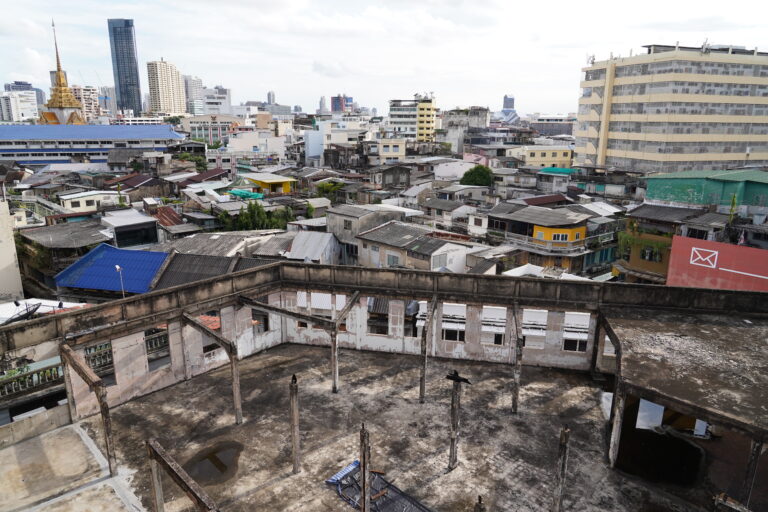
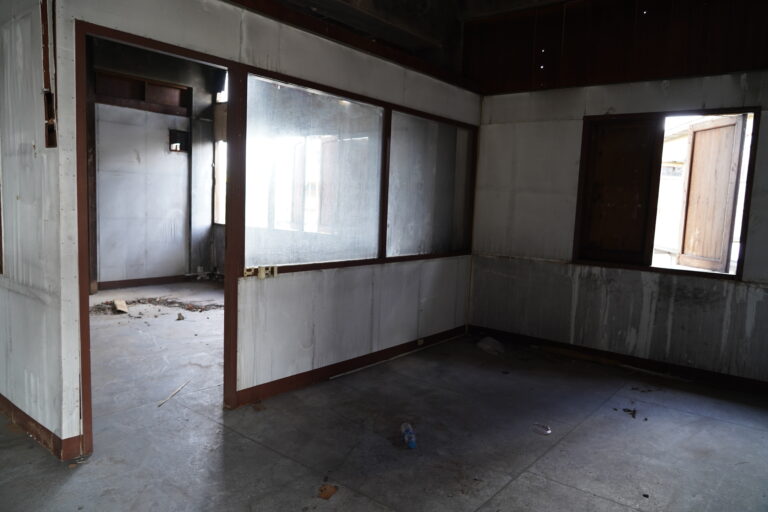
My first impression of the building was one of awe—tempered not by its fire-damaged condition, but by its potential. Before it became the Bangkok Kunsthalle, the structure already had a presence: raw, monumental, and quietly dignified. It held the memory of its past as the Thai Wattana Panich printing house, but it was also open, almost asking for a new life.
The story of how this building came to be revitalized begins with Khun Marisa Chearavanont, the founder of Khao Yai Art. From the beginning, she was deeply moved by the building. She saw its beauty and felt a personal responsibility to take care of it. But she faced considerable skepticism from those around her. Many believed the building’s circulation was dysfunctional, that its structural integrity had been too compromised by the fire, that the surrounding neighborhood lacked the right profile, and that no contemporary programme—certainly not an art space—could ever work there.
When Khun Marisa invited me to visit, I had no hesitation in supporting her vision. From the moment I walked in, I saw something else entirely. I didn’t see a limitation—I saw an opportunity. I confirmed on the spot that this was not just a building that could work—it was one that was ideal for a new kind of art institution.
Of course, I wasn’t imagining a museum in the conventional sense. What I envisioned was a Kunsthalle—not a repository of objects, but a platform for the commissioning and production of contemporary art. A space rooted in flexibility and dialogue, where the architecture itself becomes a collaborator in the artistic process.
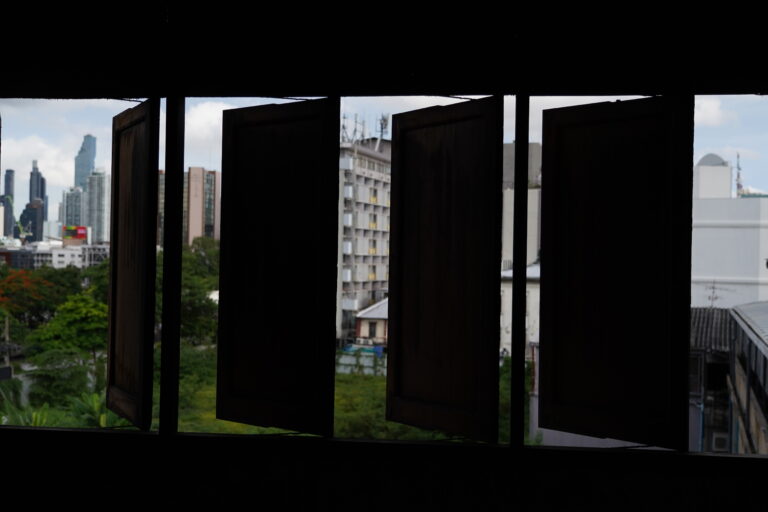
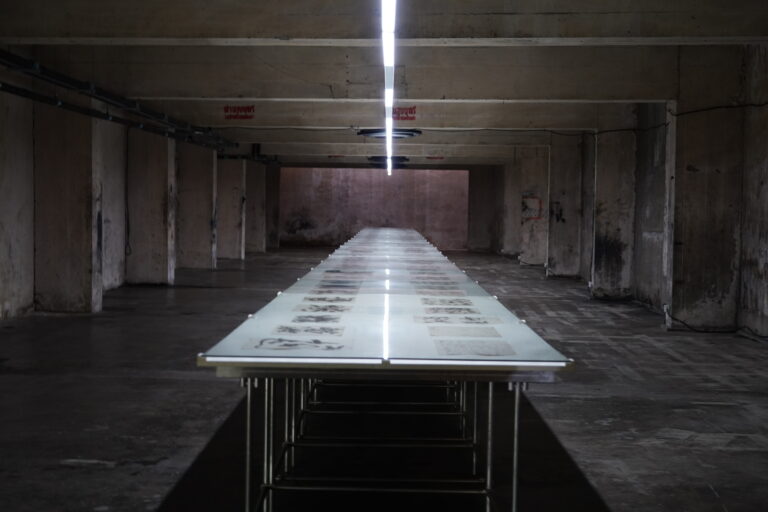
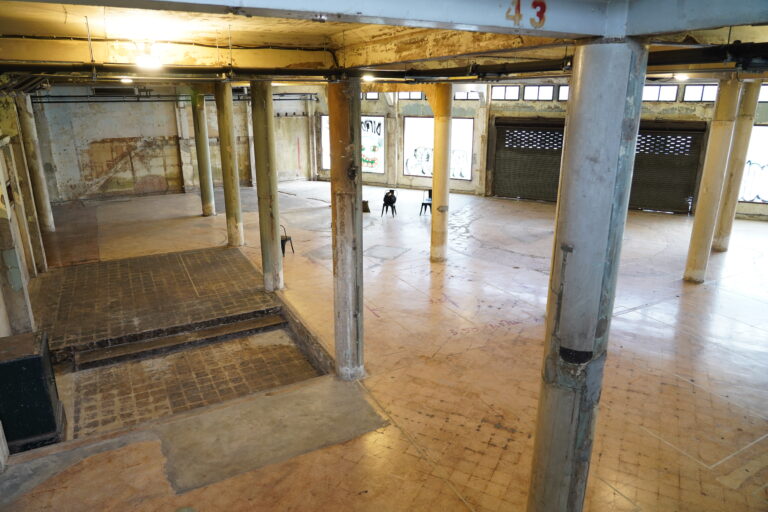
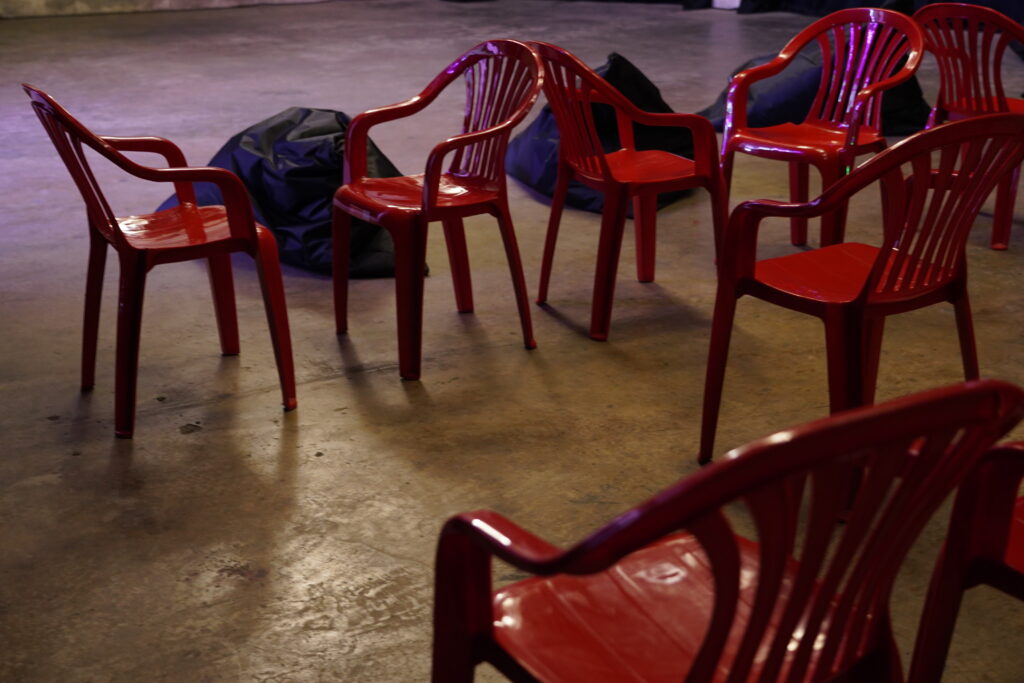
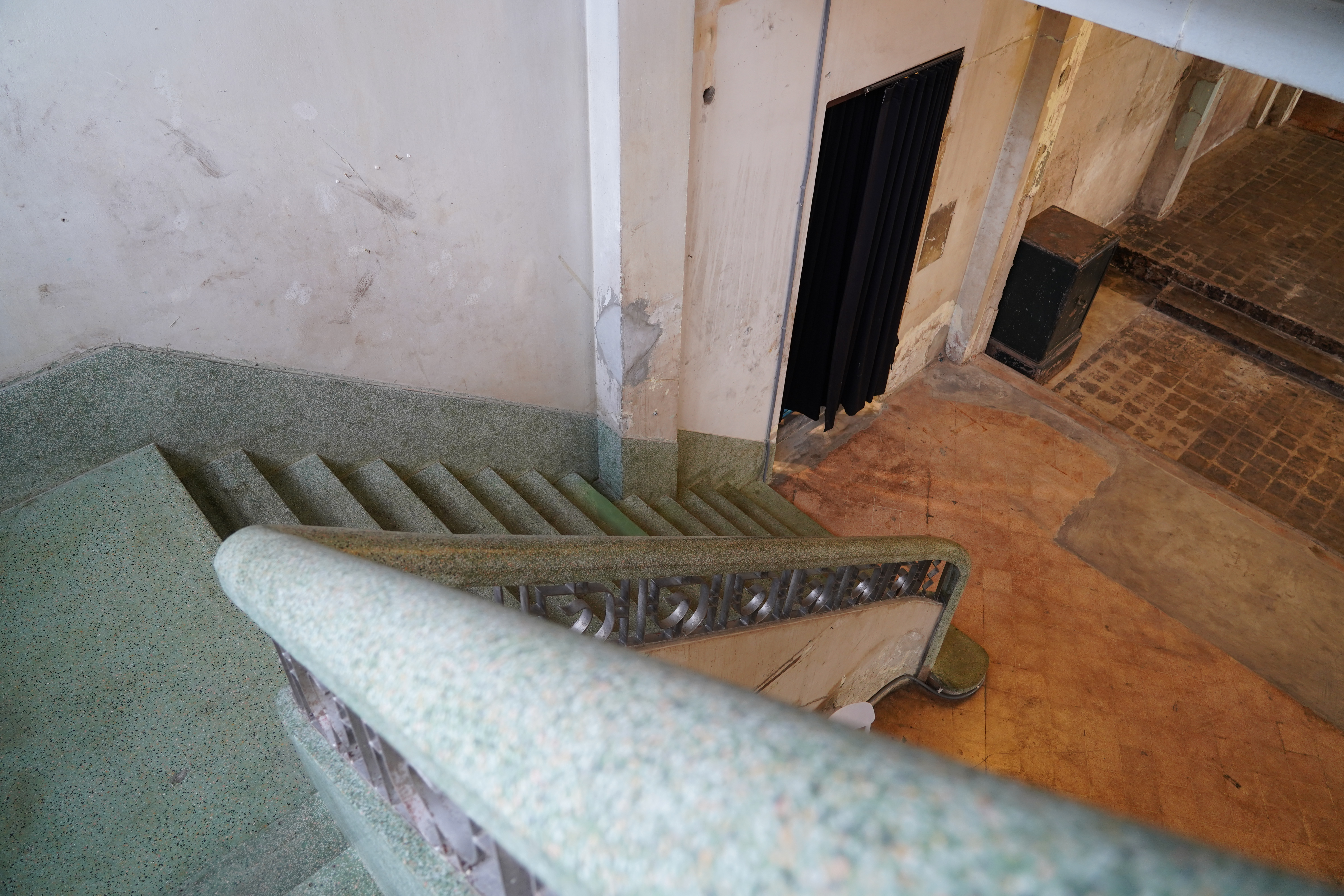
The building is extraordinary: 6,000 square meters of varied spatial conditions, right in the city center. It offers a remarkable range—high-ceilinged halls that feel cathedral-like, low-ceiling rooms with a sense of intimacy, column-filled industrial floors, completely open plans, spaces with generous windows, and others entirely cut off from natural light. These aren’t obstacles—they’re invitations. For artists, this is a rare and rich vocabulary to work with.
And the building isn’t just a structure—it’s a compound of three interconnected buildings, forming what is effectively a small city. Like Yaowarat itself, it’s a microcosm: layered, multi-functional, full of unexpected transitions. Its very complexity encourages experimentation, collaboration, and transformation.
Rather than erase its scars, we chose to build with them, embracing imperfection as a framework for artistic innovation. The building’s past is visible, but it no longer defines it. Now, it is a living space for contemporary thought, production, and healing.
the area community is diverse, made up of residents, thai-chinese merchant, newly arrived vendors, as well as domestic and international visitors. how do you perceive demographics of your patrons?
The demographic richness of Bangkok is deeply mirrored in the way we conceive the Kunsthalle’s programming. Rather than designing for a generic “art audience,” we consciously develop bespoke programs to reach the diverse communities that make up this city—and specifically, this neighbourhood. Yaowarat is layered with histories and populations: long-established Thai-Chinese families, young creatives, street vendors, craftspeople, tourists, and transient workers. Each group engages with the area—and with art—in different ways.
We see it as essential that our programming speaks to, and welcomes, all of them. For example, during our opening vernissage, we invited a beloved local street food vendor—the woman who prepares duck noodles just down the street—to cater part of the event. This was more than hospitality—it was a gesture of inclusion, a way to signal that the Kunsthalle is not sealed off from the neighbourhood but embedded in it. It made regular passersby feel at home and blurred the lines between “high culture” and “daily life.”
Another meaningful example came from our collaboration with Michel Auder, who created a film centered around the street where the Kunsthalle is located. His lens captured the everyday life of the area—vendors, elders, children, the tempo of the street. When we screened the film, local residents came to see themselves on screen. There was laughter, recognition, and even pride. In that moment, the Kunsthalle became not just a venue for art, but a mirror of community life, where people could see their stories acknowledged and recontextualized.
This is the paradigm we believe in: art not as imposition, but as engagement. By grounding our programming in local context, we expand the definition of who art is for. And in doing so, we build not just an audience, but a sense of belonging.
your exhibitions so far have carefully balanced thai artists with international ones. could you please share the thought process behind your planning?
The curatorial programme is conceived as an architectural project in its own right. The institution is not intended as a passive container for exhibitions but as an active site of engagement, transformation, and dialogue between art and space. The building’s history, spatial complexity, and materiality serve as a fundamental part of the artistic process.
In developing our programming, we have carefully balanced the presence of Thai and international artists, not simply for the sake of diversity, but to cultivate meaningful exchanges between local narratives and global discourses. Our selection process prioritises artists whose practices demonstrate a sensitivity to spatial and contextual engagement. Exhibitions are thus conceived not as isolated presentations but as interventions that domesticate, reinterpret, and activate the architectural framework.
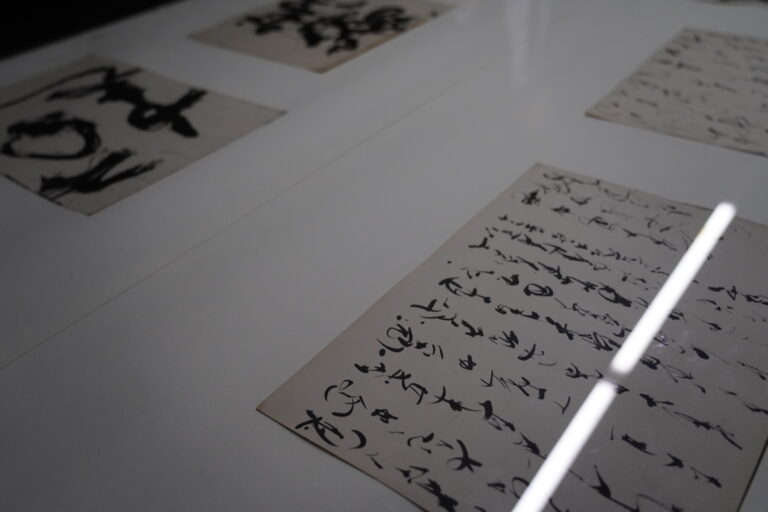
For example, Michel Auder utilized a series of scattered video projections across the ground floor. These punctual visual moments invited visitors to navigate the building differently, encouraging exploration of its more hidden areas. In Auder’s hands, the building’s circulation and voids became integral to the narrative experience.
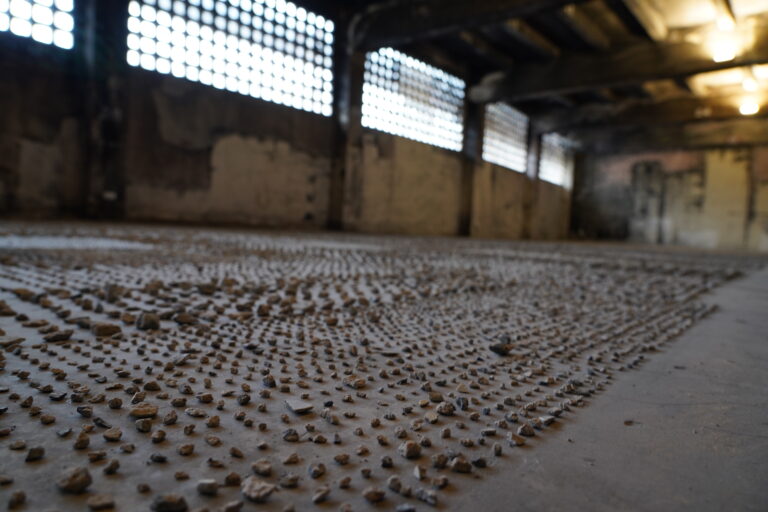
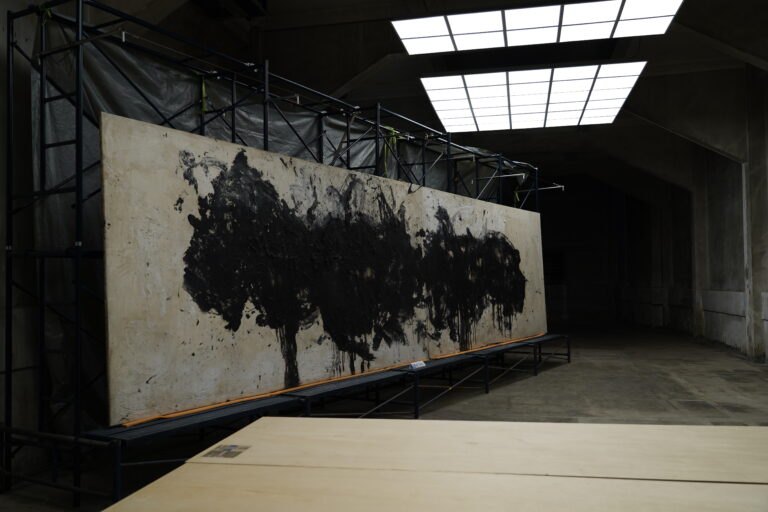
Similarly, Korakrit Arunanondchai conceived an artwork in the form of a new floor installation for the first level of the former storage building. His work transformed a previously overlooked industrial space into a tactile, immersive environment, inviting new forms of physical and emotional engagement.
Through the moving-image programme curated by Dew Napattaloong, another significant spatial reactivation occurred: the second floor of the central building was converted into a cinema room. This intervention introduced a new rhythm into the Kunsthalle’s ecosystem, creating a collective space for viewing and contemplation, and further demonstrating how the architectural fabric supports multiple modes of cultural experience.
The curatorial trajectory of the Bangkok Kunsthalle is thus not governed solely by thematic considerations, but by a commitment to site-specificity and spatial engagement. Each artist is invited to enter into a conversation with the architecture, resulting in an ever-evolving institutional identity that remains deeply rooted in material, spatial, and communal realities.
chinatowns around the world have experienced multiple waves of reinvention due to declining populations and the diminishing of their original purpose, which was to support migrants in a new land. there is a debate on whether these places should be transferring the knowledge of the ‘authentic’ culture and/or embracing innovation in expressing the syncretism of both cultures. within this conversation, organizations as kunstalle could participate to some level of re-interpretation, or, if anything, re-imagination of a new thai-chinese culture. what is your view?
We view Chinatown not merely as a site of preservation but as a space of possibility.
Healing, for us, involves acknowledging past displacements, honouring the community’s endurance, and imagining new futures through active engagement. Our mission includes co-creating with local residents—through workshops, oral history projects, and community programs—so that the Kunsthalle remains a space of shared authorship rather than external imposition.
This project inevitably raises broader questions of belonging in a globalized world. In a context like Yaowarat, authenticity cannot simply be re-enacted or preserved in static form (that would lead the transformation into a caricature or a touristic destination—much like what occurred in New York’s Meatpacking District) ; it must be continually invented, producing new conditions for cultural expression that reflect the realities of change.
We recognize that the Kunsthalle is inevitably a force of transformation and potential gentrification, but by keeping the process of domestication artist-led and rough, we hope to offer an alternative model of restoration—one that resists polished commodification and instead fosters authentic, evolving urban life.
We are fully aware that we are building a new paradigm of urban transformation: a strategy that is “inside but against”—working within existing structures while actively resisting pure market-driven logic. Through this approach, we aim to demonstrate that it is possible to catalyse urban renewal in ways that are inclusive, critical, and culturally sustainable.
re-qualification projects of this size and relevance are often contentious. critics cite gentrification, financing, the politics of art selection, and other factors. at the same time, without these interventions, important architectural icons risk being abandoned.
how do you address such critiques transparently and work proactively to serve as a ‘creative commons’ for the chinatown landscape?
Large-scale cultural requalification projects inevitably encounter both anticipation and critique, and the Bangkok Kunsthalle is no exception. Positioned at the intersection of artistic ambition, urban renewal, cultural preservation, and socio-economic equity, we are acutely aware of the challenges inherent in such an undertaking, particularly around gentrification and curatorial authority.
Rather than avoiding these tensions, we actively engage with them by involving universities, students, researchers, and residents. We do not view our role as bringing “culture” to Yaowarat, but as amplifying the rich cultural fabric already present. Our decision to preserve and inhabit the old Thai Wattana Panich building was both a practical and symbolic act of respect for the area’s material and historical memory.
In response to the pressures of urban change and market-driven development, we are committed to slowing the logic of extractive growth. As a non-profit institution, we prioritize long-term cultural investment over commercial cycles, cultivating sustained artistic processes that allow deep engagement with the architecture, the community, and the broader urban context.
We recognize that transformation must be accompanied by accountability. Through continuous self-reflection, documentation, public forums, and partnerships with universities and other cultural agents, we aim to foster a transparent and evolving record of our impact, inviting critique as part of our institutional practice.
Ultimately, we seek to demonstrate that a cultural institution can act simultaneously as a catalyst and a caretaker—fostering new forms of expression while remaining grounded in respect, reciprocity, and civic responsibility.
how is this project different from others you have developed in different ‘lands’ and are there any lessons in developing an artistic and communal ecosystem that you are ‘importing’ from experiences in other countries?
Every project I’ve undertaken has confirmed a guiding principle: each context demands the invention of a new perspective. No two sites are alike, and successful cultural work requires a deep engagement with the specific history, community, and urban fabric of each place. My practice has always operated at the intersection of art, architecture, and geopolitics, and I bring that lens to every endeavour.
In Angola, I developed national pavilions for the Venice Biennale of Art and Architecture. The art pavilion, Luanda, Encyclopaedic City, was awarded the Golden Lion, marking a turning point in Angola’s cultural positioning on the global stage. In Sardinia, I reimagined the concept of a Mediterranean gallery through a permanent open-air art space embedded in the coastal landscape—an alternative model rooted in place and seasonality. In St. Moritz, I founded a film festival that serves as a cultural catalyst for the Engadine Valley, activating urban life during the traditionally dormant low season.
Each of these initiatives posed distinct spatial, cultural, and strategic challenges, and required a tailored response. In Bangkok, the layered urban complexity, the density of cultural memory, and the social vibrancy of Yaowarat have opened a new set of questions. Here, we are not just programming an institution—we are co-producing a context, one that is as much about listening as it is about leading. The Kunsthalle emerges from this process, shaped by the city’s textures and rhythms, and rooted in an ethos of responsiveness and reinvention.
Ultimately, while past experiences inform my approach, Bangkok demands its own language—its own architecture of engagement. And that, for me, is the essence of this work: creating cultural institutions that are situated, specific, and deeply intertwined with the communities they serve.