you began organizing dangerous dinners after exploring hong kong’s many abandoned and forgotten buildings. what first inspired you to transform these raw spaces into intimate dining experiences, and how does the element of secrecy (guests discovering the location only upon arrival) enhance the sense of physical discovery and transgression?
I’ve lived around old buildings for as long as I can remember. One of the most formative was Lodge Hall, a 700‑year‑old ruin where we camped beside its ancient stone walls while it stood quietly weathered by time. Even as a child, I felt its presence. The key to the hall was larger than my adult hand—heavy, symbolic—and turning it felt like unlocking history itself.
My parents were always renovating the homes we lived in, so I grew up surrounded by bare plaster walls, unsanded wooden floors, and the scent of transformation. I still associate the sharp, smoky smell of a gas torch stripping paint from old woodwork with renewal and care. At night there was the hum of wind through old structures, the creak of timber, and in spring the delicate scent of cherry blossom drifting through the air. Buildings were never static to me—they were living environments.
At the same time, my parents frequently hosted dinner parties. Even half-finished rooms would glow with candlelight—often candles stuck into empty wine bottles—music playing, food cooking, conversation flowing. My brother and I were usually bribed into helping: pouring drinks, clearing plates, sometimes playing the piano or changing records. I learned early that atmosphere is as important as architecture.
Years later, when I began exploring abandoned buildings in Hong Kong, it felt like a natural continuation of that upbringing. I was drawn to raw, transitional spaces: places with texture, history, and a sense of quiet anticipation. Transforming them into intimate dining experiences became a way of activating those environments, bringing warmth and human connection into spaces that had fallen silent.
Today, the candlelight has been replaced with LED—practical and portable—so the scent of melting wax is no longer part of the story. But the essence remains. Guests still discover the location only upon arrival, heightening their senses and creating a moment of genuine discovery. The buildings still hum with character. And for one evening, forgotten spaces feel alive again.
The technology has evolved. The magic hasn’t.
how do you identify and evaluate abandoned or forgotten buildings in hong kong for a dangerous dinner? what technical criteria (structural safety, access, power/water availability, heritage value, acoustic properties, etc.) do you use during the initial scouting phase, and how long does the feasibility assessment typically take?
Scouting begins with instinct but ends with engineering. My partner and I always start with emotional and narrative resonance: the space has to carry a story—industrial, residential, civic—strong enough to shape the experience. If a building doesn’t move me, we don’t pursue it. That intuition is the first filter; everything that follows is technical.
Accessibility is the next test. Remoteness can add tension, but the site still has to work for guests, crew, equipment, emergency access, and night-time visibility. We map road proximity, entry and exit points, carry distances, and evacuation routes. If the logistics become impractical, we rule it out.
Structural safety is non-negotiable. We bring in registered architects and engineers during initial scouting to assess columns and beams, floor stability and load-bearing capacity, roof condition, cracks, and water damage. We need to be able to clearly define safe zones. The aesthetic of danger is central to what we do—but it can never mean actual structural danger.
Environmental conditions matter just as much. The space should feel raw, not distressing. Persistent smells, excessive noise, pest infestations, and poor air quality all eliminate a site.
One of the most important considerations is zoning for kitchen, storage, and bathroom operations, either inside the building or in an adjacent area. We need a defined back-of-house, safe prep and plating areas, dry and cold storage, separation between guest and service flow, and a waste zone. Bathrooms are essential, and we usually build temporary facilities. If those zones can’t be established safely, the location can’t move forward.
Even in abandoned sites, we test whether temporary infrastructure can be installed—portable power, water, drainage, lighting, and fire safety—without invasive structural changes. Alongside this, we assess acoustic and spatial qualities: reverberation, ceiling height, light penetration, and the flow between arrival, dining, and experiential zones all shape the emotional rhythm of the evening. Where a building carries historical or cultural value, we weigh the ethics of activation and the impact on surrounding residents.
The full feasibility assessment is slow and deliberate, usually taking months. It involves multiple site visits at different times of day, structural observation and risk mapping, logistics testing, zoning planning, and quiet observation to understand the environment. Many sites are eliminated. Only a small number pass both the emotional and technical thresholds.
securing access to derelict or historically sensitive sites involves complex permissions, regulatory approvals, and guest liability waivers. can you walk us through the operational workflow, from initial contact with property owners to final legal clearances, and explain how you structure insurance and risk mitigation?
Securing access is rarely straightforward. It’s a layered process combining research, relationship-building, legal alignment, and risk management—and it usually unfolds over months.
Ownership research comes first. Sites may be held by private individuals, holding companies, trusts, asset receivers, or local authorities, or tied up in inheritance disputes. Confirming legal ownership, identifying the right decision-maker, and verifying restrictions or heritage protections can take weeks of land registry searches, corporate filings, archival research, and persistent outreach.
Once we’ve identified the right party, I make contact directly—usually a formal letter introducing myself and Dangerous Dinners, followed by a meeting request. Because the concept is unusual, the first conversation is exploratory rather than transactional.
What follows is education and trust-building. We explain what a Dangerous Dinner is, the scale and tone of the experience, the temporary and respectful nature of the activation, and why their specific building matters to us. We also explain how the project can benefit them, for example, a family office considering a rebrand, or owners looking to reactivate a dormant space. This phase can take weeks or months, particularly with multiple owners, generational dynamics, or heritage sensitivities. Most owners arrive with understandable concerns: damage, safety, reputation, liability—and transparency is essential.
Once trust is established, we secure a verbal agreement covering dates, scale, access windows, and expectations around site protection. Only then do we move into legal formalization.
That framework rests on three pillars. Liability waivers, signed by every guest and staff member, acknowledge the building’s condition and release claims against both Dangerous Dinners Ltd and the property owners. Event insurance is tailored to guest count, activities, and the structural condition of the site, covering public liability, property damage, third-party injury, and employer’s liability where applicable, with the owner named as an additional insured party. Licensing depends on jurisdiction, alcohol service, and whether the event is ticketed, but because these are private events held with full owner consent on private property, additional public event licences are generally not required.
Practical risk mitigation runs alongside the legal layer, developed with our architects and engineers. We conduct pre-event walkthroughs, map hazards, and mark restricted zones. There are no load-bearing alterations, no drilling, no permanent modifications—only temporary installations. Capacity is strictly limited, staffing is led by dedicated event managers with full safety briefings, floors are protected where needed, and open flames require explicit approval. Everything is reversible. The building is always returned to its original condition.
Final clearances bring it together: written confirmation of terms, an insurance certificate to the owner, signed waivers, and a final operational plan. The event then proceeds under owner consent, private event status, active insurance, and signed liability documentation.
These projects succeed not only because the buildings carry their own stories, but also because the legal, insurance, and safety foundations are handled with discipline and respect—for the site, and for the people who’ve trusted us with it.
transforming a raw decaying space into a functional dining environment for 30 to 40 guests requires significant preparation—cleaning, temporary power, lighting, temperature control, kitchen setup, and sound management. what is your typical pre-event timeline and operational checklist, and do you always use the same technical team?
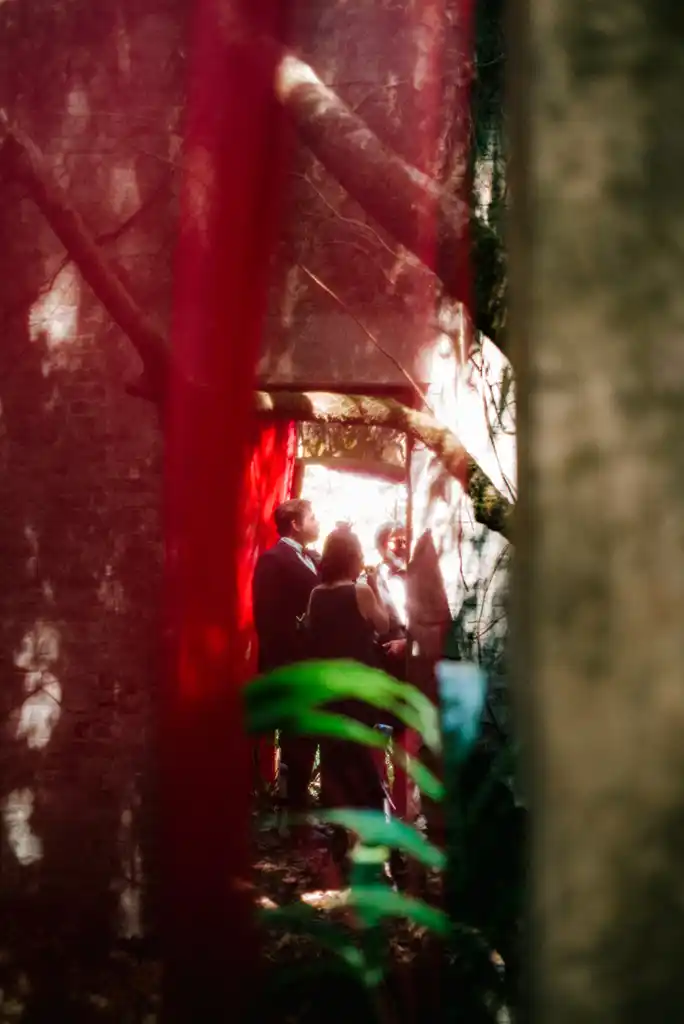
Yes! it requires structure and clear priorities. The first step is always immediate trash removal, so the building can be properly assessed. Only once it’s cleared can we evaluate layout, zoning, power, and safety.
The timeline itself is flexible, but the work expands or contracts within it. Six months is heaven—it allows for deep cleaning, zoning, reinstating doors and windows, fixing access points, installing lighting and power properly, setting up a compliant kitchen, and carefully testing sound and temperature, with pest control continuing right up to the event. A fast-track turnaround of four to eight weeks compresses the same sequence: clear out, assess utilities, clean and repair, install kitchen and lighting, conduct a technical run-through, then complete a final clean and pest control. The shortest we’ve ever done is a single day. It demands serious coordination and a lot of human energy, but we know we can push ourselves when the project calls for it.
Whatever the timeline, the operational priorities stay the same: immediate trash removal, deep clean, and pest control; safety checks and fire compliance; power, sourced from the neighborhood where possible and supplemented by LED generators where not; lighting and cable management; temperature control and ventilation; a temporary commercial kitchen; and sound positioning and testing.
We prefer to work with the same core technical team—electricians, generator specialists, kitchen installers, and lighting crew. They understand our pace and our standards, and consistency reduces risk. We adapt locally where needed, but the spine of the team stays the same. With the right planning and the right crew, even a neglected space can become a safe, atmospheric dining environment.
how do you select guests for dangerous dinners? do you maintain a core group of repeat attendees, or do you deliberately mix new participants each time? what criteria do you use to curate the audience in order to maximize meaningful physical engagement and spontaneous interactions?
Guest selection for our dinners is intentional, but not overly structured.
Everyone understands that the ticket price is very expensive. That reflects the complexity of producing something this ambitious in unconventional spaces. At the same time, I’m aware that not everyone who wants to attend earns a fortune. Passion and curiosity matter just as much as financial means, and I try to balance sustainability with accessibility where possible.
We usually begin by reaching out to friends. They know the passion and personal energy I pour into these events. Even if they can’t attend due to finances or travel, they often know someone thoughtful, open, and adventurous to introduce. That first layer of invitation builds trust into the room before the evening even begins.
We also have repeaters: guests who return and bring their friends, who then bring their friends. That organic chain creates a growing community without turning it into a closed circle. It expands through genuine enthusiasm rather than strategy.
Beyond my immediate circle, I reach out to networks I have meaningful relationships with, including the Asia Society and the Explorers Club. Both communities are naturally curious, culturally engaged, and intellectually adventurous—qualities that align beautifully with the spirit of what we do.
It’s true—we don’t have a formal marketing plan. Our Activities relies almost entirely on word of mouth. We also communicate with guests through intentionally vague updates that tantalize their curiosity. I never over-explain. The mystery is part of the experience, and anticipation becomes part of the event itself.
In curating the audience, we aim for a careful mix: A few returning guests who understand the spirit and rules of Dangerous Dinners, such as a total ban on any social media for 2 weeks until after the event and never revealing the location New participants who bring fresh energy People comfortable with physical engagement and unpredictability Individuals who are open, respectful, and willing to participate rather than simply observe
The aim isn’t exclusivity, but chemistry. We curate for curiosity, generosity, and a willingness to lean into the unknown. When that balance is right, meaningful physical engagement and spontaneous interaction happen naturally.
different dinners seem to explore varying themes: heritage, decay, contrast between glamour and ruin, and so on. do different themes call for different types of audiences? how do you adjust guest selection based on the specific concept or location to enhance the overall embodied experience and group dynamic?
The dinners do explore varying themes—heritage, decay, glamor versus ruin, cultural memory, and contrast—but we don’t choose different audiences based on those themes. We don’t curate separate “types” of people for different concepts. We curate for mindset. The common thread is curiosity, openness, and a willingness to engage physically and emotionally with the environment. If someone is receptive, the theme will meet them where they are.
What shifts isn’t the audience but the framing and energy of the invitation. We adjust how we communicate: the tone of the updates, the references we hint at, and the atmosphere we build beforehand. My intentionally vague communications create anticipation that aligns with the concept without explaining it outright, and that subtle positioning naturally attracts the right energy for that particular dinner.
The mix still matters: a few repeaters who understand the rhythm of our dinners, new guests who bring fresh reactions, people comfortable with unpredictability, and individuals willing to participate rather than spectate. The location itself also does part of the work. A crumbling mansion, an abandoned industrial site, or a heritage space will already filter the room—those who are drawn to it self-select.
So while the themes evolve, the core audience ethos stays consistent. We’re not selecting for profession, status, or aesthetic. We’re selecting for chemistry, generosity, and courage. When that foundation is right, the embodied experience and group dynamic respond naturally to whatever concept unfolds.
the secrecy element (guests only learn the exact location upon arrival) adds to the sense of discovery but also creates logistical complexity. how do you manage ticketing, transportation coordination, on-site arrival protocols, and capacity control while preserving both surprise and operational smoothness?
The secrecy is essential, but it does create logistical complexity.
It’s very important that guests do not know where we are taking them. If they know the address in advance, many will immediately look it up, form expectations, and arrive with preconceived ideas. That breaks the spell. The art of being surprised is getting lost.
That said, it’s all a work in progress. I still haven’t found the perfect system yet. Each dinner teaches me something about flow, timing, and trust.
Ticketing is handled directly and personally. Numbers are kept tight, usually 30–50 guests, so we can manage both intimacy and safety. As Dangerous Dinners relies largely on word of mouth, capacity control is organic and intentional.
Transportation is fully coordinated. We arrange coach pick-up for all guests via our Ambassadors (who more often than not are repeat clients themselves) from a designated meeting point. This ensures everyone moves together and removes the risk of people tracing the route themselves. Halfway through the journey, guests are blindfolded. It’s a gentle but powerful shift from observer to participant. The moment of disorientation heightens anticipation and reinforces that they are entering something unknown.
Arrival protocols are carefully staged. There is always a controlled threshold moment—a pause between the outside world and the experience. Behind the scenes, headcounts and safety checks are precise, even if the atmosphere feels fluid.
Operational smoothness comes from preparation; surprise comes from restraint. Guests feel guided and secure, but never over-informed.
We constantly review and refine the system. But one principle remains constant: protecting the unknown is non-negotiable. Discovery requires surrender and sometimes, quite literally, closing your eyes.
events are priced at a premium. what are the main cost drivers on the operational side, and how do you balance high fixed costs with the intimate scale? in terms of safety in unpredictable environments, what protocols have you developed regarding staff-to-guest ratios, emergency procedures, and real-time risk management?
Events are priced at a premium—around US$1300per head— but the economics are often misunderstood. With the exception of the softer corporate editions, none of our dinners has ever made money. The independent dinners are driven by vision, not profit. The intimacy that makes them powerful also limits their financial scalability.
The two biggest operational cost drivers are cleaning and site stabilization, and logistics. Cleaning begins with immediate trash removal so the building can be assessed, but the work intensifies quickly from there: industrial deep cleaning, pest control treated three times over, odor treatment, temporary repairs and reinforcement, securing doors and windows, stabilizing floors and walkways, and creating safe access and exit routes. Making an abandoned space structurally safe—without stripping away its raw character—is expensive. We’re not renovating; we’re stabilizing it enough to responsibly host thirty to fifty guests.
Logistics is the second pillar, and it’s not simply guest transportation. It’s the full physical build of a restaurant inside an abandoned site. Everything has to be delivered in: dining tables, chairs, and tableware; a temporary commercial kitchen; refrigeration and cooking units; lighting rigs and sound systems; generators and cabling; heating or cooling systems; and the decorative and atmospheric materials that define the space. Access is often difficult—narrow staircases, unstable floors, no elevators, and restricted vehicle entry. Load-in and load-out demand experienced crew and careful planning. Nothing is plug-and-play; each site is a custom installation. Together, these preparations form the financial backbone of each dinner.
We deliberately keep the scale intimate. Increasing capacity might improve margins, but it would dilute the chemistry and the embodied experience. So we hold the line at thirty to fifty guests, even when it means most editions don’t turn a profit. Corporate soft editions occasionally subsidize the more experimental ones.
Safety in these environments is layered and deliberate, even when the atmosphere feels raw and immersive. We conduct thorough structural walkthroughs, remove hazards before guest arrival, and establish clear evacuation routes. Staff roles are defined, the staff-to-guest presence is strong, on-site first aid is in place, and the entire event is monitored in real time. Guests may feel disoriented—particularly during the blindfolded transportation—but they are always held within a carefully managed framework.
The experience feels wild. The operation behind it is precise.
from an organizational perspective, how do you measure the success of each dinner in terms of genuine engagement, for example, repeat attendance rates, quality of interactions, post-event feedback, or observable group dynamics? what evidence tells you that guests form lasting emotional traces or a deeper sense of belonging? have you considered operational models for scaling or replicating the format in other cities?
Success for us isn’t measured in financial terms—especially since most independent editions don’t generate profit. It’s measured in engagement, atmosphere, and emotional residue.
For this, live observation is essential. We move through the space and mingle with guests throughout the evening, watching body language, proximity shifts, spontaneous conversations, and the moments where hesitation turns into participation. You can feel when a room unlocks: when strangers lean in, when laughter becomes unguarded, when people surrender to the environment. That embodied shift tells me more than any formal metric.
The conversations afterwards matter just as much. We speak directly with the guests post-event, sometimes immediately, sometimes days later. Are they still processing? Are they telling all their friends, trying to explain what their experience actually was? That lingering reflection signals depth. Repeat attendance reinforces it: guests who return and bring friends, who then bring their friends. That organic chain signals trust and emotional resonance. People don’t come back to something that left them untouched.
We also observe social media interactions after the event—the tone of posts, the private messages, and how guests recount the experience. It’s less about visibility than sincerity. And interestingly, the most recurring operational issue we face is that guests don’t want to leave. The bus driver often calls me repeatedly, asking where his return passengers have gone, because people linger, continue conversations, and resist the transition back to normal life. Operationally, it’s inconvenient. Emotionally, it’s one of the strongest signs that something meaningful has happened.
The clearest evidence of lasting impact is in those small, telling details: guests staying well beyond the official end, strangers exchanging contact details, messages arriving months later referencing a specific moment, and repeaters actively recruiting others. There’s usually a subtle sense of shared vulnerability, a feeling that they experienced something slightly disorienting and intimate together. That’s what creates belonging.
We have considered operational models for replicating Dangerous Dinners and potentially taking the format overseas. Logistically, it can be done the cleaning protocols, transportation choreography, safety frameworks, and build systems are all adaptable. But Dangerous Dinners is highly site-responsive, and the chemistry between space, audience, and atmosphere is delicate. Replicating it successfully would require trusted local technical teams, careful site selection, a commitment to maintaining intimacy rather than scaling up, and the same disciplined approach to secrecy and controlled transportation.
Ultimately, we measure success by feel. Did the room transform? Did strangers connect? Did people hesitate to leave? When the coach driver starts calling me to ask where everyone is—that’s usually a very good sign.