PAOLO CASATI
co-Founder & creative director: Studiolabo, Fuorisalone.it, Brera Design District, Brera Location, Brera Design Apartment.
MILAN.
convening the ecosystem.
you pioneered the ‘district’ model in milano, such as brera design district and zona tortona. how does territorial engagement help balance commercial participation with public accessibility? what does a “district” represent for both the design industry and the city’s residents?
Territorial engagement and marketing, when it works, is an opportunity to make legible and connect what already exists in a place. The shift from the concept of industrial district to that of cultural district has been fundamental: where the former refers to production chains, skills, and infrastructure, in the latter these elements transform into thematic destinations, where content, identity, and relationships build value.
The Brera district, for instance, wasn’t invented from scratch — it emerged from a careful analysis of the territory, which revealed a strong concentration of design and furniture showrooms within a defined area. This process is also part of the project promoted by the Comune di Milano and the Chamber of Commerce on Urban Commerce Districts, which introduced new geographies of the city: no longer simply zones or neighbourhoods, but systems organised around a shared identity. In this sense, a district allows brands to operate within a common context rather than as isolated presences, helping to balance the commercial and public dimensions. For residents, it represents a temporary transformation of everyday space; for the industry, it’s a platform with an identity and audience already in place.
In the early 2000s, Tortona’s concept of “zona”—bolstered by a strong, recognizable visual identity—helped define a transformative area focused on design and fashion, where old industrial spaces were repurposed into event venues. In 2010, the Brera Design District took this a step further. The brand here is crafted by leveraging the heritage of one of Milan’s most iconic historic neighborhoods—the Accademia—known for its artistic roots, street life, restaurants, and workshops—forming the foundation of the first truly international design district.
Today, Brera Design District is effectively the first and most important Design district in the world, given the density and quality of what it offers, and it represents the epicenter of Design Week: from around 70 showrooms in 2010 we’ve reached over 230 in 2026, with more than 300 events during the week, becoming the reference stage for the leading international brands in design and lifestyle.
historically, the official salone del mobile was the platform for major institutional furniture brands, while smaller and more experimental brands gathered around fuorisalone. in recent years, we’ve seen a clear migration: big names like cassina, poltrona frau, minotti – stakeholders of salone – and others are now choosing to present their main installations in the city rather than inside the fairgrounds. what is your view on this shift?
The change is the result of the time we’re living in and the structural transformations in communication and sales models. The trade fair, especially in a sector-like design, is no longer the only tool for gaining visibility and results, taking orders, and meeting clients.
In the meantime, Fuorisalone has grown progressively, expanding its reach and welcoming brands that no longer belong exclusively to the furniture world. Technology, automotive, fashion, fine craftsmanship, and consumer goods have all helped transform Design Week into the most relevant lifestyle week internationally. This evolution wasn’t planned — it took shape over time, reinforcing Milano’s role in the global context.
In parallel, the design-furniture sector has also seen its business models change. Many brands have begun rethinking their investments, shifting resources traditionally allocated to large fair stands toward permanent spaces in the city that are active year-round. This introduces the concept of “destination” to design as well: being in Milano, and in many cases in Brera, becomes a strategic choice for a brand’s international positioning and global distribution.
In this scenario, the city offers what the fair cannot replicate: context, unpredictability, and a direct relationship with people. The Salone remains a fundamental business platform for developing the ‘Modello Milano’, but today brands seek identity, not just visibility. The city enables them to build more layered narratives and reach diverse audiences, going beyond the traditional exhibition format.
does this migration represent a validation of the fuorisalone model? what do brands seek in the city environment that they no longer find — or find less — within the traditional fair?
In part, yes — but more than a validation, it’s a signal of a broader transformation in the way design is communicated. Today, brands look for experience, storytelling, and emotional engagement: elements the city can offer with a level of complexity and authenticity that’s difficult to replicate at a fair.
There’s also a more subtle but equally important dimension: operational freedom. Our initiative is an open platform without rigid rules or predefined categories, allowing brands to experiment with different languages and formats. This environment fosters self-regulation that drives innovation, novelty, and continuous development. In this sense, Design Week has also become an instrument of urban transformation. Increasingly, it serves as a moment to test new spaces, neighborhoods, and real estate projects, helping to define new identities and imagine future scenarios for the city.
how does this evolution affect the balance you try to maintain between serving the industry’s commercial goals and keeping fuorisalone open and accessible to the public?
It makes the balance more fragile. The involvement of large brands threatens to make the experience too rigid. Our responsibility is to keep it open, providing room for independent, experimental, and less-organized projects. This is what keeps Fuorisalone accessible and meaningful.
you recently announced a future collaboration with the salone del mobile after years of what you described as “antagonism.” what has changed, and how do you see the two systems complementing each other going forward?
There was never really any antagonism — rather, a lack of dialogue, which over the years has nonetheless been activated, with moments of acceleration alternating with slower phases.
What has changed today, above all, is awareness: these aren’t competing systems but complementary models. The Salone is an extremely efficient commercial engine; Fuorisalone is a diffuse, cultural, relational system. Together, they build a unique ecosystem and define the format of Milano Design Week, which exists precisely because of the balance between these two souls.
fuorisalone addresses two main constituencies: paying clients (brands, sponsors, exhibitors) and the general public (visitors and design enthusiasts). How do you define the distinct value you offer to each group?
For brands, we offer visibility, positioning, and access to an international and highly engaged audience. To this we add concrete services: strategic orientation, commercial, organisational, and operational support, which allow them to work effectively within a complex system like Fuorisalone.
For the public, the value lies in access and in the possibility of experiencing design as a cultural event. We offer tools to navigate a very broad and diffuse offering, which requires different levels of reading and modes of engagement. In this sense, digital plays a fundamental role — from the editorial platform to more specific tools like Fuorisalone Passport, which we’re launching on an experimental basis across a selection of events in the Brera district. The challenge is to make these two levels coexist without either prevailing over the other, maintaining a balance between commercial and public dimensions.
what are the main revenue streams for fuorisalone.it? you have worked with sponsors such as asus, hyundai, and samsung, and you offer services like location scouting and communication planning. how do you structure these partnerships?
The main revenue streams are partnerships and sponsorships, communications services, and strategic consulting, including location scouting and project development. We don’t sell visibility as advertising space; we build tailored projects that align brands’ objectives, the urban context, and audience expectations.
how do you decide which services and experiences remain free for the public and which are supported by paying clients? is there a guiding principle behind this balance?
The guiding principle is that access to the experience we offer should remain as open as possible. From the beginning, the Fuorisalone events guide was conceived as a free tool for companies, supported by a few key sponsors.
Today, the model has evolved into a hybrid formula that combines paid and free content. This allows us, on the one hand, to offer services and structured visibility to brands, and, on the other, to remain faithful to our editorial objective: to cover and tell the story of the entire event while maintaining the role of official guide to Fuorisalone.
Within this balance, paid elements may exist, but they must never define the overall experience. The public dimension remains the foundation of the entire system.
during the pandemic you launched fuorisalone digital. did this change your revenue model or your relationship with brands and the public? which elements of that digital experience are you still using today?
We were born digital in 2000 and have consistently stayed true to that foundation and our core strengths. These have helped us stand out and develop a unique editorial positioning. The introduction of the “Fuorisalone Digitale” concept during the Covid year was mainly a strategic communication move, signaling a significant transformation: from a simple event guide to a comprehensive, year-round editorial platform — a true ongoing design guide. This shift expanded our role from curators of mainly physical experiences to creators of an editorial and digital ecosystem that supports both audiences and brands throughout the year. Today, digital acts as an additional layer, enhancing access, duration, and reach of the experience. It enables us to engage over 1.5 million users annually and deliver increasingly targeted services to our partner companies.
how do you measure the success of fuorisalone?
Success is measured not only in quantitative terms but also in the quality of interactions, the relevance of projects, and the overall perception of the experience. If the public continues to see Fuorisalone as open, accessible, and meaningful, the system is working.
At the same time, we measure success by the trust we receive from the companies that invest in our channels. It’s a very concrete indicator: every year we see steady growth, often unexpected. For this edition, for example, we’re recording a +10% increase in revenue compared to last year (already a record) in a complex historical context marked by a contraction in communications spending.
This figure is a clear signal for us: it confirms not only the solidity of the model but also the recognition of our role by both the public and industry operators.
with regard to partners and sponsors: what do they tell you they gain — sales, networking, brand visibility, public engagement, or something else? can you give an example of a brand that particularly understood how to engage the public effectively?
Partners gain visibility, but most importantly, improved positioning and cultural relevance. The most successful brands are those that create experiences rather than just displays.
with regard to the public — both professionals and occasional visitors: beyond visitor numbers – 500,000 in physical presence and 320,000 unique users of Fuorisalone.it –- and economic impact – €255 millions generated – how do you know the public feels genuinely welcome and that commercial interests do not overshadow the open spirit of the event?
We observe behaviors and flows, but above all, we listen. When people move freely and take possession of spaces, it means the balance is right. Fuorisalone Passport was born precisely from listening to the public and professionals; to criticism, we respond with planning, the only operational tool we know and use.
you have often emphasized that networking is one of the key values of fuorisalone. does networking serve industry professionals and casual visitors differently? how does the platform facilitate meaningful connections for both groups?
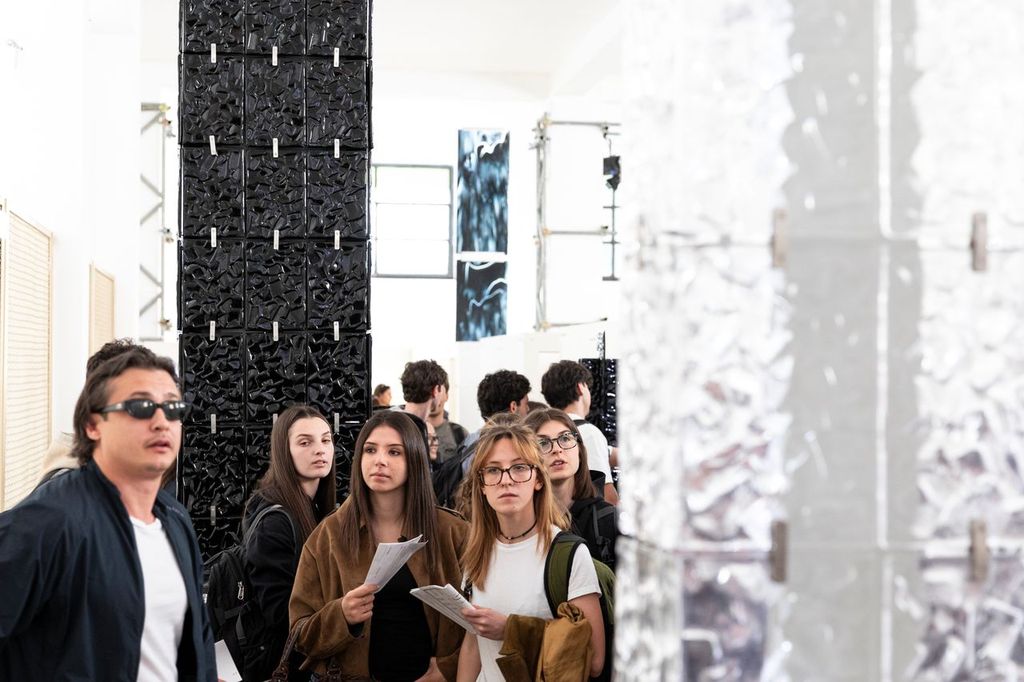
Networking is fundamental — central to Design Week, which, before being a platform for showcasing products, is a platform that creates relationships between people. For professionals, it’s about relationships and business; for the public, it’s about discovery and belonging. The platform facilitates both.
in the context of engagement, how do spontaneous, unscripted physical encounters in the districts — shared multi-sensory experiences — differ from the digitally facilitated connections on fuorisalone.it? do you see the platform enhancing or replacing certain forms of human interaction?
Physical encounters are unpredictable and involve multiple senses, while digital interactions are organized and ongoing. Digital spaces expand on physical experiences rather than replacing them.
you have said that digital is “complementary” to physical, not a replacement. how do the two work together today, and what does physical presence offer that digital cannot?
The digital platform fosters engagement and a sense of belonging. But physical presence remains irreplaceable for density and collective experience. Each feeds the other, and vice versa.
you famously said: “milano is fuorisalone, and fuorisalone is milano.” what does this mean in practice for the city’s identity, economy, and civic life?
This means that each is the manifesto of the other, and vice versa. Such a unique alchemy could only be created here, because one embodies the other.
what is your relationship with the city management leadership / comune di milano? how does public-private partnership help you balance commercial vitality with genuine public access?
It’s there is a necessary relationship, primarily tied to the operational and administrative management of an event of growing complexity. Over the years, it has passed through different phases, with more effective and more difficult periods. Milano Design Week is an articulated system with very fast dynamics and timelines that the administrative machine often struggles to follow with equal agility. Some attempts at regulation or management, though conceived to improve overall functioning, haven’t always been fully understood or recognized by operators and the public, sometimes generating more complexity than solutions.
The starting point was a service-oriented approach, aimed at solving concrete problems for the city during design week. In recent years, however, there has also emerged a will to represent and promote the ‘Modello Milano’ — which is historically the result of the diffuse work of a plurality of actors (companies, operators, designers) rather than of institutional direction. This balance now invites reflection: there’s still much to be done to build a more effective dialogue between private initiative and public administration, one capable of sustaining the event’s growth without compromising its open and spontaneous nature.
some districts and venues have introduced paid entry for certain events. what is your stance on accessibility versus crowd management? how do you approach this tension?
I do not believe access should be based on payment as a principle. Instead, I advocate for a more mindful management of flow, achieved through audience profiling and segmentation, distributed across various time slots or days. For this, a unified identification and access tool is necessary, which is the concept behind Fuorisalone Passport. We are launching it this year as an experimental model, with the goal of developing it into a standard — similar to the Fuorisalone events guide — turning it into a practical tool for event access. In this context, the key factor isn’t payment but the ability to activate and guide audiences, creating genuine value for exhibitors who invest in the event.
you have attracted partners from outside the traditional design world — automotive (BMW, Mazda), technology (Asus, Samsung), and luxury (Tissot). how do you ensure these cross-industry partnerships feel authentic to both the design community and the public?
If they are relevant and coherent with design, they work. Otherwise, they come across as opportunistic.
during the pandemic you launched dedicated channels for japan and china. how did you approach these international partnerships while continuing to serve your local milano audience?
In our case, the process is not just about exporting a format; it’s about fostering relationships. Milano stays the core, with other cities acting as satellites for collaborative projects. We envision this as the model for Osaka Design Week, which we plan to launch in Osaka, Japan, at the end of September 2026.
what are the biggest challenges you face today in maintaining the balance between commercial interests and authentic public engagement? (for example: overtourism, gentrification, or loss of spontaneity)
To always do our best, to keep passion and vision intact, integrating services and continually offering new opportunities to companies.
you are exploring new technologies such as NFTS, the metaverse, and AI. how might these digital tools help you better serve both paying clients and the public? could they create new forms of participation or a deeper sense of “belonging”?
Fundamental tools are essential, but they should serve as enablers rather than replacements, while remaining vigilant against false leads. Today, AI offers a significant opportunity that we must understand how to incorporate effectively, and we are actively engaged in doing so.
if you could redesign the fuorisalone model from scratch today, what would you do differently?
We already are, and we continue to do so every year. Fuorisalone is never the same as itself: it evolves constantly, introducing innovations and new developments. By its very nature, it’s a perpetual project, in continuous becoming.
Precisely for this reason it’s almost perfect — and therefore always perfectible.