QING LI.
MD. PhD. forest medicine expert. clinical professor of rehabilitation medicine at tokyo Nippon Medical School. vice-president and secretary general of International Society of Nature and Forest Medicine. president of the Japanese Society of Forest Medicine. TOKYO.
THE SCIENCE AND PRACTICE OF SHINRIN-YOKU.
based on all your clinical data from thousands of participants and hundreds of studies, how do you now define well-being itself?
I am a medical doctor, and my understanding of “well-being” is based on the WHO’s definition of health. Specifically, “well-being” refers to physical, mental, and social health, as well as happiness.
In other words, “well-being” means being in good physical, mental, and social condition. It is not simply a temporary sense of happiness, but a broad concept that includes elements such as a sustained sense of happiness into the future, a sense of purpose in life, and self-actualization.
I believe that forest bathing can promote well-being for all humanity.
your research has shifted forest bathing from a cultural practice to a clinical intervention. what is the single most robust physiological mechanism (phytoncides, negative ions, sensory reset, etc.) that explains why even brief forest exposure causes measurable, lasting reductions in stress biomarkers?
The impact of forest bathing is the total effect of the five senses (sight, smell, hearing, touch, and taste) and the forest environment, including the quiet atmosphere, beautiful scenery, calm climate, pleasant aromas, and clean fresh air compared with the city environment.
However, the aromas from the trees (sense of smell, phytoncides) have the main effect among the five senses.
you often differentiate shinrin-yoku from simply “walking in nature.” from a neuro-immunological standpoint, what specific intentional changes—such as pace, sensory focus, or device abstinence—transform a casual walk in the park into a therapeutic experience?
Forest bathing is an activity that involves visiting forests to reduce stress and to get a beneficial effect from forests using the five senses. Walking slowly, using your five senses, and deep breathing without getting tired, is what distinguishes forest bathing from simply “walking in nature.”
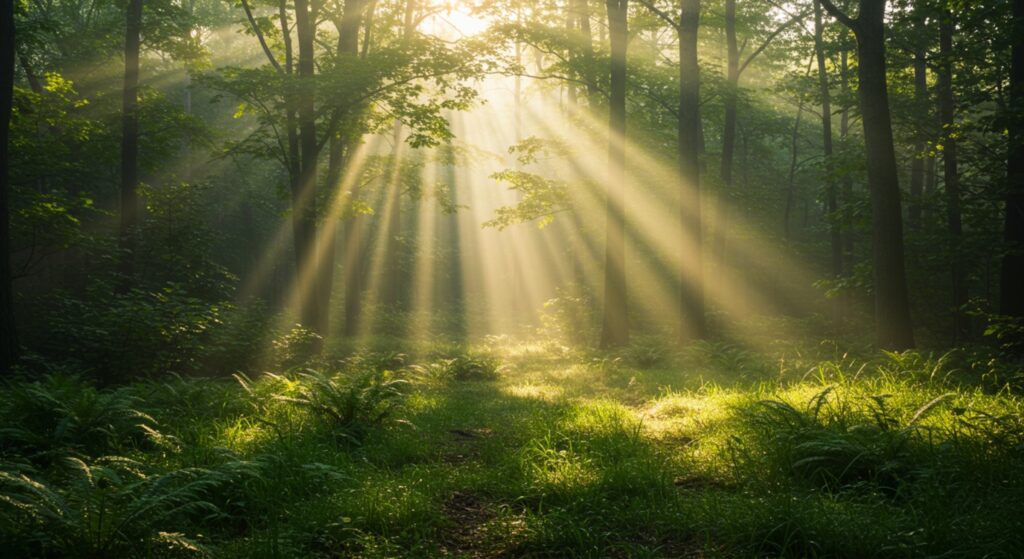
your field studies show that forest bathing sessions can boost NK-cell activity by up to 50% for several days. how should we view forest bathing as a form of preventive immune support rather than just relaxation?
A three-day, two-night forest bathing session can boost natural killer (NK) cell activity by up to 50% for several days.
We should view forest bathing as a form of preventive immune support rather than just relaxation. It has become a new preventive medicine for some chronic diseases such as depression, hypertension, heart diseases, sleep disorders and other conditions.
In the future, forest bathing may become a new clinical medicine to treat some lifestyle-related diseases, such as depression, hypertension, heart diseases, sleep disorders. In addition, forest bathing may be incorporated into rehabilitation medicine in the near future.
modern workplace wellness still defaults to meditation apps and gym memberships. based on your data comparing forest exposure with indoor mindfulness practices, where do you see the clearest superiority of forest-based interventions for sustained cortisol reduction and parasympathetic activation?
Research comparing Shinrin-yoku (forest bathing) with conventional indoor mindfulness practices and exercise programs demonstrates that forest exposure produces significantly greater and more sustained reductions in cortisol levels, along with stronger and longer-lasting activation of the parasympathetic nervous system.
The therapy has been scientifically demonstrated to increase NK cell activity, NK cell numbers, and intracellular anti-cancer protein levels (suggesting cancer-preventive effects); lower blood pressure and heart rate (indicating protection against hypertension and cardiovascular disease); reduce stress hormones including urinary adrenaline, noradrenaline, and salivary and serum cortisol; enhance parasympathetic nerve activity while suppressing sympathetic activity to restore autonomic nervous system balance; raise serum adiponectin and dehydroepiandrosterone sulfate; improve mood by decreasing anxiety, depression, anger, fatigue, and confusion while increasing vigor on the Profile of Mood States (POMS) test; elevate blood levels of serotonin, oxytocin, and insulin-like growth factor 1 (further supporting depression prevention); enhance sleep quality; and show promising applications in rehabilitation medicine.
“From feeling to science” is a key phrase for understanding the importance of forest bathing.
how can knowledge workers intentionally use brief, regular forest “micro-doses” to combat digital overload and decision fatigue?
Knowledge workers can enjoy forest bathing on a daily basis, using nearby parks and green spaces. Or they can enjoy elements of indoor forest bathing by using aromatherapy and houseplants.
for the 70–80 % of the global population now living in urban areas, what hierarchy of accessible proxies—urban parks, indoor plants, cypress essential oils, recorded forest soundscapes—comes closest to replicating the full phytoncide + sensory constellation when true forest access is limited?
Yes. You are right. People in cities can use urban parks, indoor plants, cypress essential oils, recorded forest soundscapes, which comes closest to replicating the full phytoncide and sensory constellation when true forest access is limited.
if national health systems were willing to prescribe nature-based interventions the same way they prescribe pharmaceuticals, what minimum effective “dose” (frequency × duration) would you recommend as a standard protocol for anxiety, depression, and burnout prevention?
The following protocol are recommended: 1. enjoy forest bathing for at least 20 minutes daily at a nearby park or green space; 2. If it is not possible to do so daily, enjoy forest bathing for at least four hours each weekend in a large urban forest park. The effects of forest bathing sessions for more than four hours last for a week.
you have trained thousands of forest-therapy guides worldwide. what is the single mindset shift that produces the largest measurable increase in physiological and psychological outcomes?
Enjoy forest bathing with all your senses.
Stress is a keyword to understand the background and importance of forest bathing because stress can induce many lifestyle-related diseases such as depression, hypertension, sleep disorders, heart. On the other hand, forest bathing can reduce stress.
further reading:
Li Q, Ochiai H, Ochiai T, Takayama N, Kumeda S, Miura T, Aoyagi Y, Imai M. Effects of forest bathing (shinrin-yoku) on serotonin in serum, depressive symptoms and subjective sleep quality in middle-aged males. Environ Health Prev Med. 2022;27:44. doi: 10.1265/ehpm.22-00136.
Li Q. Effects of forest environment (Shinrin-yoku/Forest bathing) on health promotion and disease prevention – the Establishment of “Forest Medicine”-. Environ Health Prev Med. 2022;27:43. doi: 10.1265/ehpm.22-00160.
Li Q. New concept of Forest Medicine. Forests, 2023, 14(5), 1024; https://www.mdpi.com/1999-4907/14/5/1024
Conte A, Pace R, Li Q, Carloni S, Boetzkes A, Passatore L.Aula Verde (tree room) as a link between art and science to raise public awareness of nature based solutions.Scientific Reports 2024 Feb 6;14(1):2368. doi: 10.1038/s41598-024-51611-9.
Benedetti, V.; Giganti, F.; Cotugno, M.; Noferini, C.; Gavazzi, G.; Gronchi, G.; Righi, S.; Meneguzzo, F.; Becheri, F.R.; Li, Q.; Viggiano, M.P. Interplay among Anxiety, Digital Environmental Exposure, and Cognitive Control: Implications of Natural Settings. Behav. Sci. 2024, 14, 323. doi: 10.3390/bs14040323
Simpattanawong D, Li Q, McEwan K. A controlled trial comparing the impact of guided Forest bathing or a mindful urban walk on heart rate, blood pressure, and mood in young Thai adults. People and Nature. 6 (6), December 2024, Pages 2577-2586, https://doi.org/10.1002/pan3.10744
Li Q. Preventive Effects of Forest Bathing/Shinrin-Yoku on Cardiovascular Diseases: A Review of Mechanistic Evidence. Forests 2025, 16, 310. https://doi.org/10.3390/ f16020310, February 2025.
Li, Q.; Takayama, N.; Katsumata, M.; Takayama, H.; Kimura, Y.; Kumeda, S.; Miura, T.; Ichimiya, T.; Tan, R.; Shimomura, H.; Tateno, A, Kitagawa T, Aoyagi Y, Imai M. Impacts of Forest Bathing (Shinrin-Yoku) in Female Participants with Depression/Depressive Tendencies. Diseases 2025, 13, 4, 100 . https://www.mdpi.com/2079-9721/13/4/100. March, 2025.
Li, Q.; Takayama, N.; Kimura, Y.; Takayama, H.; Kumeda, S.; Miura, T.; Kitagawa T, Aoyagi Y, Imai M. Forest bathing improves inflammatory markers, SpO2 and subjective symptoms related to COPD (chronic obstructive pulmonary disease) in male subjects at risk of developing COPD. J Occup Health, 2025 Jan 7;67(1):uiaf041. doi: 10.1093/joccuh/uiaf041.
Li Q, Kobayashi M, Wakayama Y, Inagaki H, Katsumata M, Hirata Y, Hirata K, Shimizu T, Kawada T, Ohira T, Park BJ, Kagawa T, Miyazaki Y. Effect of phytoncide from trees on human natural killer function. Int J Immunopathol Pharmacol. 2009 Oct-Dec;22(4):951-9. doi: 10.1177/039463200902200410.