RYO YAMAZAKI
founder and CEO, Studio-L. professor, School of Architecture, Kwansei Gakuin University. OSAKA.
design for community engagement.
when does engagement of communities fail—when do human bonds dissolve rather than strengthen?
When the relationship between the people involved and the community is not one of equals, building genuine relationships with people becomes difficult. For example, when a company wants to offer a new product or service, it tends to treat the community as a testing ground for product development — and once the product is complete, the relationship defaults to one of provider and consumer. In reality, however, it is the wisdom and experience of local people that generate so many of the insights and so much of the value. The moment people in a community sense that they are being engaged merely for the sake of product development, the bond does not deepen. Bonds deepen, I believe, when we build relationships in which we create something together — meeting one another as equals, with mutual honesty. What matters is not a relationship in which one side simply takes something away, but a relationship in which we think together and make together.
why is community design necessary in the first place? what problem does it solve that architecture or urban planning alone cannot?
Architecture and urban planning are often designed with the people who will live there in mind, yet the very people who will inhabit and actually use these spaces are frequently not involved in the process. Specialists in architecture, urban planning — and equally in healthcare, social welfare, and education — bring deep professional expertise, but they risk overlooking the granular realities of a place: the complex web of human relationships, the charms and values that only residents know, and most importantly, the opportunities for local people themselves to act. They overlook these things because the residents who could share them are not at the table.
Every act of design depends on a plurality of perspectives. This is especially true of design oriented toward problem-solving, where the participation of those who actually live with the problem is, in my view, essential. Community design builds a relationship between specialists and residents in which what each side wants to say can be expressed and a real dialogue can take place — and then, once the architecture or urban plan is built, helps the community actually put it to use. The result is not a “beautiful but unused space” once construction is complete, but a place that is used by people and grown by them over time.
what kind of engagement is born from intentional community design efforts—what does it look like, feel like, and ultimately produce in the life of a place?
Within the places where they live, people can build relationships that workplaces and schools simply cannot offer. Through community design, they engage in ongoing dialogue about things like neighbourhood planning or systems of care and then move from conversation to actual activity in the community itself. As this happens, they begin to feel a real care for the place — an attachment takes root. Their attention also widens to include others who live in the area, the surrounding environment, and the broader life of the place. Out of the relationships formed and the experiences accumulated through this work, they go on to create new activities of their own — and, in time, they come to take genuine pleasure in shaping the way they live.
in a way the conversation on community design suggests a paradox: community is supposed to be organic and self-organizing, yet you are deliberately designing for it. how do you, as a designer, create structures that invite spontaneity rather than constrain it?
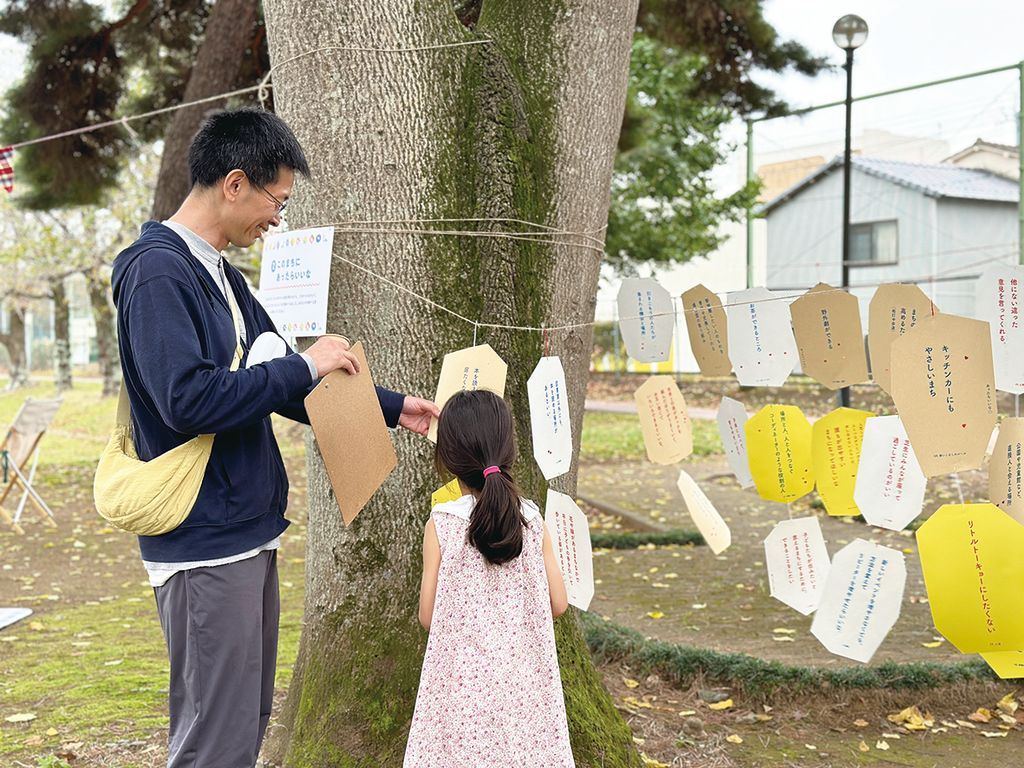
As you say, a community is something organic — it is already there; it cannot be manufactured. What can be formed, however, is the kind of community that takes shape when people gather around a shared interest or concern. So when people come together around themes that matter to their lives and to their area — the design of a public facility or a park, for instance, or the planning of the wider neighbourhood — and engage in dialogue and act together, relationships are built. A gathering of this kind is sometimes called an association.
Community design, moreover, means designing with the community. It is not that we design for them; rather, we come to know the thoughts and wishes the community holds, and we help them give those thoughts a form of their own. To that end, we design the opportunities for encounter and mutual learning, and the spaces for dialogue, that make this possible.
your method involve supporting residents themselves to address community problems using their interpersonal connections and ideas, rather than focusing on “hard” infrastructure like buildings and park. has this approach been influenced by your previous experience in landscape design? could you share with us the significant elements of this methodologic approach, the mechanisms that work more than others?
My approach has also been shaped by my experience in landscape design, and by what I lived through as a student. While I was studying, the Great Hanshin-Awaji Earthquake struck (1995). I was studying architecture and landscape design at the time, and I went on to take part in the recovery effort in the disaster area, surveying buildings that had collapsed. The destruction was devastating to witness — and yet, watching the people of the surrounding communities help one another using whatever was close to hand, whatever they could lay hold of, I came to understand the strength people carry within them.
That experience shifted something in my work. In landscape design, the act of designing itself matters of course, but my interest began to move toward the management side — toward thinking about the people who would use the space, and how it would be used. Over time, I began running workshops with the people who would actually use the places I was designing, and I came to believe that before designing anything at all, dialogue with the actual users — and with those likely to become users — is essential. The methods I use in community design today have grown out of that accumulation of experience.
you’ve described your work as supporting communities over a three-year arc, with the goal of eventually withdrawing. in that time, you must constantly encounter moments where your initial assumptions—about a community’s needs, its conflicts, or its latent energy—turn out to be incomplete or simply wrong. could you share a story of a moment when you had to fundamentally rethink your approach based on what the community revealed? what did that experience teach you about the difference between designing for a community and designing with them?
A project does not begin with a clear answer already in view. In practice, we hold repeated conversations with a wide range of people, run small experiments again and again, and arrive at a shared sense of direction little by little. So even when we have certain expectations going in, the constant dialogue throughout the process means that significant disconnects rarely arise. On the contrary, it is precisely because the dialogue continues that we are able to respond flexibly to change. And when someone not directly involved in the process raises a question, residents already participating in the project will often step in to explain — so the number of people able to respond, in the moment, gradually grows.
This, I think, is the difference between “designing for the community“ and “designing with the community“. When you design for a community, people can become passive, almost as if they were customers being served. When you design with the community, the residents who take part become the ones leading the activity themselves — and they go on to grow that activity over time.
you’ve worked on many projects over the years. based on that experience, what are the most common reasons community design efforts fail to take root?
I haven’t really had the experience of a project failing to take root, so I can only speak to what might go wrong — and if I had to point to something, it would be the cases in which the strength and resources the residents themselves possess are not recognised as a source of possibility. If you focus only on problems — “we don’t have this,” “we’re short on that” — you end up having to bring in money, people, and other resources from outside, and a sense of stagnation sets in. The project stops being something people can enjoy. But when you turn your attention to the resources and people already there, including those that are only latent, you find that there are things you can do right now — and once creativity joins in, the people taking part begin to move the project forward with real pleasure.
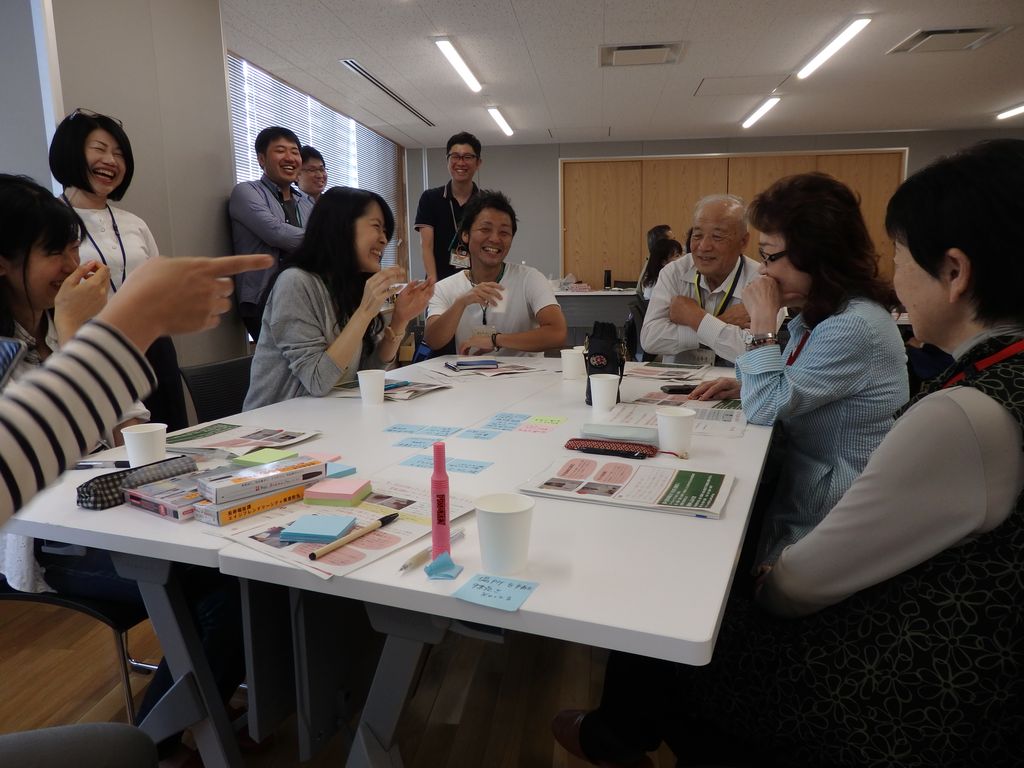
why is this new generation of designers embracing community-centred approaches, and how do they fit into the larger ecosystem of architects, coordinators, and local stewards who sustain these projects?
I get the sense that they have naturally taken on ways of thinking like regenerative design, and the principle of not creating gaps or divisions. And I suspect they understand, as a felt reality, that living that way is richer and more enjoyable. Within the larger ecosystem, there will be things we can learn from them about these ways of thinking; and equally, we can ask them to bring the drive and willingness to take on challenges that comes with youth and perhaps play the role of helping turn what they’ve tried into reflections that point the way forward. In Japan there’s been a longstanding saying that “outsiders, fools, and the young“ are the ones who change a town — and I think they may well take on exactly that role.
when you collaborate with architects, urban planners, or local government officials, what is the most common misunderstanding they bring about what community engagement actually is?
(This will echo my answer to the earlier question, but ) I think it would be in the cases where one fails to see possibility in the strengths and resources the residents themselves hold, and proceeds without building a relationship of trust with them. It happens when work moves forward on the assumption that the specialist is the one who provides the solution. Specialist knowledge matters, of course — but every place has wisdom and context that only the people who live there can know. If you proceed without listening to that, trust becomes very difficult to build.
community bonds—trust, belonging, reciprocity—are intangible. how do you, as a designer, know when your efforts have succeeded? what are the subtle signs you look for?
What I pay closest attention to is whether, after we step away, the people of the area carry on with their activities under their own steam — and with a sense of enjoyment. I also watch for whether new encounters and new activities are arising naturally, and whether a genuinely diverse range of people are taking part. To make that possible, I make sure that diverse residents are involved from the very beginning of the process — and I keep checking: not only the voices that come through loudest, but what the people who say nothing are thinking, whether there was anything someone couldn’t say in a public setting. Sometimes I follow up afterwards to ask. If someone is genuinely angry or carrying doubts, I go to meet them in person and talk. You can usually pick up the signals by listening carefully to the people taking part, and by paying attention to how they carry themselves.
younger generations are often described as “digital natives.” in your observation, how is their relationship to physical community spaces different—or perhaps surprisingly similar—to previous generations?
I often see them being more deeply moved by physical, in-person contact. When they meet people in the area who are older than their parents, or younger than themselves, and share an experience with them, they often come to love that place. An earlier generation sometimes left smaller towns for the big cities precisely to avoid those close, almost-too-close relationships — but lately, even among those who have to leave for high school or university because there isn’t one locally, I sense a growing number who love their hometown and are determined to come back. What strikes me as remarkably similar across all of them is this: when you actually sit and talk with them, every single one feels that connections with other people are something worth treasuring.
drawing on your work with these communities, what meaning do you find in cherishing and preserving the “ordinary” of everyday life? might this be, in itself, a way of living rooted in place — one that shapes a town’s identity, sustains its quiet resilience, and offers something genuine to those who arrive from elsewhere?
To cherish the things that exist within everyday life is, in itself, to build the history and culture of a place. History and culture are what most clearly distinguish one territory from another; they are what nurtures a town’s identity and the quiet affection its inhabitants come to feel for it. A place where many such people gather — those who hold their town in mind and heart — is, I believe, profoundly rich. Not economically, but in a deeper sense.
Among the “ordinary things” we encounter in daily life are also the resources offered by the natural environment of the place itself: sources of renewable energy, food, timber, water. And beyond these, the wisdom, experience, skill, conscience, and networks of the people who live there. When we draw on these together, locally, our dependence on what lies outside begins to diminish. Even short of full self-sufficiency, the degree to which we are shaped by large external forces is reduced. In recent times, wars and conflicts unfolding far from us have come to touch our daily lives more directly. It is perhaps for this reason that the idea of building one’s own way of living — close to home, with what one already has — is being rediscovered.
Such places also hold a particular appeal for those arriving from elsewhere. A town rich in history and culture, where the people who live there appear to take genuine pleasure in their days, carries a quiet, unmistakable pull. When we travel, is it not more meaningful to be shown a place known only to those who live there, than to follow the crowd to where everyone else goes?